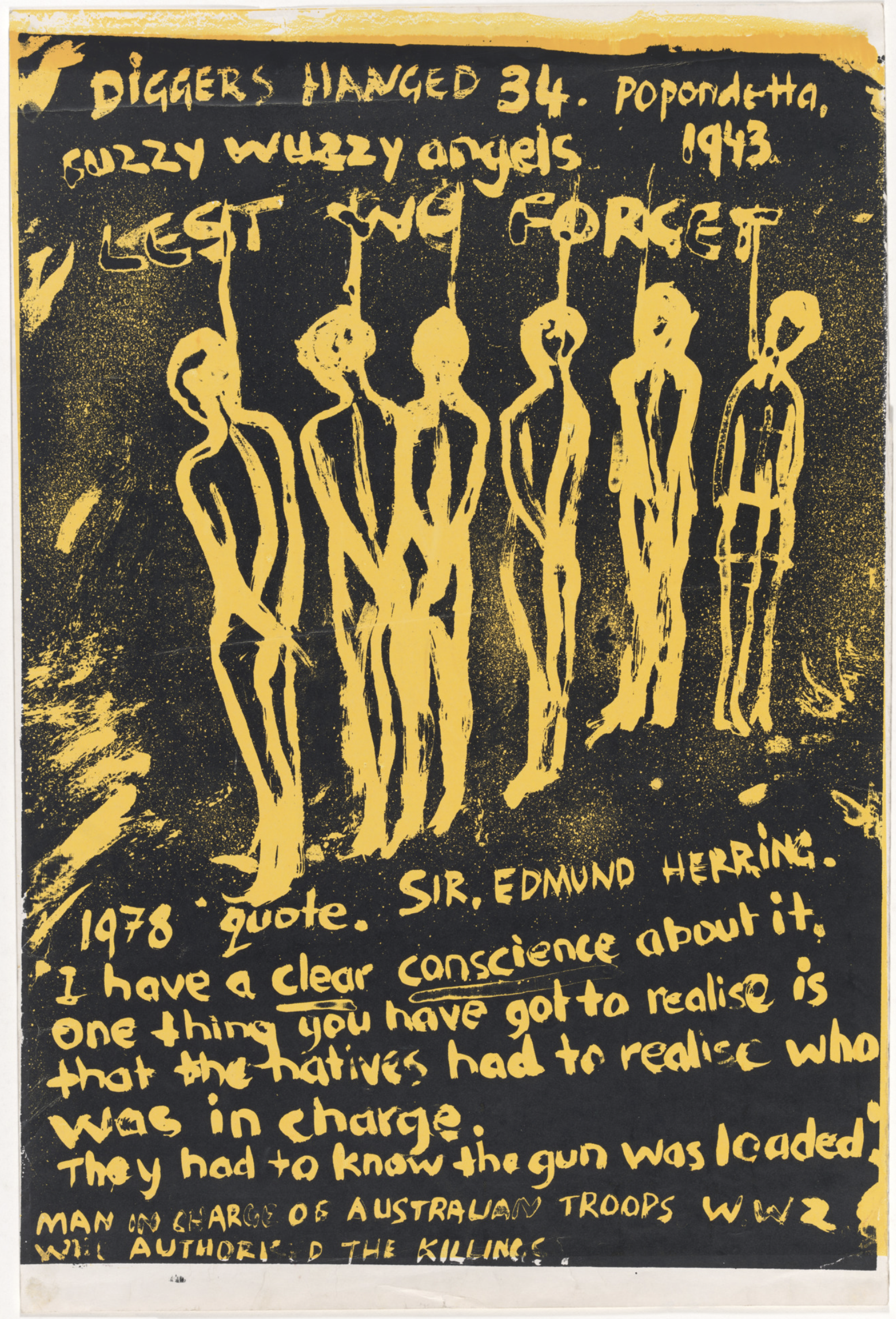
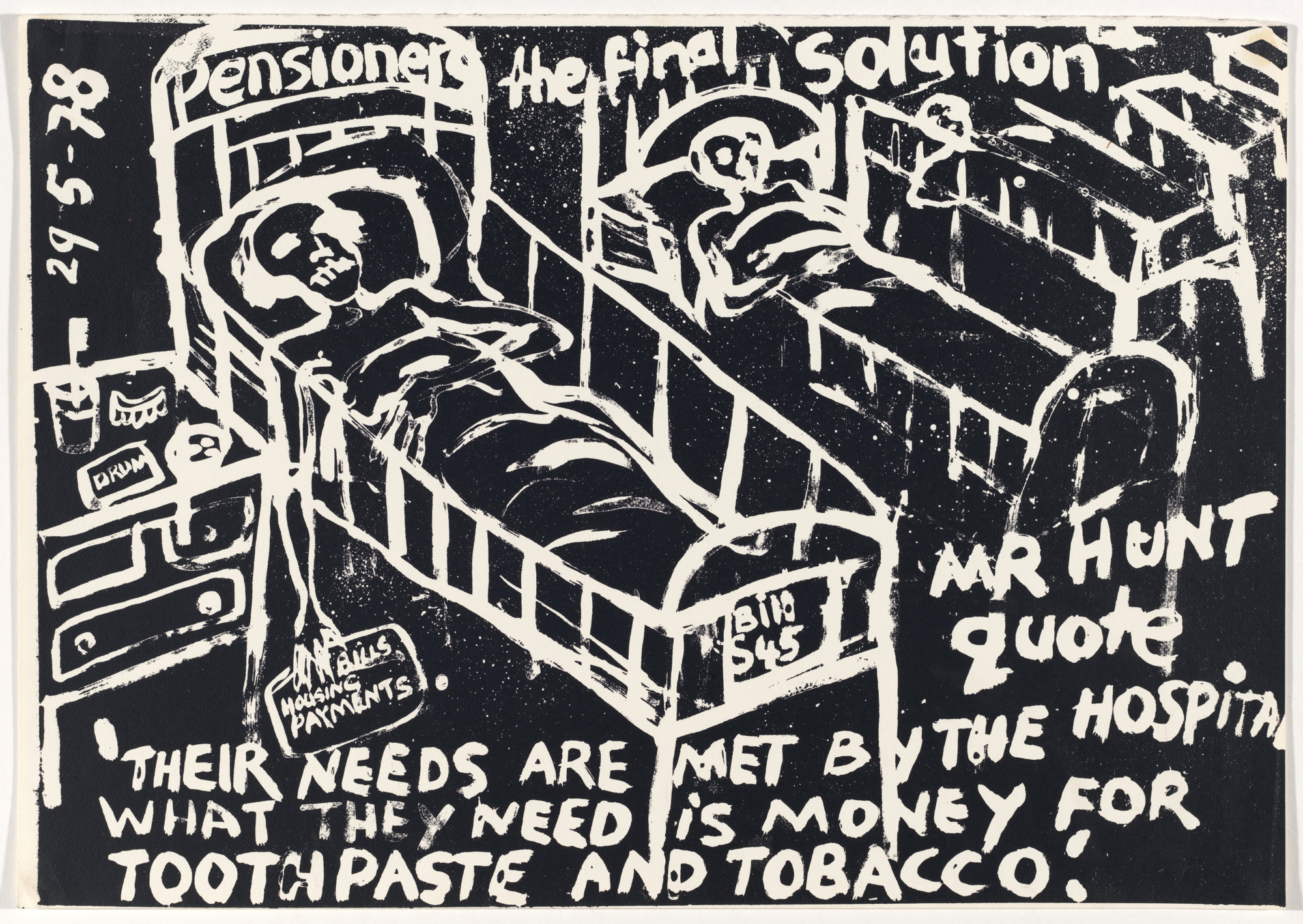
There is a characteristic and telling moment in the story of Viva Gibb’s political poster Popondetta 1943 (1978) — a searing silkscreen about the wartime hanging of 34 Papuan civilians ‘for treason’. Responding to the 1978 Bulletin report of Australian commander in Papua, Lieutenant-General Sir Edmund Herring‘s unapologetic dismissal of the executions— and not satisfied to just plaster it on walls around Melbourne — she pasted a copy of the poster directly outside Herring’s Toorak house.
That was Gibb (1945–2017) — her fierce directness, refusal to stand back, and a conviction that art had to go where it hurt. Yet simultaneously she made some of the most tender, intimate portrait photography — images described by NGV curator Jennie Boddington as “jewel-like” — of her neighbours on Capel Street, the barber on Errol Street, the drag queen at Trish’s Coffee Lounge on Peet Street.
This same artist was working in the same streets of West and North Melbourne, making intimate portraits inside the walls and pasting agitprop outside. Superficially, the personal and the political may seem dissociated, but like her sister artists, Gibb would readily reassert feminist activist Carol Hanisch‘s sentiment that “the personal is political”.
That duality, of combative agitator and compassionate witness, is the key to understanding Viva Gibb, an artist who had a significant early career, spent three decades in near-obscurity, and is now being rediscovered—she might have found the considerable institutional enthusiasm gratifying, but ironic.
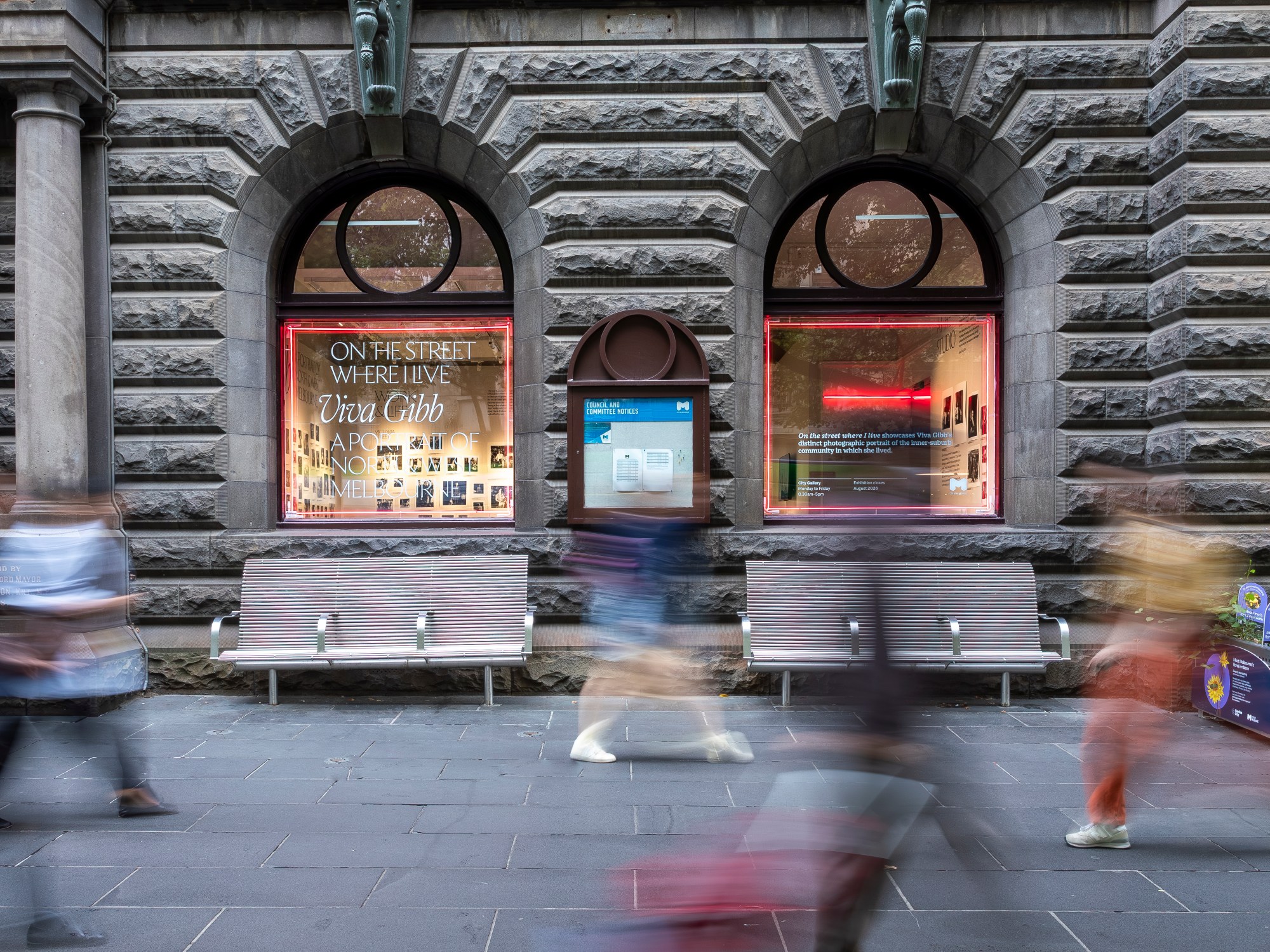
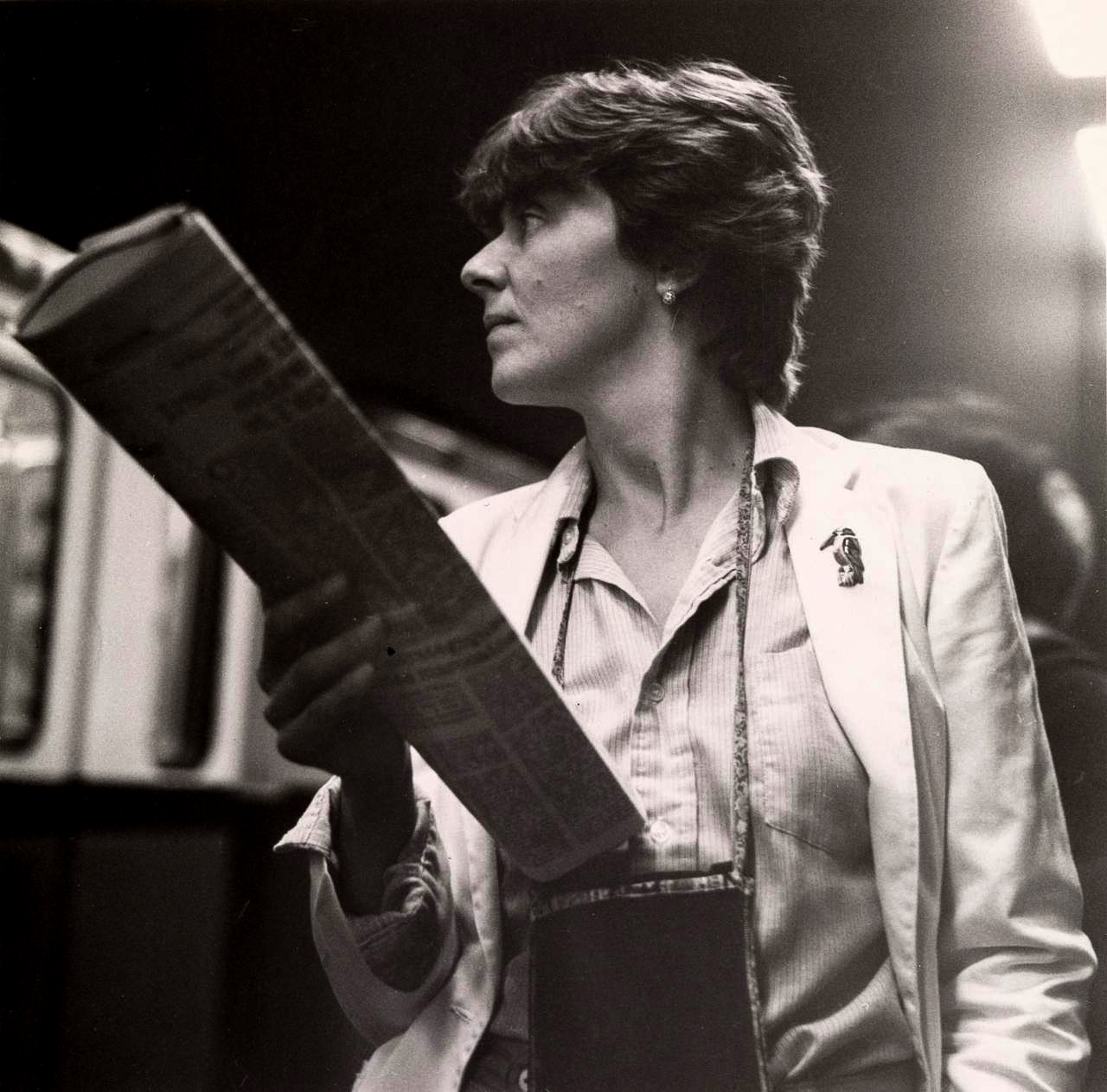
Inspired by seeing On the Street Where I Live: Viva Gibb’s Portrait of North and West Melbourne which runs until 7 August 2026 at City Gallery, Melbourne Town Hall, and her sternly feminist available-light picture of Helen Garner in the NGV’s current show Women Photographers 1900–1975: A Legacy of Light, I’ll draw here on a Wikipedia entry I have just created on Viva Gibb. You will find other, usually earlier, references to her as Jillian, her middle name, but ‘Viva’ now generally used, and is a more fitting and characteristic name!
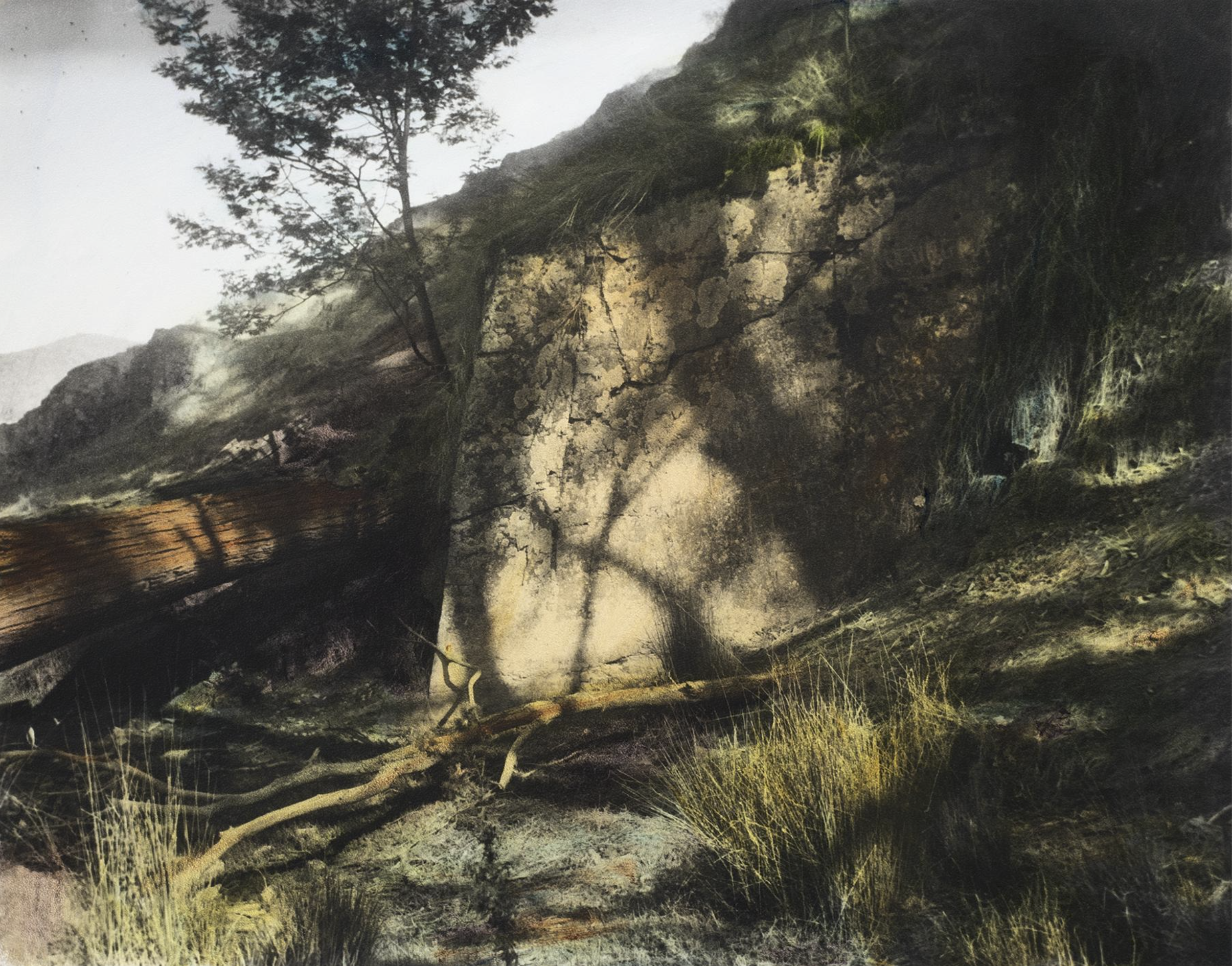
Bobinawarrah is a small locality about 30 kilometres south-east of Wangaratta in north-east Victoria, with 100 people in 30 families around the area, a hall, CFA shed—its primary school closed after 104 years in December 1993. It is livestock country. Viva Gibb was born there in 1945, the youngest daughter of a farming family — and, as the City of Melbourne has noted in its current exhibition texts, she was “a black sheep”: the animal-loving child of people who raised animals for slaughter.
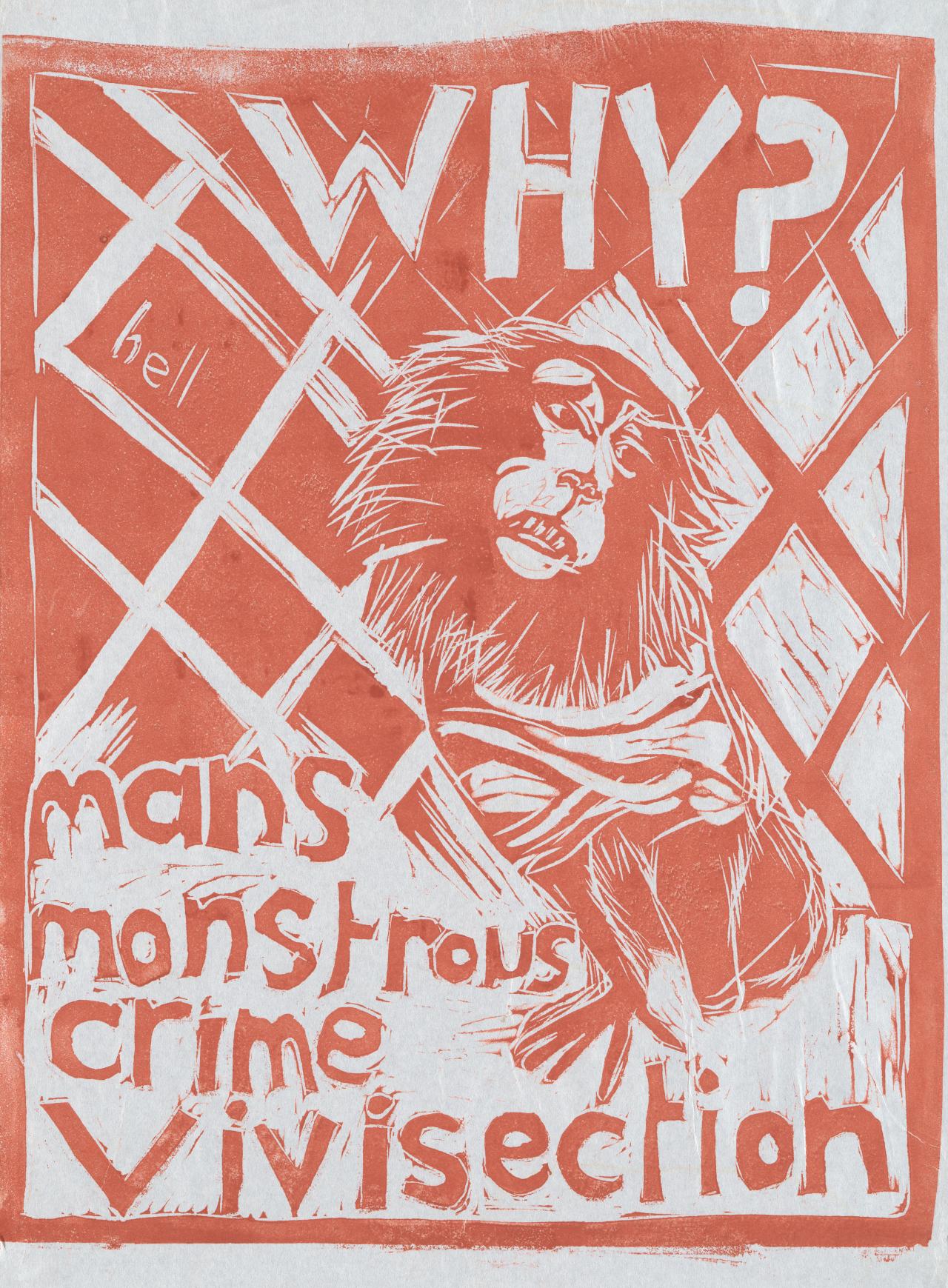
That tension between attachment to living creatures and the economics of rural life lodged in her; she became a vegetarian at 16 and a vegan later in life, and her animal rights posters of rabbits wired up in laboratories, pigs in factory cages, a monkey in a tiny cage under the caption Why? Man’s monstrous crime. Vivisection) are among her most viscerally affecting.
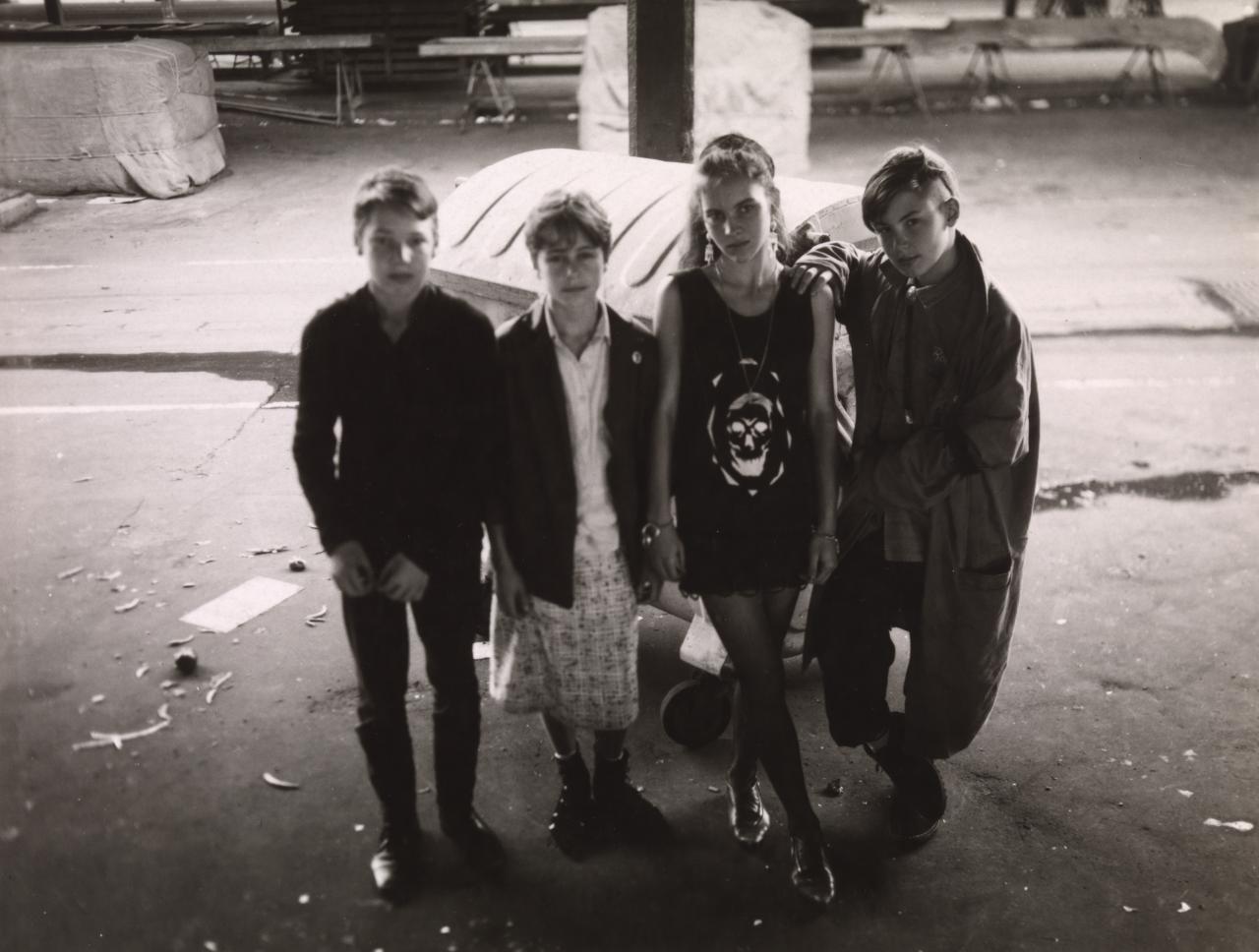
Viva began her formal training at Wangaratta Technical College (1961–65), then made the move to Melbourne to study painting under John Brack at the National Gallery Art School (1965–68) and later, printmaking at the Victorian College of the Arts (1973–74). Photography emerged from the intersection of these disciplines: as a student she had incorporated old photographs into her silkscreen prints, and after her postgraduate studies the medium took over entirely. By 1976 she was exhibiting photographs. Her first solo show was at Melbourne’s George Paton Gallery at the University of Melbourne; the National Gallery of Victoria followed in 1979–80.
In 1975, Gibb moved into 64 Capel Street, West Melbourne near Victoria Market, with her two children, Sybil and Rupert. She would not leave the immediate neighbourhood for the rest of her life; she died in 2017 at 10 Hawke Street, North Melbourne, 10 minutes’ walk away. The country girl had become a Melbourne artist. But the country hadn’t entirely left her. Helen Garner who, while she was writing Monkey Grip, lived with Gibb on Capel Street in the mid-1970s, recalls her as “a country woman, a person of awesome practical skills” — someone who knew how to grow tomatoes and basil, make yoghurt, sew, cook, and make a household. These capacities weren’t incidental. They enabled Gibb to live cheaply, raise two children alone in an inner-city terrace, and keep making art on her own terms. The practical and the political were, for her, inseparable.
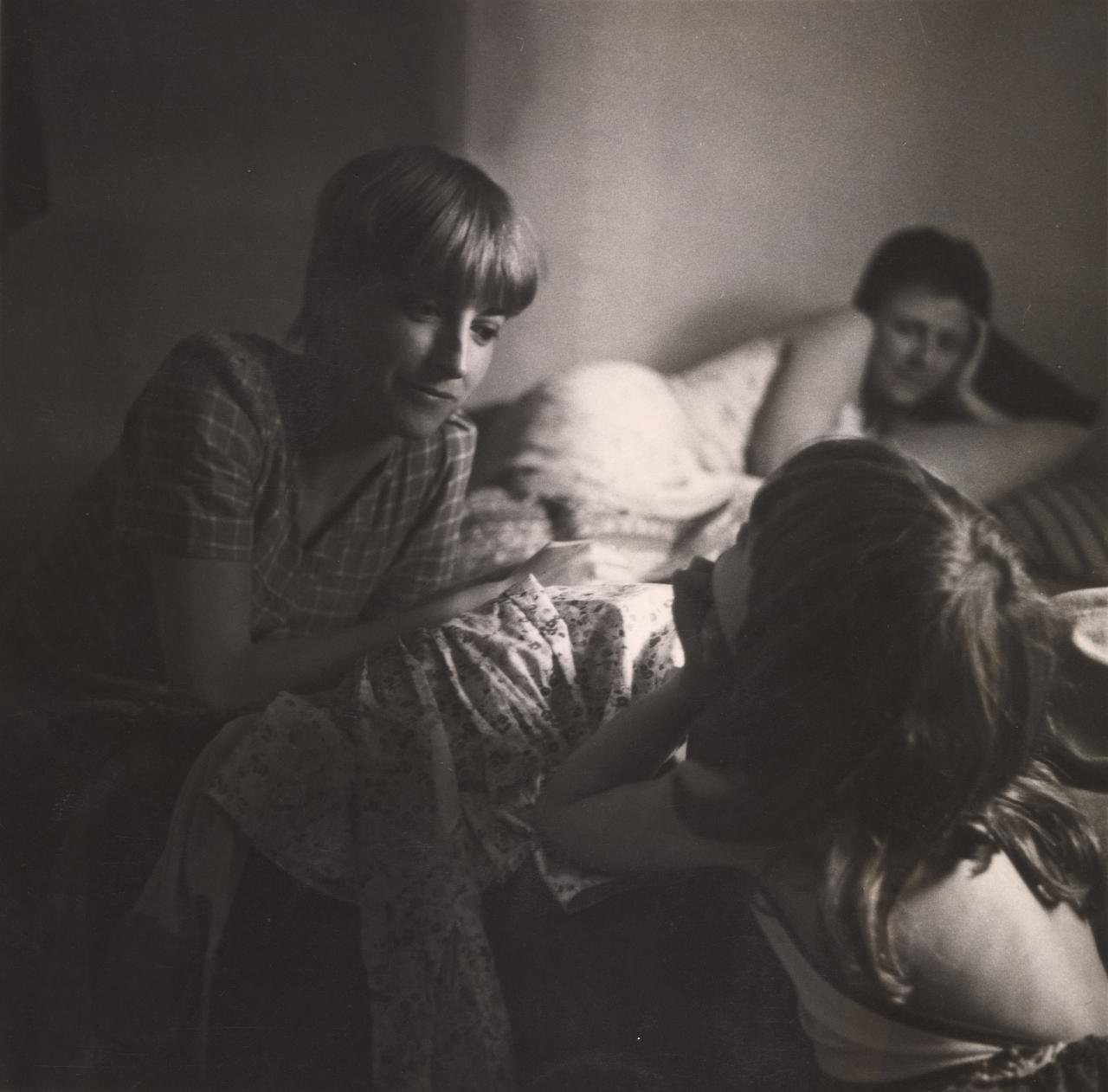
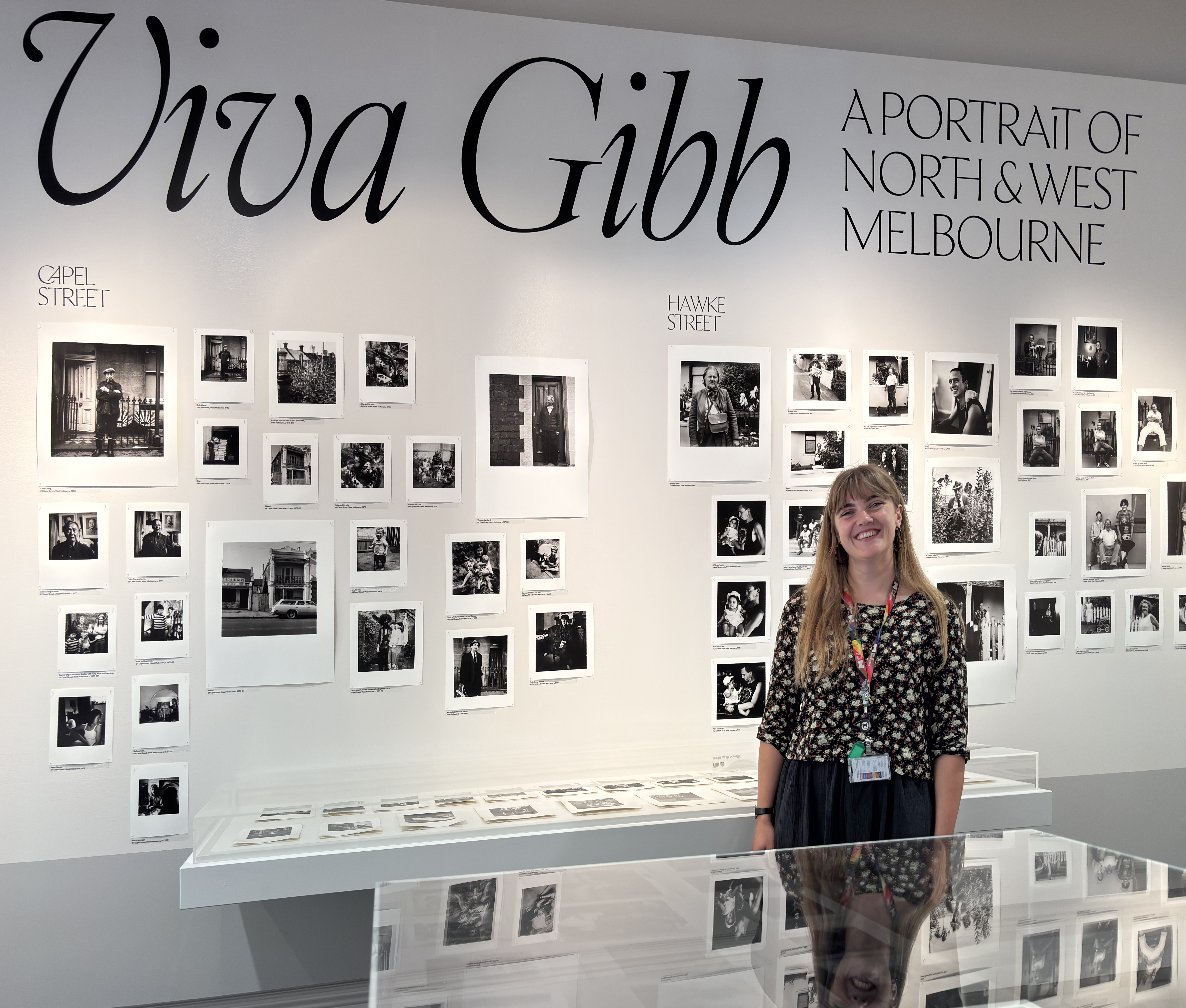
West Melbourne in the mid-1970s was, as exhibition curator Savannah Smith has described it, flying under the radar of the gentrification already affecting Fitzroy and Collingwood.
It was a semi-industrial suburb of wharfies, labourers, and working-class migrant families living in Victorian-era terraces and cottages, many of which the City of Melbourne had acquired ahead of a proposed Queen Victoria Market redevelopment that was ultimately abandoned in 1976.
This left an odd urban limbo — council-owned properties leased cheaply to tenants, affordable for the single mothers, artists, musicians, and political activists who were already finding Carlton and Fitzroy too expensive. Gibb moved in as a council tenant.
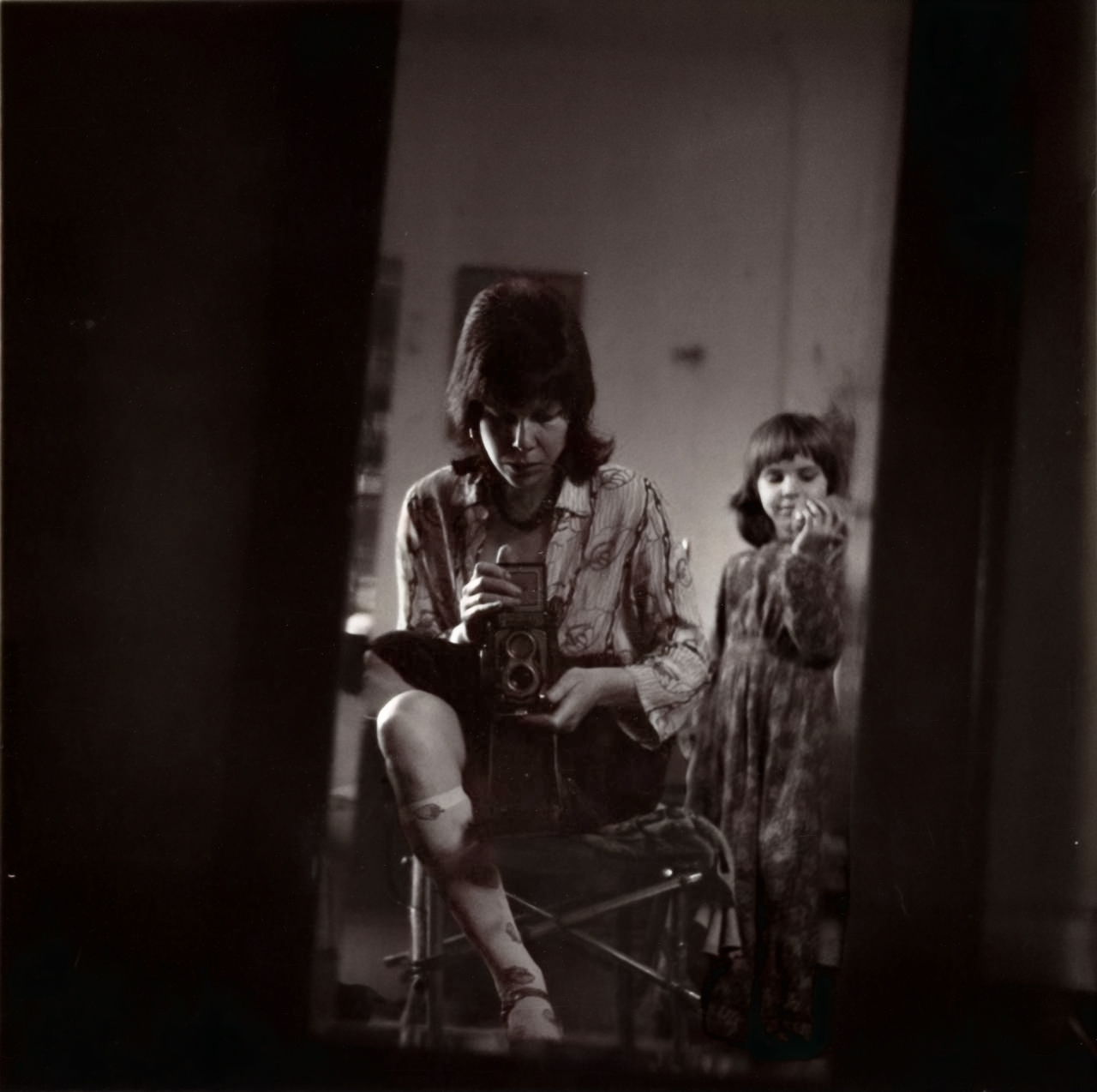
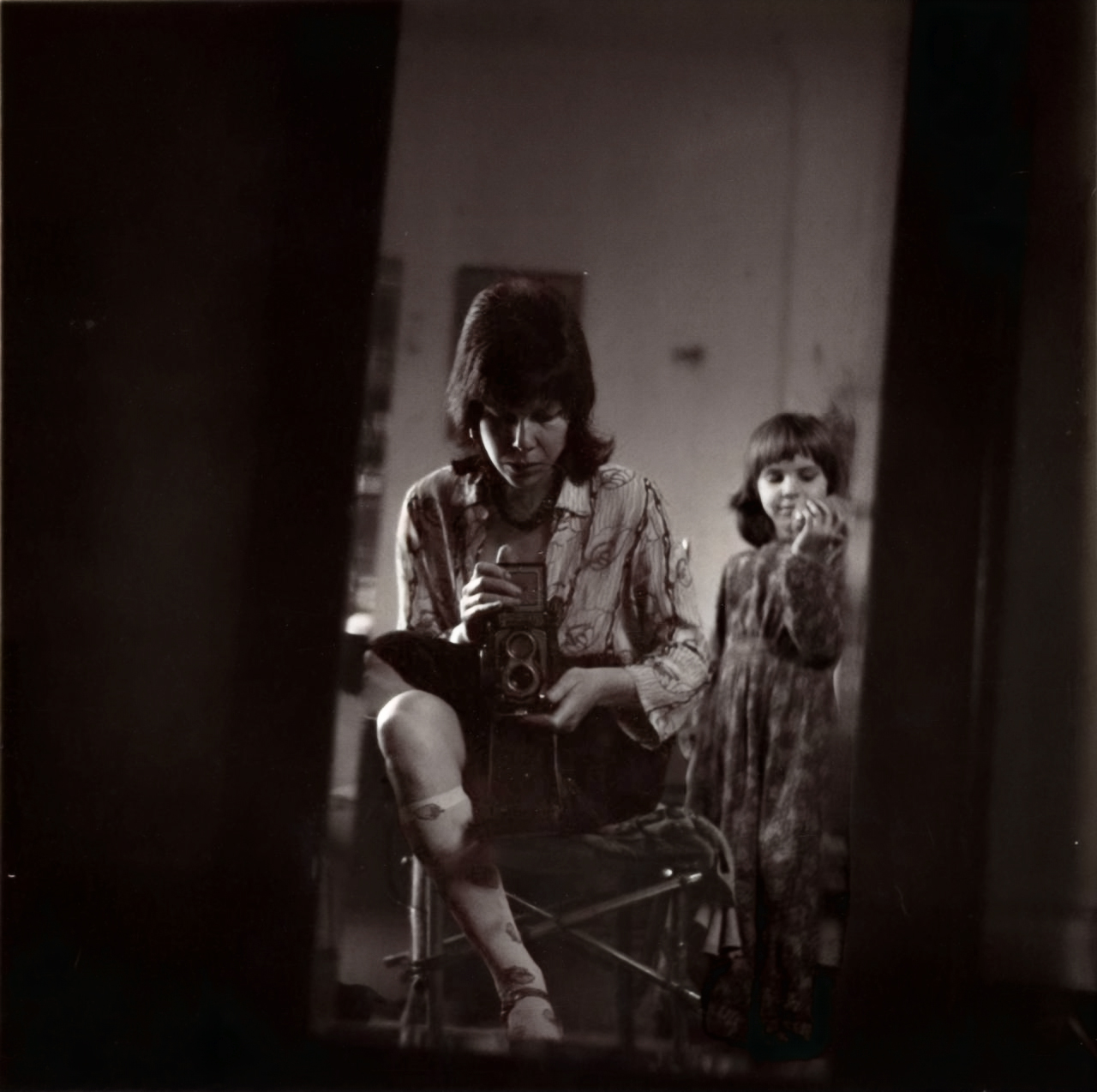
Viva set up her first dedicated darkroom at 72 Capel Street. Her printmaking training made her technically formidable: her son Rupert later recalled that she knew “exactly how black she wanted her blacks to be and how bright her highlights were,” and was rarely wasteful with film. She worked with a Rolleiflex medium-format camera for most of her portraiture, and a large-format 4×5-inch Graflex Speed Graphic press camera, tools that supported her patience and purpose, and built the trust of the person being photographed. The use of both offsets that sense of being scrutinised directly by the photographer that is imposed by an eye-level viewfinder or reflex camera, and one can see how Viva is standing above her camera or beside it, in eye contact with her subject, perhaps talking to them, calmly or animatedly depending on the reaction desired, as she presses the shutter.
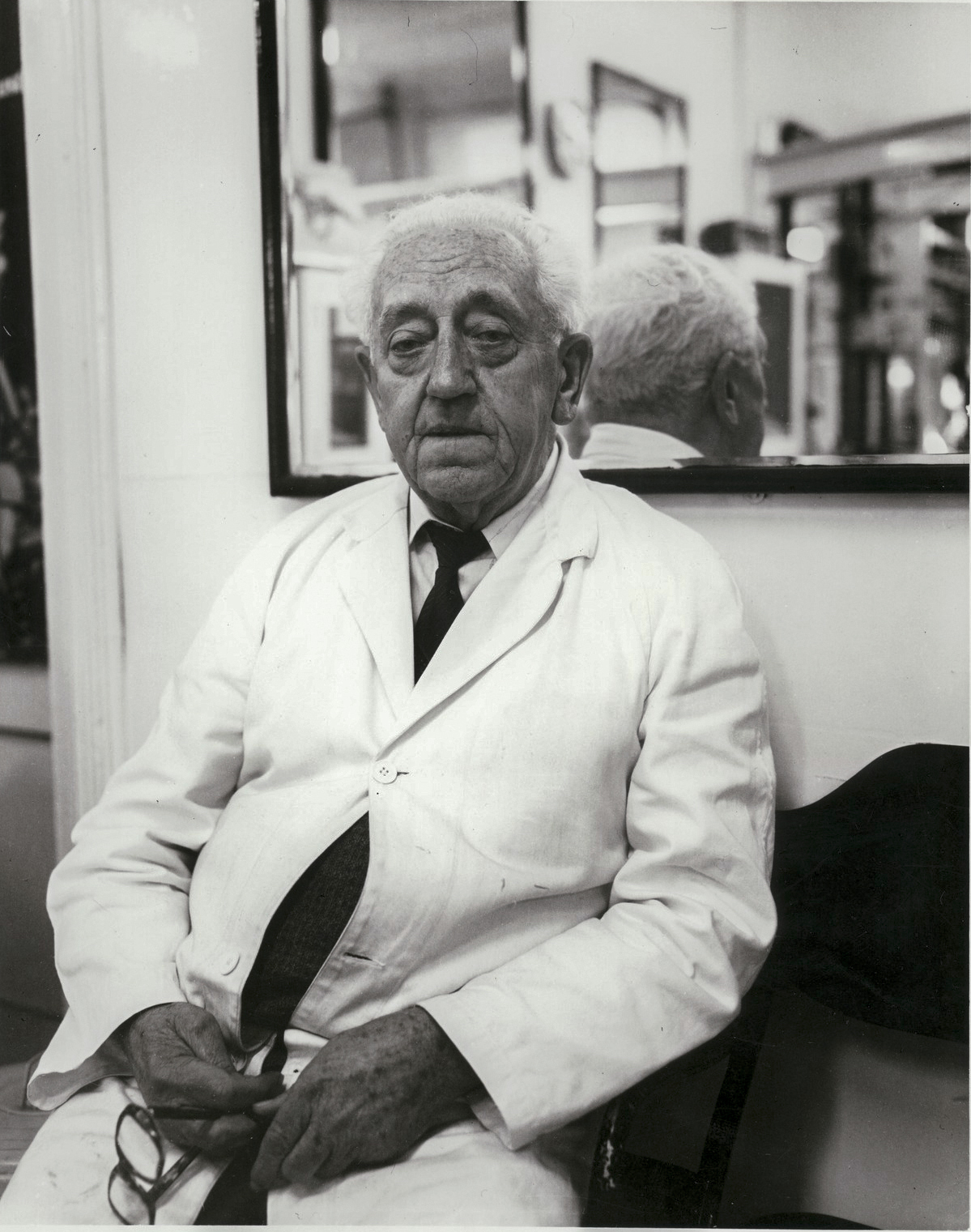
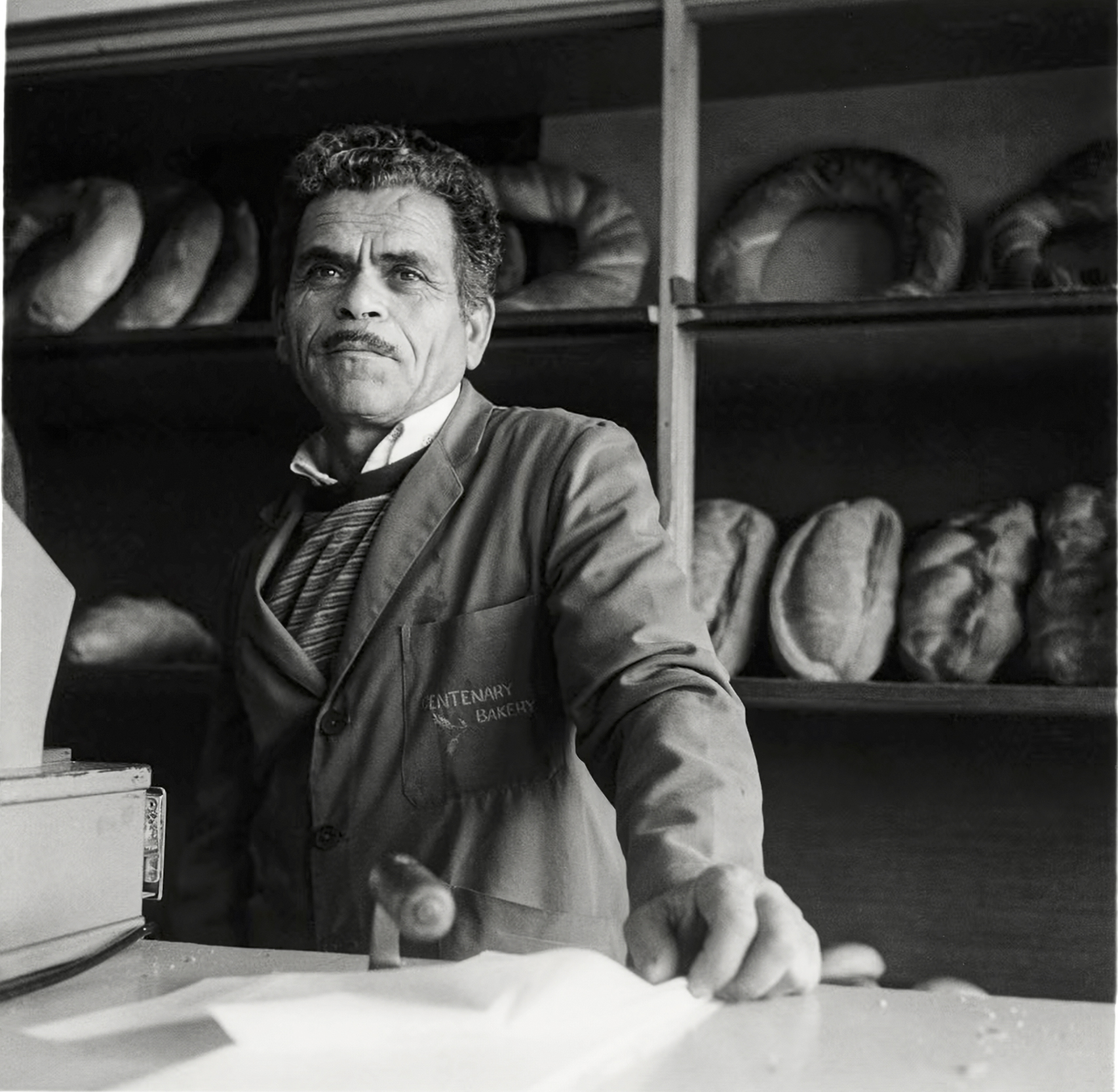
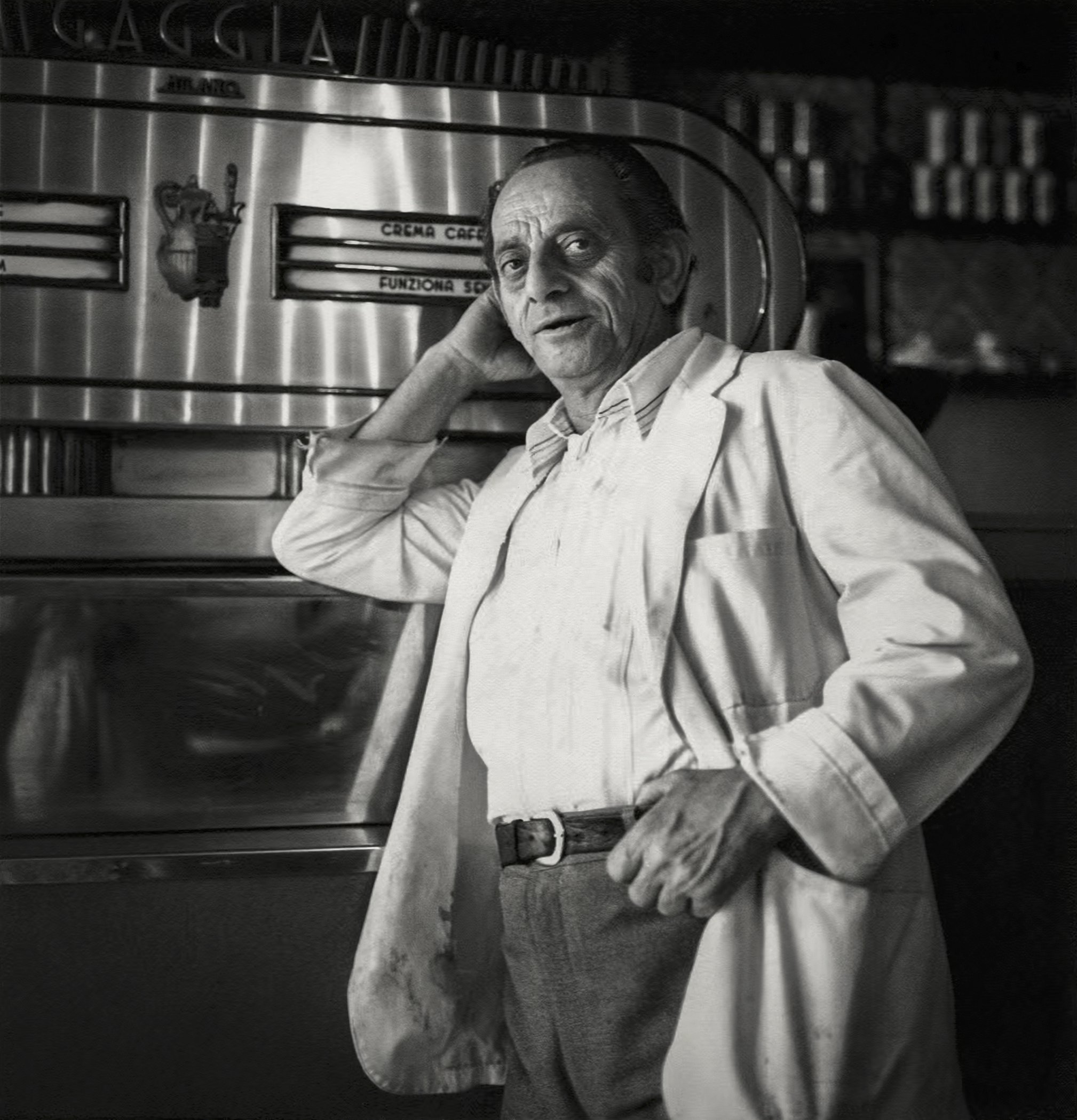
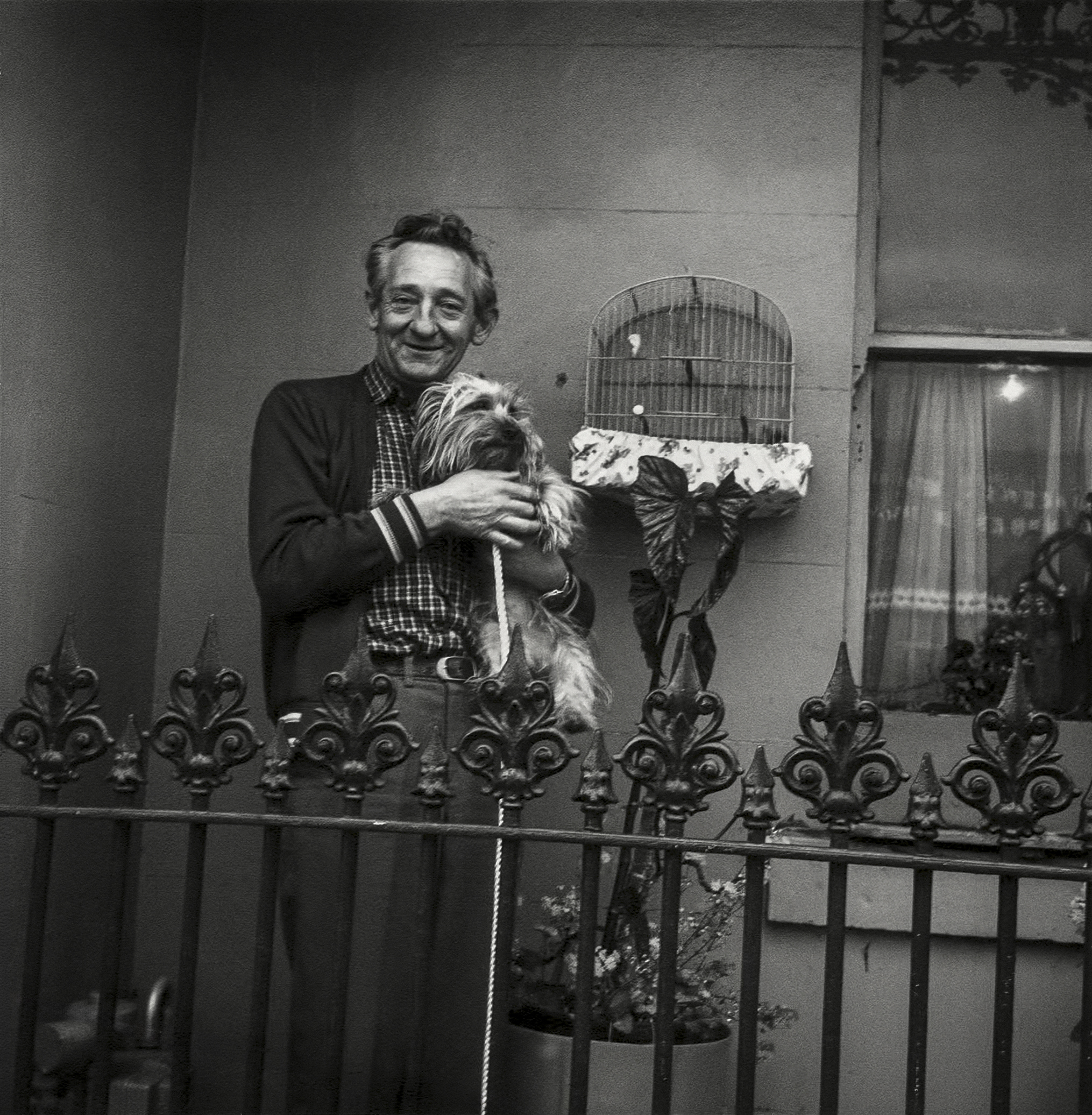
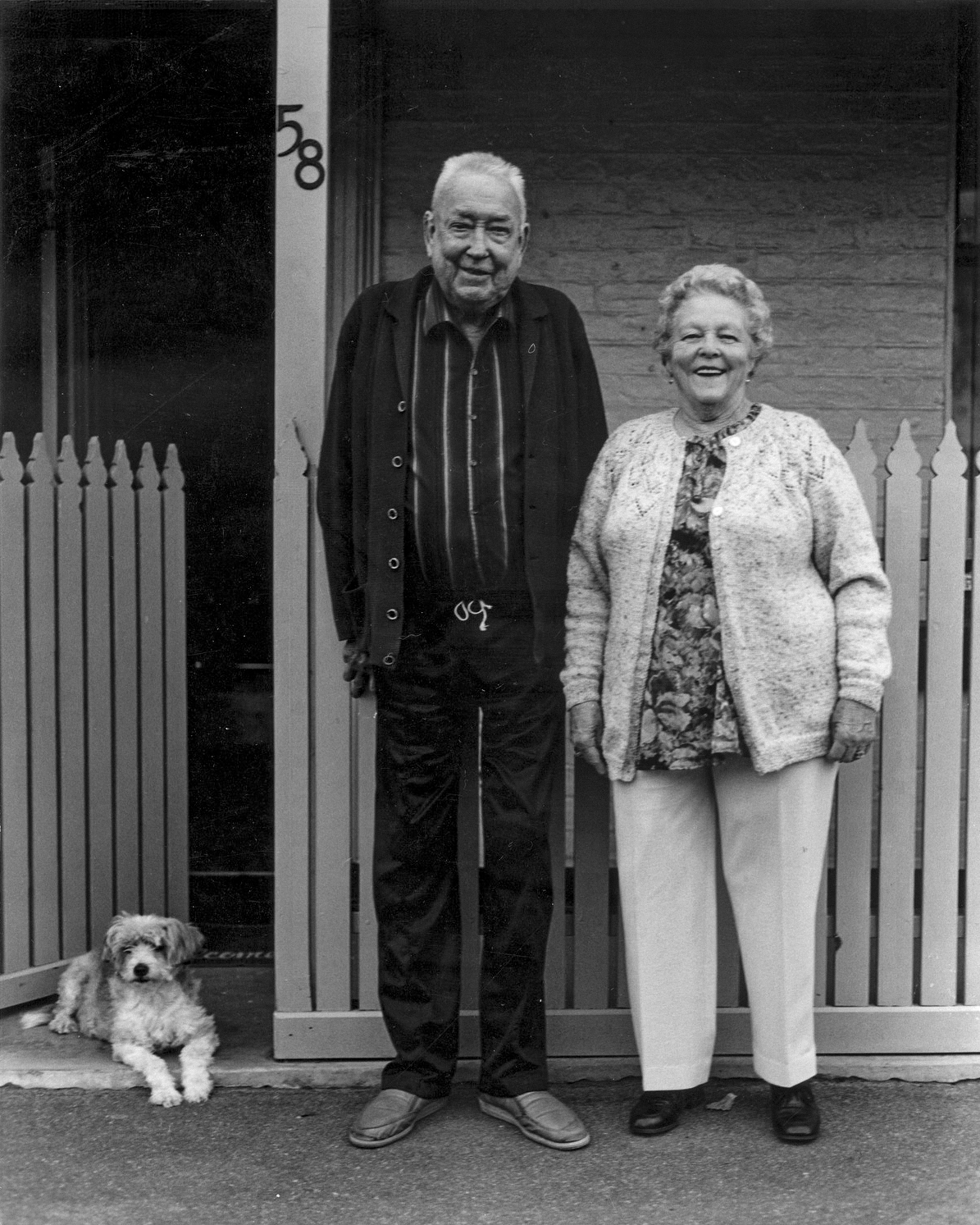
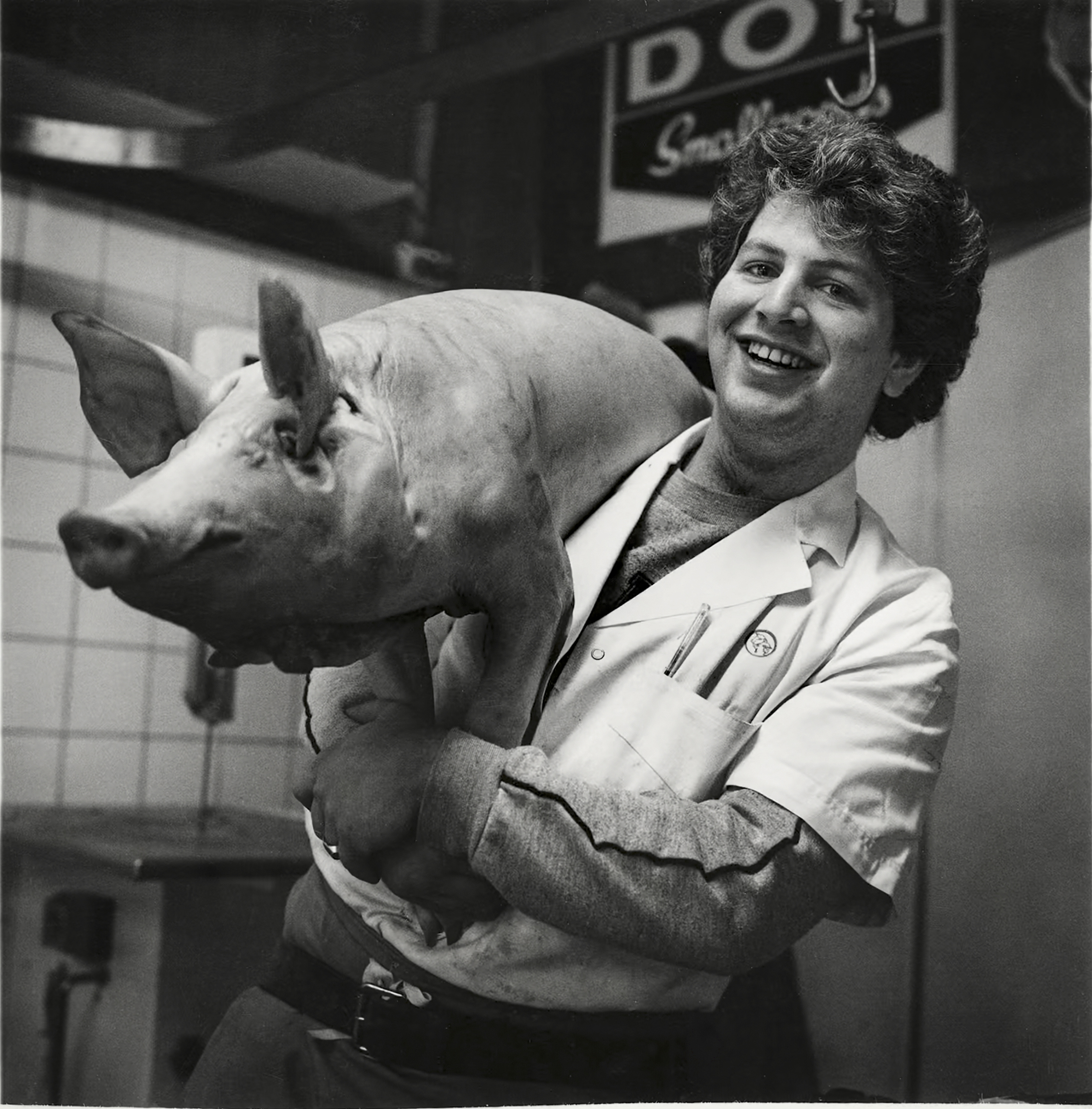
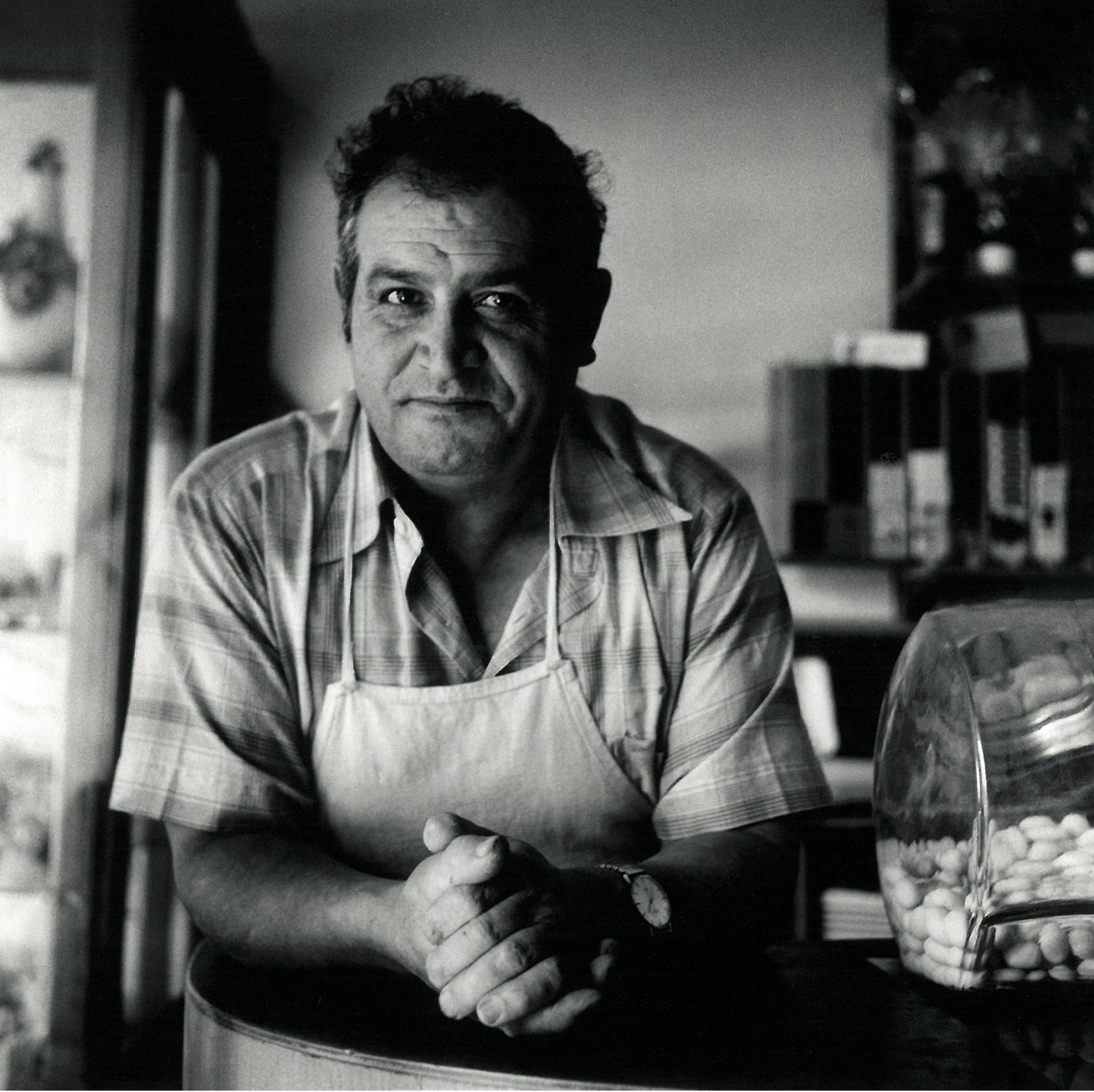
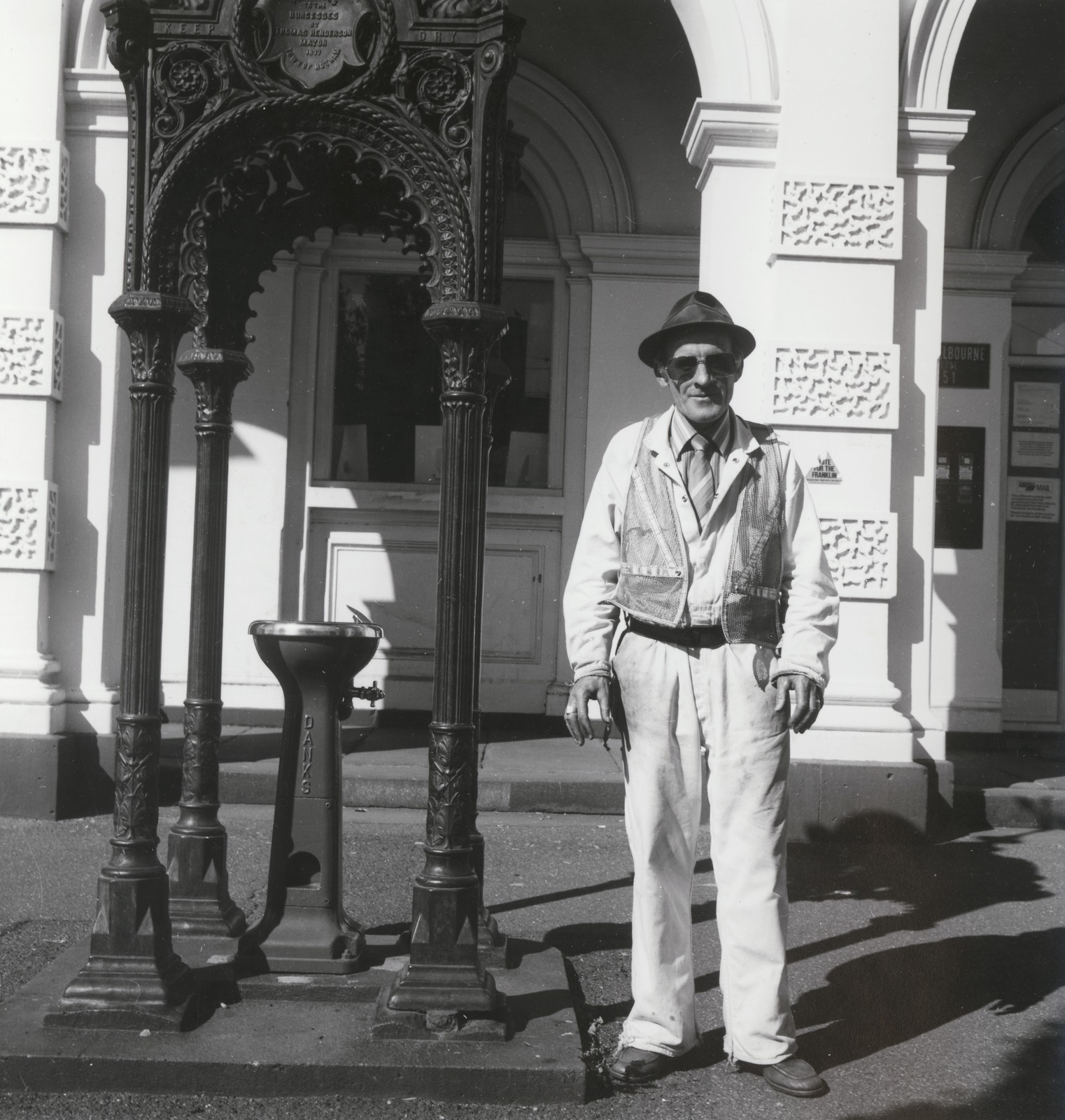
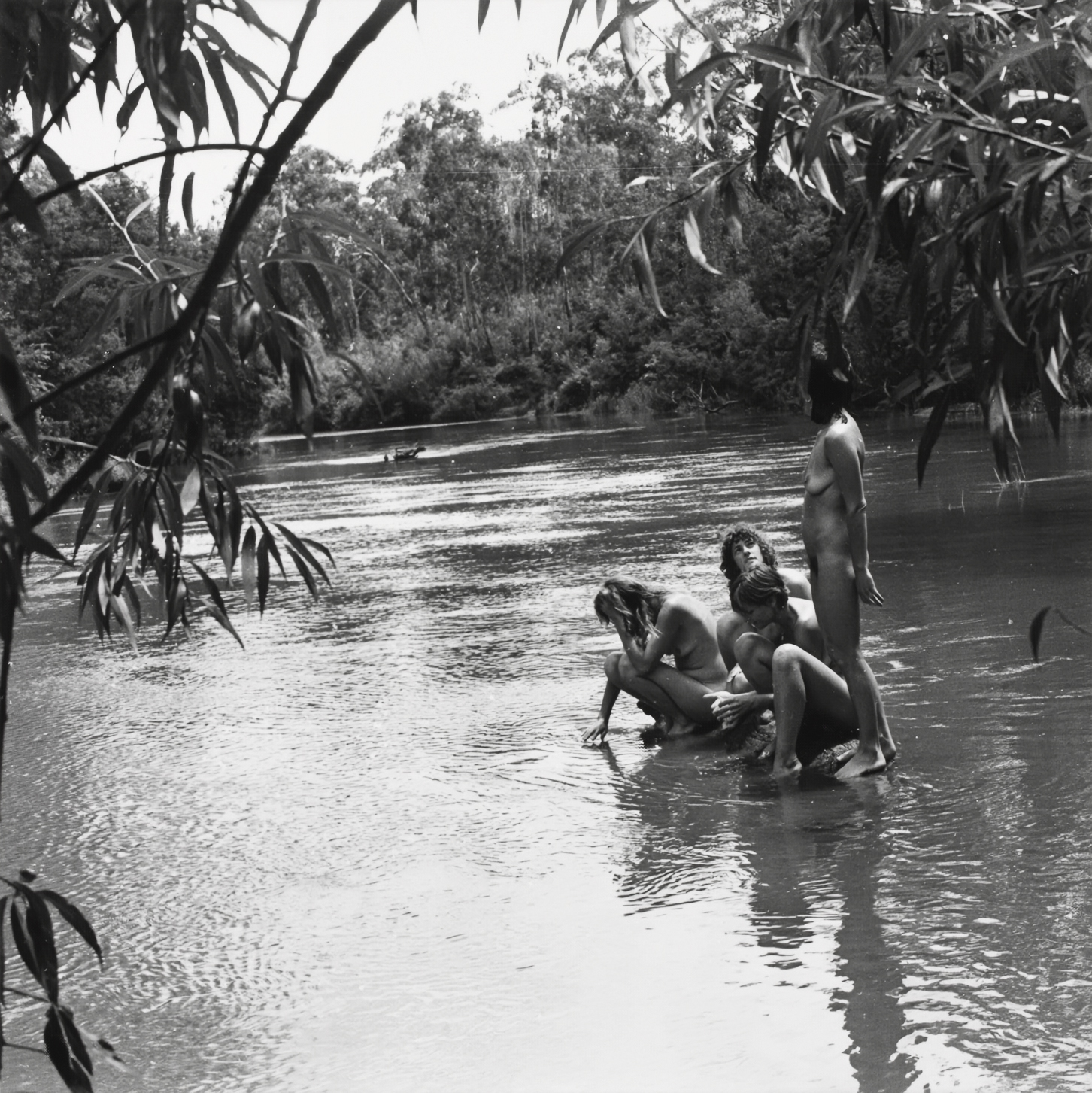
Such trust is visible in the keen eyes of Vito Barone in his cake shop: in the smile of the barber Jack Rozen’s client (below, where we can see the tripod in the mirror); the boss of Don Camillo café, imposing in front his Gaggia. Brian & Jessie Barker outside 58 Hawke St. where they always lived; Jean collecting bottles. Billy Flowers with his dog at 44 Hawke street — some were photographed again and again across years. Jennie Boddington, writing in the NGV catalogue for Gibb’s 1980 exhibition One Year’s Work, observed that her photographs were “entirely free of clinical investigation”: it was obvious, she wrote, that Gibb worked only with people for whom she felt “a strong sympathy and warm interest.”
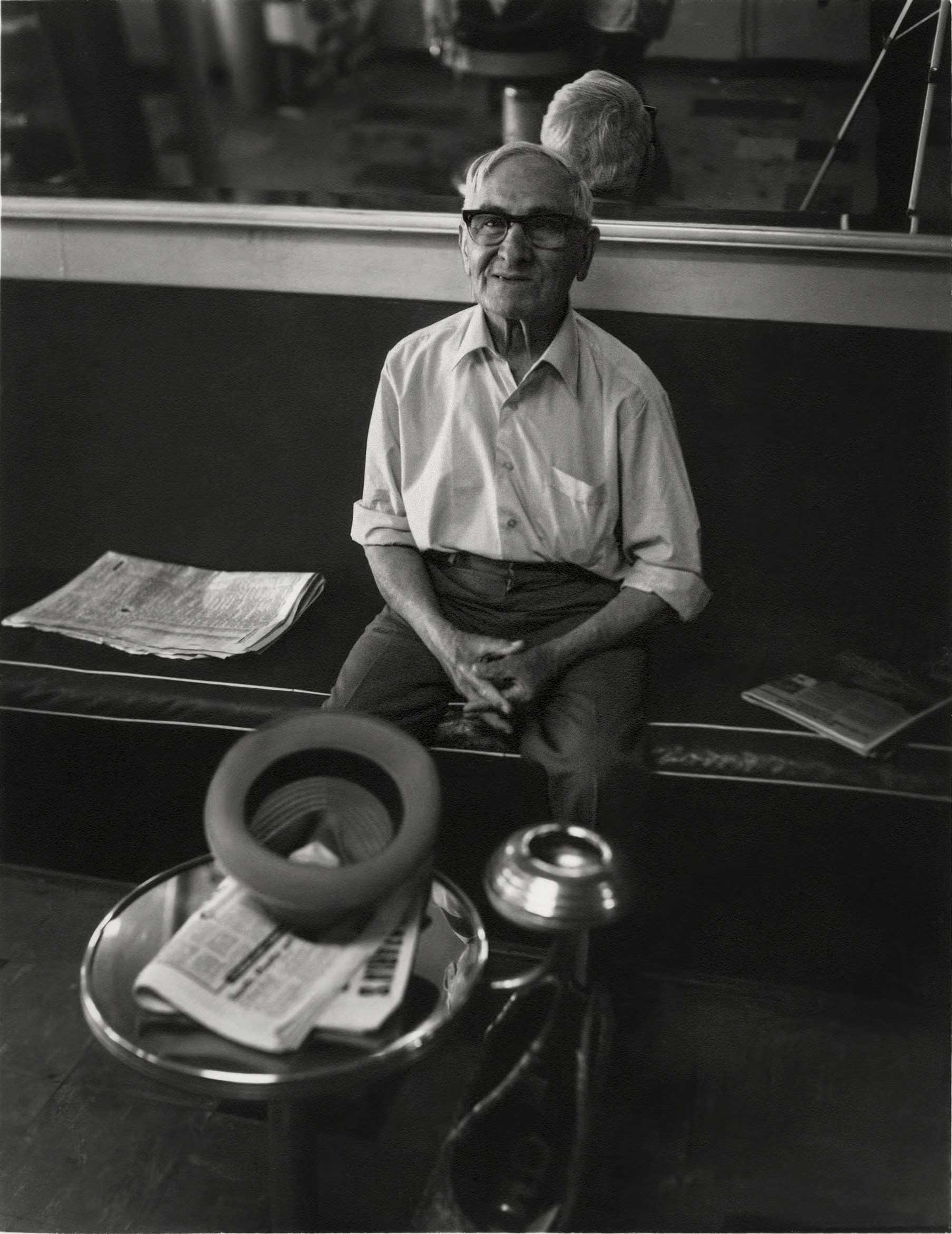
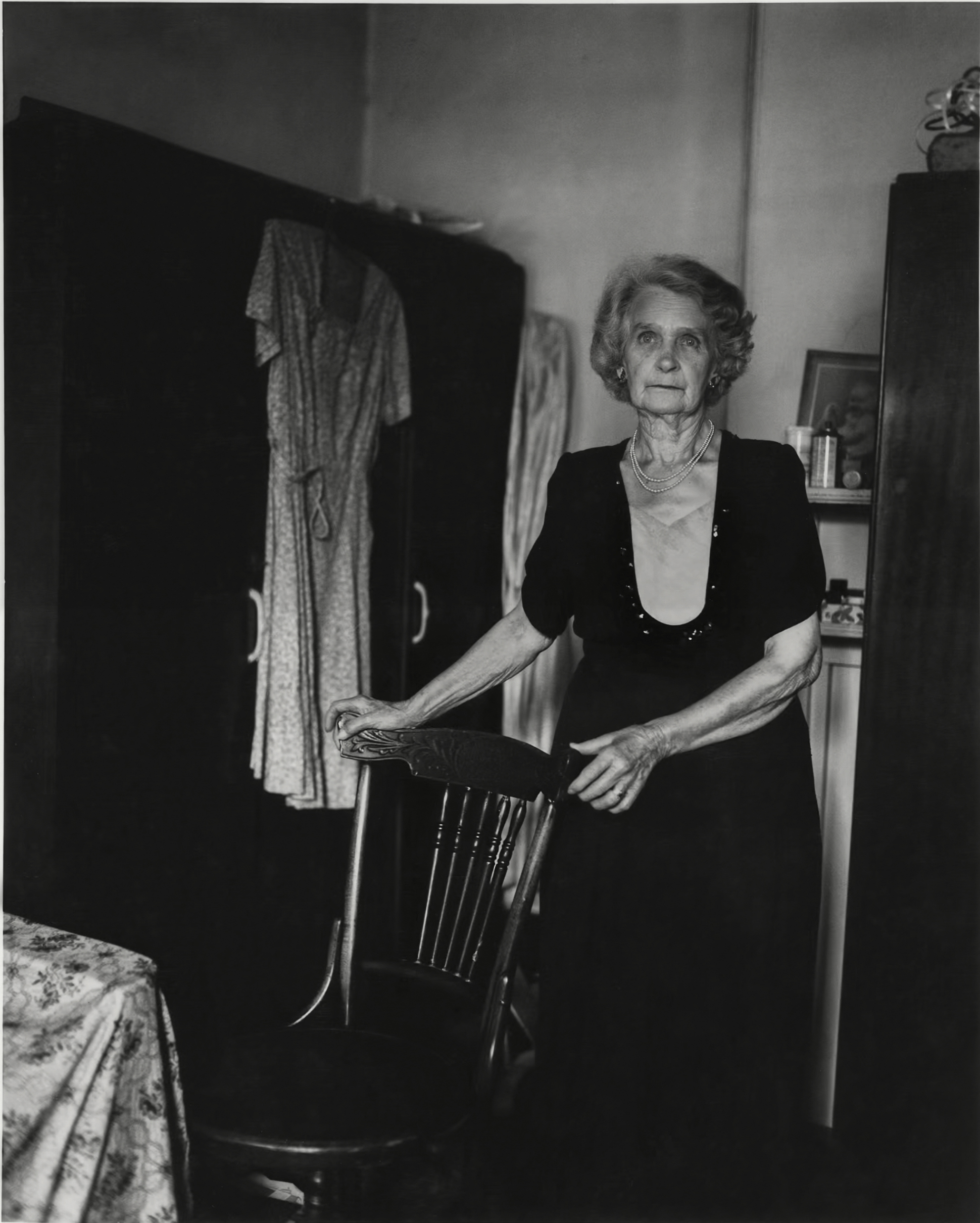
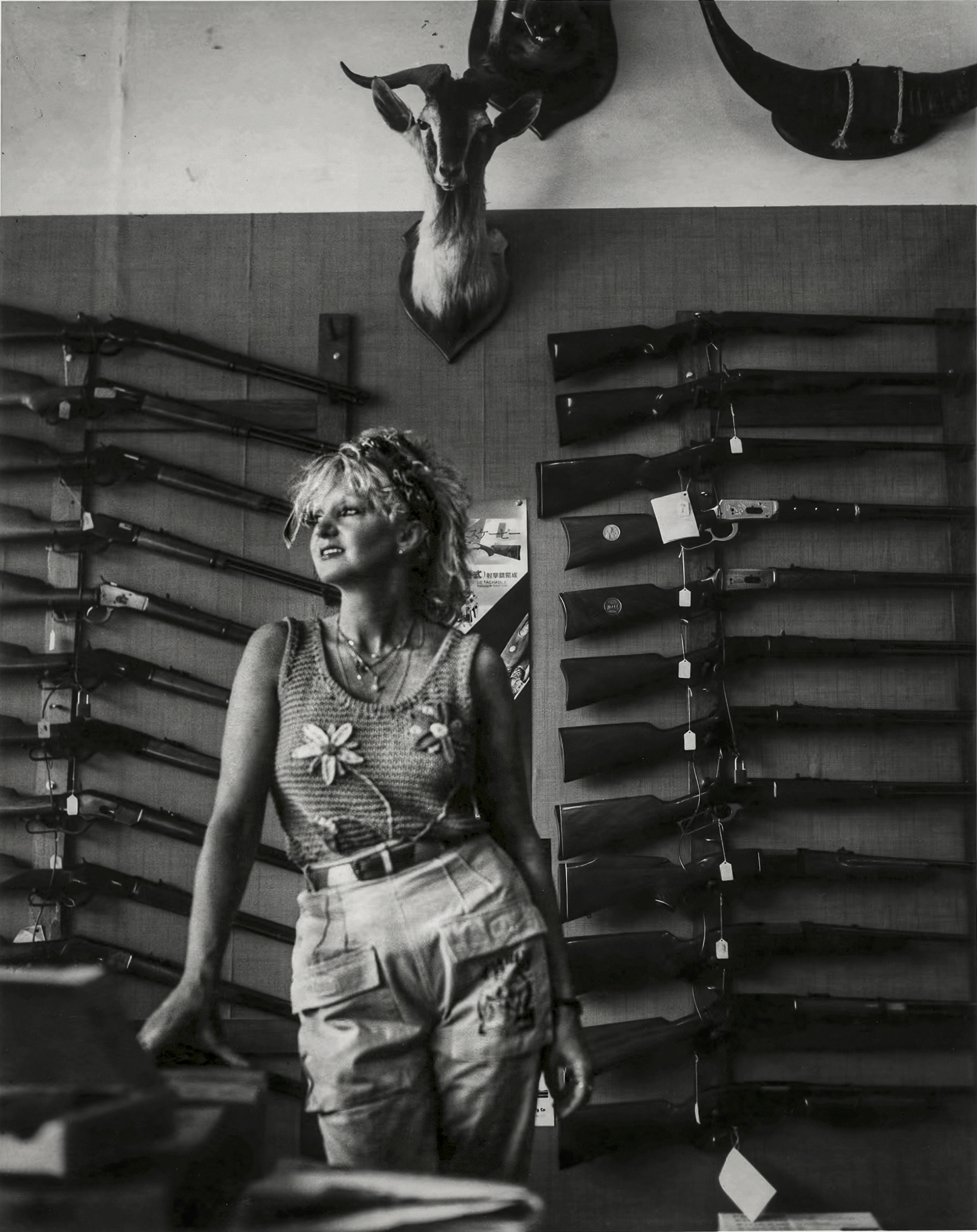
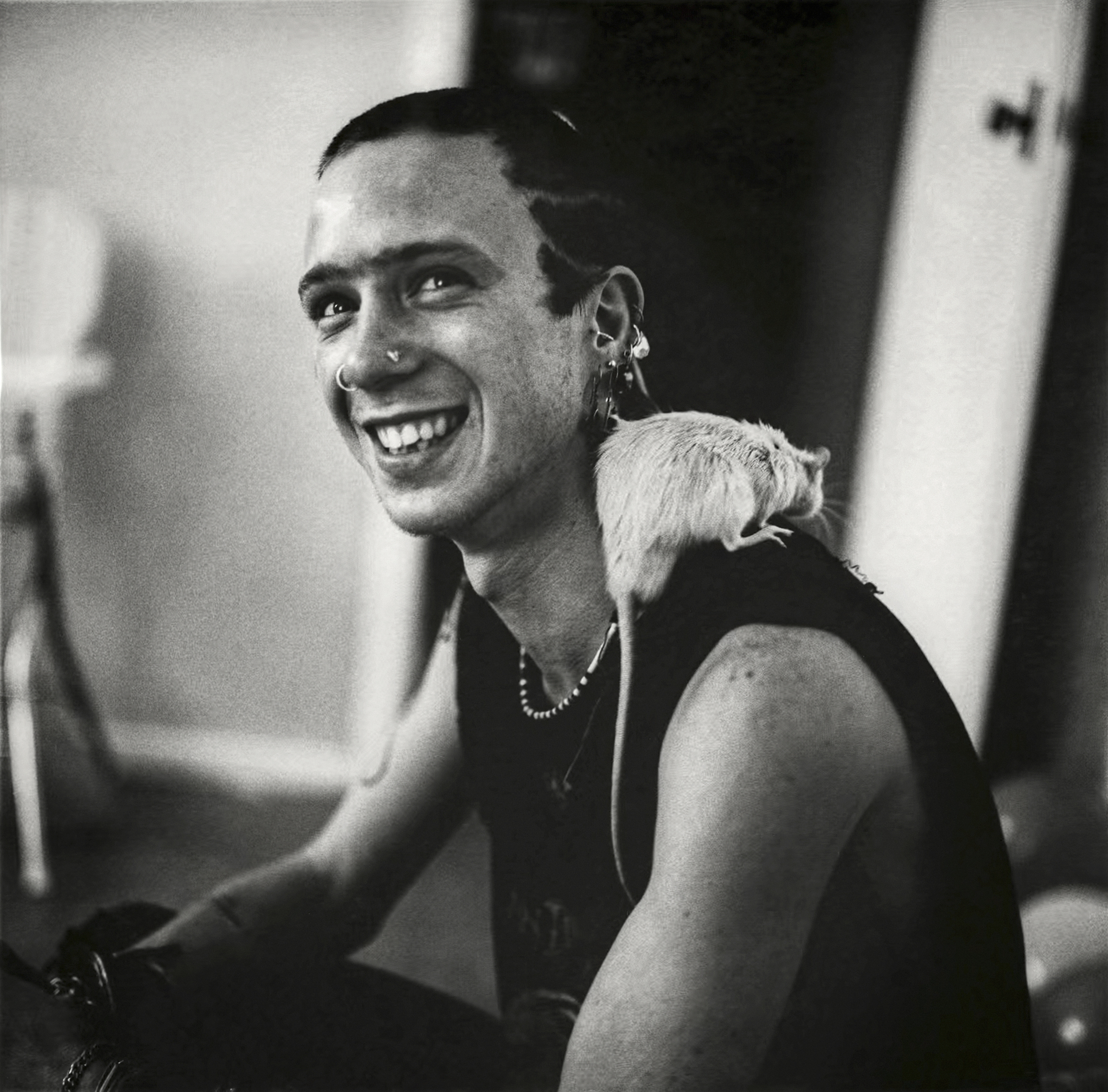
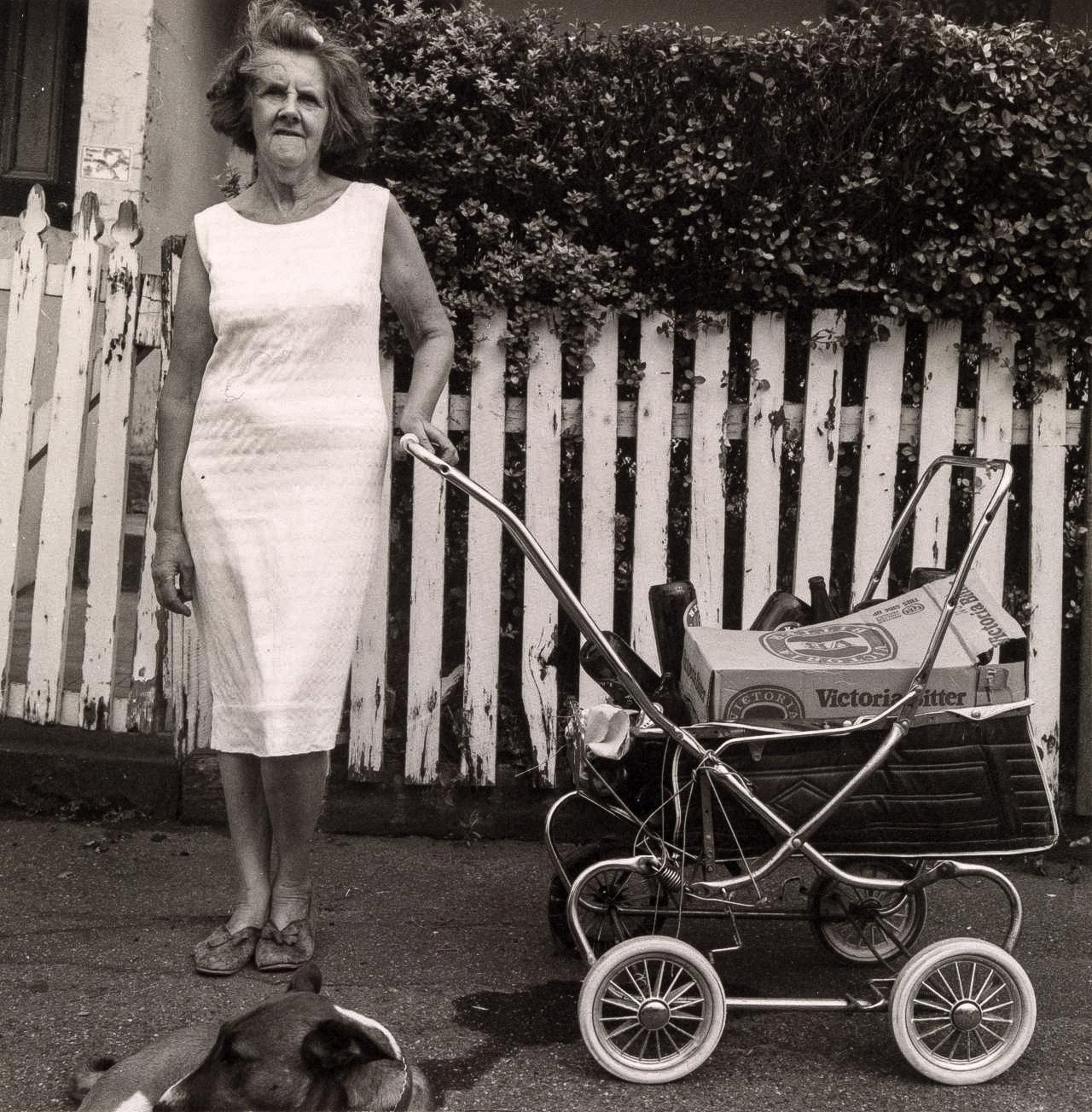
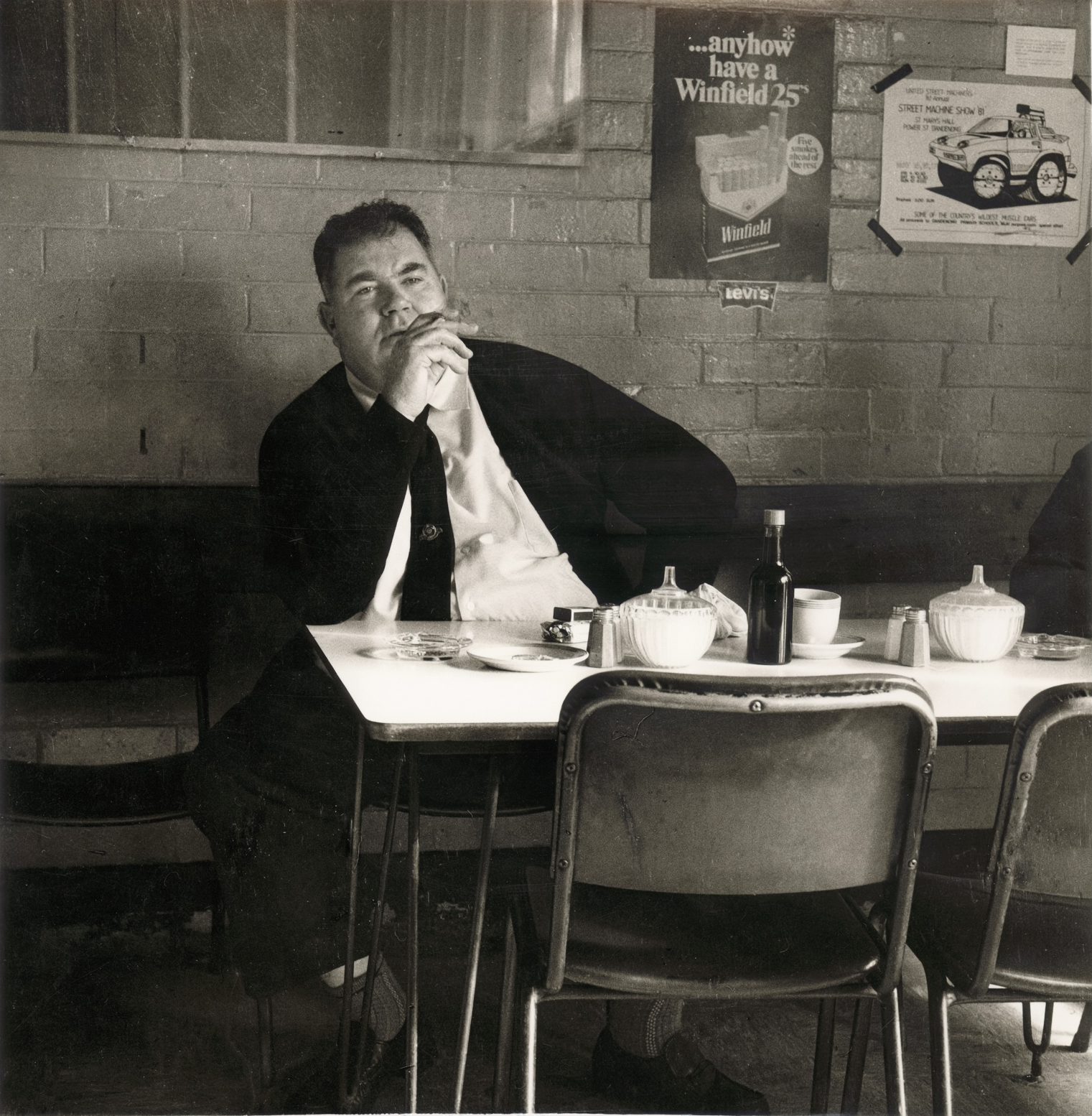
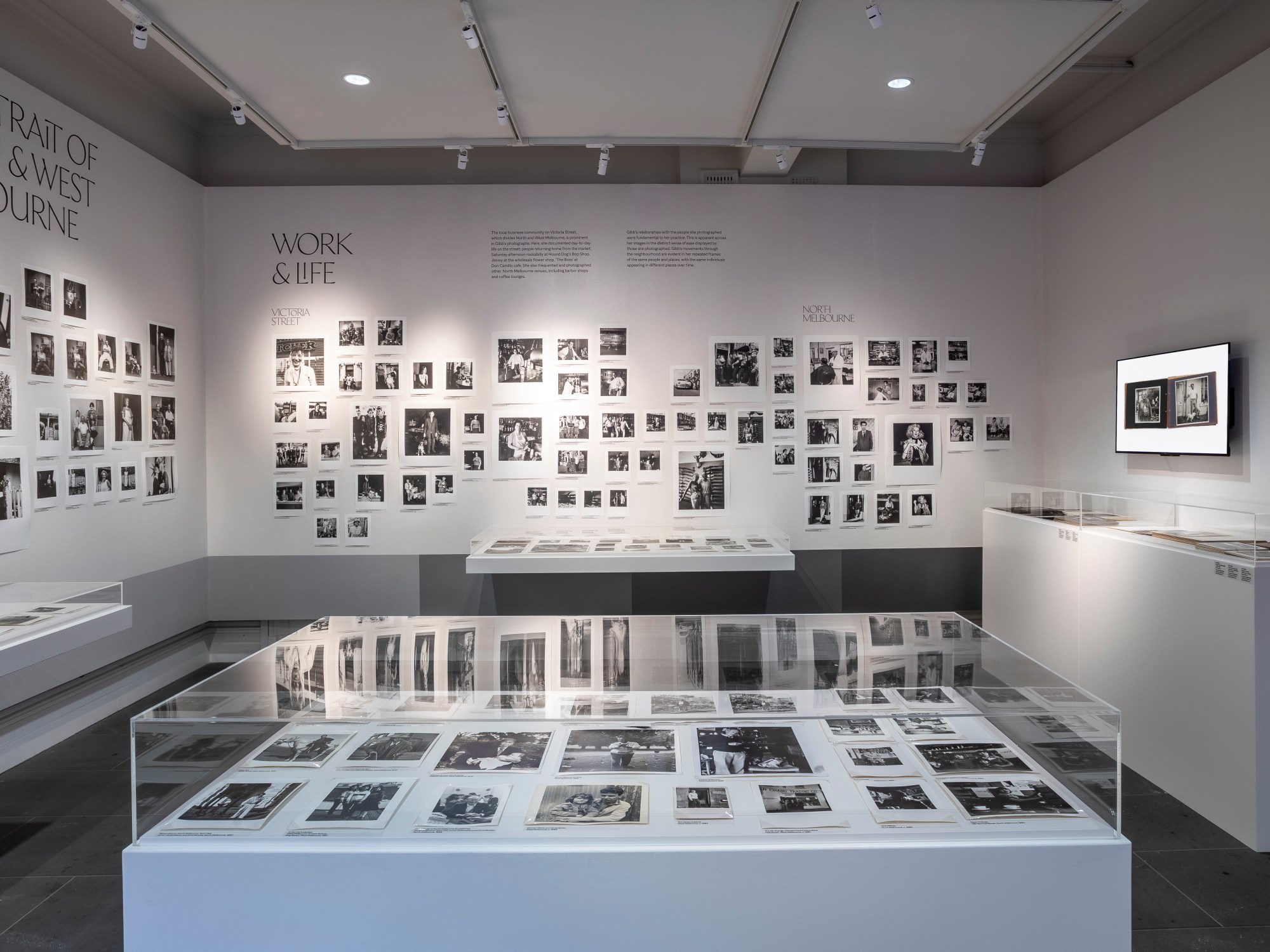
This was deliberate. Gibb was explicit about it:
“I don’t really deal with people I don’t know… I only ask them for a photograph if I am interested in that person, if there is something in the whole story about them.”
This is almost the opposite of the stereotypical documentary photographer’s stance — the detached observer, camera as instrument of neutral record. For Gibb, photography was a relationship.
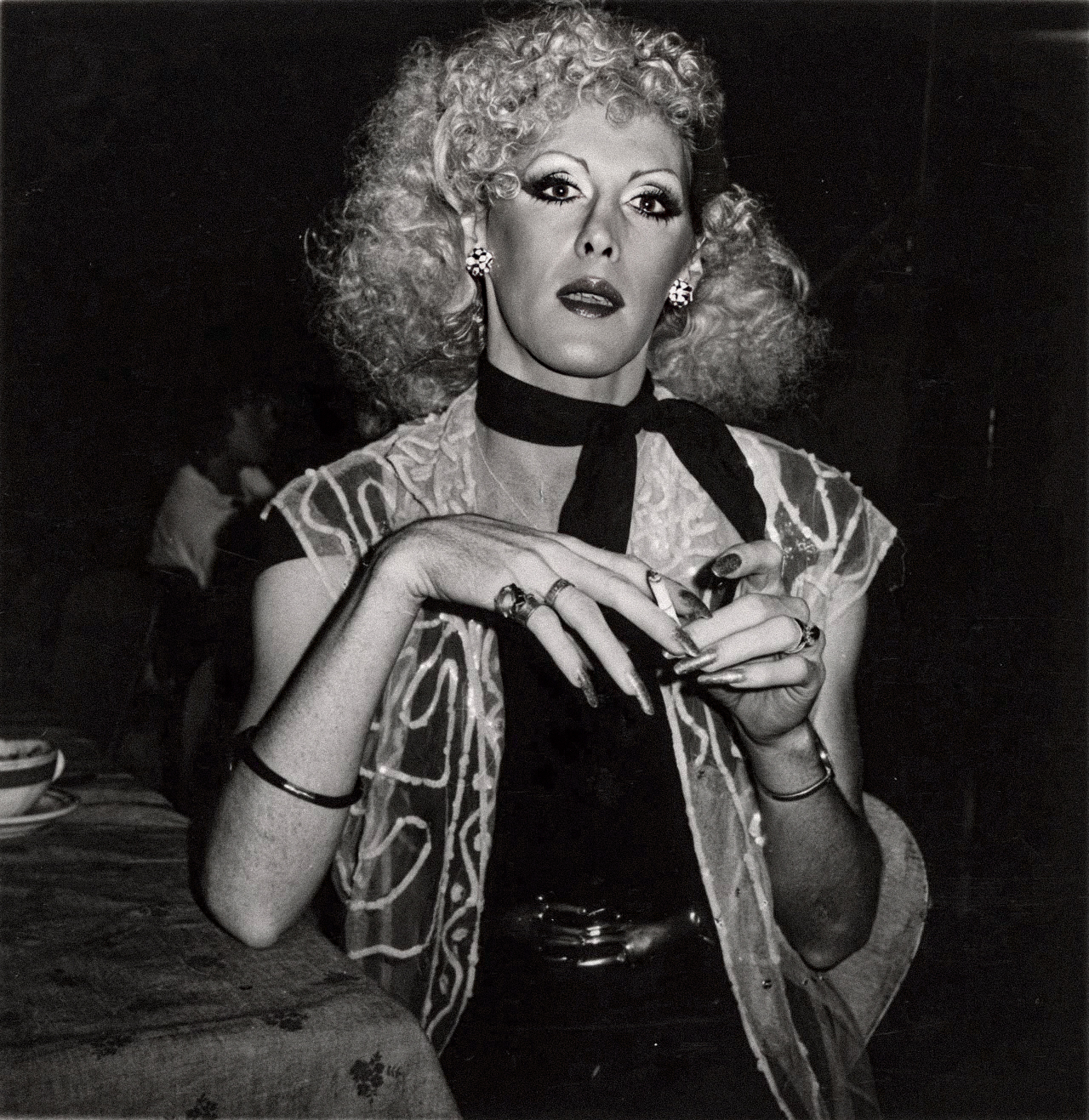
Of course, important to the City of Melbourne in staging this long-running show is the historical value of photographs of major working class and industrial suburbs for which there were few records in their collection. Gibb’s 1979 photograph of drag queen Maxine Du Barry at Trish’s Coffee Lounge — a queer venue at 126 Peel Street, North Melbourne — is one of the few surviving documentary records of a place that left almost no official trace; what survives is largely patron memory and photographs uploaded to the Facebook page Lost Gay Melbourne. Trish’s operated without a liquor licence, serving coffee rather than alcohol from 9pm until late , it was a cabaret venue–cum–disco. Its proprietor, the drag queen Trish (Jon) Barrie, was loud and domineering, the venue tiny and informally decorated, and, as one regular recalled, “in need of a bit of a paint job.” Another regular, Michael Baxter, remembers it as the last stop on a long night out — arriving around 3 or 4am after the other clubs had closed, pulling up a chair at the long table by the door where the queens sat drinking coffee, all on one side, he said, “like Christ and the apostles.”
In front of Viva Gibb with her camera armed with a flash unit she soon abandoned, Maxine Du Barry was on a cigarette break between performances — in blonde wig, novelty belt clasp and see-thru sequinned vest — when she turned and looked directly into the lens. Gibb’s flash-on-camera aesthetic renders the moment with the cut-out clarity of an Arbus—with no softening atmosphere, just Maxine’s direct gaze returned without flinching, but also against contextual incidentals; a grubby butt-filled coffee cup on a coarse hemp flower-print tablecloth visible under Maxine’s elbow, and beyond her, patrons sitting in a booth waiting for the next act. These convey the texture of the place.
That incidental background detail now carries a weight it could not have been intended to bear. Trish’s closed without institutional record. Gibb had no particular archival mission that night — she was simply doing what she always did, documenting the community around her. But her image of Maxine records a venue of which queer Melburnians have only memory.
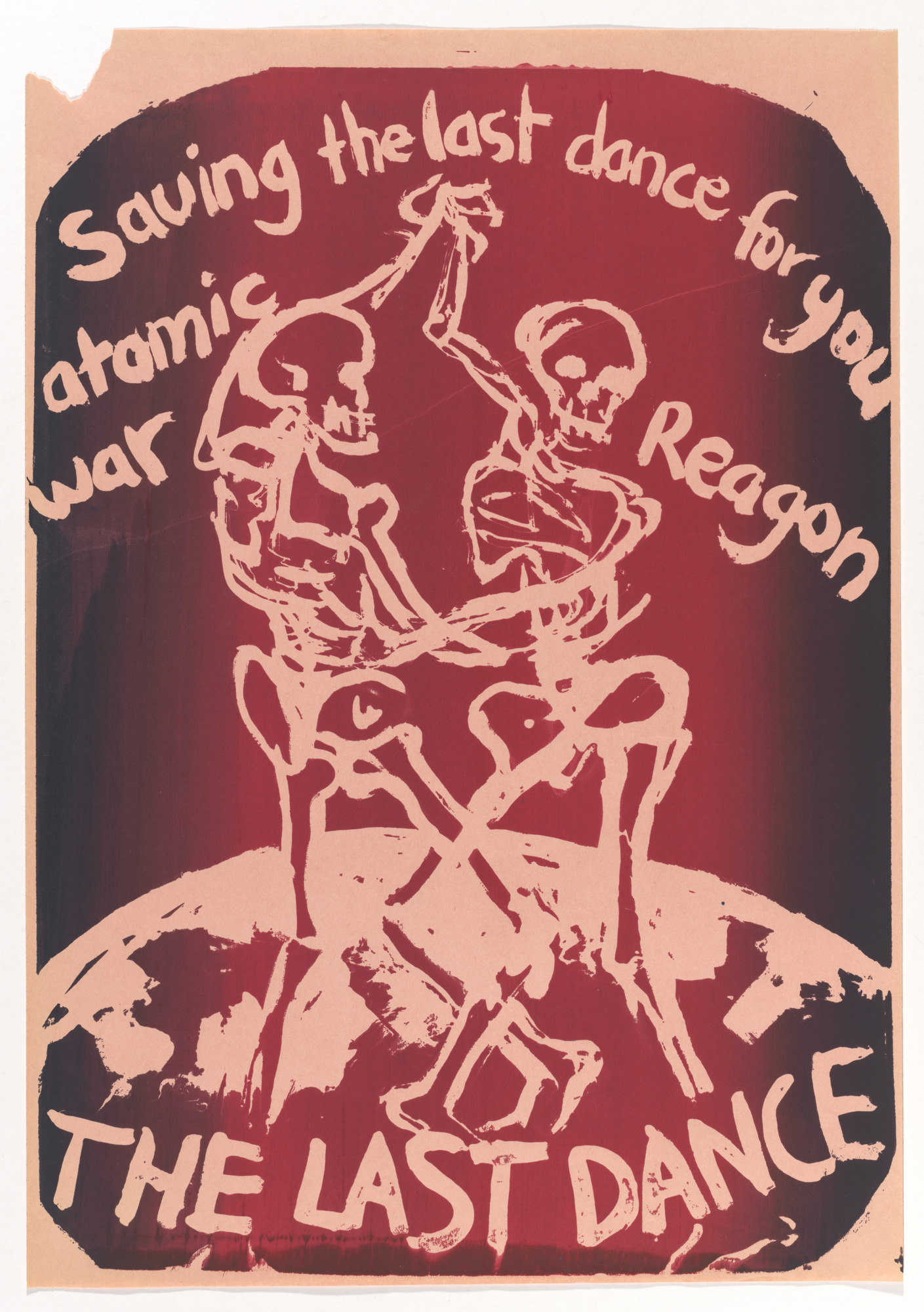
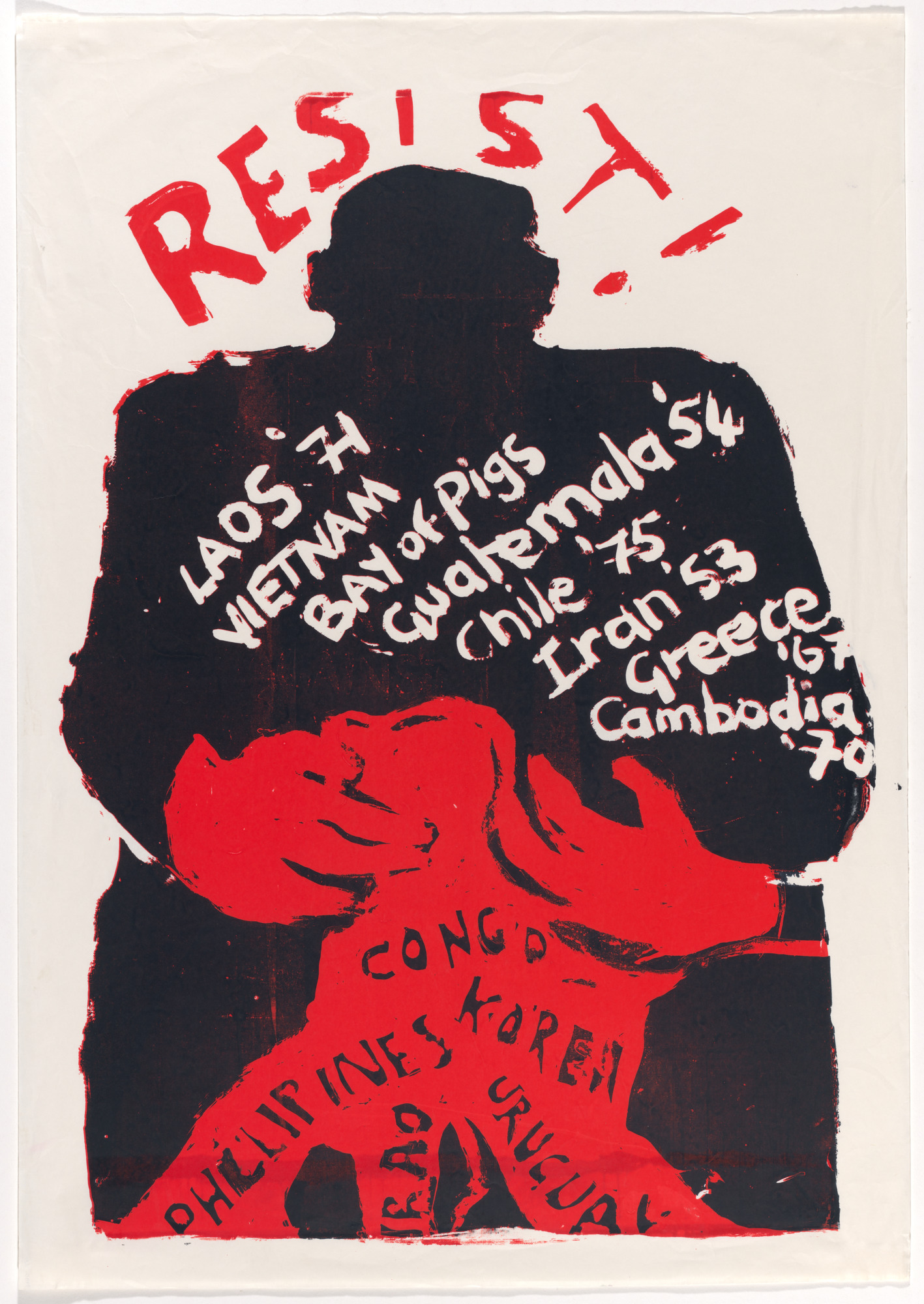
Beside her photography and, in spirit, seemingly contrasting with it in, was Gibb’s practice as a political poster maker; fast, furious, and anonymous. Gibb designed them in direct response to news reports, often completing a poster within two days of reading a story. She printed them herself usually in two colours “on water-based filler which gave a positive image which I could do very quickly, then print them by myself in a little studio” which she pasted on the streets at night, alone. The expressive rawness of the printing expressed their exigency.
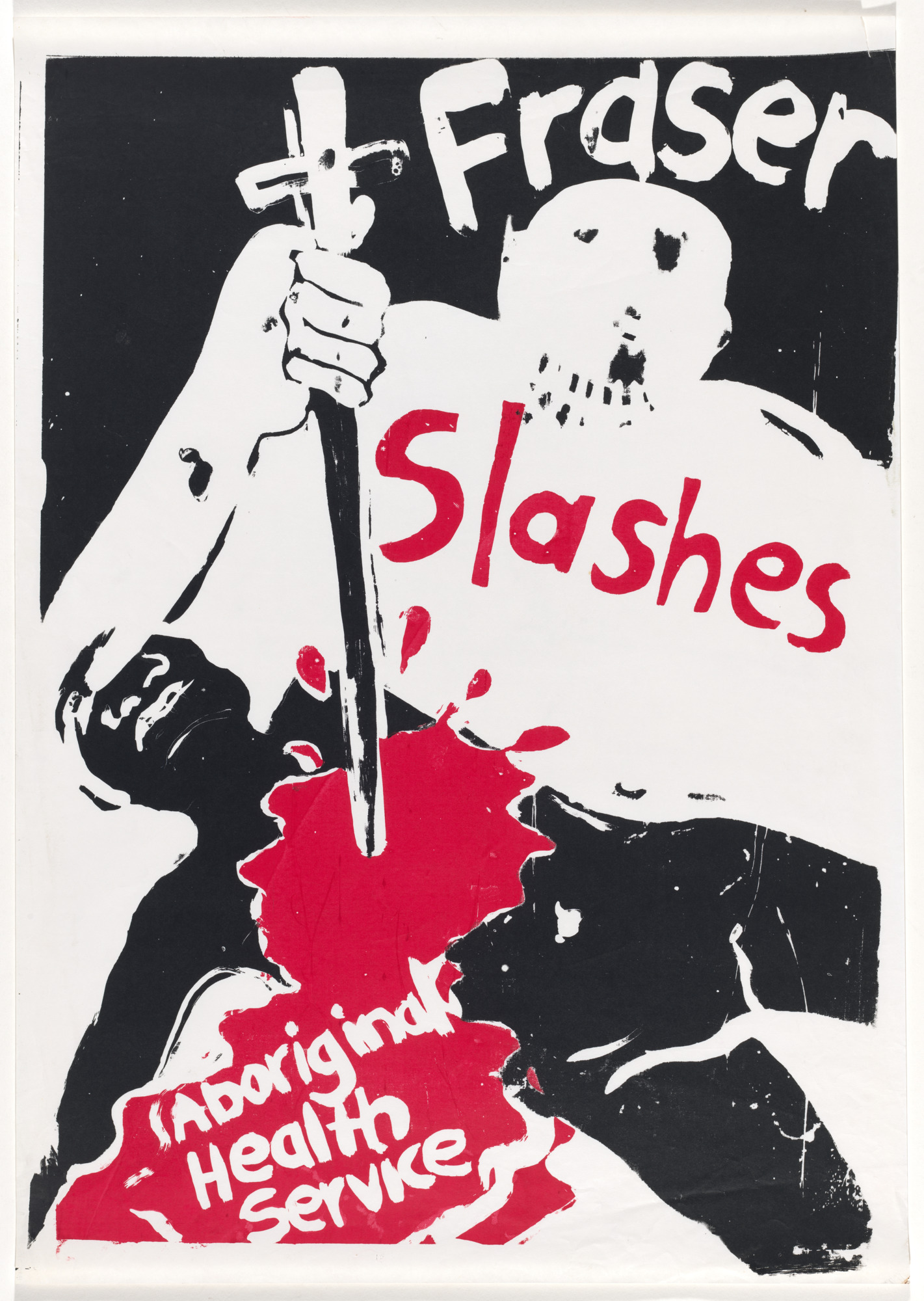
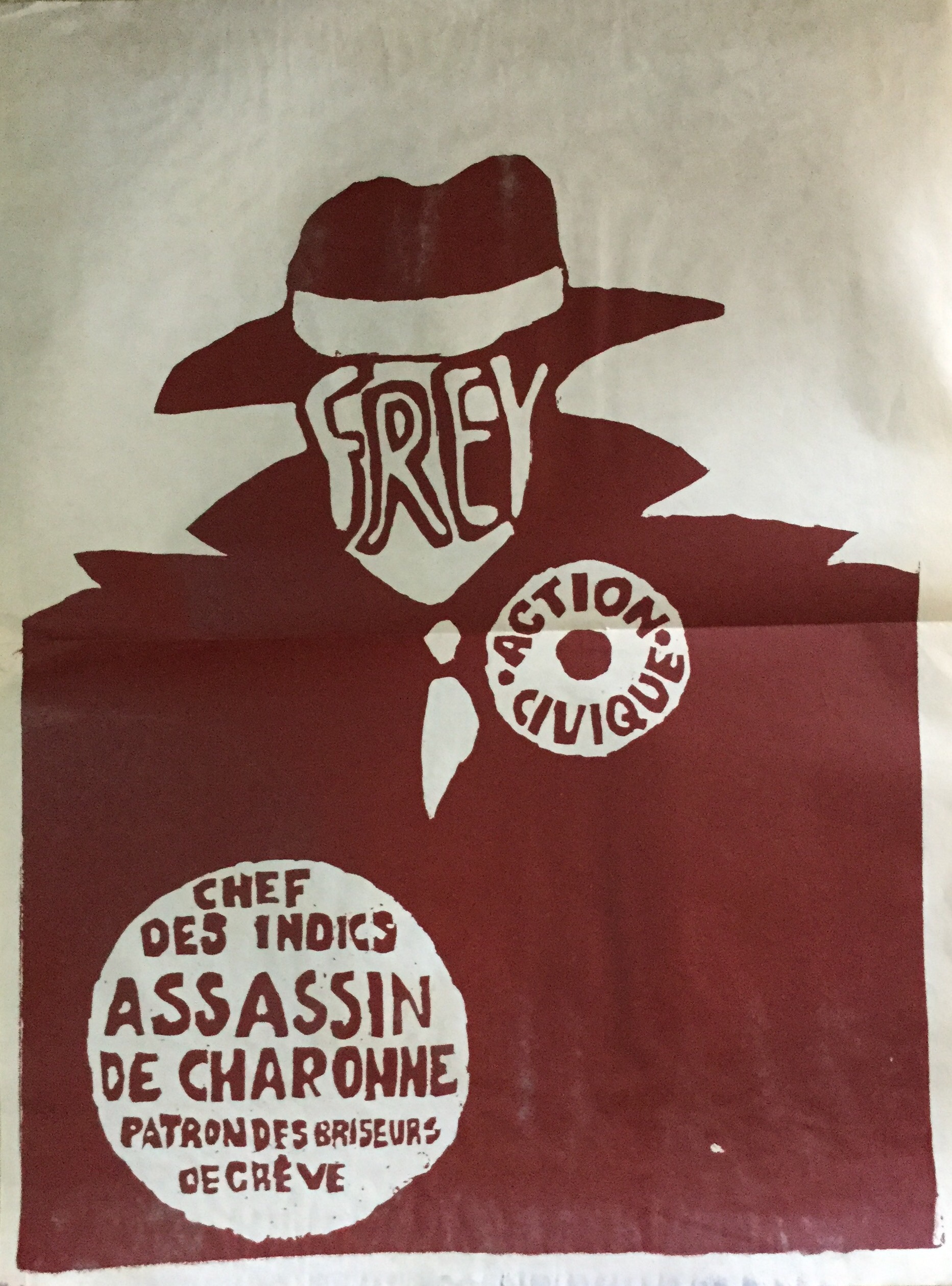
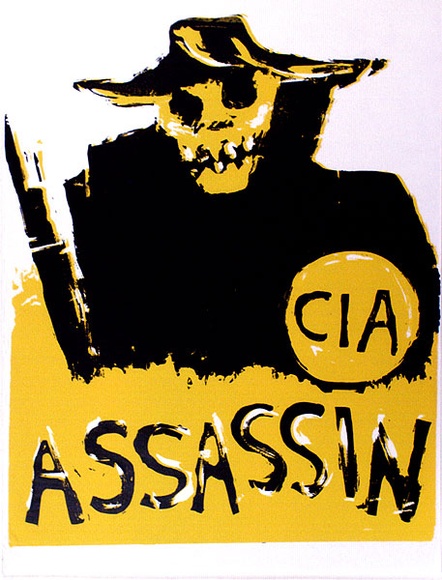
Her primary influence was the collective of students who produced the iconic protest posters at the École des Beaux-Arts in Paris during the May 1968 uprising, particularly their poster referring to Roger Frey – a Gaullist politician reviled for his role in the violent crackdown on student protests against the Algerian War in Paris; the most notorious being the massacre of Algerians in Paris on 17 October 1961 and the 1962 Charonne Metro killings.
Gibb had been looking for a way to fuse image and text politically when she encountered these works, and the effect was immediate.
Her 1974 poster C.I.A. Assassin is a direct visual quotation of the Atelier’s Frey (1968) — a massive, shadow-filling figure of male dominance, a skull-face of death conveying, as she put it, “the shadowy world of the CIA and its insidious movements in third world countries.”
The issues ranged widely: anti-nuclear and anti-uranium mining, animal rights, the Palestinian cause, the plight of pensioners in the public health system, Aboriginal rights, anti-apartheid. What united them was her own fury — a fury that was, she noted, always grounded in “compassion towards people and seeing the plight of ordinary people in a fast modern world.”
Though apparently crude in execution, these are finely honed, efficient in making text integral to and as expressive as the iconographic imagery with an eloquent economy of means. To paraphrase McLuhan in relation to this fitness; “the medium becomes the message.”
Gibb shared facilities at Redletter Press, Melbourne’s alternative print collective which operated 1979–1991, working sometimes with printer Wendy Black, who was one of her connections to a broader feminist art network. Never solitary Gibb thrived in the communities and collectives reshaping what Australian art could be about.
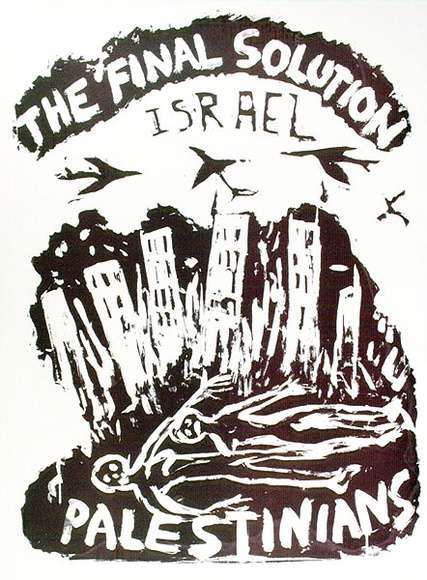
On the streets at night, pasting up counter-propaganda; by day, visiting the neighbour at number 62 to make a portrait. The same person, using two media, was motivated by her conviction that ordinary lives mattered and that power needed to be challenged.
In the Canberra Times (10 July 1984) critic Sasha Grishin noted the response to one of Gibb’s posters shown in a 1984 group exhibition of politically-motivated posters seen by more than 5,000 visitors across two venues in Canberra:
The ability to offend through art is always one criterion through which to measure its social relevance. Already, Truth Rules … OK? has run into some difficulties with the bold poster by Jillian Gibb entitled Israel’s final solution ordered to be taken down by the Woden Shopping Square authorities. In an exhibition of more than 100 items, all of which set out to challenge the so-called status quo, it is not difficult to predict opposition from some of the defenders of this status quo.
Printmaking and photography exchanged their influences in Gibb’s work and its evolution. Text is a significant element in a few of the portraits, where it appears in the background, but is made more significant in the titles of series in which she quotes words spoken by her subjects: Not many of us left now in the case of Billy Flowers holding his dog outside 44 Hawke street West Melbourne; or the comment on old age; It is the price of life by ‘Elsie’ of 55 Stanley Street, West Melbourne. The passionate declamations and rhetoric embedded in Viva’s poster imagery appear also with the photographs but with the added narrative emphasis that a sequence infers even whether the pictures are taken days or moments apart.
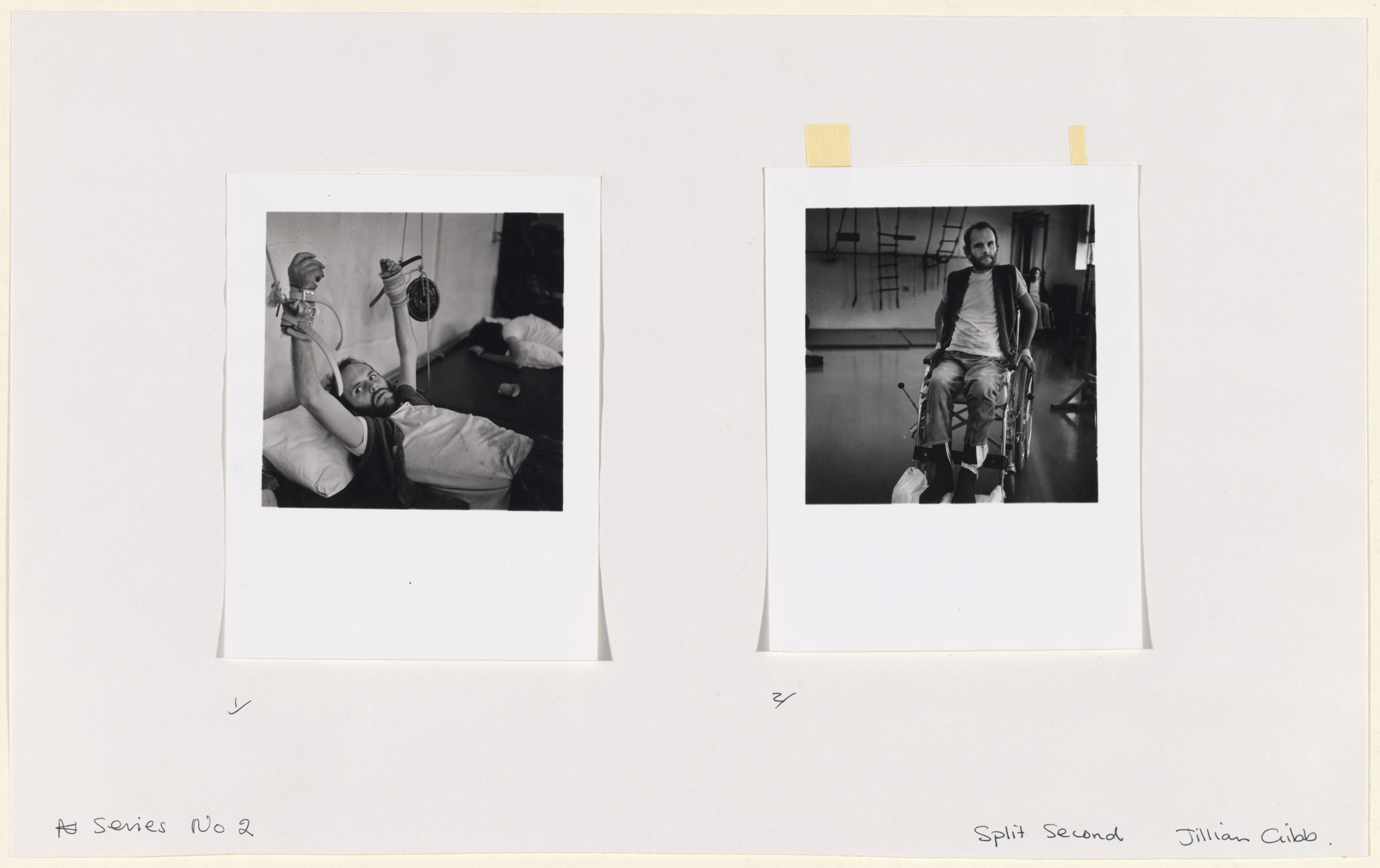
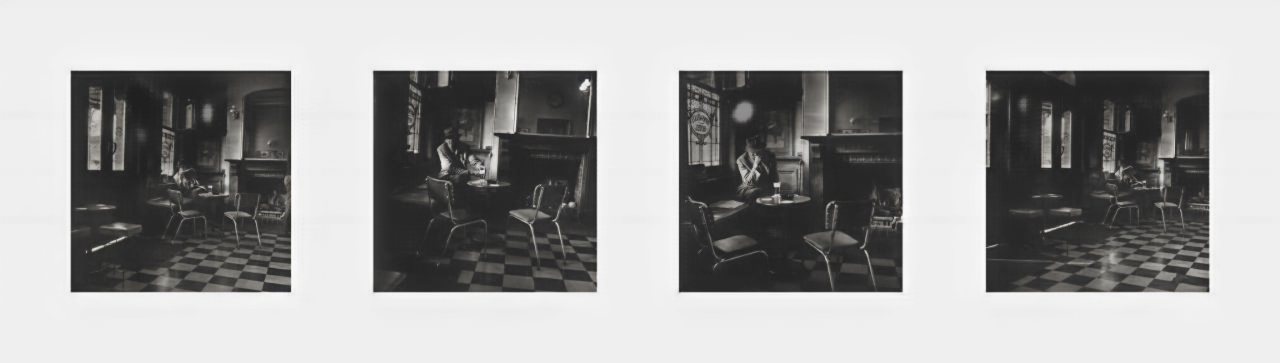
Time stands heavy in Gibb’s series of closely related photographs, and to compare them with Duane Michals’ serial print fantasies of this period like his Death Comes to the Old Lady, confirms her vehemently documentary and compassionate purpose. Her printmaking and photography thus interconnect in one career-length body of work. 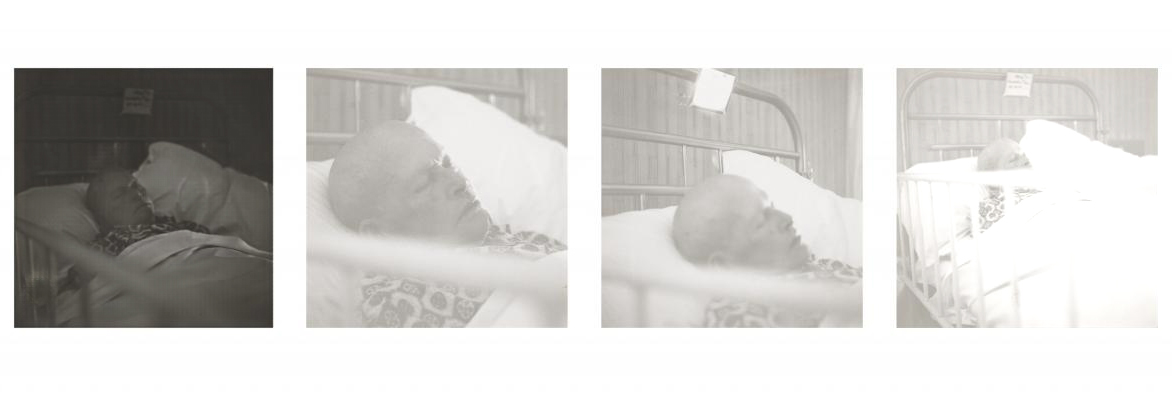 Viva Gibb (1982–83) But each person dies in their own way, gelatin silver photographs, each 17.4 × 74.0 cm. National Gallery of Victoria, Gift of Mrs Barbara Barnes, 1983
As a social-documentary photographer Gibb was, alongside her printmaking network, also part of that foundational generation of Melbourne women, mostly based in the inner north — Sue Ford, Ponch Hawkes, Micky Allan, Ruth Maddison, Virginia Coventry, Sandy Edwards, Janina Green, Virginia Fraser, Helen Grace — who knew and supported each other, and sharing a feminist conviction that everyday domestic and community life was legitimate — indeed essential — subject matter for fine art photography.
Sue Ford’s Time Series, the first solo exhibition by an Australian photographer at the NGV, in 1974, was a landmark. Its impact was recalled by Ponch Hawkes: Ford’s show “struck me like lightning — she had made the ordinary and the commonplace worthy of a place in the NGV.” Ford and Gibb had completed postgraduate studies at the VCA in that same year.
The connection with Helen Garner adds another dimension. For a period in the mid-1970s, Garner and her daughter Alice lived at 64 Capel Street with Gibb and her children. Garner was writing Monkey Grip (1977) at the kitchen table; Gibb was in her darkroom. Their practices may be seen in retrospect to be closely parallel: both were committed to the local, the ordinary, the overlooked; both building an “intimacy with place” — to quote critics Emily Potter and Kirsten Seale — through daily movement through the same streets. A pair of photographs from December 1975 shows the three children — Sybil, Rupert, and Alice Garner — chalking “VOTE LABOR” on the door of Gibb’s studio, a moment so emblematic of the household.
Both Gibb and Garner were, in curator Savannah Smith’s phrase, part of “the first generation of Australian artists to shake off the cultural cringe.” Jennie Boddington praised Gibb’s work in 1980 for its “strong and confident sense of identity” that was “not borrowed from foreign sources but formed from the artist’s own conviction and sense of things.”
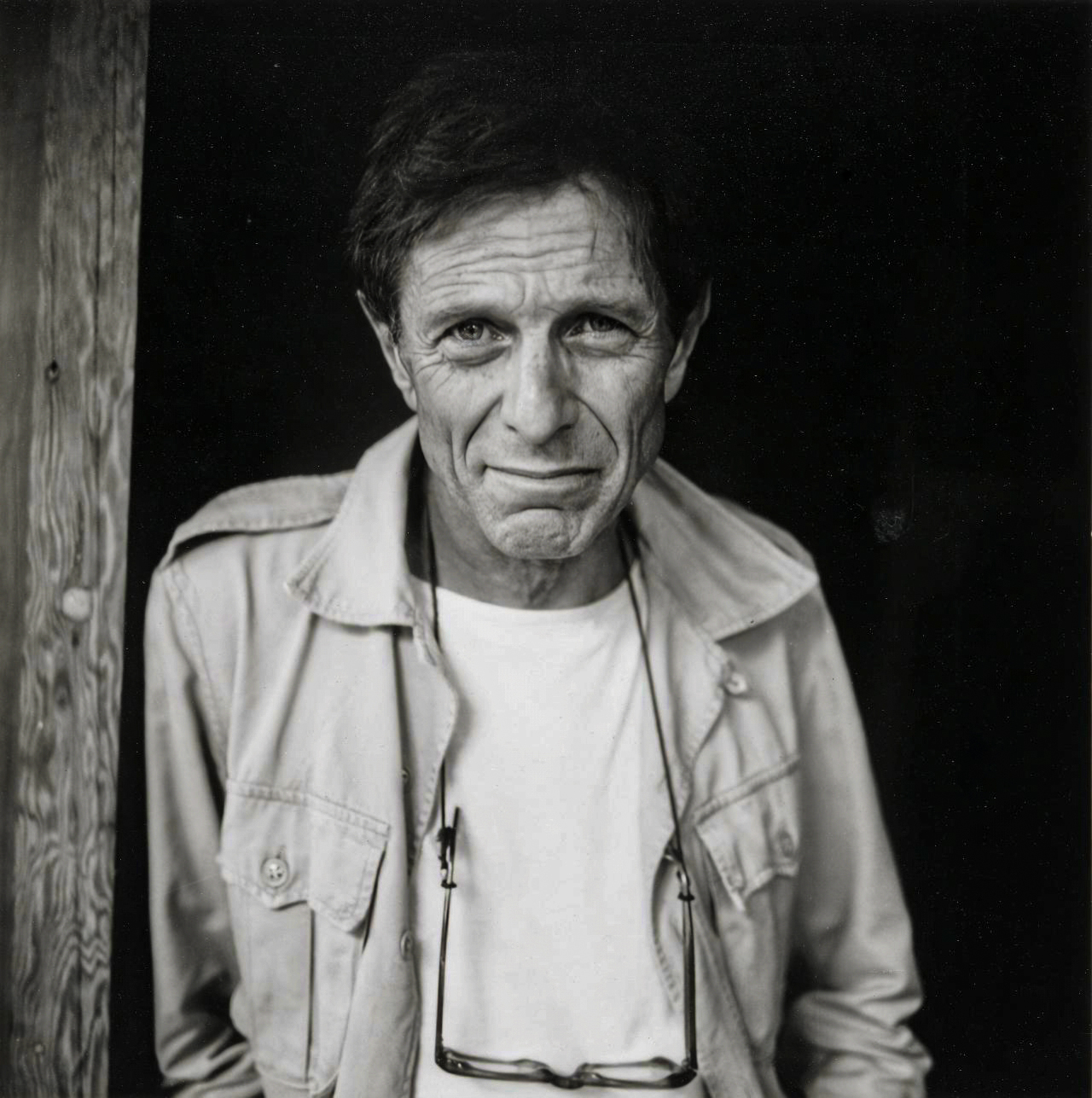
Later, Gibb’s social engagement extended internationally. In the late 1980s she travelled to South Africa to document lives under apartheid, and there photographed David Goldblatt who had shown his own, early imagery on the subject, at the NGV in 1975. She photographed markets and sacred sites in Hong Kong and China for a series titled Of Gods and Animals. Back in Australia, noting the absence of photographic training for Aboriginal women, she approached the Victorian Women’s Trust for funding to create cadetships — the first recipients were Maree Clarke and Kim Kruger, both of whom went on to significant careers. First Nations artist-photographer Destiny Deacon recalled how when “in 1990, some friends had been doing a photography workshop with the late Viva Gibb” she too was motivated to use the power of photography for postmodern purpose, making icons of objects in the domestic environment.
Gibb’s photographic practice declined after 2000. As her son Rupert has explained, “she didn’t take at all to digital,” as the darkroom had been integral to how she worked — she printed her own silver gelatin prints, experimented with different papers, spent hours retouching. The enforced economy of film, the preciousness of each exposure, was not a constraint she chafed against but a creative condition she depended on. When maintaining a darkroom became financially unviable and the medium shifted decisively toward digital, she stopped.
She kept photographing friends and family informally, and she returned to painting. But the major photographic work — the sustained, technically accomplished, socially committed documentary practice — was over. Her reputation, which had been considerable in the late 1970s and throughout the 1980s, faded almost entirely. Photographs held in major public collections (the NGV, the National Gallery of Australia, the State Library of Victoria) sat in storage. Exhibitions that had once caused notice were forgotten.
When Gibb died in December 2017, curator Savannah Smith has noted, her reputation had “largely lain dormant for thirty years.” Her last exhibition had been at Mario’s café in Fitzroy — a small showing of the paintings she produced in the final months of her life after her doctor told her she did not have long to live. Her friend Ruth Maddison, who saw her there, recalls those last works as “beautiful, vibrant, tender paintings, all painted in that last year.”
The neglect is stark when set against the early career. Solo shows at the NGV and the National Gallery of Australia. Work in major public collections. Inclusion in nationally significant group exhibitions throughout the 1970s and ’80s.
The rehabilitation of Gibb’s reputation has come in two stages, each through a different institutional imperative. The first was the 2019 donation by her children, Sybil Gibb and Rupert Duffy, of a significant body of work to the Monash Gallery of Art (now the Museum of Australian Photography, or MAPh). This gift — silver gelatin prints from the West and North Melbourne years — led directly to A Place in Time: Photographs by Viva Gibb, which opened at MAPh in July 2019. It was, as the institution noted, the first public gallery showing of her work in more than thirty years. MAPh’s interest was in photography’s history: Gibb as a figure in Australian documentary practice, her technical mastery of the silver gelatin print, her place in the feminist photography network of the 1970s and ’80s.
The second act of institutional recognition came in 2025, when Sybil and Rupert donated over 200 silver gelatin prints to the Melbourne Art Trust — managed by the City of Melbourne’s Art and Heritage Collection. This donation, which came about through a stroke of chance (a separate donor mentioned Sybil Gibb to curator Savannah Smith, who then made contact), led to On the Street Where I Live: Viva Gibb’s Portrait of North and West Melbourne, which opened at City Gallery in Melbourne Town Hall on 12 March 2026 and runs until 7 August.
The City of Melbourne’s interest is civic and historical: Gibb’s photographs are a record of what West Melbourne was before gentrification arrived, before council auctioned off the properties it had accumulated, before the working-class and migrant community was priced out and dispersed. The exhibition is partly an act of municipal memory — an acknowledgement of what was lost when, in Gibb’s own words, “all those interesting faces which told a story” were gone.
These are not contradictory interests, but distinct, and reveal how photographic reputations may be restored: through the convergence of estate generosity, curatorial initiative, and institutional need. The photographs remain the same; what changed was who needed them, and why.
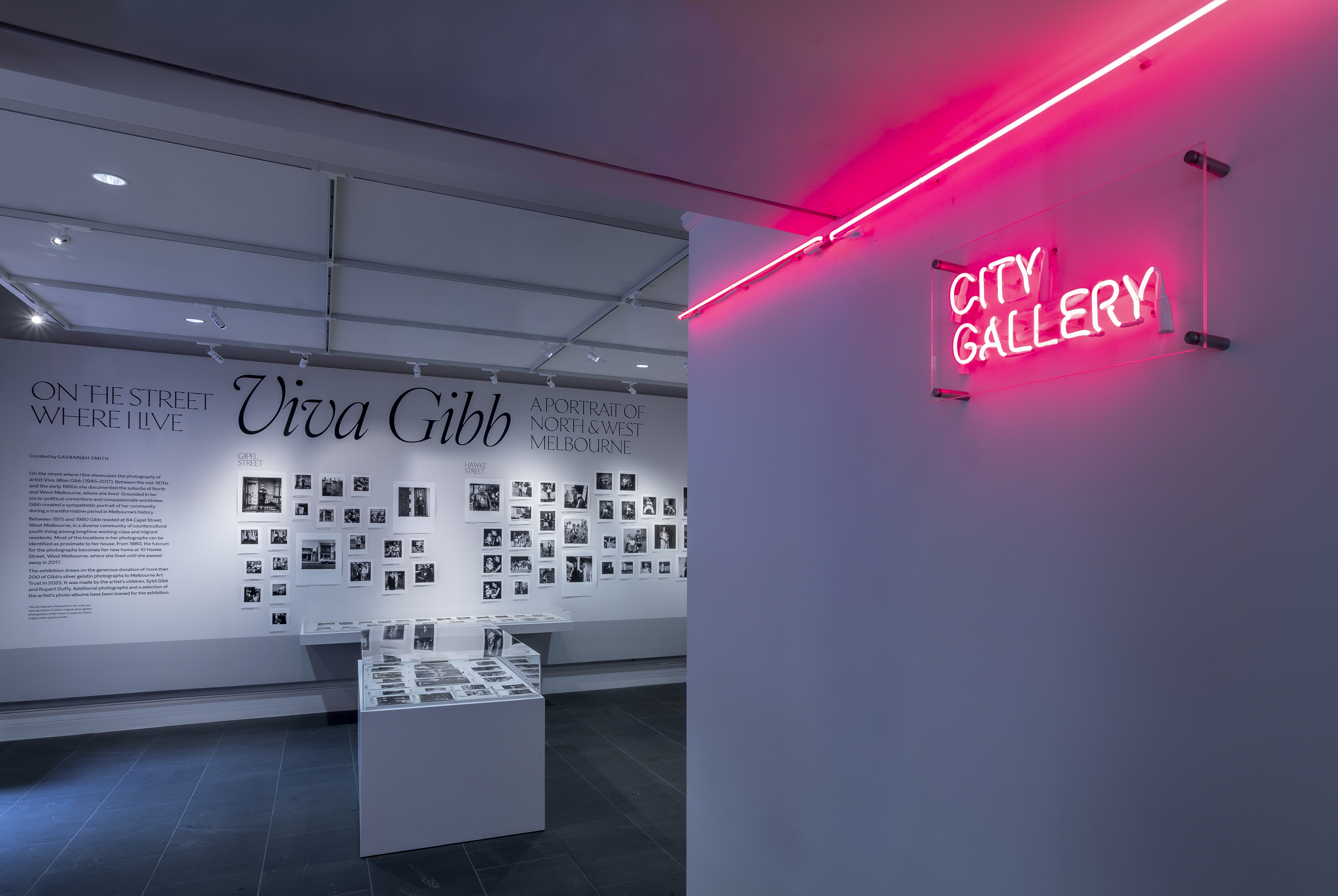
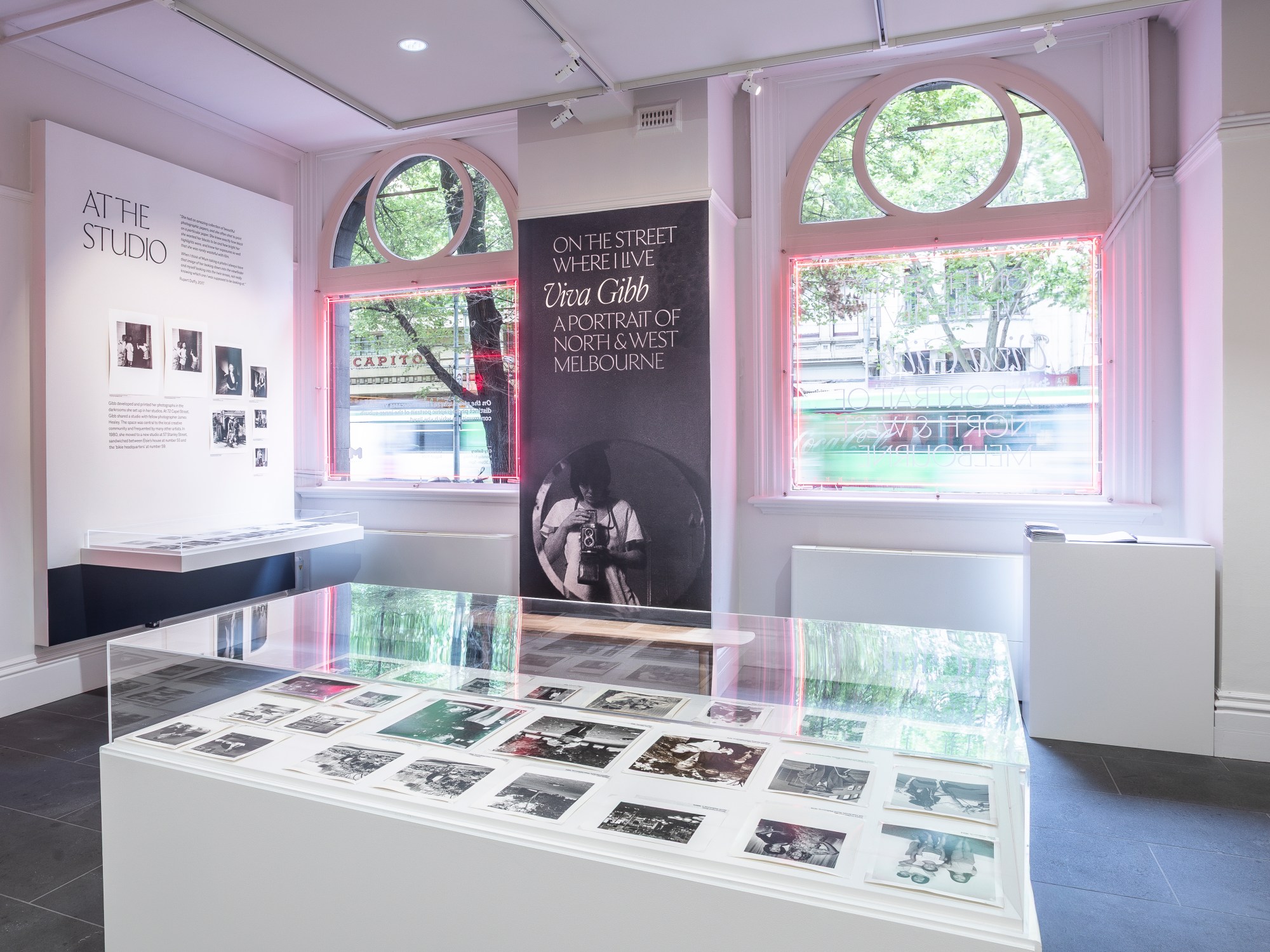
On the Street Where I Live: Viva Gibb’s Portrait of North and West Melbourne runs until 7 August 2026 at City Gallery, Melbourne Town Hall. Entry is free.
Viva Gibb’s photograph of Helen Garner appears in Women Photographers 1900–1975: A Legacy of Light. National Gallery of Victoria, Melbourne. 28 November 2025 – 26 May 2026
A Place in Time: Photographs by Viva Gibb was exhibited at the Museum of Australian Photography (MAPh) in 2019.
Work by Gibb is held in the collections of the National Gallery of Victoria, National Gallery of Australia, National Library of Australia, Art Gallery of New South Wales, State Library of Victoria, Museum of Australian Photography, and Melbourne Art Trust.
Sources: Exhibition catalogue, On the Street Where I Live (City of Melbourne / Melbourne Art Trust, 2026); State Library of Victoria; Museum of Australian Photography; RMIT Design Archives Journal; Latrobe Journal; City of Melbourne.


 On This Date in Photography: by James Mcardle
Great story, thanks James, I knew nothing about Viva Gibb whatsoever, despite spending considerable time in West/North Melbourne and frequenting some of the places she documented.
LikeLiked by 1 person
These are certainly images that bring back a distinctive part of Melbourne, now largely vanished. Gibb’s work is a national treasure.
LikeLike
she was known as Jillian Gibb in the 1970s and 1980s
LikeLike
Hi James
I remember seeing this silkscreen pasted in Lygon Street on the wall in Timani’s as it used to be called back in the 1970s. Thanks again for a wonderful article. (I said hello in the outside area in Lazy Bones the other day.)
Cheers, Bronwyn
>
LikeLiked by 1 person
Ah yes, Tiamo’s! Thank you for reading and remembering, Bronwyn. So many posters in multiple layers…it should have been preserved as a gallery, and what fond memories of one’s first taste of Chinotto, really decent coffees that fended off sleep in philosophy tutorials, and pasta…meals second only to Shakahari! At least we have Origini in Castlemaine. Viva Gibb is a real discovery and I hope her true worth is recognised.
LikeLike
I spelt it incorrectly. It was Tamaniâs back then.
LikeLike
Hi Bronwyn, and thank you…you’re right, it didn’t become Tiamo until after 1977 and at https://www.facebook.com/photo/?fbid=4155044714749062&set=gm.2801931353471317&idorvanity=2199525433711915 there’s a colour transparency of the restaurant and it’s street-sign, labelled as from National Archives (can’t find the original at NAA) and there are the ‘rustic’ brown-stained boards on the front that were still there last time I visited.
LikeLike
Hi James,
Viva’s daughter Sybil here. So great to read your beautiful piece on Viva. She was a force of nature indeed. A true artist, always creating, driven and never for financial gain. Her insight and empathy and creative force live on.
LikeLike
Hi Sibyl, I’m honoured to have your comments, but most of all I thank you for your generosity; anyone can now see the huge scope of Viva’s artistic output in the several collections to which you have provided her images. If only those organisations had been perceptive and farsighted enough to have made more purchases in her lifetime! There is so much more to Viva Gibb than I could ever fit into a blog post. She was a formidable force for good, a national treasure.
LikeLike