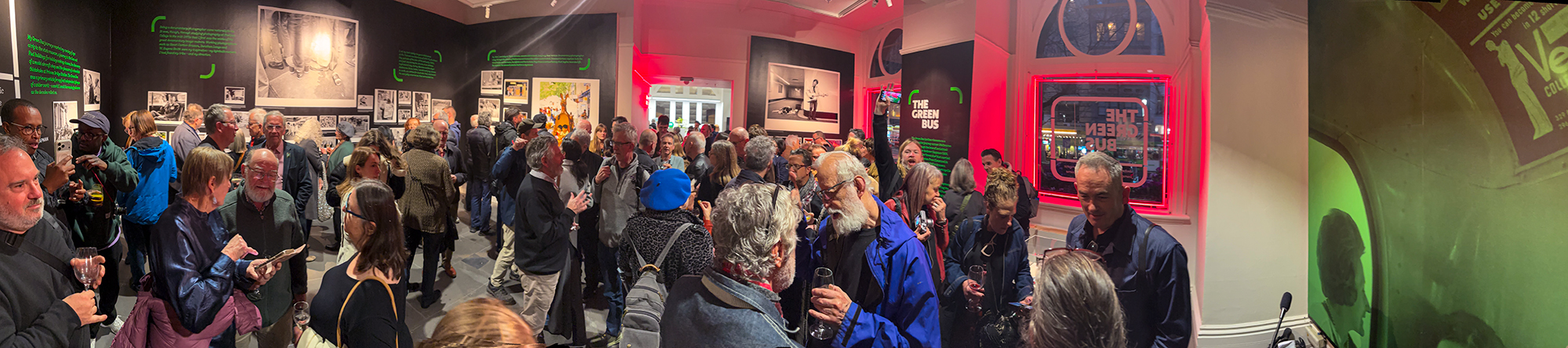
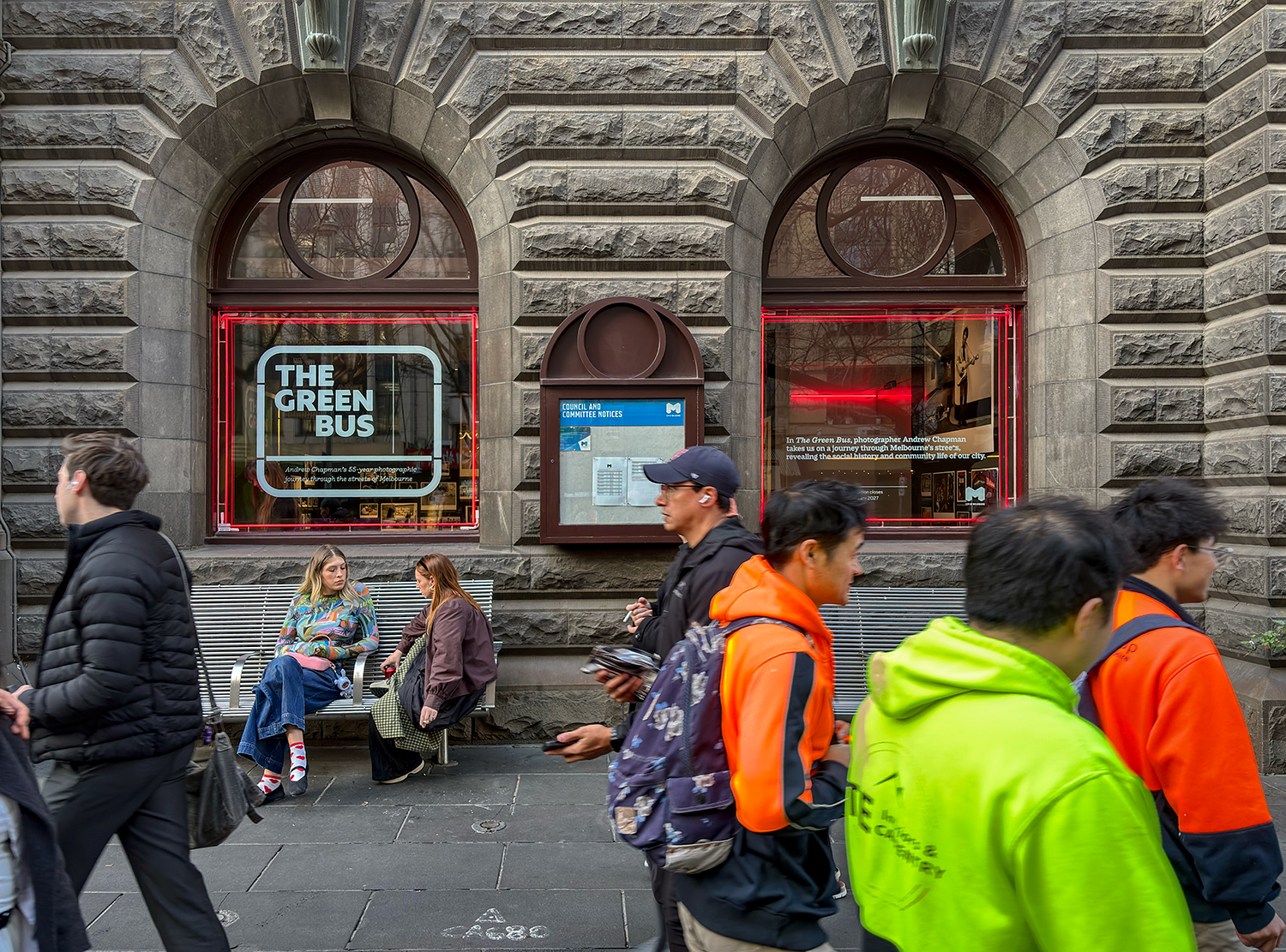
 Not by any means concealed, but hiding in plain sight, is the City Gallery located on the ground floor of the historic Melbourne Town Hall at 110 Swanston Street.
Established in 2002, it is dedicated to showing art and artefacts of Melbourne’s social, civic, and cultural history. Since it shares an entrance with council customer service you may have walked past it countless times, but ignored it as just a another part of the monumental municipal monolith, despite bright red neon signs and its large picture windows! Through them you can always preview the latest of the four exhibitions it shows annually. Since its founding, it has hosted more than fifty of them; free, themed, and beautifully designed, displaying content from Melbourne’s heritage, in the form of design, architecture, and photography, often in partnership with specialist guest curators.
The City of Melbourne collects too, and is continuously adding to a broader Art and Heritage Collection of over 13,000 items, and in 2023 relocated its storage facility to sixteen heritage rooms on the fourth floor of the Melbourne Town Hall, gathering in one place municipal treasures previously stored offsite in Docklands. They include civic artefacts, rare items including 1956 Olympic memorabilia, Moomba festival floats and crowns, and mayoral robes; historical relics such as early architectural plans, council records, and an 1837 house brick from Queen and Bourke Streets; First Nations contemporary artworks and cultural markers celebrating traditional custodians of the Eastern Kulin Nation; and public access areas in the form of open storage organised into narrative “chapters.”
Photography of course is prominent among these records and artefacts, and is on regular display in the quarterly exhibitors in the modestly proportioned, brightly-lit gallery. Viva Gibbs’ imagery of North Melbourne, on which I have posted here, has just been replaced with another photography show at City Gallery. The photojournalist featured, and the curator of his own show, is Andrew Chapman OAM, about whom I have most recently written here, after he published the latest of his ten books.
 The value to the City of Melbourne of Andrew’s carefully-kept archives comes about because his career as a photojournalist has overlapped, and over a long time-line of 55 years, with the city, he having taken up photography in 1971 and commenced work as a local news photographer in 1978. Aside from having been published in newspapers, magazines and online, and holding exhibitions nationally and in the United States and France, his self-driven projects have covered the wool industry, Australian politics, rural Australia, organ transplantation and the power industry.
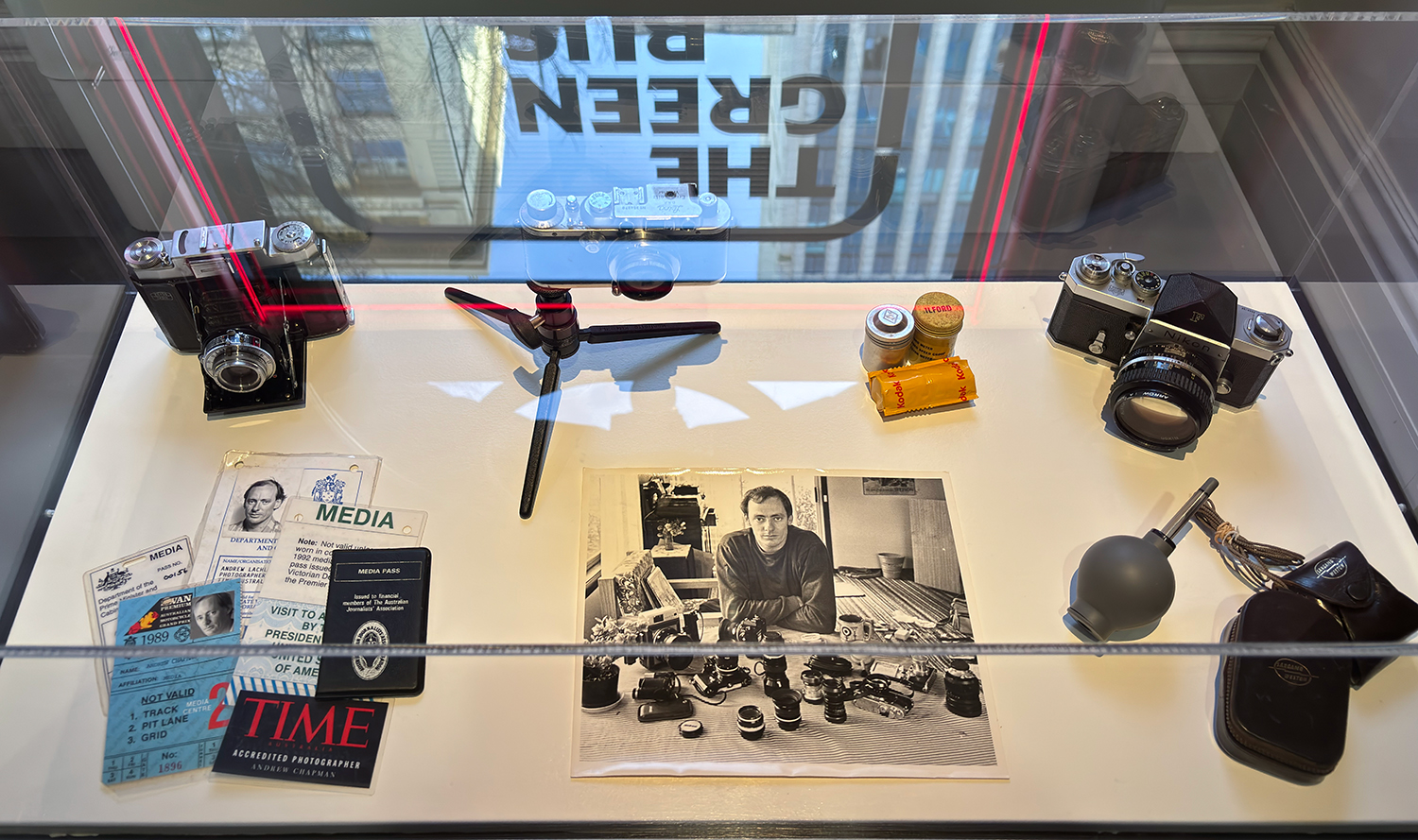
The premise of this exhibition The Green Bus, takes us back into the early seventies and the photographs Andrew was making then as a fledgling photographer with the “poor man’s Leica”, a heavy all-metal Canon Canonet QL17 rangefinder with a fixed 45mm lens and something Leica did not have…speed priority auto exposure!
When friend and fellow Caulfield High School student Brian Pieper introduced him to photography, Andrew had at last found something that inspired him and in which he found he could do well, while he struggled in sport, or with schoolwork.
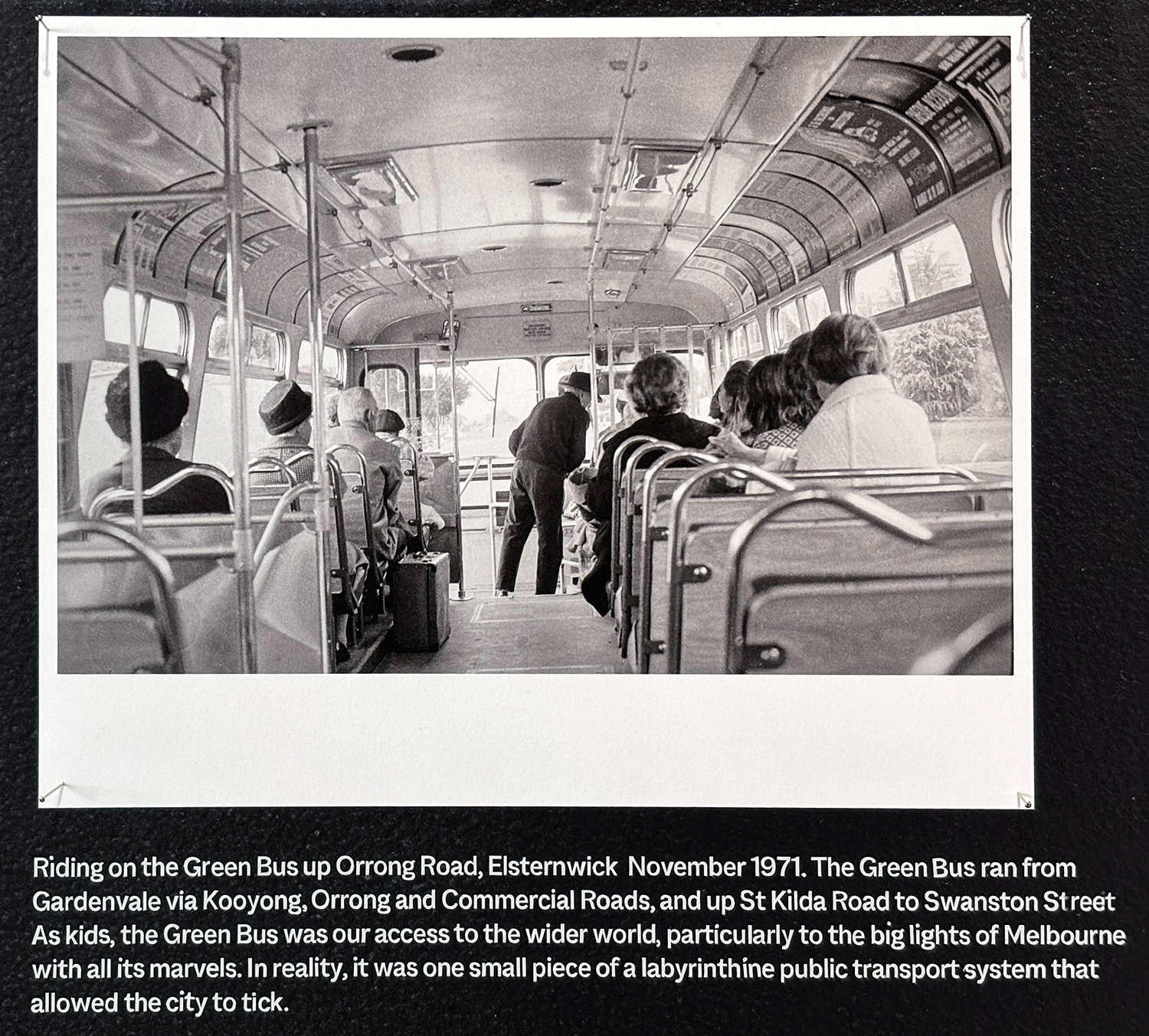
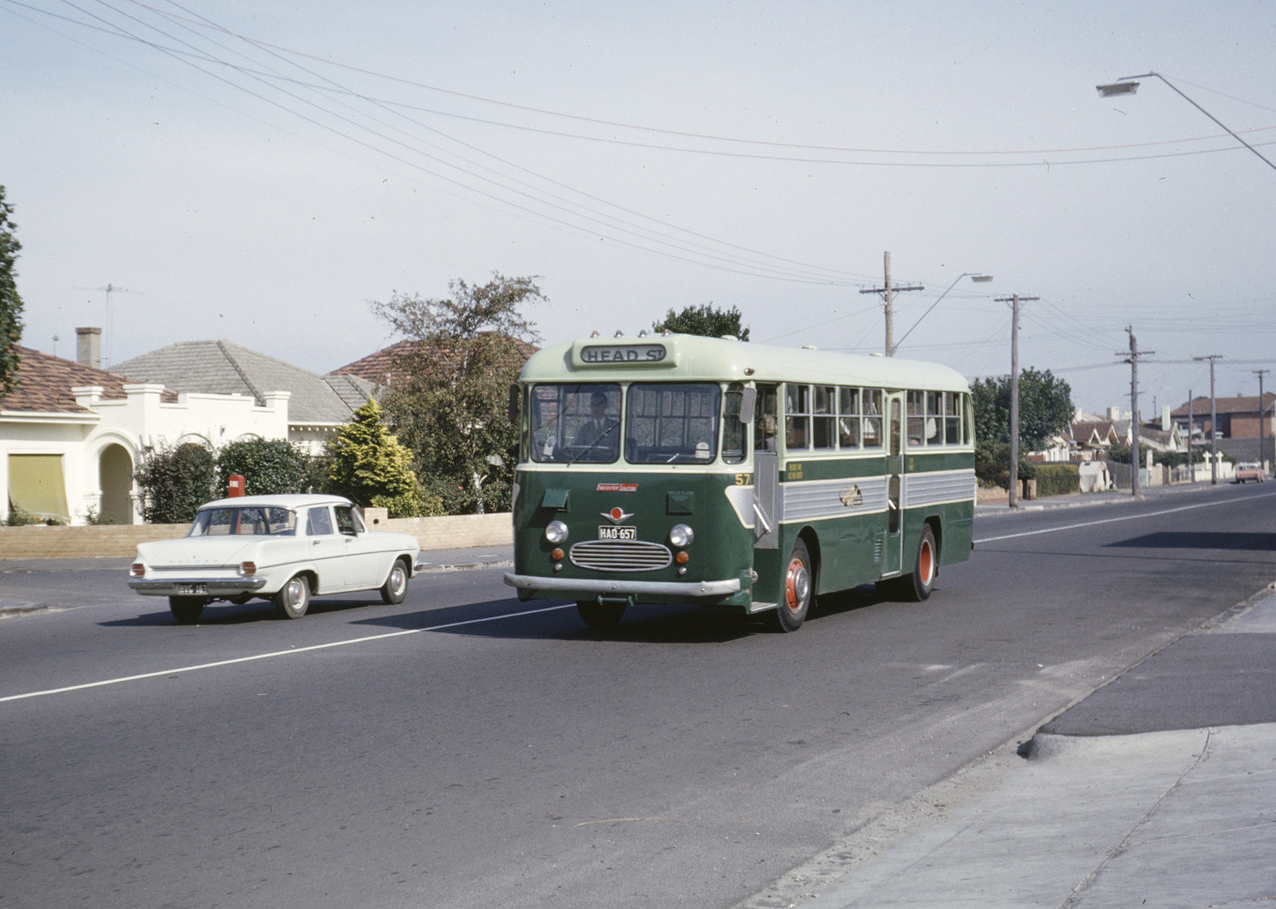
As for so many of us, to young Andrew photography was it, a life-force, a perpetual drive. His entry point is represented here by the interior of a bus; the Green Bus of the show’s title which took him from Elsternwick to Melbourne CBD was owned by Eastern Suburbs Omnibus Services (ESOS) whose fleet of distinctive dark green and cream buses ran from their Elsternwick depot, beginning in the late 1950s.
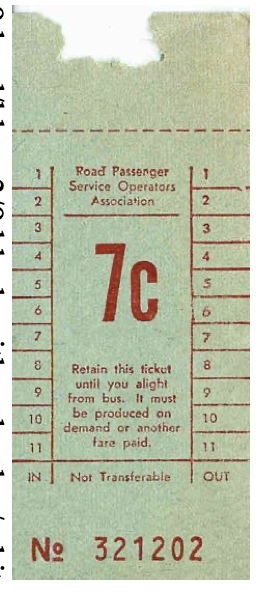
Meanwhile, I was travelling on the local bayside tan-orange hued bus, the service owned and operated by Ray Allnutt (whose son was at my primary school) which ran from Beaumaris (replacing the early horse-drawn then electric tram on Tramway Pde) to Sandringham Station throughout the ’60s and ’70s before it was taken over by Moorabbin Transit in 1988.
Those buses had in common a modest size, hardly longer than a couple of cars, and in the older models passengers perched along bench seats running opposite each other down the length of the bus beneath advertisements tucked into the coved ceiling. Everyone piled into each other if there was a sudden stop. The driver, often sporting a fag stuck to his bottom lip, expertly manhandled a shift-stick as long as a snooker cue—with no synchro-mesh it required much pumping of the arm and leg, double de-clutching while negotiating corners by muscling a giant unpowered steering-wheel and taking fares. None had air-conditioning, just a little fan on the dash for the driver’s face, and tiny aluminium sliding windows that usually wouldn’t.
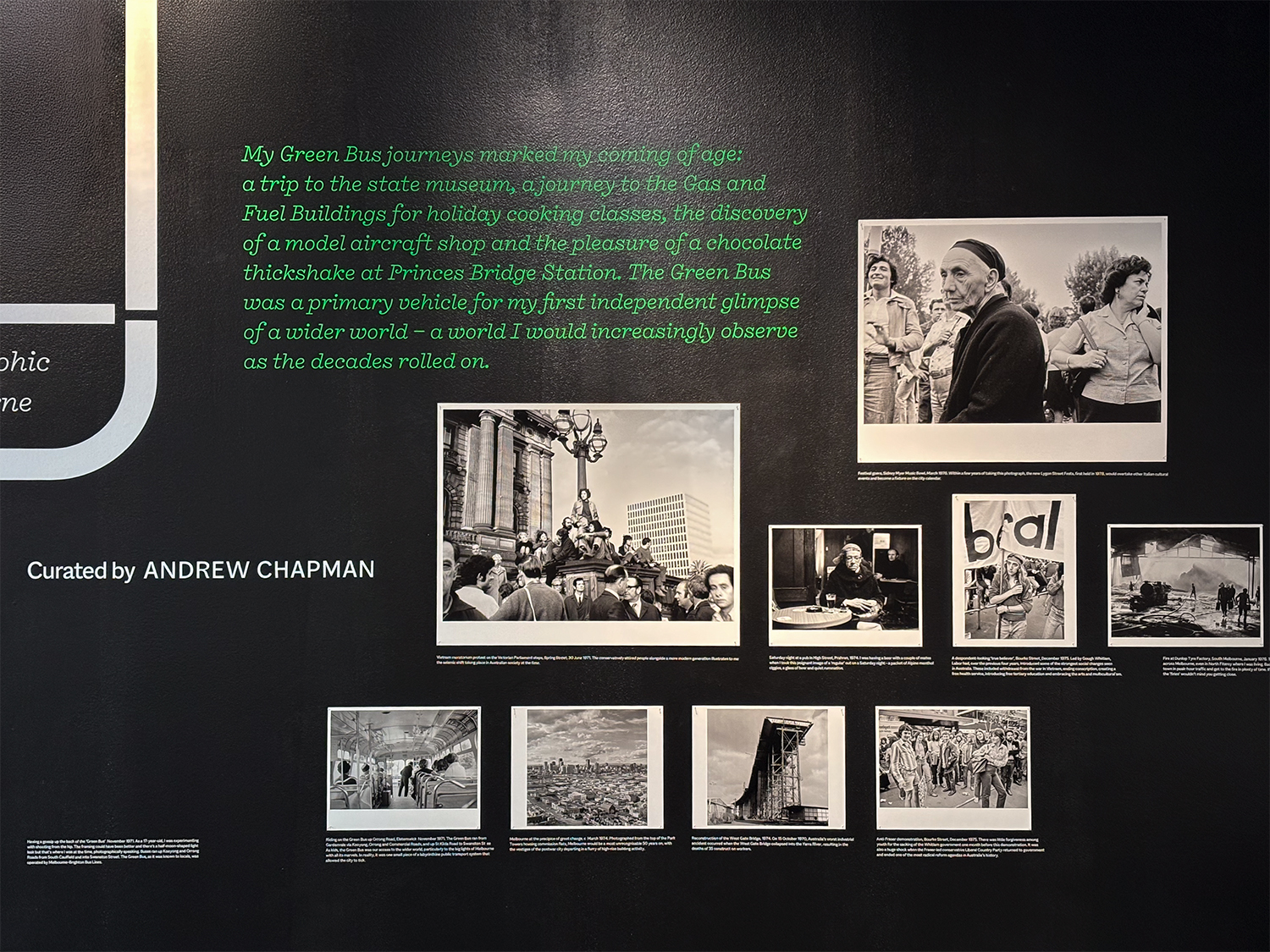
There’s some segregation going on in the bus interiors Andrew shows us; younger passengers congregate in the double seating on the right, while their elders sit unaccompanied, mostly grandmothers in their uniform of high-rise pillbox hats in synthetic fur or textured fabric, always worn on an outing to ‘town’ and with gloves. Though the chap with the cardboard suitcase is hatless, it was still more common for older men to wear a felt hat, like he who has just boarded and is paying the driver.
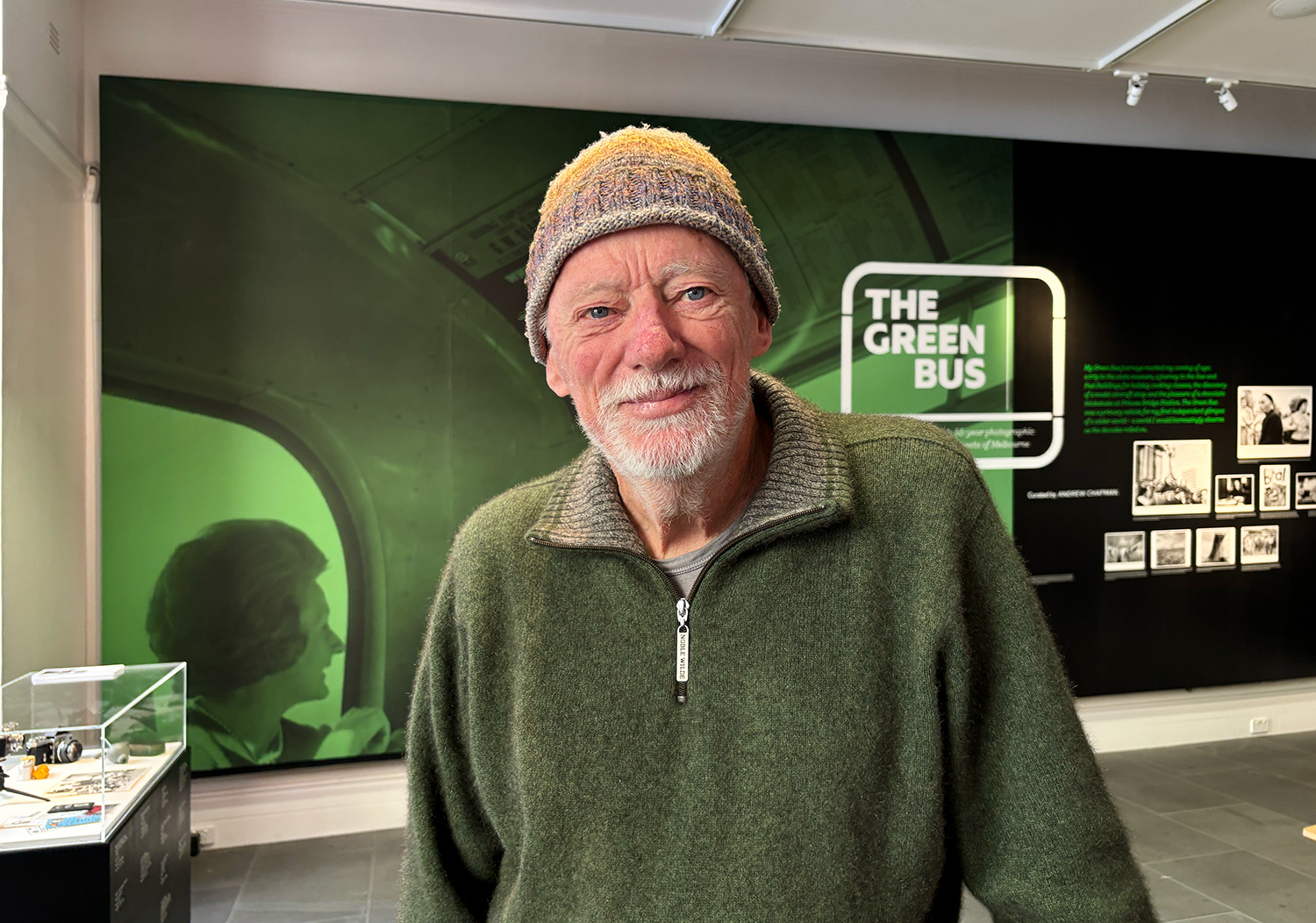
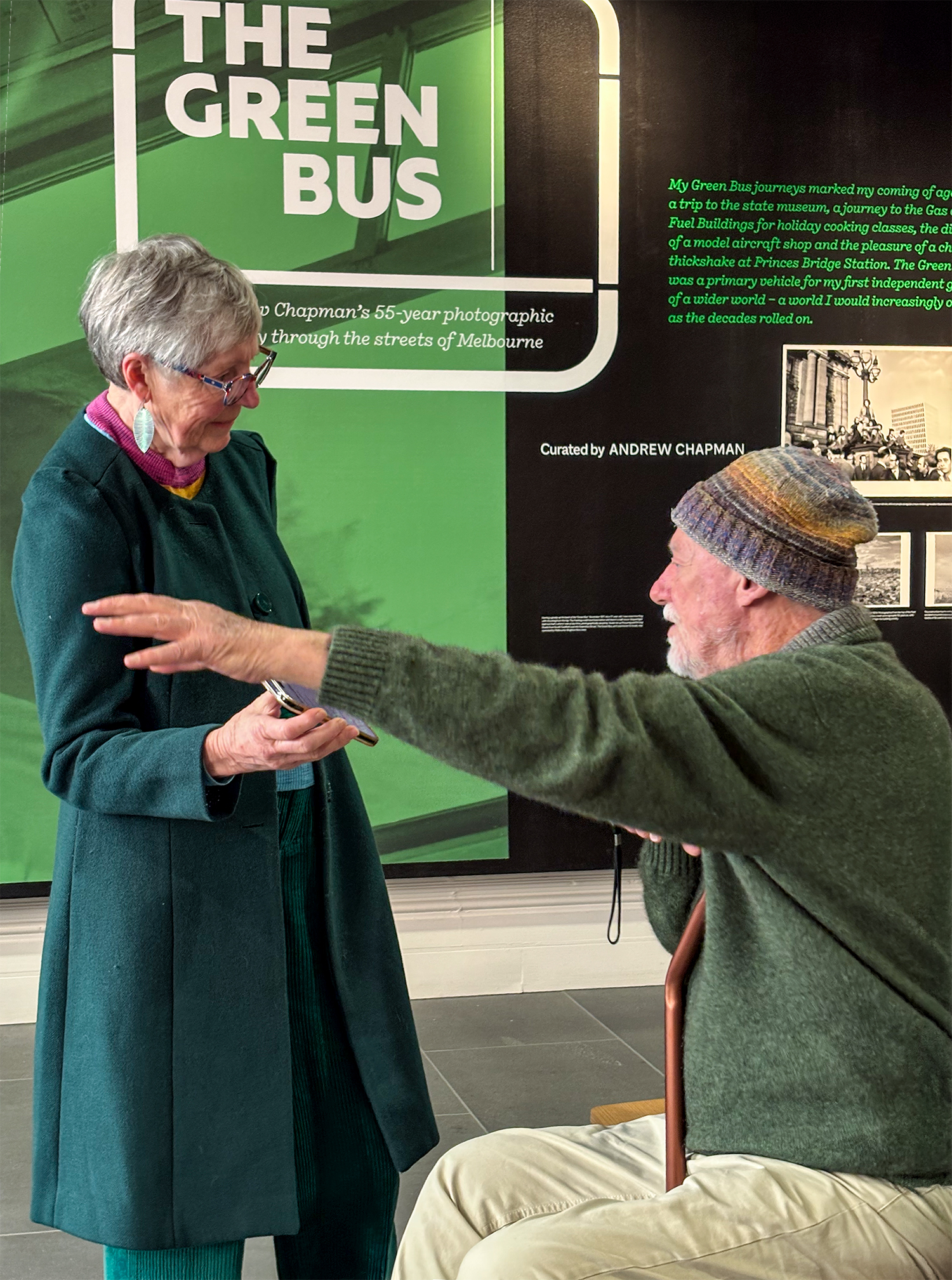
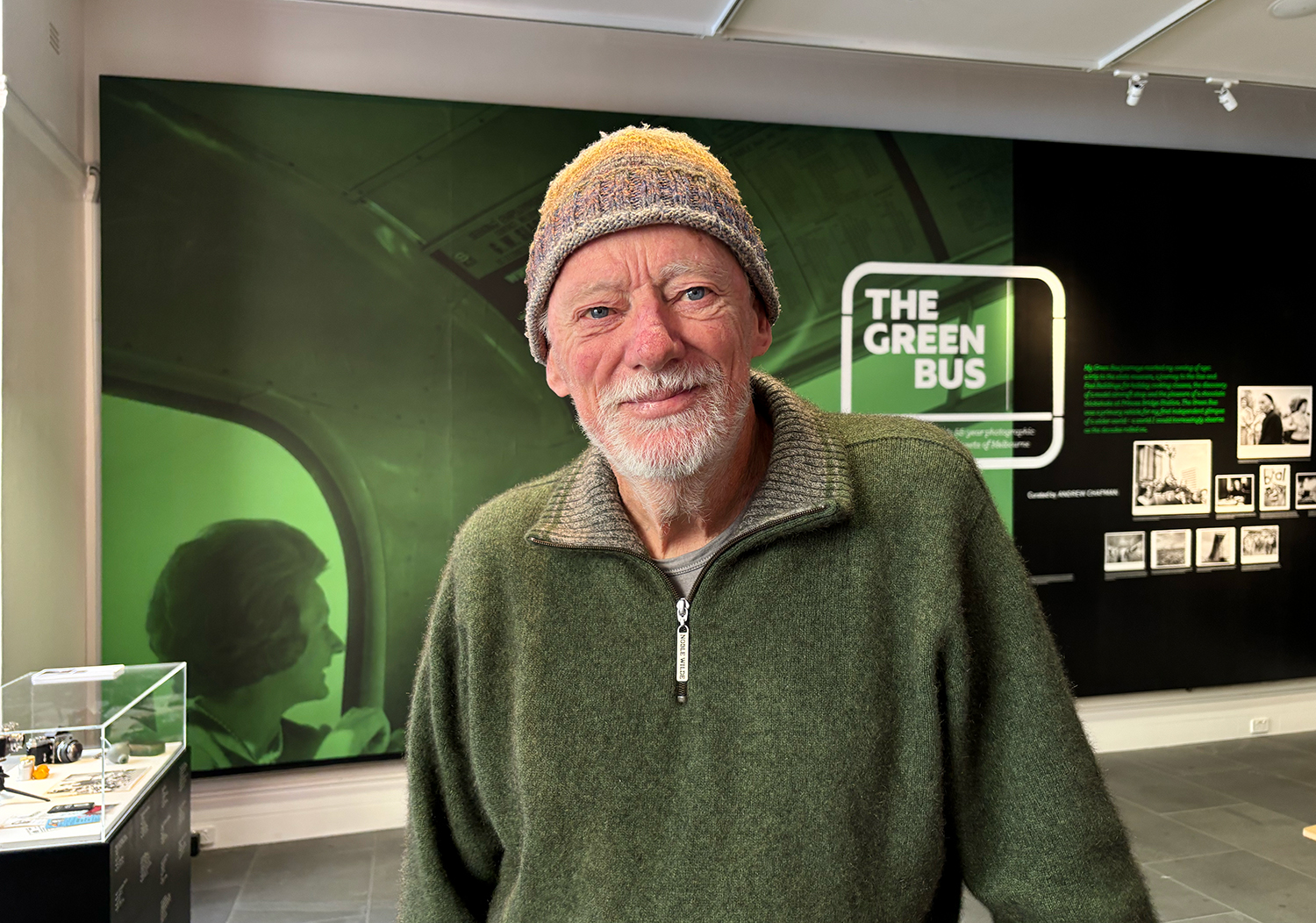
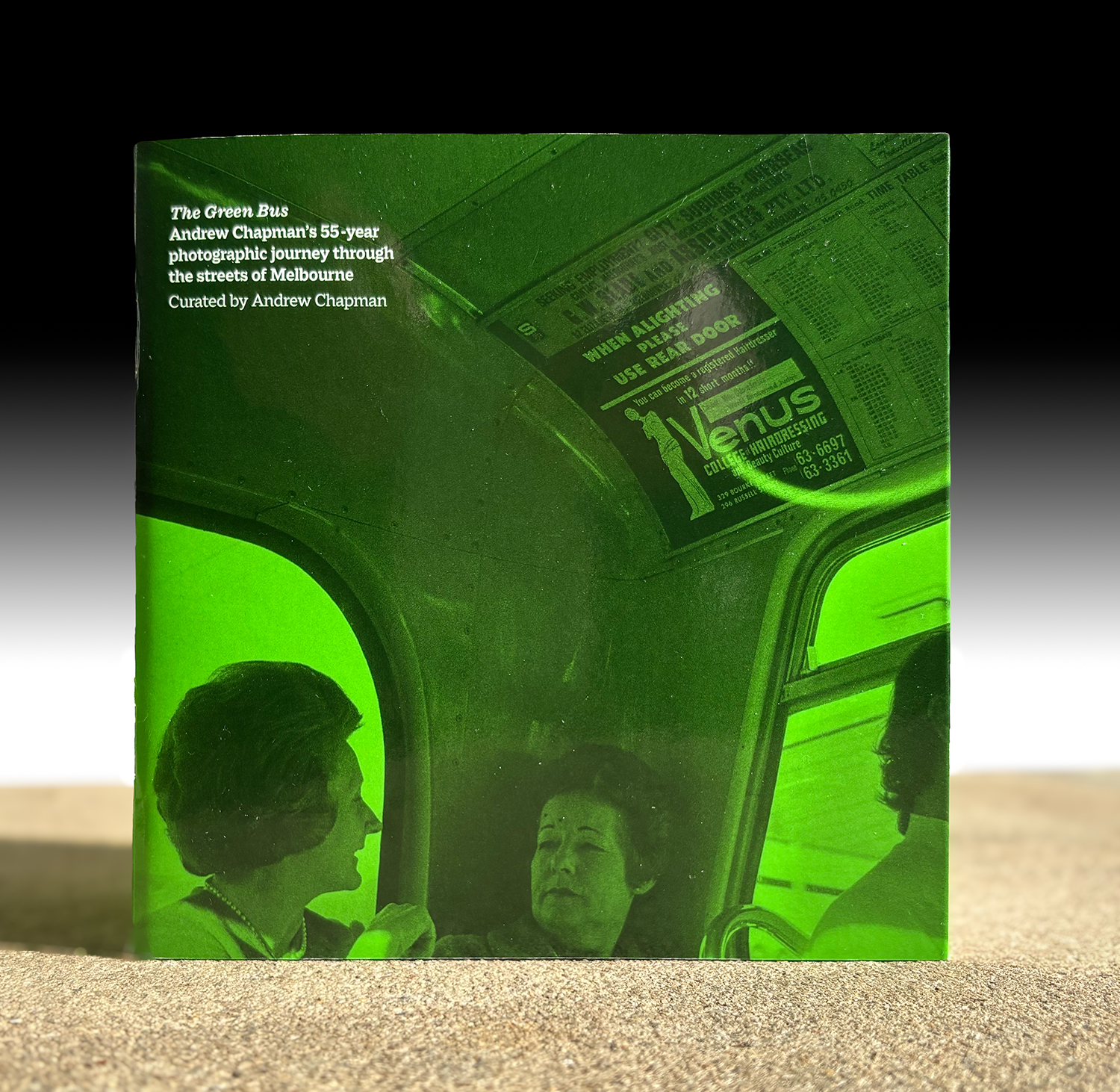
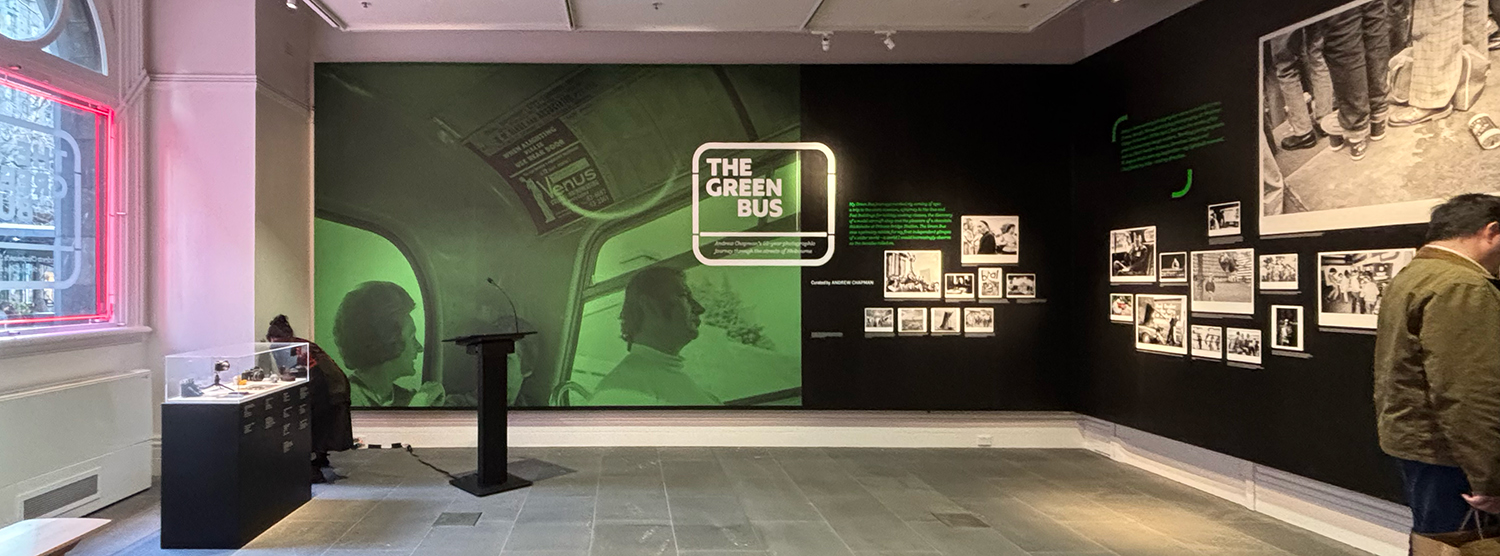
The exhibition, sympathetically designed by Stephen Banham, sports a massive blow-up of another bus interior in which a woman, her hair a carefully permed helmet, holds forth volubly on the bench seat at the rear of the vehicle, while her companion shrinks somewhat defensively into the corner, and both are ignored by the young man in the next seat.
I’ve mixed in my own memories here (as you may too) to the prompting of only two of Andrew’s 55 marvellous, now historical, photographs in the show, because they depict the vehicle that transported him to the real subject of this show; Melbourne:
My Green Bus journeys marked my coming of age: a trip to the state museum, a journey to the Gas and Fuel Buildings for holiday cooking classes, the discovery of a model aircraft shop and the pleasure of a chocolate thickshake at Princes Bridge Station. The Green Bus was a primary vehicle for my first independent glimpse of a wider world; a world I would increasingly observe as the decades rolled on.
His greater odyssey was into photography, in making documentary images which are now our vehicle for time-travel, recording, as Andrew says “Melbourne’s own journey from a large town to a modern metropolis.”
Being a documentary photographer came naturally to me. It was, though, through studying photography at Prahran College in the mid-1970s that I first saw the works of the great documentary image-makers… Henri Cartier-Bresson, Dorothea Lange and W. Eugene Smith were my inspiration – my lightbulb moment. Their high-contrast black-and-white images called out to me. I had found my tribe—and my direction. I cut my teeth taking images in Melbourne: at the Vietnam moratoriums of 1970-71, the Anzac Day parades of the late 1970s and early 1980s, and just wandering the streets in an aimless, haphazard way [and] I would carry my camera to work as a driver for Australia Post…Taking photographs each day in my first photography job, for the Melbourne Times, solidified my skills. Starting my own freelance business in the mid-1980s rapidly improved the work I produced through the following decades. This was mainly for a commercial return, but I always found time to photograph projects dear to my heart. Ultimately, my experience led to some sort of success.
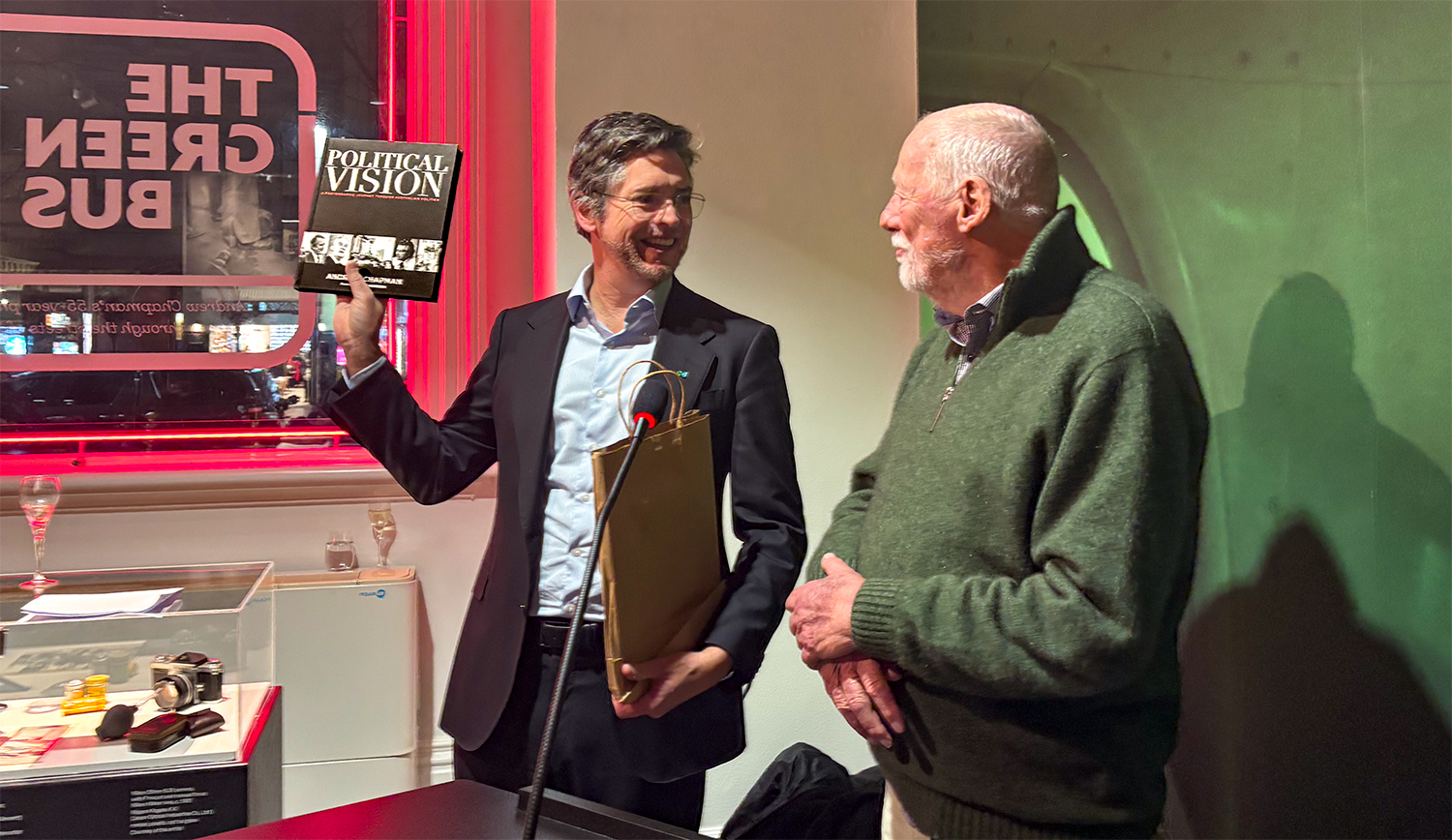
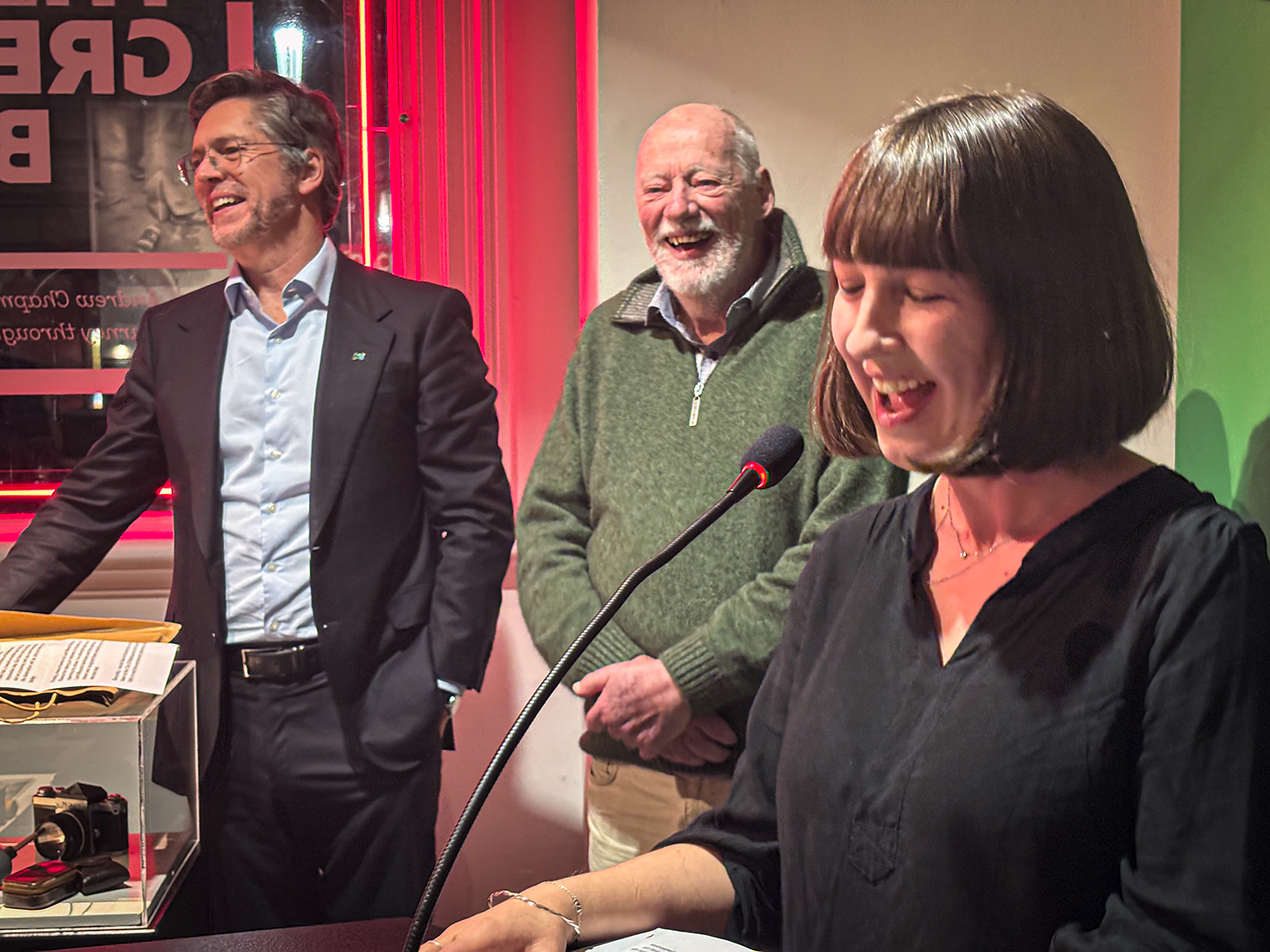
 The opening of the exhibition was addressed by Stella Loftus-Hills, a Melbourne-based curator since 2003 who has been working with Australian photography for the last 18 years on more than 30 exhibitions. She has a Master of Art Curatorship from the University of Melbourne and has written, from conversations with Andrew, the nine-page essay for the exquisite little catalogue for the show, which regrettably does not have an ISBN, though it will still serve researchers as a reference for years to come.
Loftus-Hills emphasises less the aesthetics of Chapman’s photographs than their service as significant historical and social records of Melbourne’s evolution, and not mere nostalgia, but as a collection that actively threads past to present and traces changes in culture, architecture, and politics over 55 years. Chapman, she writes, captured everyday scenes, professions, and objects that have vanished from modern urban life, such as Alec Pearse’s 1920s hardware store; Claude Butcher, one of the last horse-drawn milk cart drivers; and people reading physical newspapers or using public phones instead of staring at smartphones.
We can visually trace Melbourne’s architectural scale, as we compare a 1974 monochrome view of flat suburbs photographed form a helicopter, with the dense modern skyline captured in colour from a hot air balloon. Chapman is a “fly on the wall” in documenting major shifts in Australian society in moments of tension: the raw, politically charged street movements, such as the 1971 anti-Vietnam War moratoriums, anti-Fraser protests following the 1975 dismissal of the Whitlam government, and controversy over national identity cards in 1987. She values a core historical focus in Chapman’s practice on ordinary Melburnians rather than just the major players:
“Homing in on the city’s people, places and traditions, his photographs reveal pieces of Melbourne’s social, political and architectural history, and highlight the changes that have occurred over the last five decades….his eye for capturing the everyday has led him to make many important photographs that have since become historical records. Helping to keep Melbourne’s past alive in the present, his photographs provide a legacy.”
That legacy is enhanced because each of the images is captioned with Andrew’s interpretations and memories of taking the photograph. Consequently, the City of Melbourne has acquired much of Chapman’s personal archive for its permanent Art and Heritage Collection, a fact noted in Lord Mayor Nicholas Reece’s speech in which, instead of boasting of municipal achievements as we may have expected, he impressed an audience of photographers with his knowledge of the medium and in naming those who documented Melbourne, a city whose establishment by Europeans was only four years before the invention of “the mirror with a memory” was announced in Paris.
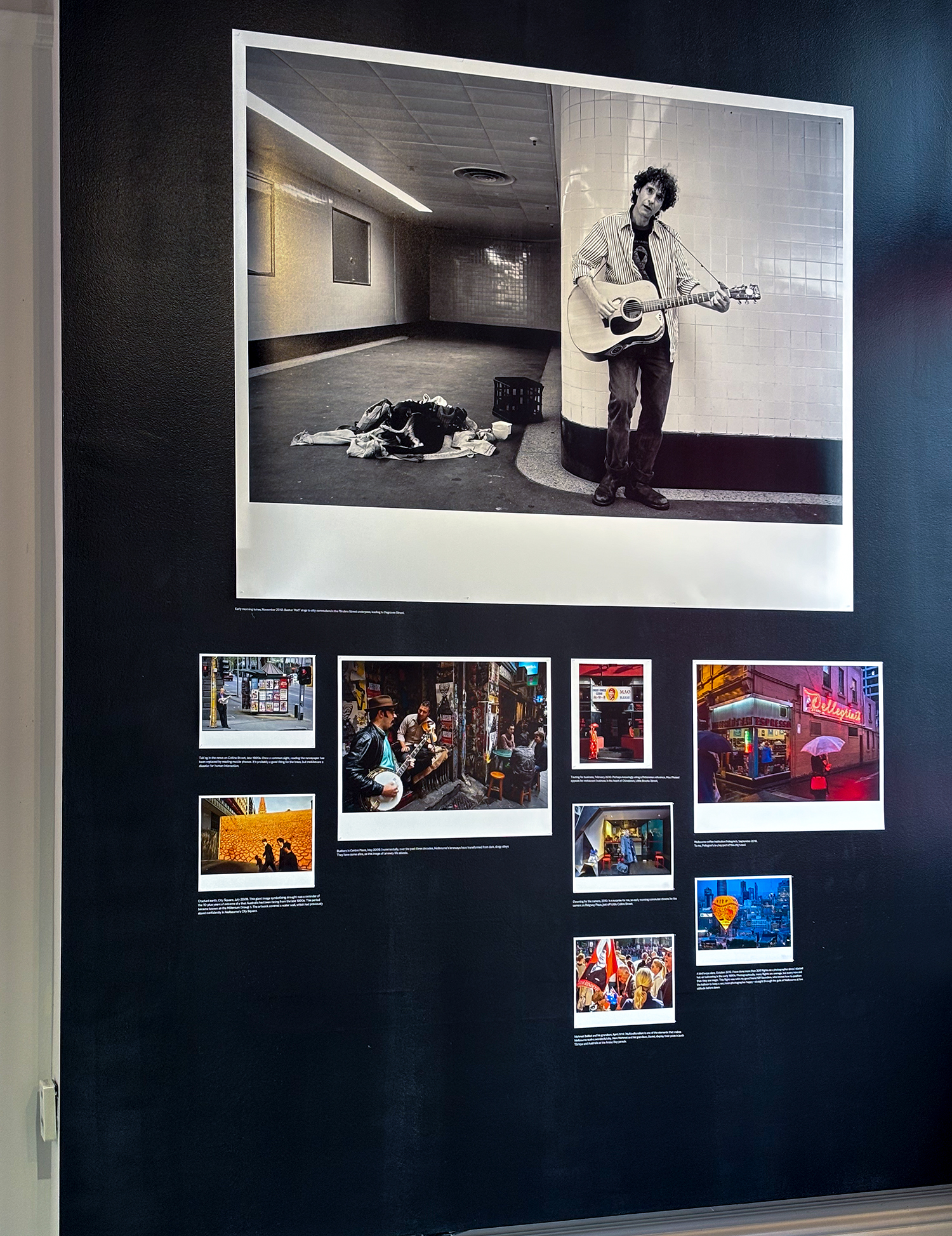
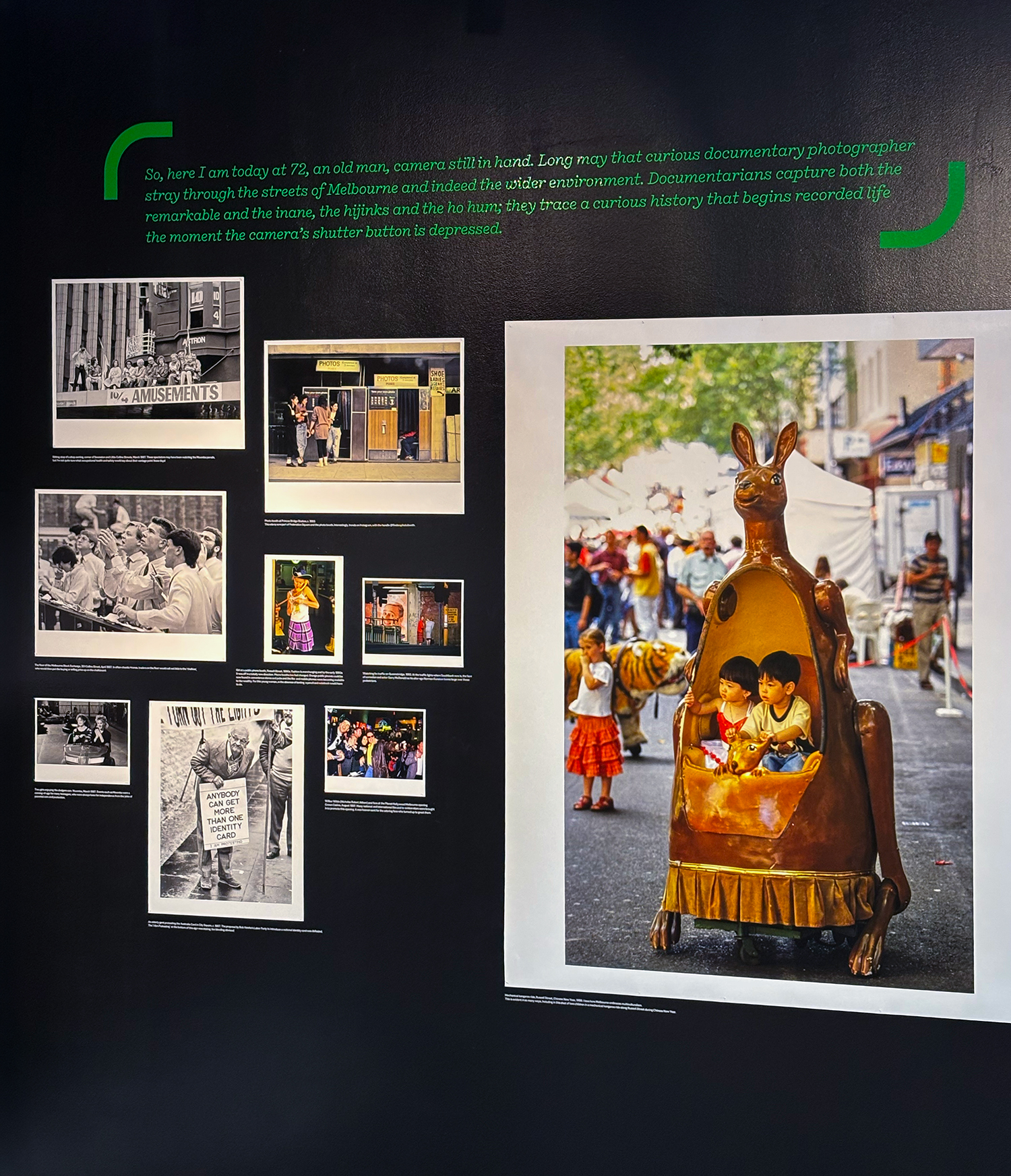 Though my iPhone photos do no justice to the colour balance of Bryan Gracey’s crisp digital prints from Andrew’s negatives, they do show how thoughtfully they connect with film photography. Photographic paper then came in sizes that did not match the proportions of a 35mm image. When printed full-frame as Andrew was wont to do—since he composed in the camera, not by cropping in the darkroom—that meant that when inserting paper in the easel under the enlarger, a larger margin remained across the width of the sheet, so that each of the landscape-format prints ‘sit’ on a large white border, and the vertical shots sit within bands wider at the sides than top and bottom.
 There’s another reminder of the physicality of film photography; on the 1971 picture of the bus interior printed as the massive green mural and on the catalogue cover, there is a halo above the head of the man in the skivvy, mullet and side-burns, a crescent-moon shape resulting from Andrew’s then nervous hands buckling the dry, unprocessed film as he loaded it into the developing tank:
I started photography as a kid, not really knowing much but thinking that I did. Isn’t that the way it always happens? You start off knowing nothing, but you pick up skills as you make errors along the way. I’ve always loved the expression that ‘an expert is somebody who’s made a lot of mistakes in a very narrow area’. Well, that’s me and I’m proud to admit I’ve made a lot of mistakes.
Rarely are photographers so candid and modest, and Andrew’s compassion for his subjects can be seen reflected in their eyes.
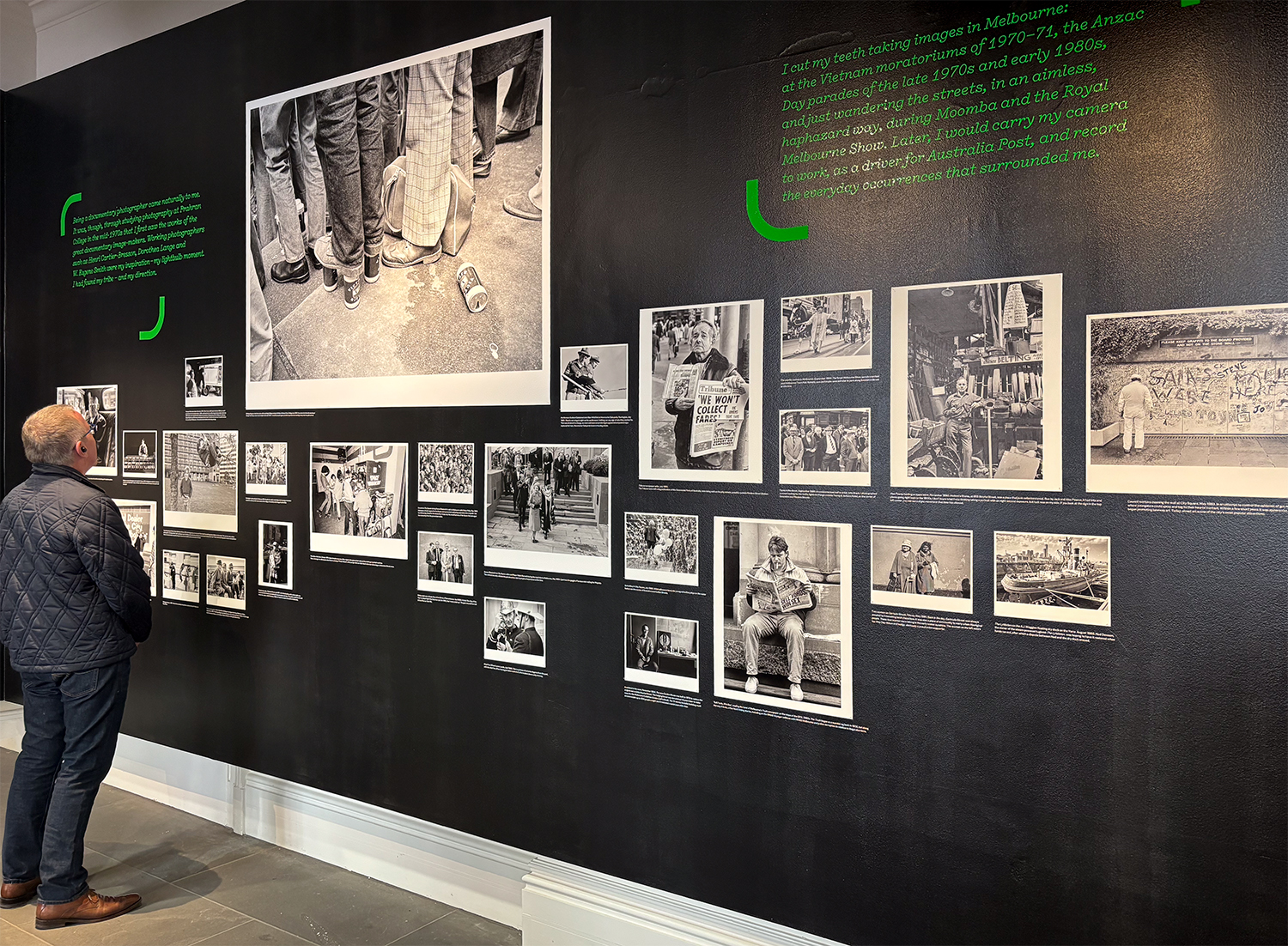
In curating this show himself, Andrew has trusted his own judgement when cutting the selection back to 55 images that represent every year of his career since 1971 when “he was also in his late teenage years and finding his way in a rapidly changing society. He was part of a new generation that was rising up against conservative views. As such, Chapman began engaging with the anti-Vietnam War movement, participating in moratoriums in Melbourne while using 35mm film to record the politically charged movement that was unfolding on the streets.”
The back flap of the book shows a young Andrew standing proudly next to Bob Hawke, and his photographs of the political scene fill the book he presented to the Lord Mayor, who was thrilled.