 Three concurrent exhibitions, two ending in late November are devoted to the gum tree, which is an Australian common name encompassing several species, mostly the eucalyptus. In two of the shows, photographers approach the subject with incisive results.
BIYAL at Castlemaine Art Museum displays works from the timber of one ancient, sacred tree; while Ngarn Wa’ngal: Art of the gum tree at the Potter Museum of Art at the University of Melbourne features over 160 works of art depicting the species, including colonial paintings, twentieth-century art and Miegunyah Creative Fellowships commissioned work by leading contemporary artists, Dean Cross, megan evans, Janet Laurence, Jazz Money…
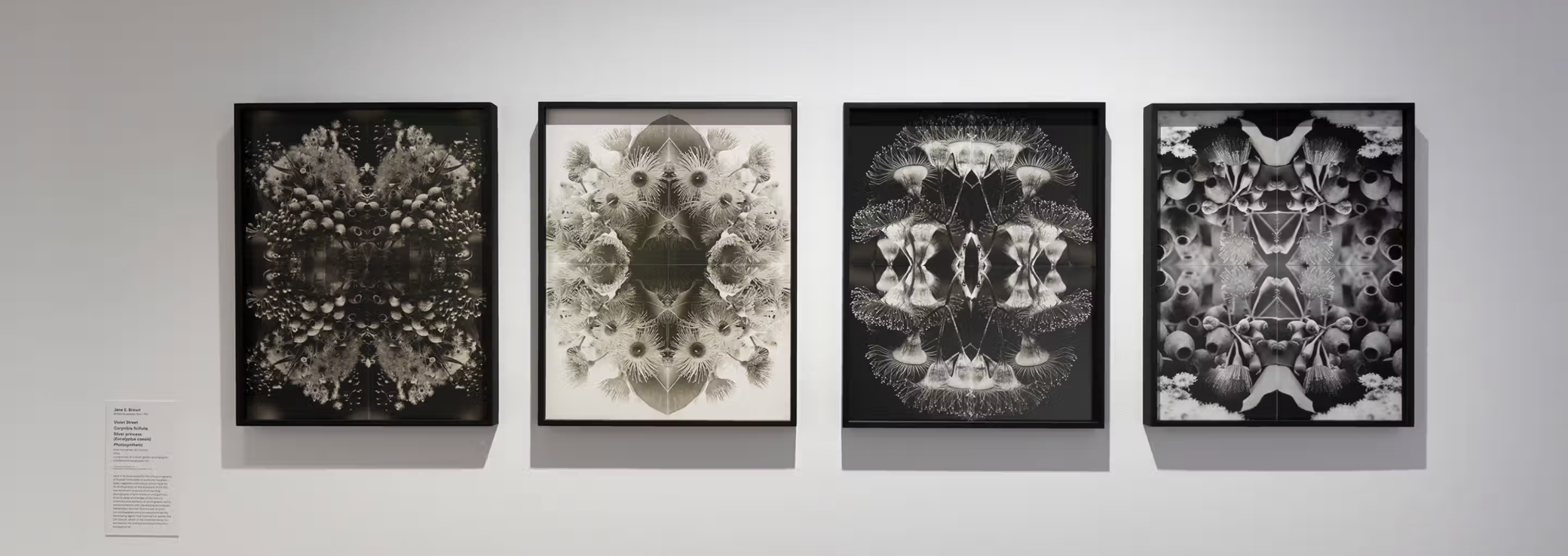
…and Jane E. Brown who ingeniously processes her kaleidoscopic large format montages in eucalyptus oil, a process that she does not divulge in detail but which, since eucalyptus oil and extracts are rich in polyphenols and antioxidants, may combine ingredients like vitamin C and washing soda with the oil to develop traditional silver gelatin prints and even black-and-white film. Along with the acetic acid in the stop-bath, working in her darkroom would certainly clear the head! Her series title 1,8-Cineole, is the chemical name for eucalyptol, the primary compound found in eucalyptus oil.
Australian chemist, botanist, industrialist and philanthropist, Russell Grimwade, also featured in the exhibition, was behind the Miegunyah foundation that provided the Fellowship. He was vocal advocate for the appreciation and commercialisation of the eucalyptus. Interested in photography from age 16, in early 1896, he was an accomplished amateur who as a teenager constructed his own darkroom and produced 35 albums over forty years (now held by Melbourne University).


Grimwade befriended Dr Julian Smith from whom he may have learned the carbon-transfer process used for his book on the species, An anthography of the Eucalypt, completed during the 1910s and 1920s from his photographs of local examples in the Melbourne Botanic Gardens (where he served on its advisory committee) and other specimens suggested by gum-tree enthusiast associates. He planted eucalypts extensively in his Toorak garden and at his farm in Melbourne’s south-east. An Anthography of the Eucalypts is illustrated with carbon prints of their flowers, a series now held in The University of Melbourne Art Collection and on show in Ngarn Wa’ngal.


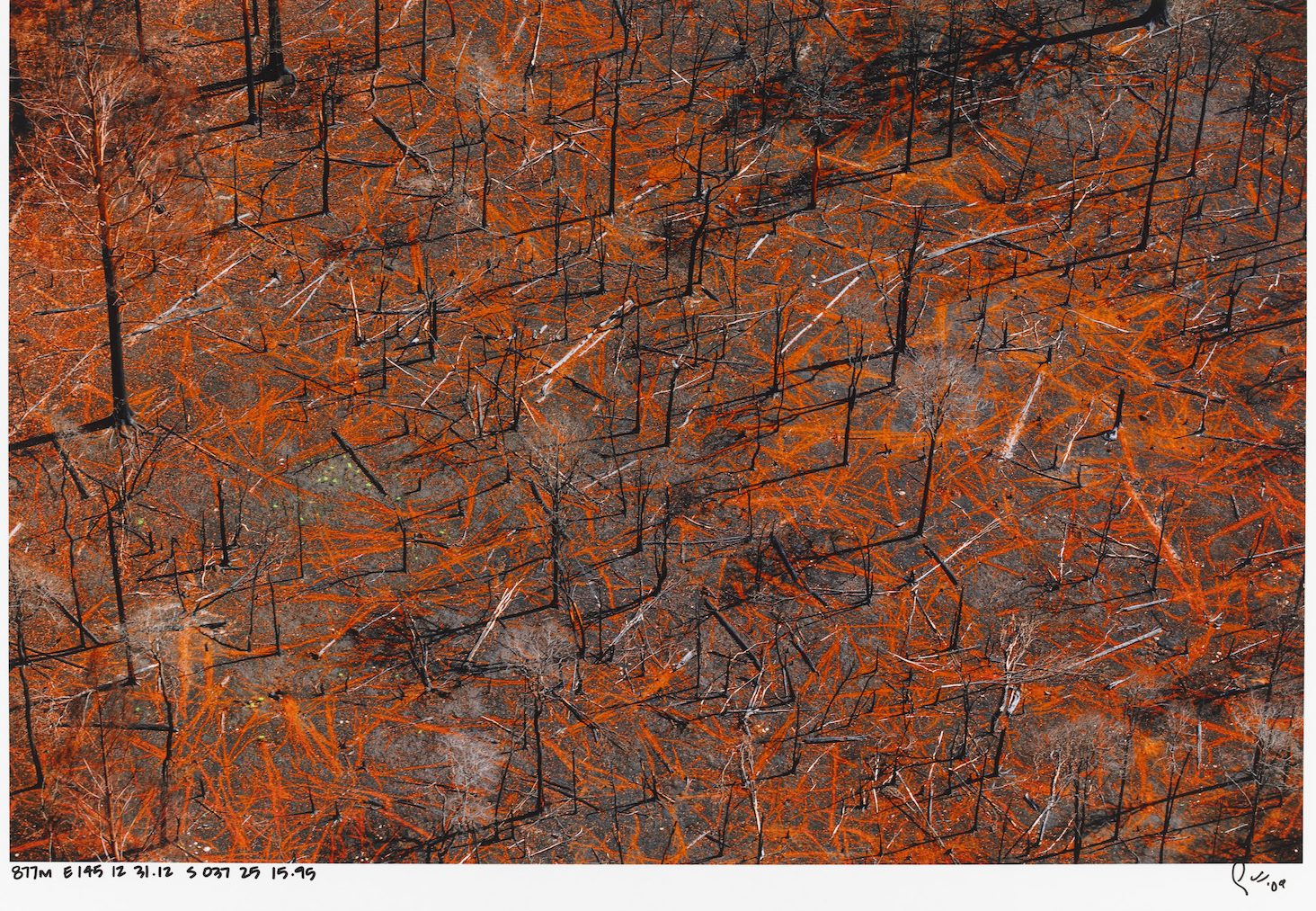
The destructive elemental force that the tree represents in Australian culture and experience is John Gollings’ stark red and black aerial view of the aftermath of Black Saturday.
But let us start at the skin of the tree, at the Bark Salon in the Ian Potter Centre: NGV Australia in Fed Square. The display is as awe-inspiring as the night sky; some bark paintings intricately weave unerringly straight brushstrokes, each one a hairsbreadth, into an ordered tessellation; others rival abstract expressionism in their vehement action; some contain forms and accurate anatomies of creatures, and recognisable objects of human origin; others intrigue the eye with apparently abstract pattern which may be maps of earth, sky or human journeys.
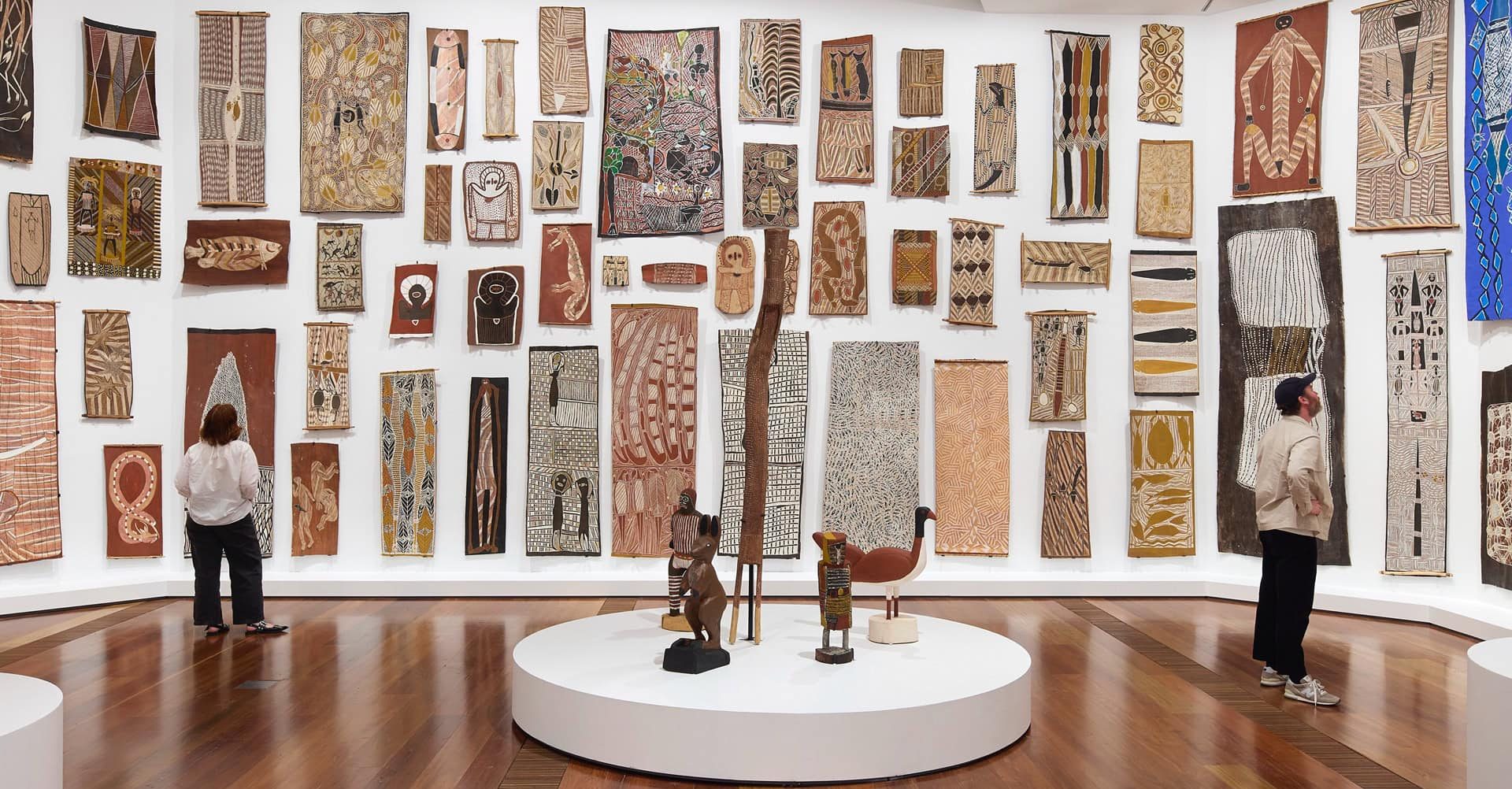
The more than 150 barks represent diverse nations of Indigenous Australia; so many more than all the empires of Europe. Wonderment, an awakening reverence even, makes the tall room cathedral-like, a place of calm in which time slips away, that beckons forth a meditation on how and why these were painted, before inevitable awareness comes that such knowledge lies beyond us. It remains with those initiated into their code.
Alone in the bush, with nothing; how long can you survive on what you can find or make? Contemplating that condition, you will know how much you would value others to guide you in how you might act, where you might look and go, what you should find. How much more certain would you be of such wisdom to know it was spoken by and shown you through fathoms of time by countless generations? Even the apparently unknowable—the night sky, the clouds, the wind—would be given enduring meaning, while the vital signs in the tracks at your feet, slight movements behind the tapestry of leaves, or the subtly familiar in plant-forms, ensure your survival. Those ciphers are what we might recognise on these barks. While Geoffrey Bardon in his 1979 book, Aboriginal Art of the Western Desert, deciphers for us the crescents, lines, waves, circles and dots that represent travel, meeting and communication amongst gatherings of one desert society and its mythology, he provides a mere glimpse into the secrets of these paintings.
To see Biyal at Castlemaine Art Museum, before it closes on 29 November, is an opportunity to see this truly Australian art in the making, to witness the creative effort behind it as the makers produce both traditional and novel forms for the exhibition.
In February 2024, the Biyal (Red Gum) dropped a significant limb. This was a pivotal event for Dja Dja Wurrung People and the broader community. The DJAARA Malamiya (Cultural Heritage) and Galk-galk Dhelkunya (to heal/to care for, many trees) teams ensured timber was protected from being gathered as firewood, and transported to a safe location – allowing time for Dja Dja Wurrung People to determine the next steps.
In the days following the limb drop, many came to spend time with the tree – and the community’s connection to the Biyal has shaped and sustained this project. Since then, Uncle Rick Nelson and Dja Dja Wurrung People have guided how the timber has been shared – with community, and with those commissioned to create works for BIYAL.
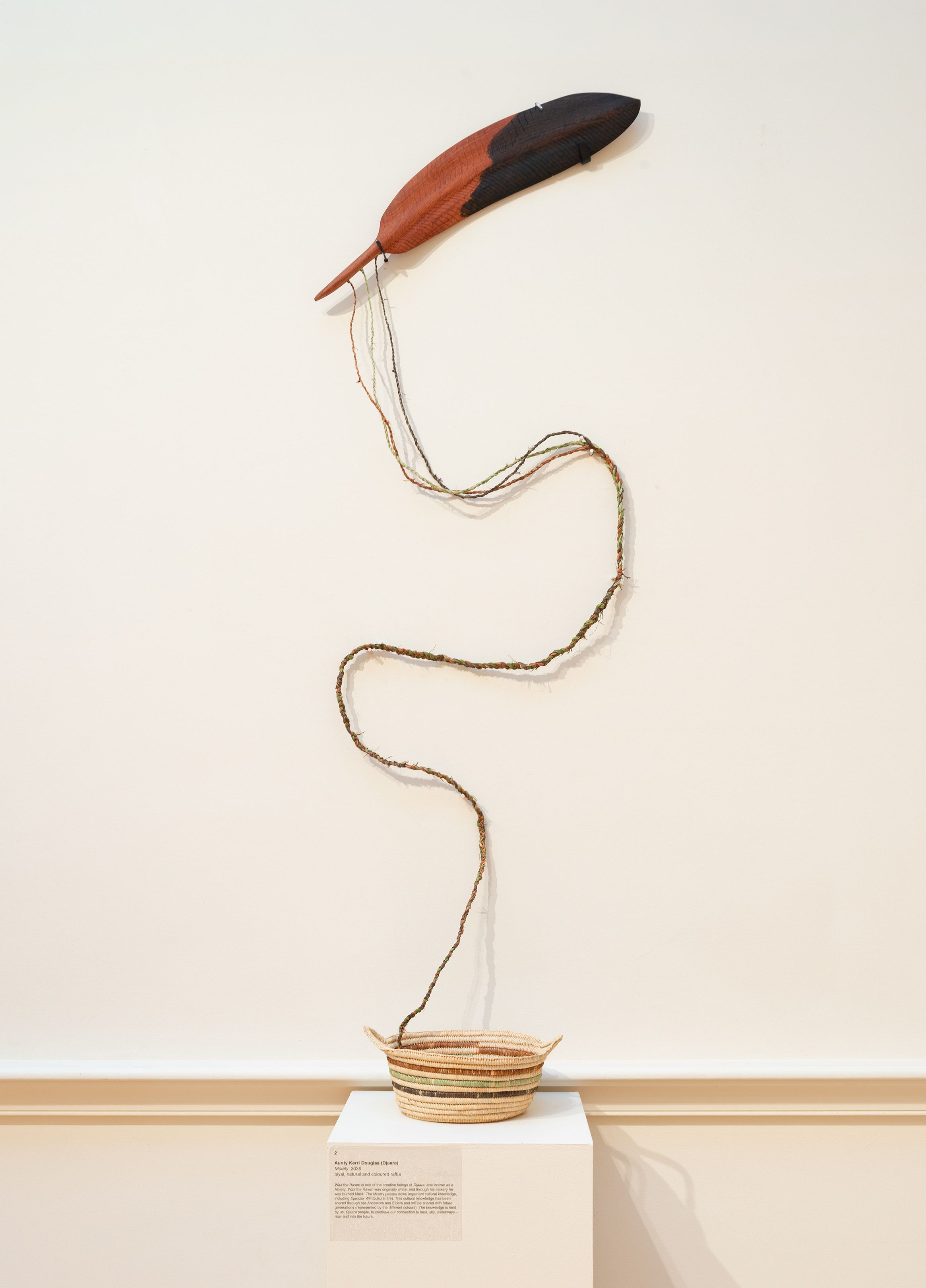
Kerri Douglas, a Dja Dja Wurrung woman, was the first female Djaara person on site to protect Biyal after the limb fell. She made sure a woman’s voice was heard in a project otherwise assumed to be men’s work, and contributed a carved feather that tells the story of Bunjil and Waa, the two moieties that guide Djaara kinship. Others among those contributing to the project are Dja Dja Wurrung Elders, First Nations artists, and local artisans who have transformed the fallen timber into symbolic forms of both grief and renewal.
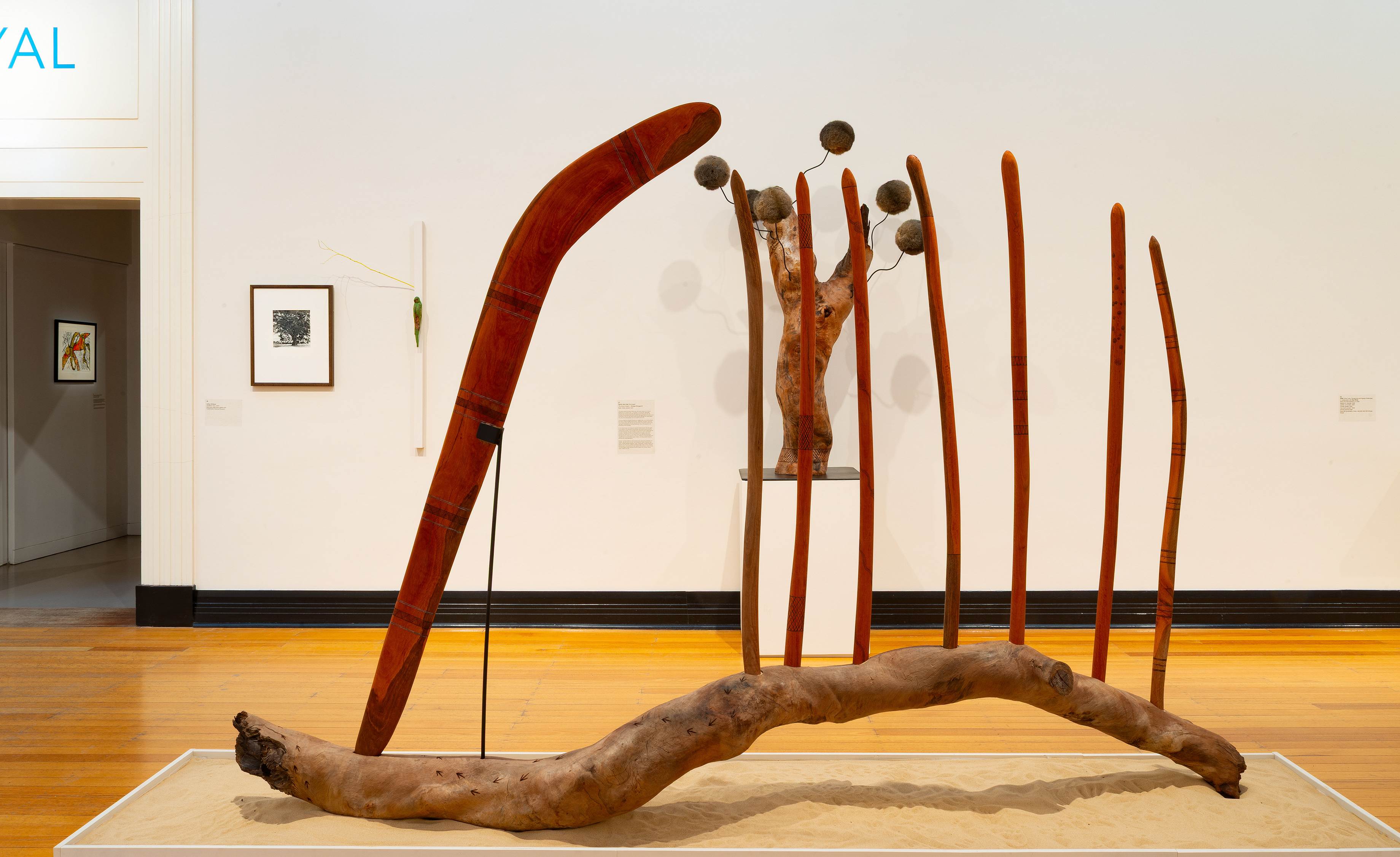
Working alongside Uncle Rick Nelson, local craftsman Pete McCurley helped carve a monumental fallen limb into the Reconciliation Seat at the site; in effect it is a giant darnuk (coolamon) large enough to hold visitors to sit in as they contemplate the tree. In the exhibition, participants from the DJAARA Timbers cultural crafting workshops have shaped the salvaged Red Gum into sculptures, musical instruments, and vessels and ambitious constructions from commissioned artists such as Narungga maker Sarah Jane Hall (with her piece Seven Sisters – Mangga Mangiardi), while some have accepted for interpretation the forms the tree presented, as did Whadjuk Noongar man Dan Mitchell, Creative Producer at DUMAWUL, who realised branches as snakes, and a bole as a bowl.
While the Bark Salon at NGV Australia invites quiet reverence before ancestral codes from across eons of time, BIYAL lets us witness that same cultural continuity in the present tense. Here in Castlemaine, the tree’s story is actively carved, painted, photographed, shared, and brought vividly to life by the community that gathered beneath its boughs.
Photographer David Rosendale moved to Hepburn after COVID during which his business as a commercial still-life photographer was affected by the pandemic. He learned of his family connection with Glenlyon and felt a deepening connection with the local bush. His photography there has gained places in the Heysen Prize for Landscape 2026, a Highly Commended in the Lethbridge Landscape prize 2025, and Jury Top 5 Selection in the International Photography Awards 2024 and they easily associate, in their atmosphere and deep spatial resolution with the paintings of Eugene von Guerard whom he admires and whose work, in the German landscape tradition, suggested the presence of divine powers in nature. The luminous quality of his photographic printmaking in rendering the qualities and details in such colonial-era painting is a tribute to his association and training with the inimitable Les Walkling whose workshops, David says “opened my eyes” to artistic purpose in photographic printmaking, with results that evoke that era, before, or during early, white settlement as depicted by von Guerard in his oil paintings..
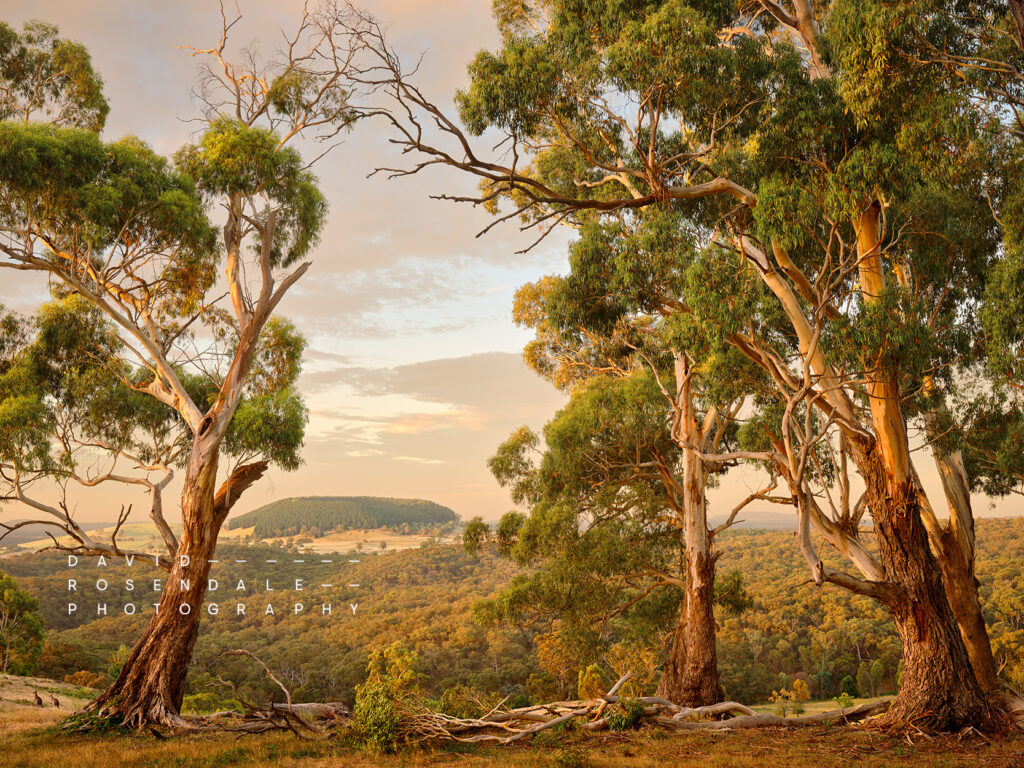
David responded to the Dumawul invitation to submit an expression of interest to “create a collaborative artwork/sculpture/installation from the Guilford Biyal for Big Tree Project,” and though he was not successful in gaining one of the five Biyal commissions, he committed to producing works for the project, submitting a pitch that was broad enough to accommodate his still incompletely formed ideas around the nature morte.
At DJAARA Timbers, Djarra’s specialty and cultural timbers initiative (of the Galk-galk Dhelkunya Forest Gardening Strategy, developed by Djaara community members and knowledge holders in 2021 and 2022) he found potential subjects among the broken limbs of the river red gum. Asked if, like the other artists, he would like to take them away, David said no, that he would devise an on-site studio in a shed at the mill, and produce his work there.
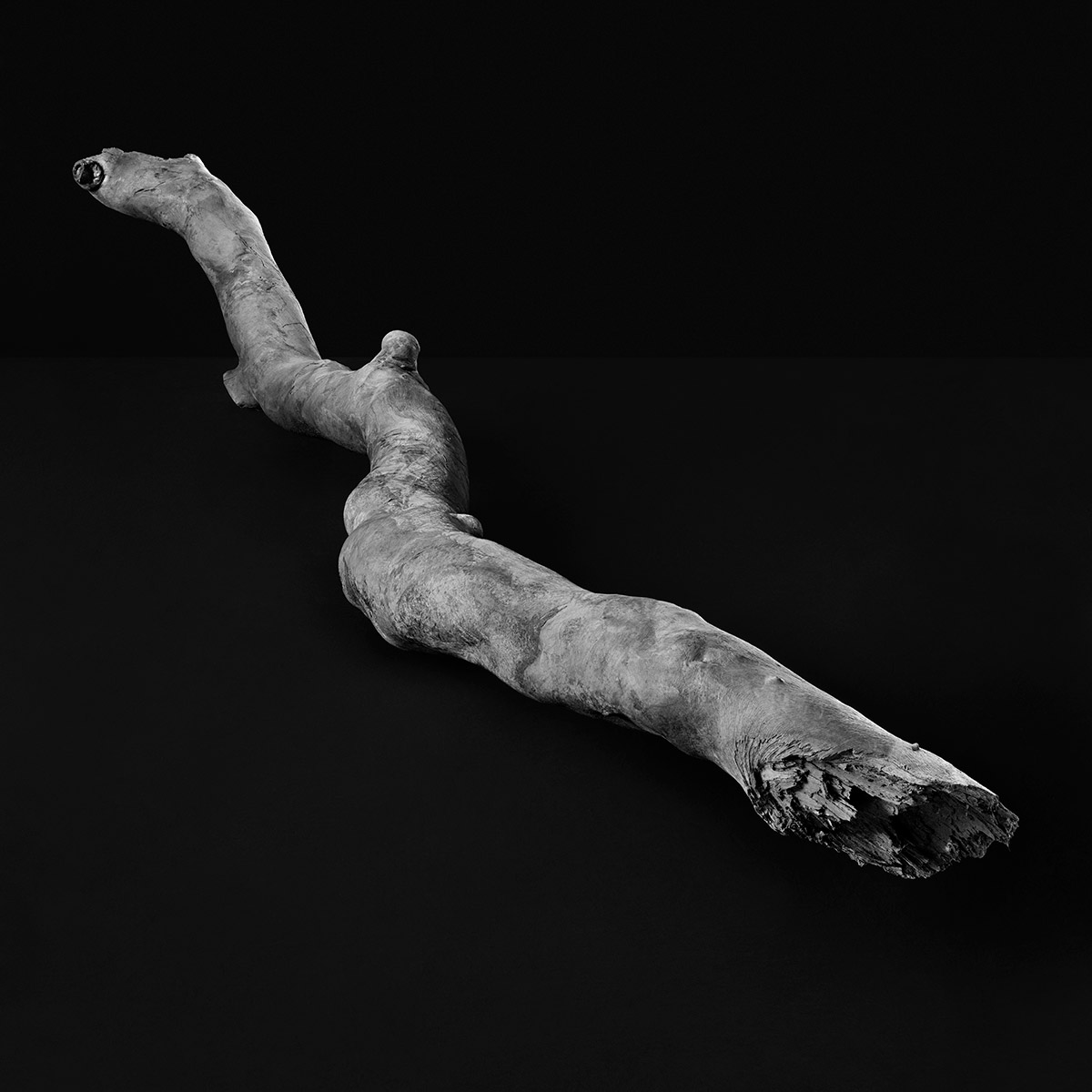
His series for Biyal moves from the panoramic views of his earlier work to concentrate on detail which you find at ground level; as in the very lowest register of Ulysses Gaze (above), among the branches that hardy gum trees habitually shed in order to survive fierce, droughty summers (campers beware!).. David wanted to convey their extraordinary weight and texture, their age and endurance—the Guildford tree is estimated to be over 500 years old—and their role as an animal, bird and insect habitat.
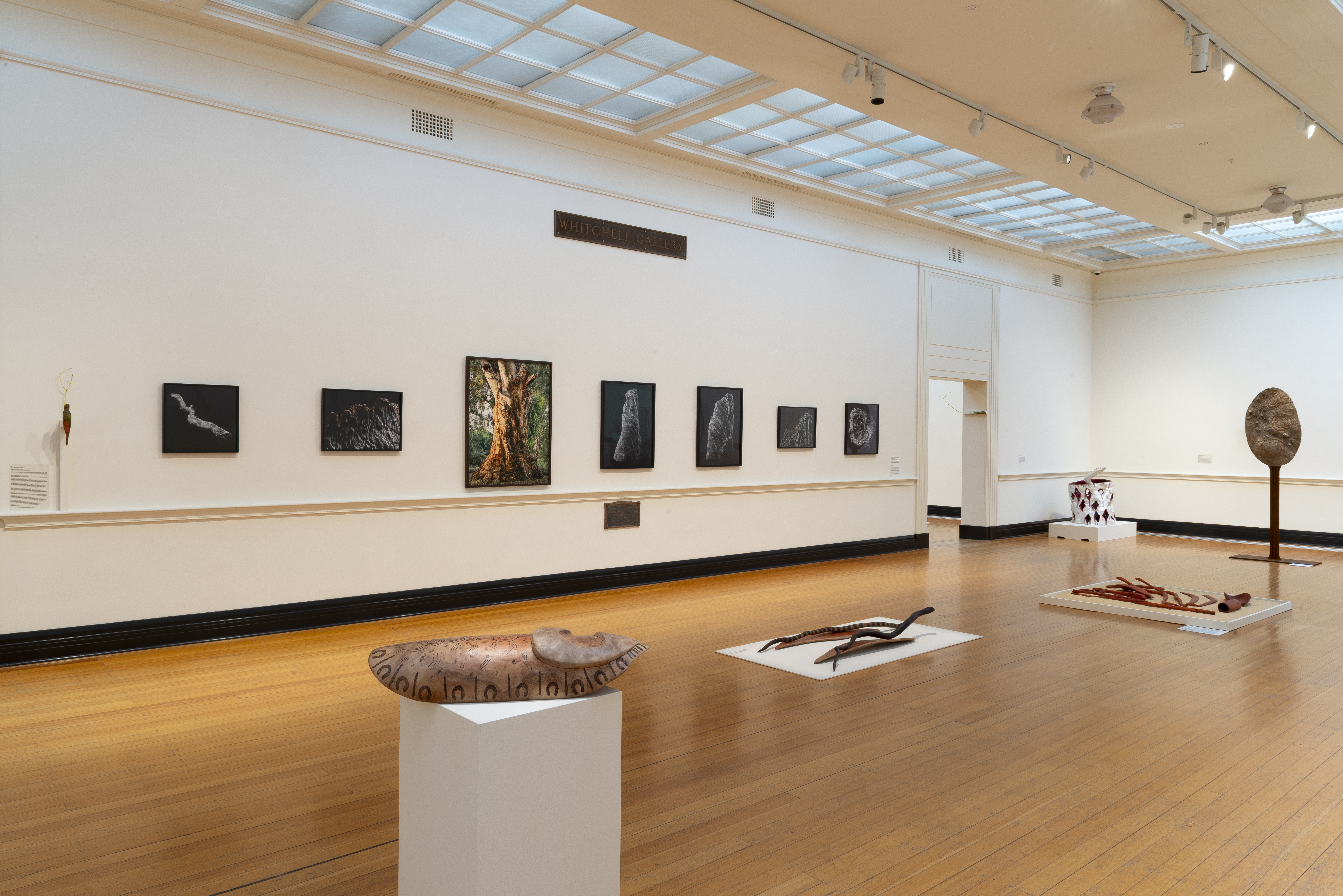
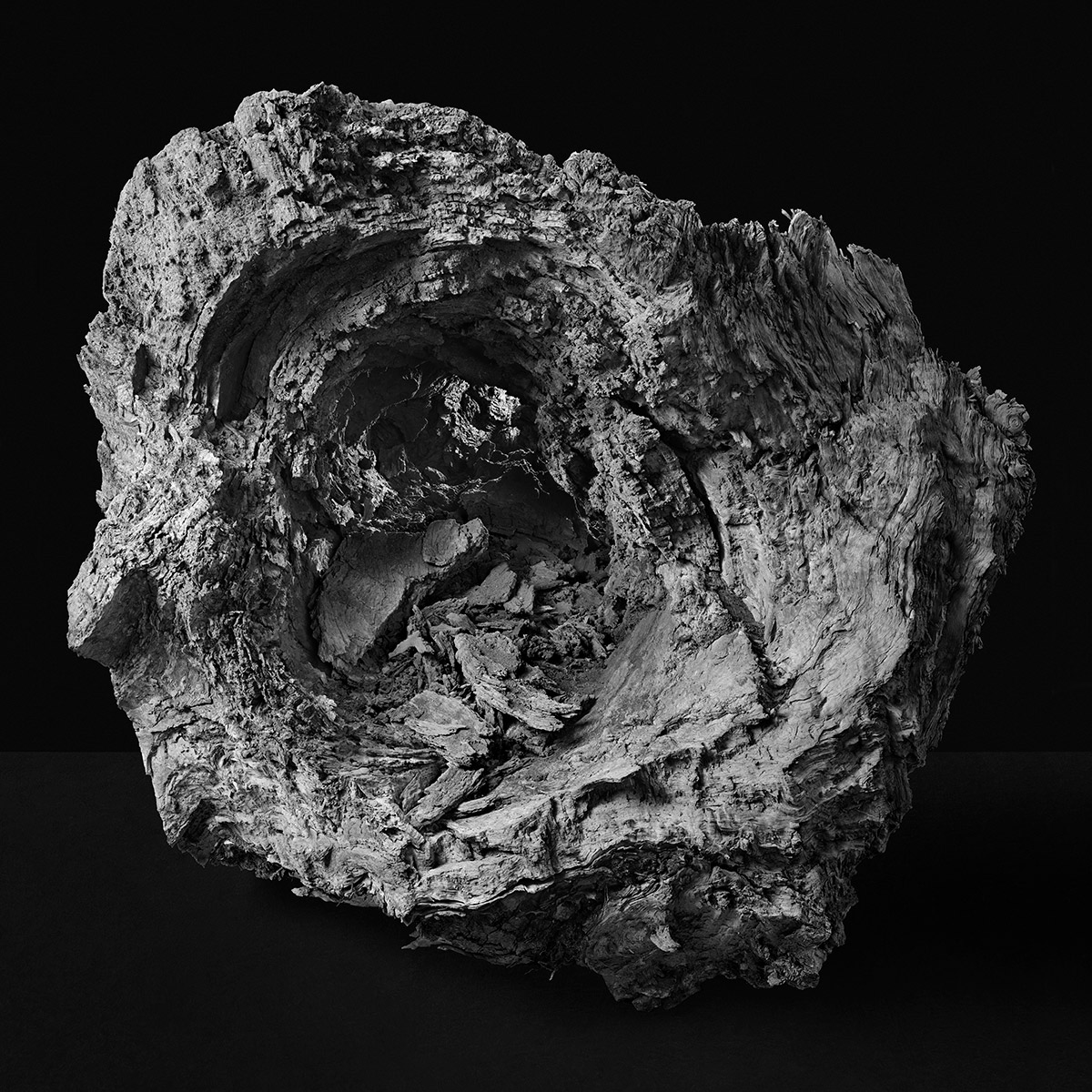
To achieve that change of perspective, he has drawn on his commercial experience, moved in close, and using focus-stacking to carve these wooden forms in continuous focal depth, rendered his subject monumental against the unfathomable black background. They may be seen as the photographic equivalent of the sculptures that surround his framed prints at Castlemaine Arts Museum. In fact, he tells me, one of the images Nature Morte, Study 05 depicts the branch supporting the huge boomerang and the Seven Sister spears in Sarah Jane Hall’s Mangga Mangiardi. Make the comparison yourself and you will understand the depth of Rosendale’s spatial focus effect.
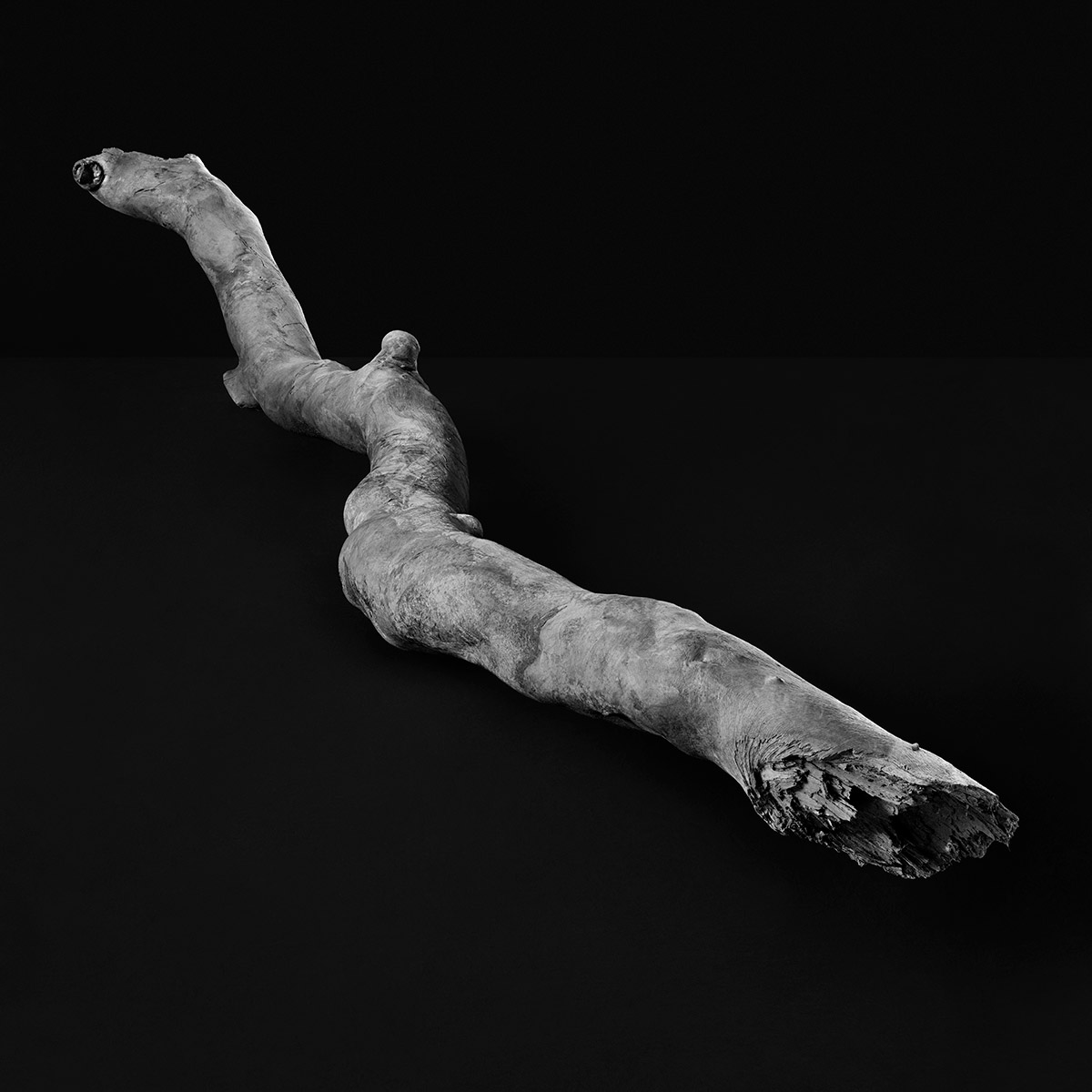
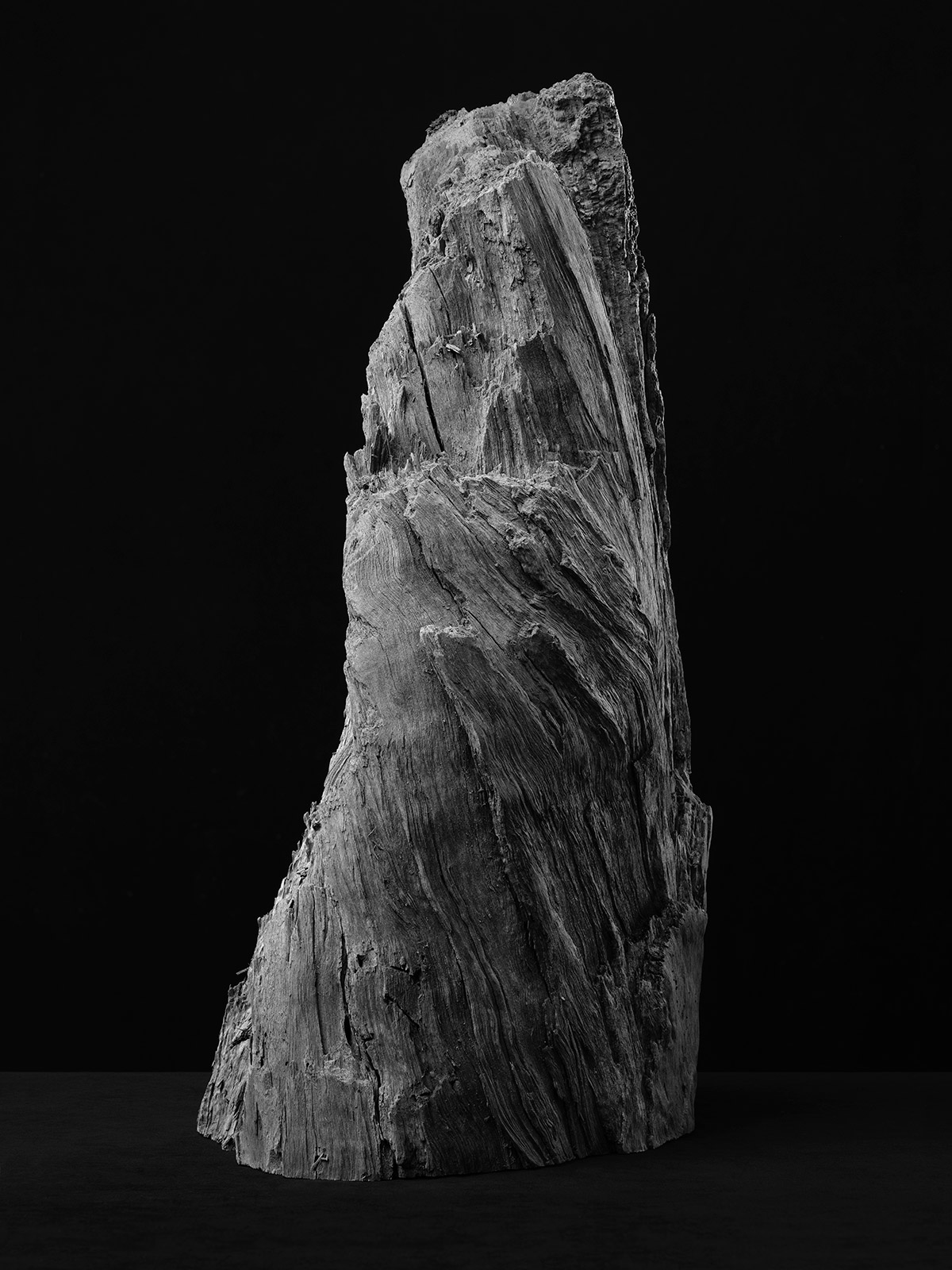
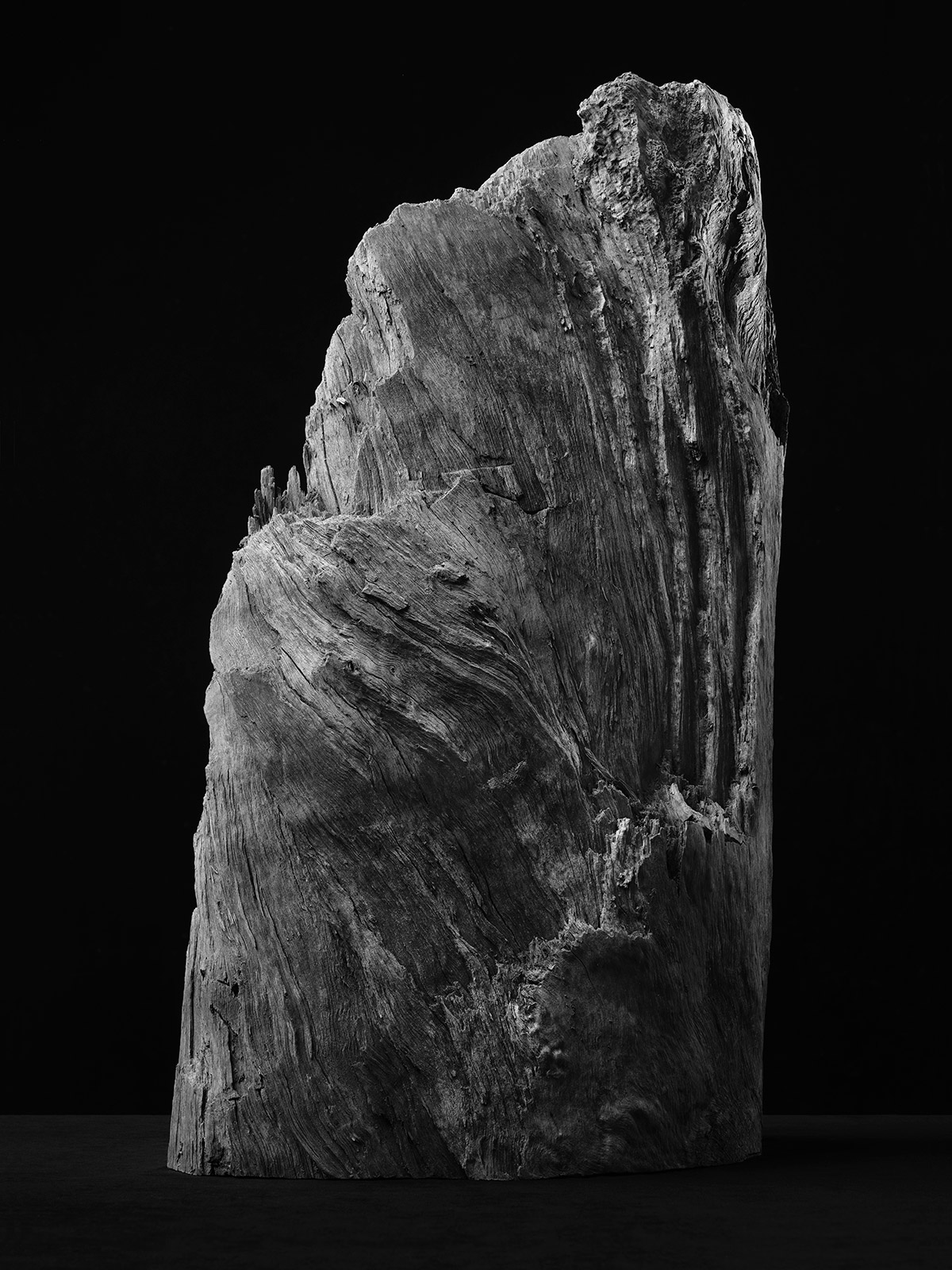
Grimwade’s prints are monochrome, but like his, two of Rosendale’s subtly incorporate colour. Retrieved selectively from his digital file, traces of the red of the red gum poignantly hint at the calamitous injury suffered by the tree.
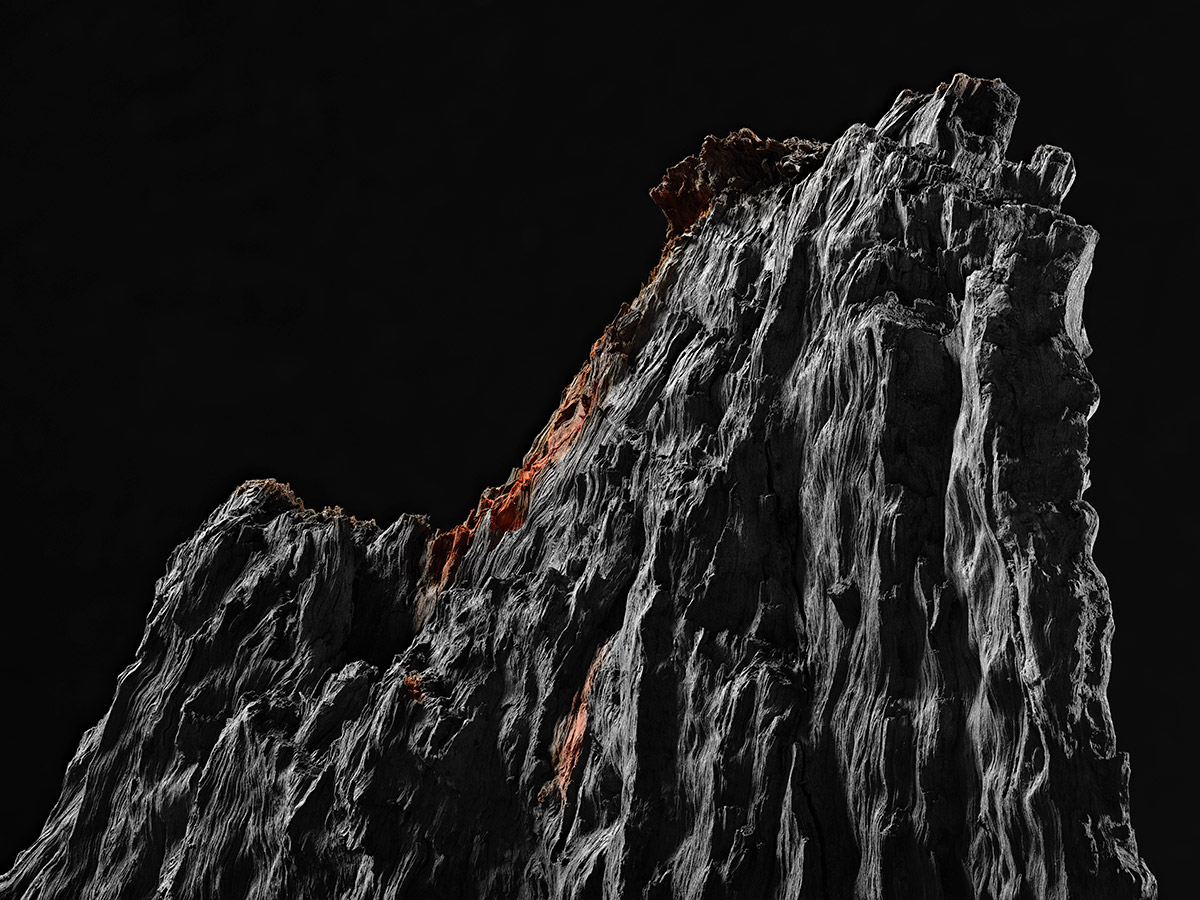
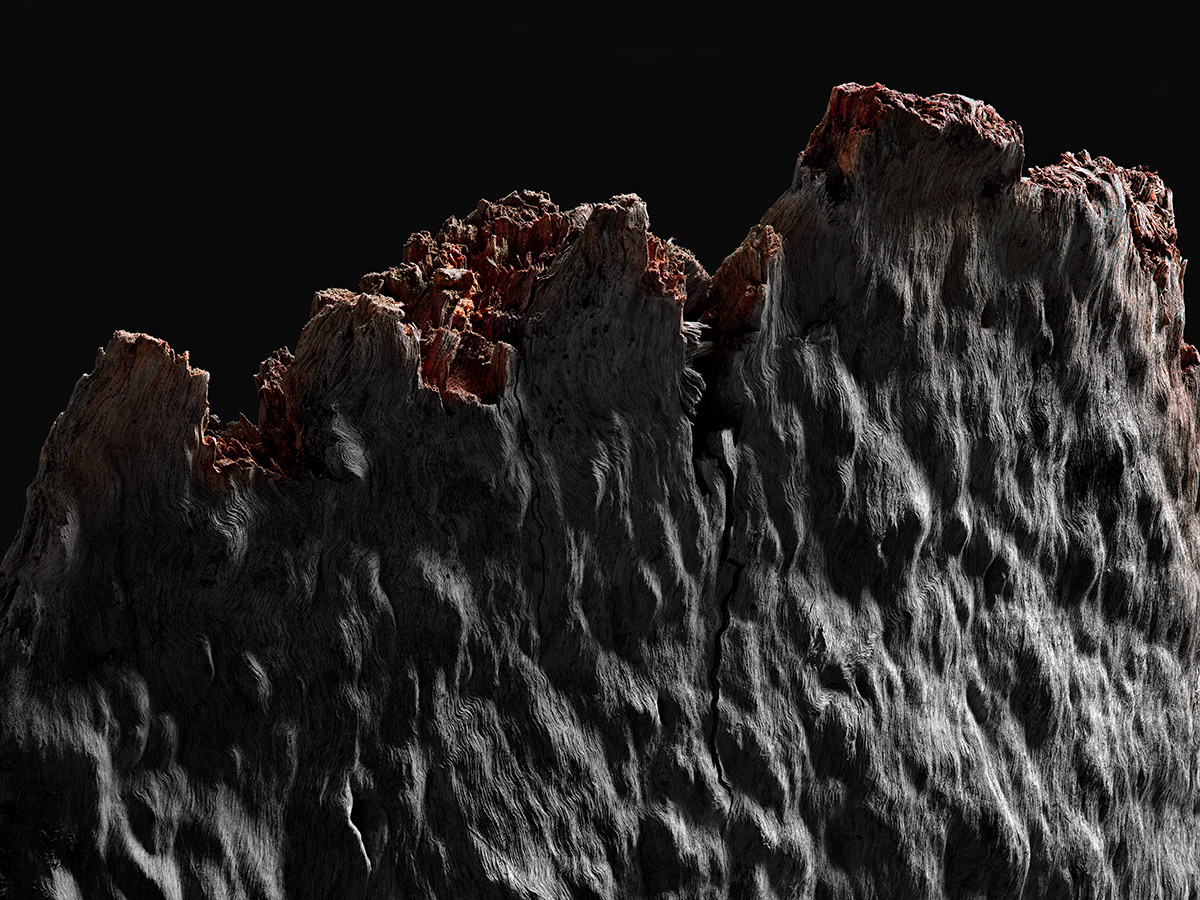
An exquisite, intimate detail takes the viewer inside a branch, into what may have served as the home a sugar glider, or of the insects whose incremental, consumptive activity eventually had caused the limbs to weaken, and to collapse in the storm.
It is only the one full-colour print, hung near the centre of the series, that anywhere in the exhibition places Biyal in its current habitat. There is a 1970s photograph showing the ‘Big Tree’ surrounded by bare ground and, at its left, a makeshift fence constructed of wired-together sticks, probably branches from the tree itself. Rosendale’s image—one selected from many attempts to capture either in the most painterly light—by contrast conveys the solid magnificence of the tree. He has cannily framed it as if it is in a lush bush setting, though in fact it is in the midst of Guildford town. Shards of the missing limb hang in empty space at top right, and it is only the size of the leaves that indicate its scale; the head of an adult human standing at the base would be level with the line of rough bark at the base!
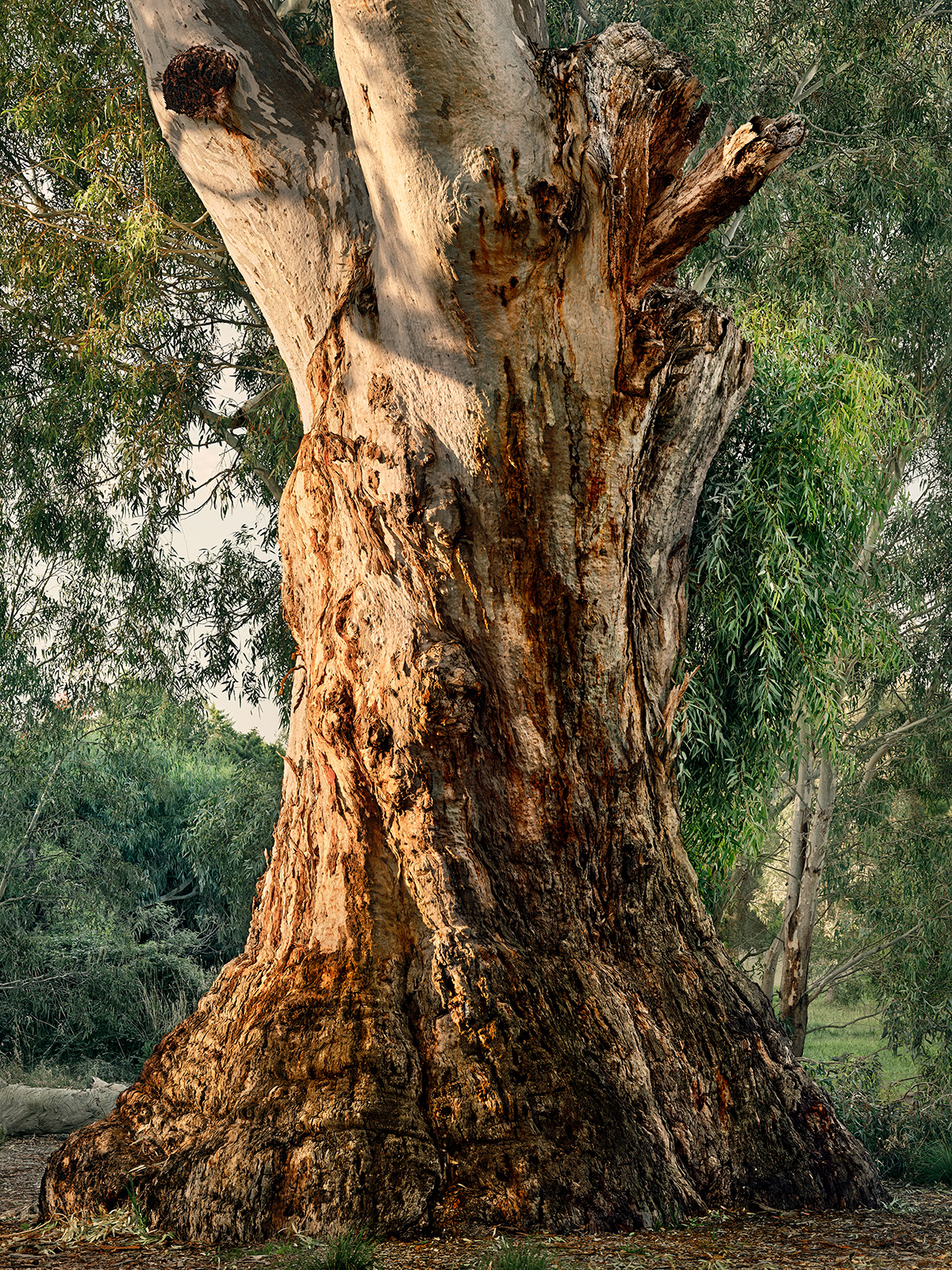
Rosendale’s photography, placed even among sculptural works that are physically ‘in the round’, is able to expand the dimensions of the exhibition’s tribute to Biyal.
There remains a final chance before 29 November to see the bounty of Country returned through varieties of artistic ingenuity in Biyal at Castlemaine Art Museum before it tours to other venues


