 Fame fades, or is fortified, but Frances Derham, artist and art educator, is now largely forgotten despite her efforts in making art an essential part of children’s experience of kindergarten and primary school.
Though not a photographer, she has a significant link to one.
She corresponded with anthropologist and photographer Charles Mountford and artist Rex Battarbee, and early in 1938 she visited the Hermannsburg mission in the heart of Australia, 100km west of Alice Springs. There, she gathered from her workshops with local aboriginal children over 200 non-traditional, European-style drawings. These were included in her exhibition Child Art From Many Countries, which she toured across major Australian cities starting from June 1938.
Notably, some of these children later became recognised artists of the Hermannsburg School. The impact of the exhibition was highlighted by George Bell, proponent of modernism against the prevailing conservatism of the Australian art establishment, when he commented; “The whole effect of the show is stimulating and is a lesson on the encouragement of natural expression in art to all teachers and, indeed, to all artists who are not mentally sterile.”
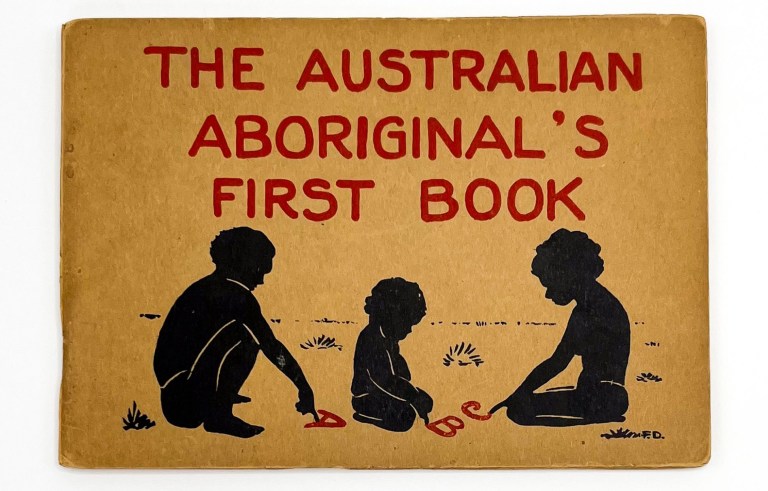
In 1948, Derham journeyed to the Aurukun Mission in Queensland to teach and study Aboriginal children’s art. There she was the guest of Geraldine MacKenzie, volunteer educator and the wife of Bill MacKenzie, superintendent of the mission, both resident at Aurukun for over 40 years. Derham had met MacKenzie at a meeting of the Victorian Aboriginal Group in Melbourne in 1942. As Derham recounts, when MacKenzie appealed to the group “for someone to write a primer for Aboriginals, I asked her why she didn’t do it herself, and then followed nearly a year’s work…” That led to her contributing the pen and ink illustrations for the 1948 book The Australian Aboriginal’s First Book.
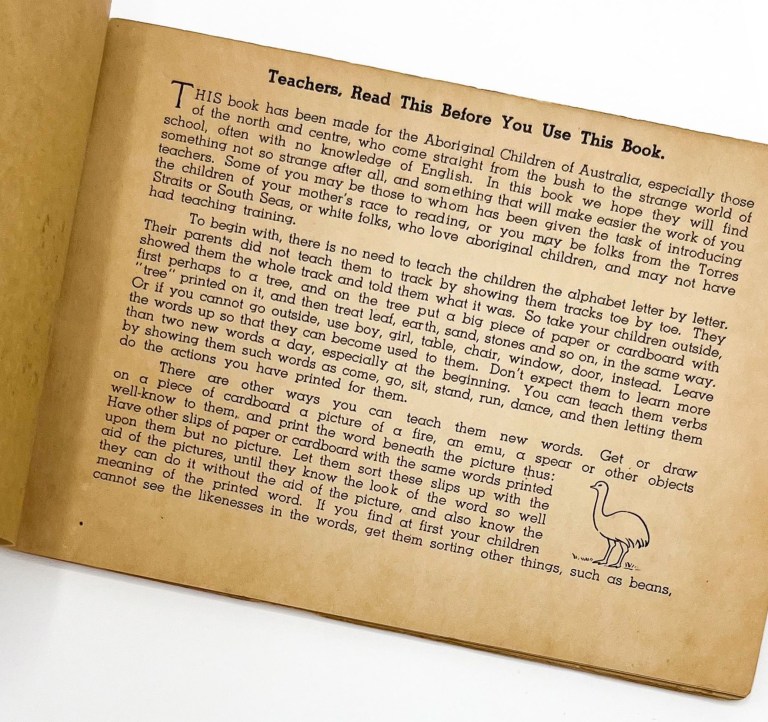 Children’s picture books’ simplicity is deceptive, as any author or illustrator of them will tell you; paring them down communicate their essential message attractively to children, and their parents, is a considerable undertaking.
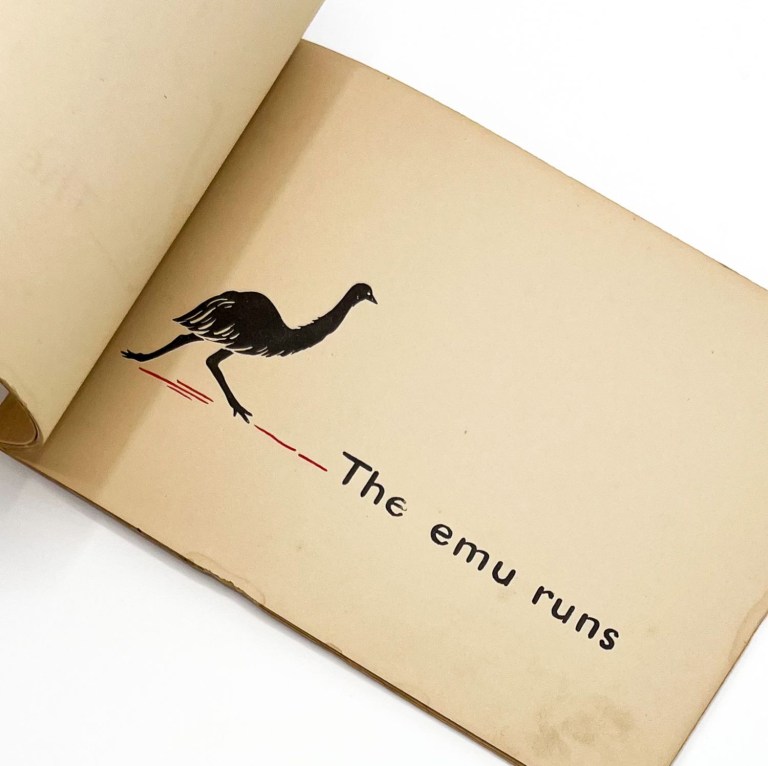
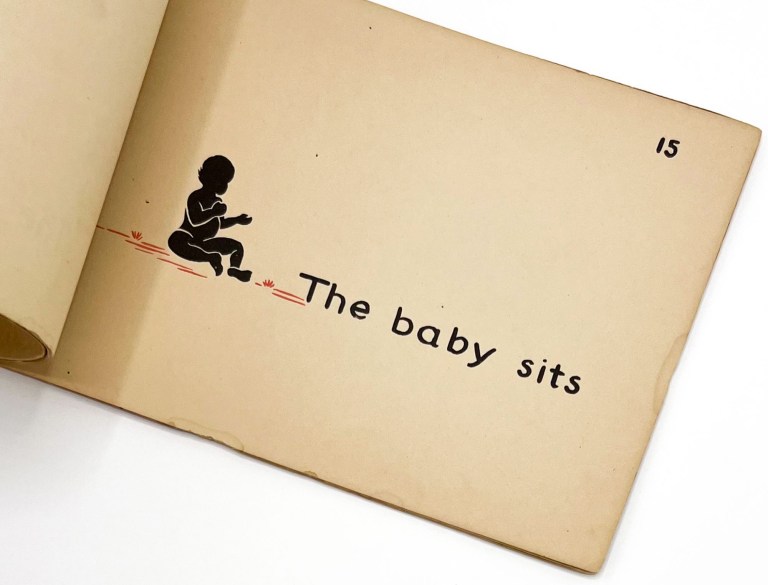
Derham supported Geraldine Mackenzie, promoting her in a 1948 article in the Victorian Artists Society magazine The Australian Artist. Derham also proposed that “primitive races” retained their eidetic memory for a longer time, enabling them to draw objects from memory.

The book was issued in a new edition in 1951. Titled The First Australian’s First Book, it presented an early use of the term. However it featured a new cover by Roma Thompson, in which the subjects, compared to Derham’s more lively silhouettes and vibrant red on warm-toned card, appear to slump into poses that read as dull or defeated as rendered in black on a greenish paper.
In 1948, the year that the first edition appeared, Mountford led the American-Australian Scientific Expedition to Arnhem Land (also known as the Arnhem Land Expedition) a notable endeavour; one of the largest scientific expeditions to have taken place in Australia.
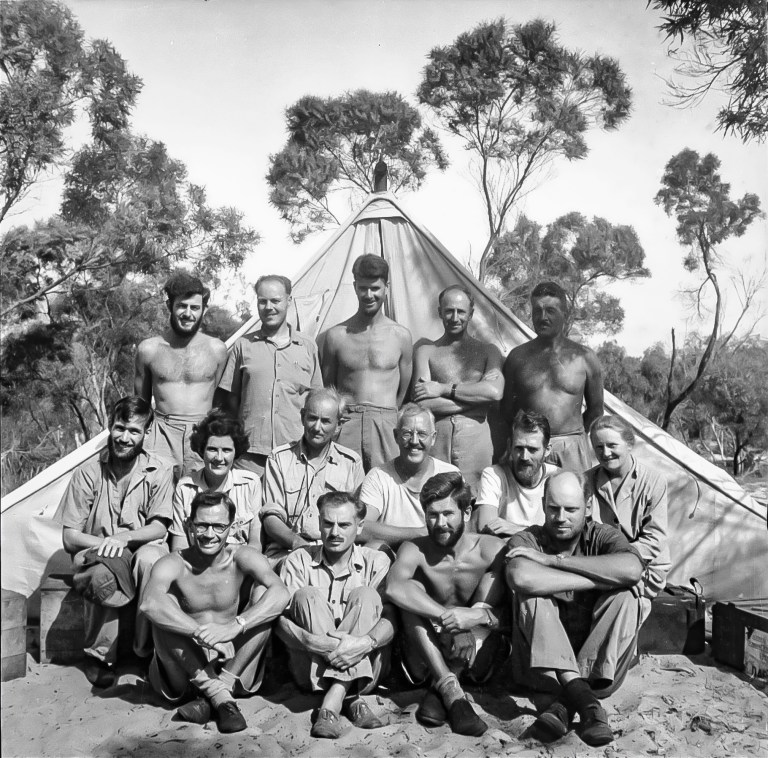
At times a contentious figure within his field, and at loggerheads in particular with Fred McCarthy (front row, left, above) over their divergent documentation methods and interpretations of indigenous rock art, Mountford rose to prominence as a leading advocate on matters pertaining to Aboriginal affairs, and frequently sought after by the media for his insights, despite his lack of formal qualifications. This earned him disapproval from the academic community, notably from Professor Adolphus P. Elkin, an anthropologist at the University of Sydney, who challenged Mountford’s credentials and held a condescending view of his humble working-class origins. This critique emerged when the Arnhem Land Expedition gained attention in the Australian press.
Mountford’s beginnings were indeed modest. His biographer, Max Lamshed, recounted in 1972—just four years before Mountford’s passing at the age of 86—how he toiled from his early teens at his father’s chaff mill, undertook manual labour in a copper mine, and at scrub-cutting and stone quarrying, and later joined his father in the sale of stereoscope slides. This endeavor continued even after they relocated to Adelaide, but foundered because the self-conscious son found pursuing sales door-to-door embarrassing. Following the consequent collapse of their business, Mountford found work as a stable hand in Kilkenny, and later as a striker in a blacksmith’s shop, then secured a more lasting position as a conductor on the horse tram service (valuable experience, one would think, for his future endeavours in anthropology). This role continued even after the tram line transitioned to electric power. Meanwhile, he pursued studies at the South Australian School of Mines and Industries. In January 1913, he secured a permanent role in the engineering workshops at the General Post Office’s Engineering Branch, although he continued his studies in mathematics and natural science at the School of Mines and the University of Adelaide, despite having not not matriculated, he faced no prospect of graduating.
Mountford also demonstrated talent as a photographer. Influential figures in Aboriginal studies, Norman B Tindale and Frederic Wood Jones, encouraged him to document Aboriginal art sites around Adelaide for the Anthropological Society of South Australia and the South Australian Museum. Despite his initial status as an amateur in the field, he joined a circle of enthusiasts of Australian anthropology, including figures such as AW Howitt, Lorimer Fison, RH Mathews, John Mathew, and WE Roth, all self-taught and often self-funded. Mountford nurtured a deep fascination for traditional art forms, a passion he shared with Derham, and after the premature death of his first wife in 1925 when both were 35, he joined his father on excursions to photograph Aboriginal art sites.
During the 1920s and 1930s, Mountford actively participated in anthropological expeditions, embarking on journeys through remote regions of Australia. He captured sound recordings of Aboriginal vocalists and actively encouraged the visual representation of traditional stories. A noteworthy collaboration emerged as he teamed up with Hermannsburg School founder and watercolour artist Albert Namatjira, resulting in the creation of a book and a documentary film. Notably, Mountford acknowledged Namatjira as an associate producer in this joint effort, indicative of his attitude to First Nations people as equals, a stance rare among white Australians of the time.
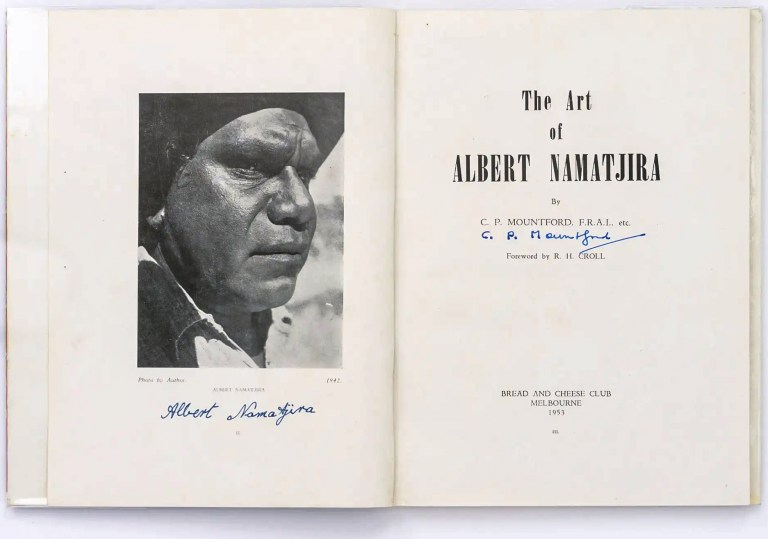

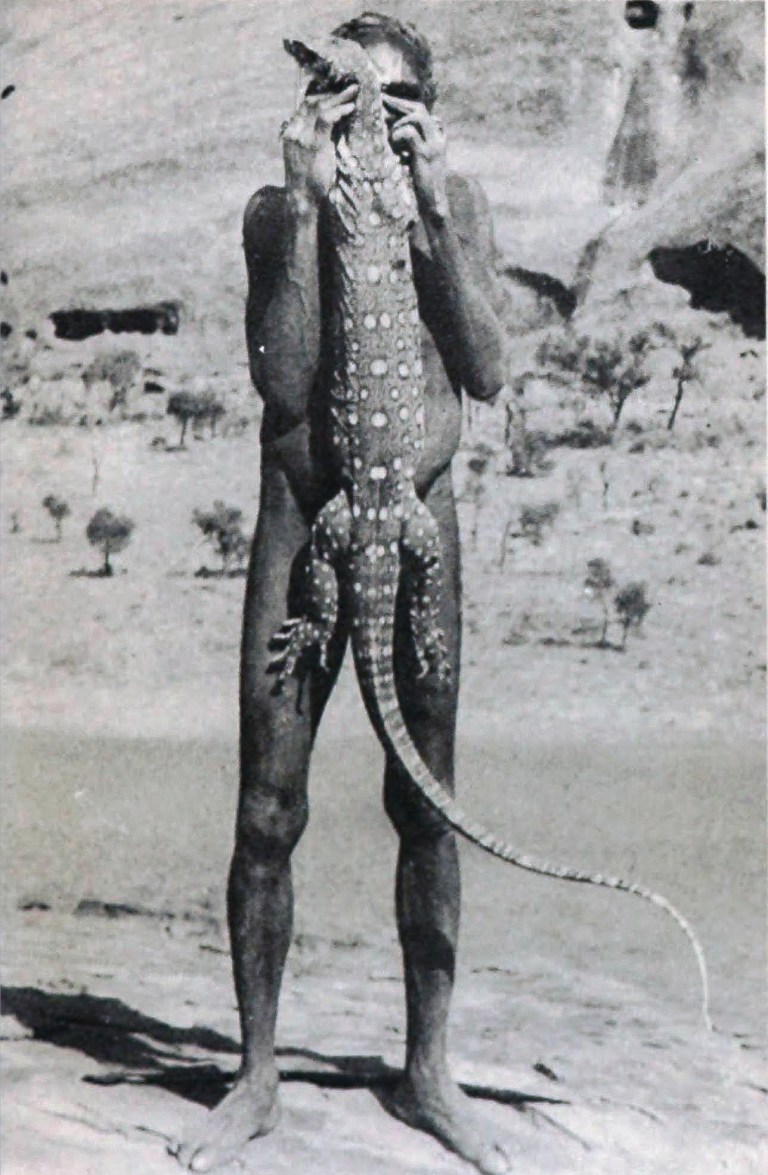
His exploration in 1940, with his second wife Bessie, of Uluru and Kata Tjuta, resulted in a film Brown Men and Red Sand and book of the same title published in 1948. Despite facing prejudice and challenges, Mountford’s dedication to documenting and promoting Aboriginal culture led to significant contributions to the field of ethnology.

Mountford’s photographic work and colour films record can be said to have led to the inception of the Arnhem Land Expedition. Toward the conclusion of World War II, following the screening of his materials in Canberra, Mountford captured the attention of Arthur Calwell, the wartime Minister for Information, and from 1960 leader-to-be of the Labor Party in opposition to Robert Menzies. Calwell advocated for stronger Australia-US relations, regarding the United States then as an exemplar of progressive democracy, a reputation now junked by Donald Trump.
In his pursuit of bolstering this transnational connection, Calwell dispatched Mountford to the United States between 1945 and 1946. Across various locations in the US, including schools, Mountford conducted presentations of his films and photography, with the most significant event occurring at the National Geographic Society in Washington DC attended by around 4000 individuals including National Geographic editor Dr. Gilbert H Grosvenor, at the Cosmos Club—an establishment frequented by Washington’s intellectual elite and birthplace of the Society.
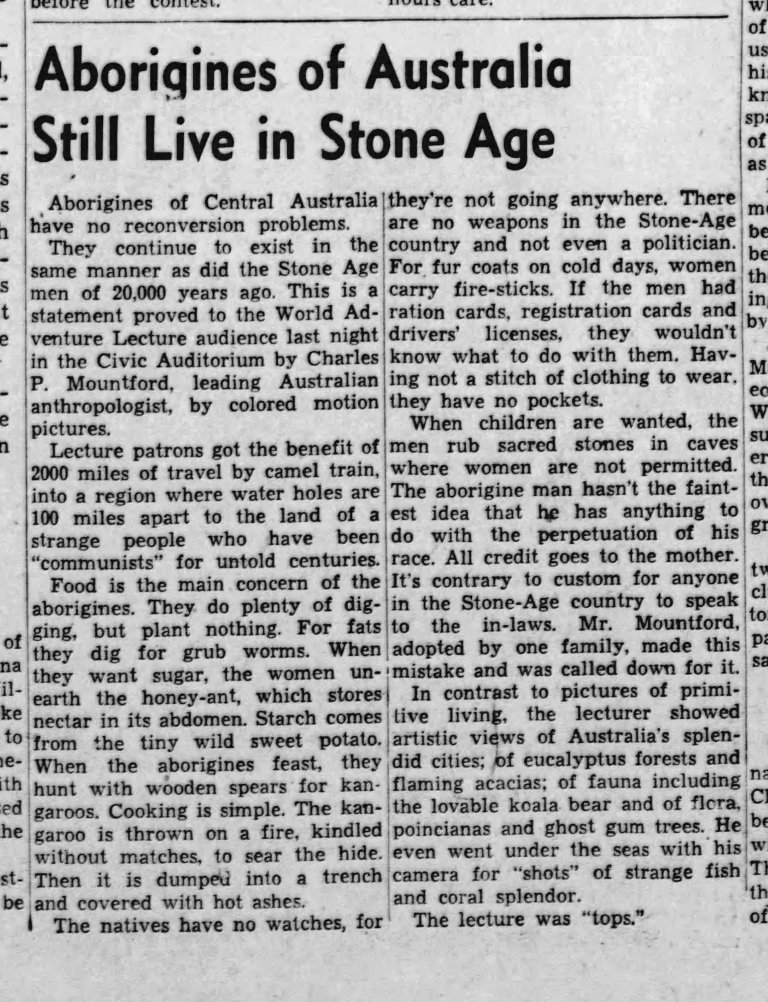
American perceptions of Australia (and their presumption of the superiority of the capitalist lifestyle) are evident in the title of the article Grosvenor commissioned Mountford to write; “Earth’s Most Primitive People: A Journey with the Aborigines of Central Australia.” Discussions between Grosvenor and Mountford ultimately led to the genesis of the Arnhem Land Expedition; Grosvenor’s endorsement prompted the National Geographic Society to grant an initial fund of US$8500 for the expedition.
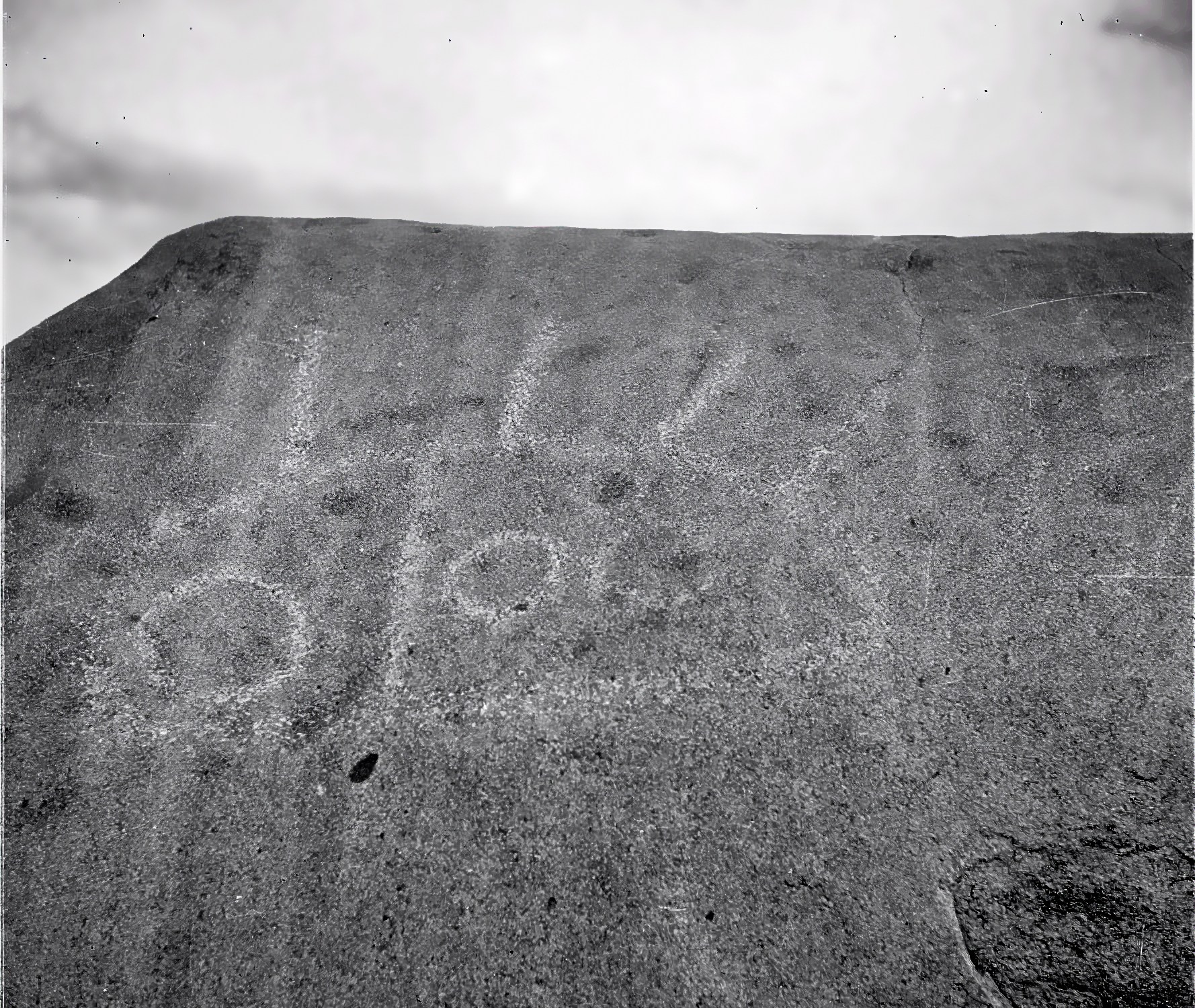
It is in his photographs of the activities of his aboriginal subjects that we discover his respect and admiration of them. In 1935, he took on the role of secretary for a board of inquiry tasked with investigating reports of mistreatment of Indigenous Australians in the Northern Territory, specifically at Hermannsburg and Uluru, and in the same year, he joined an expedition organised by the University of Adelaide’s board for anthropological research to The Granites in the Northern Territory. There he photographed a boy at the waterholes among the granite boulders, a man spinning string from animal fur, and the process of knapping glass from discarded bottles to turn them into exquisite, and deadly, spearheads, like those held in Castlemaine Art Museum.
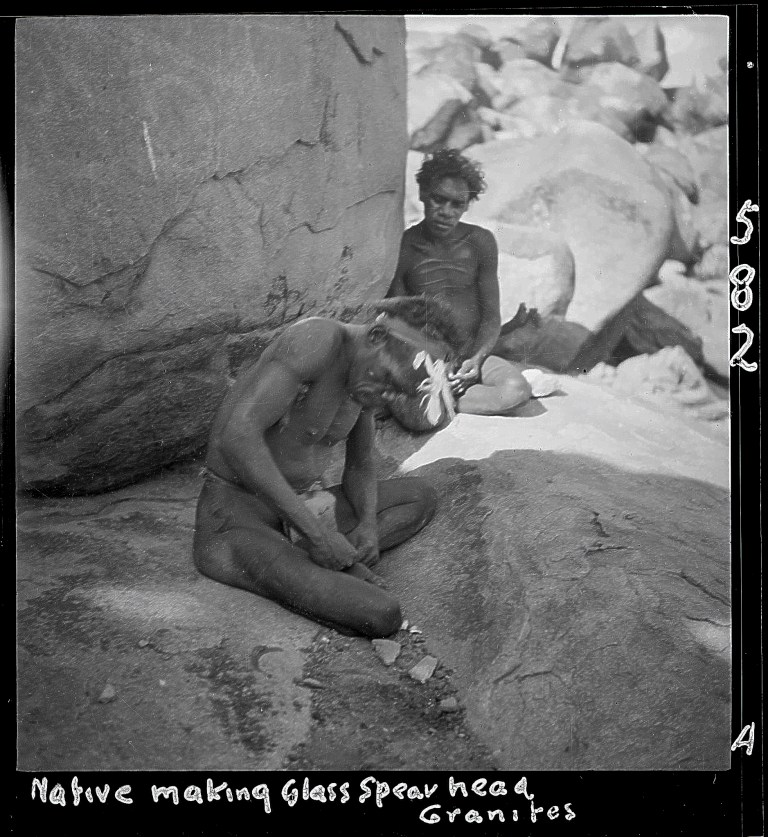


The Granites in the Tanami Desert 540km north-west of Alice Springs is a gold mine established by a prospector in 1901 and now operated on an industrial scale by Newmont Mining. The desert people quickly adapted their spear making to the availability of glass, and this adaptability is reflected in their rock art, created by pounding the weathered patina of granite boulders to reveal a lighter tone beneath to make traditional designs but also depictions of the arrival of the white prospectors in motor vehicles.
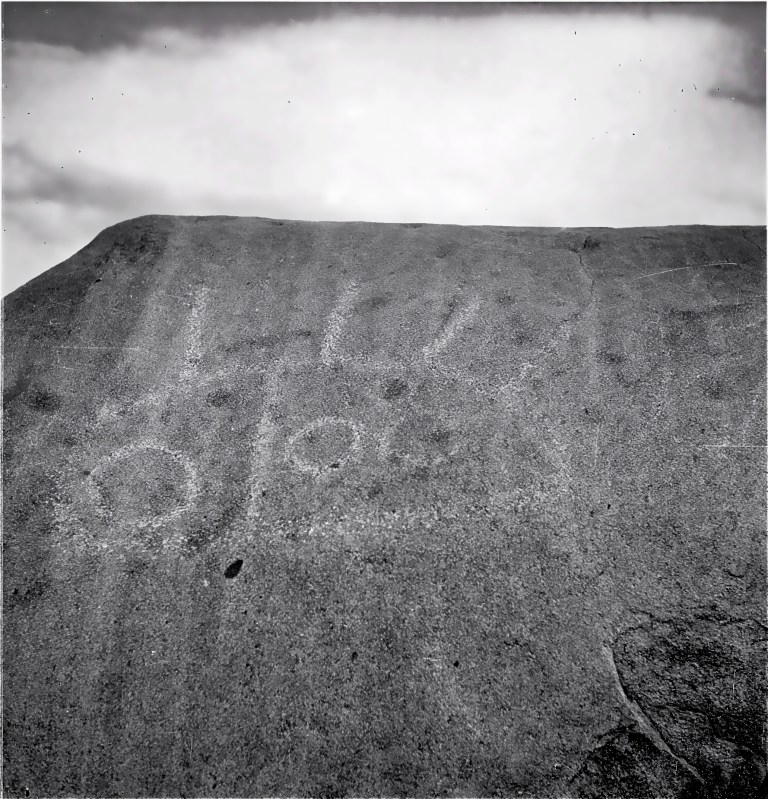
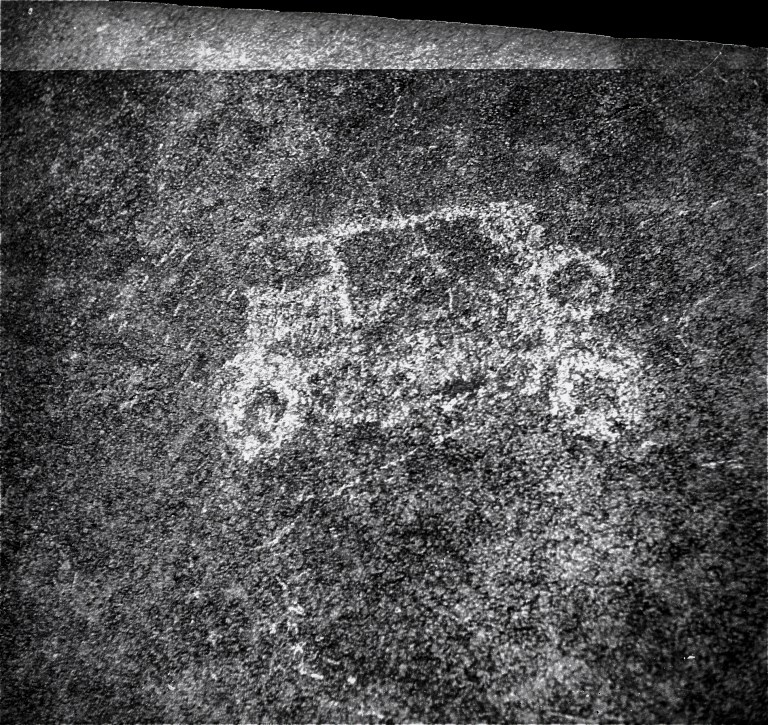
The sophistication of their technology with the sparest of means, their skill, and the adaptability to novel phenomena by these people, as evidenced in Mountford’s photographic records, contradicts the perception of them as locked in the ‘Stone Age.’ That certainly was brought home to me on a recent visit to Tae Rak (Lake Condah) to visit the eel traps and remains of stone dwellings of the Gunditjmara people who so bravely fought white colonisers in the Eumeralla Wars and are returning to their lands.
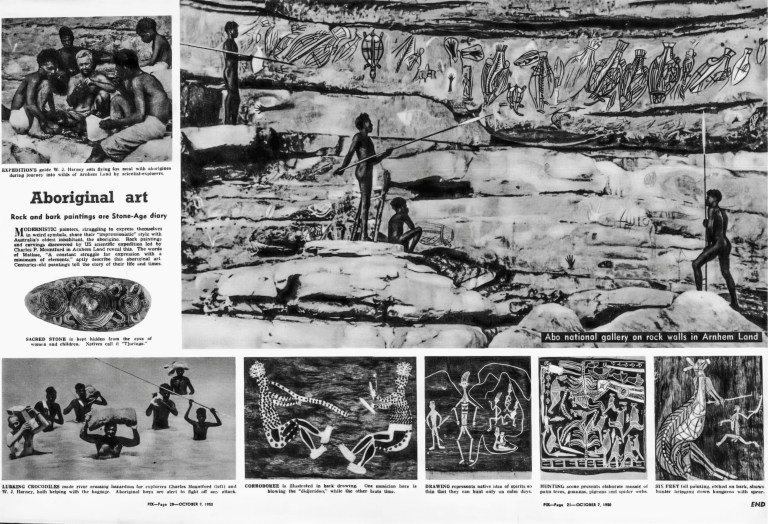
The 1948 American-Australian Scientific Expedition to Arnhem Land was well publicised in articles featuring Mountford’s photography and increased Australians’ awareness of the ancient lineage of aboriginal art. The captions in the PIX magazine spread above are indicative of Mountord’s primary interest in the art as indigenous peoples’ shared cultural heritage fundamentally inseparable from narrative, place, and identity, and transmitted through song and ceremony, a perspective represented in his books The Dreamtime (1965), The Dawn of Time (1969), and The First Sunrise (1971) – in collaboration with artist Ainslie Roberts.
In emphasis of the primacy of narrative is the aboriginal engagement with the Expedition in the legend of ‘The American Clever Man’ (Marrkiibu Burdan Merika) recorded by Bruce Birch. One member of the Expedition was David Johnson, Curator of Mammals at the Smithsonian Institution, Washington whom the locals observed as he taxidermied the animals that he shot and collected, apparently bringing them back to a kind of suspended animation. They unsurprisingly arrived at the idea that he was a marrkijbu, possessing an enhanced capacity to manipulate both the natural and supernatural realms—a ‘shaman’ or ‘clever man.’ Johnson indeed aligned well with this description, particularly in regard to his mastery over elements of the natural world. He wore light coloured clothing and yet emerged from the bush pristine.
According to Johnson’s own account, he disembarked at Cape Don on September 18th. He spent the subsequent three weeks on the Cobourg Peninsula, with the Cape Don lighthouse as his base. From there, he ventured on foot to Knocker Bay on Port Essington. He left Cape Don on October 8th and traveled overland to join the main party at Oenpelli. This twelve-day journey allowed him a comprehensive view of the entire Cobourg Peninsula, with its unique collection of introduced large mammals.
Johnson never recorded a complete account of this journey, and our knowledge from the Balanda (white) perspective remains fragmentary, but it is known that Johnson undertook the journey alone, hunting game en route, following a vehicle track for a significant portion of the route.
The Indigenous account, however, is replete with specifics. Uncannily, Johnson sped through 200 km in two days! He rested in Inybarlmun on the neck of the Cobourg Peninsula, before traversing the escarpment or ‘stone country’ north of Gunbalanya. There, he visited a sacred ancestral site named Dilkbany and captured the spirit of Marrarna, an Alarrju clan member, whose remains had been placed there among his paternal ancestors’ lands years earlier.
From Dilkbany, Johnson carried Marrarna’s remains initially to Gunbalanya, where he united with the main expedition party without disclosing Marrarna’s capture. He then transported the remains back to the United States via Darwin, where Marrarna was revived as a vigorous young man. Allegedly, Johnson reaped substantial wealth as a consequence of these events.
This occurred unseen by anyone but Johnson, but they are known from a letter and accompanying photograph that reached Minjilang settlement on Croker Island many years later, addressed to Marrarna’s brother’s daughter, Ada Brown. Reportedly, Ada was deeply moved upon seeing the photograph, identifying it as a depiction of Marrarna in his youth. The specifics of the letter, its contents, and its arrival date remain unknown. Regrettably, the photograph itself no longer exists, having been buried with Ada Brown.
In Mountford’s prioritising of myth he differed from McCarthy’s more granular and methodical scientific approach, which was the cause of friction between them and one of the causes, against Mountford’s evident egotism and frank single-mindedness, of the unaccomplished coup that he faced as leader in the midst of the Expedition; academics can be vicious in the politest manner.
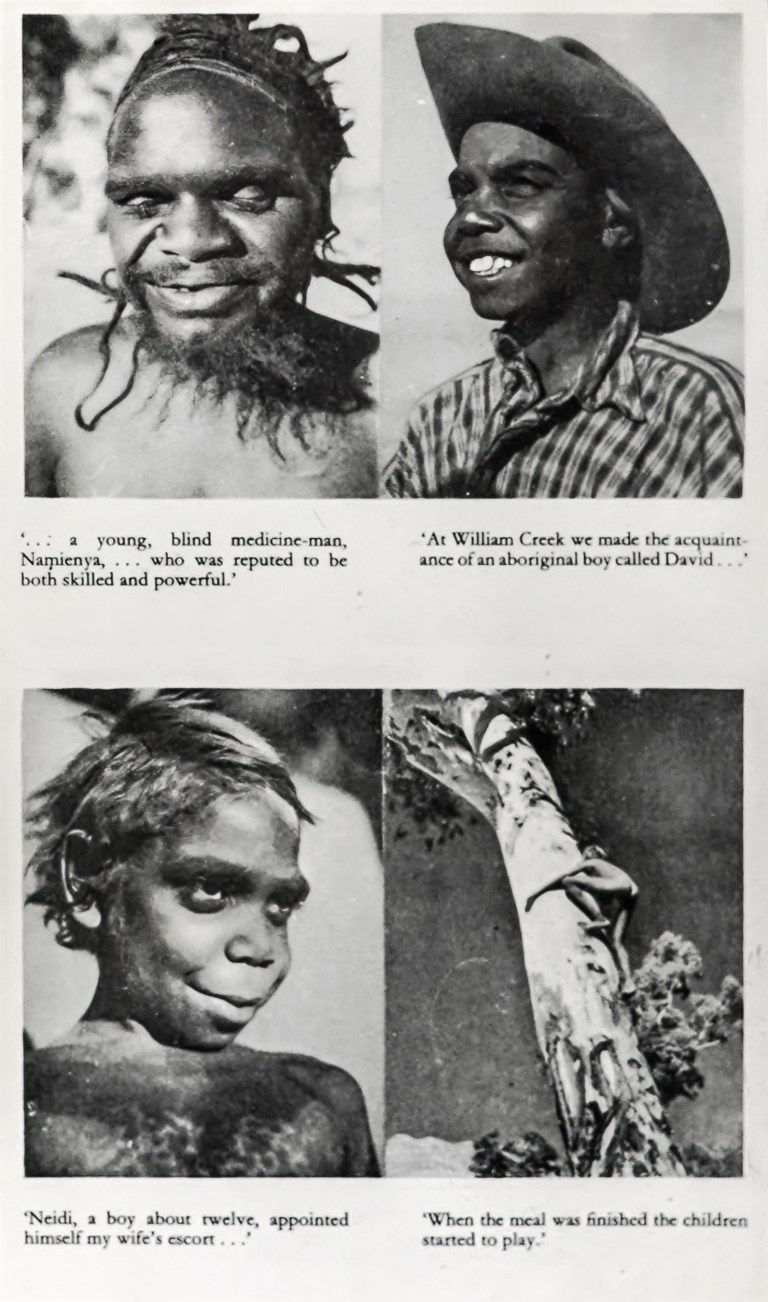
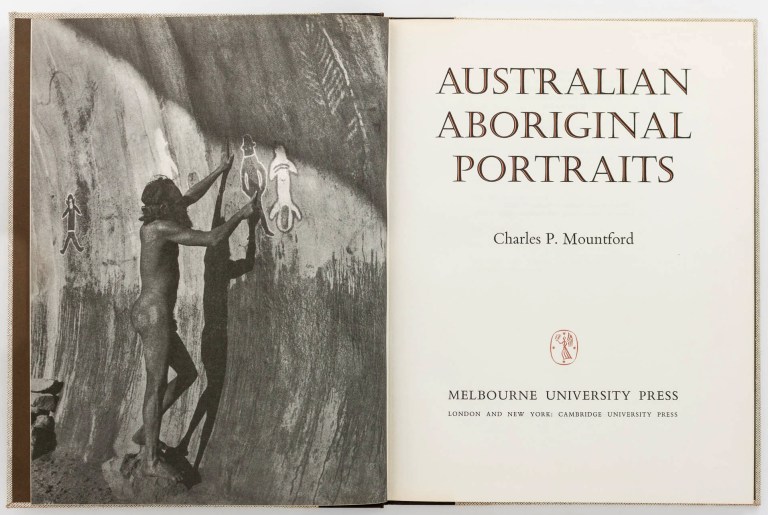
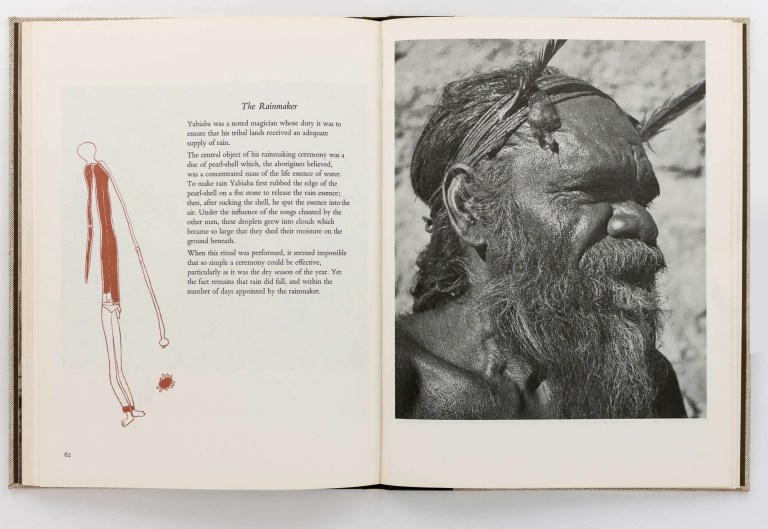
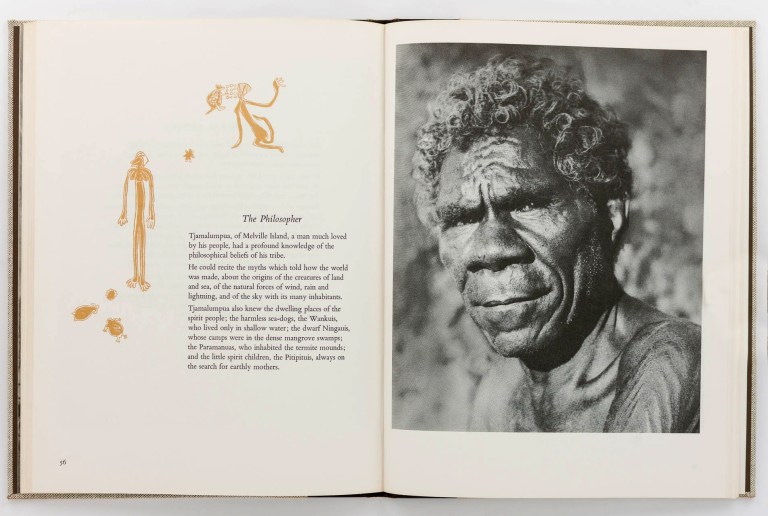
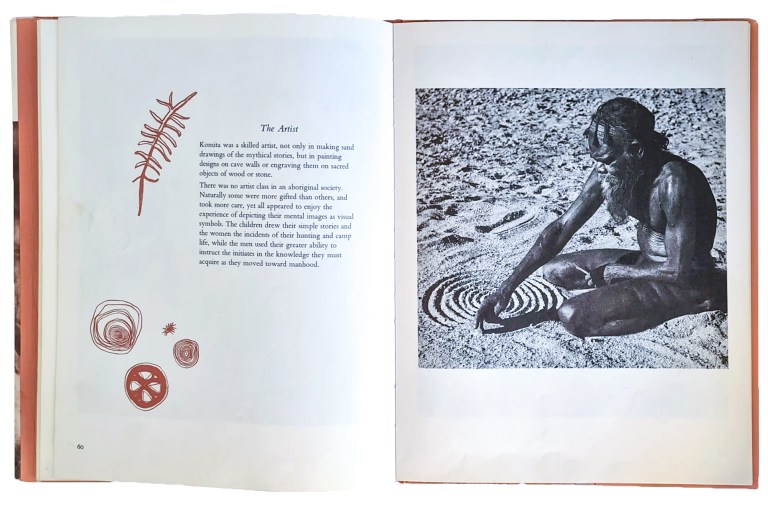
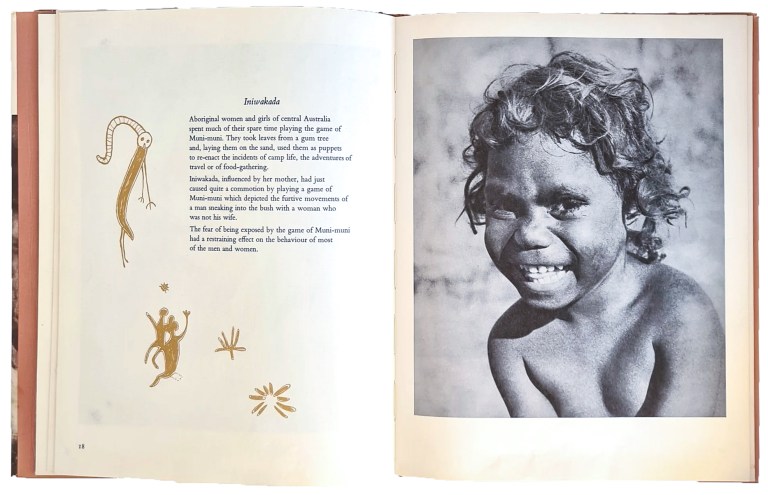
The tightly cropped head shots he made in throughout his career and especially those in the elegant publication Australian Aboriginal portraits (1967) convey Mountford’s humanism through their equanimous eye-level perspectives that acknowledge the dignity of his subjects. Conservative, pictorialist even, as they might be (he was twice President, Adelaide Camera Club), there is a quiet candour about these carefully framed features isolated in the hard, unmodulated outback sunlight.
Despite garnering accolades including Geographical Society awards in the 1940s and an OBE in 1955, and the honorary doctorates and medals received at the end of his life and the many publications and films he left behind, Mountford who emerged from humble origins and was invested with honour, is now undeservedly forgotten, like Frances Derham. As I heard the Tae Rak guide’s version of the life cycle of the freshwater eel, still not completely known to science, I understood that aboriginal legend, like that of ‘The American Clever Man,’ and our own mythology, is not fixed but is in flux, constantly adapting through retellings, never complete even if written down.


 On This Date in Photography: by James Mcardle
Excellent as always James, as well as being a most important record/commentary.
LikeLike
Thank you Brian. The forties is a period in Australian photohistory, still erroneously considered barren, that deserves the deeper exploration that the anthropologists and archaeologists have been giving it.
LikeLike