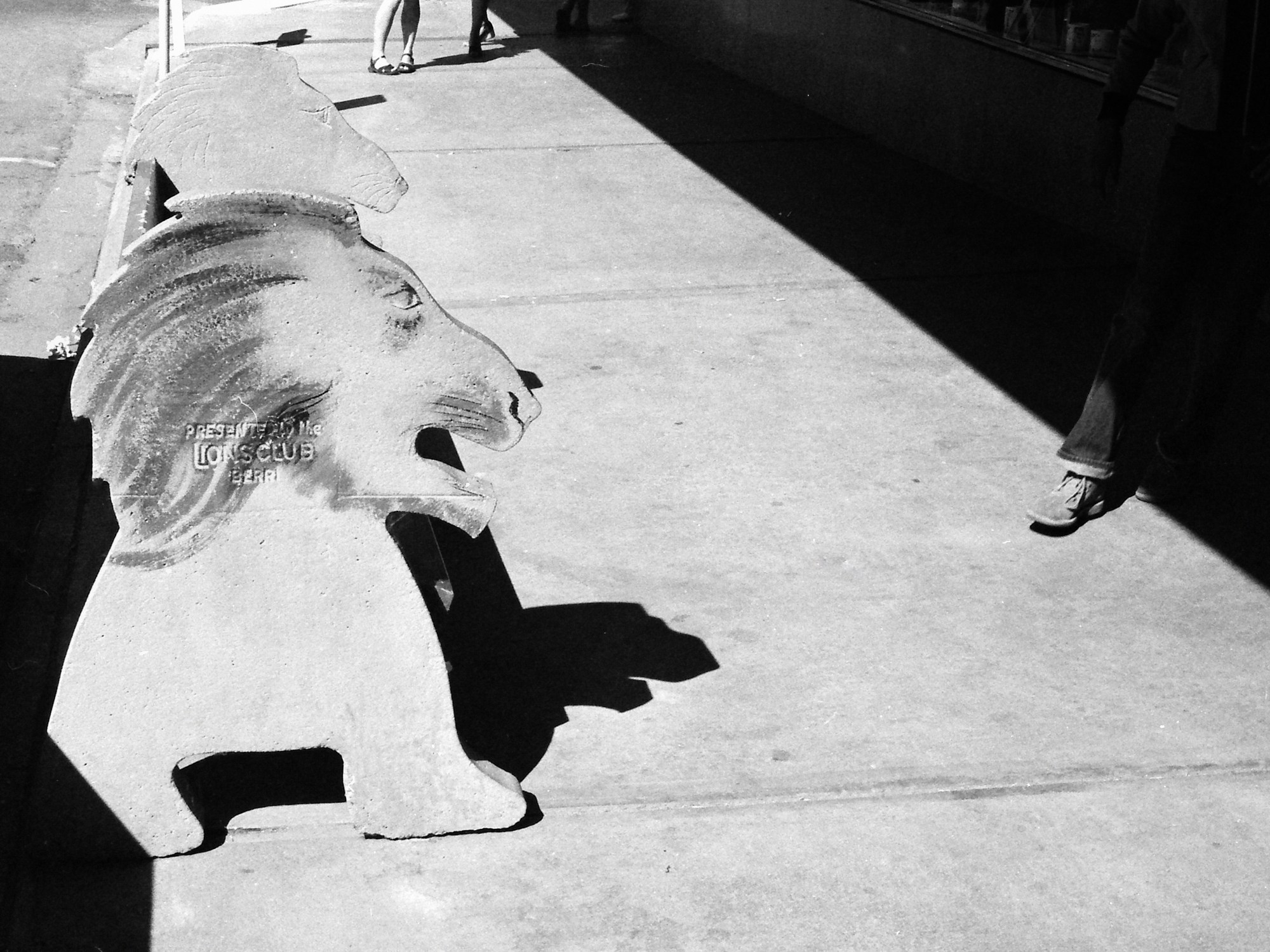
 Acuity, or wit, is an attribute of both good writing and good images. Since Prahran College graduate Geoff Strong is at home in both media, let him tell his own story, illustrated with his own images…
Born in Sydney in July 1950, Geoff Strong started taking photos with Box Brownie at age 8 and nagged his parents into buying small 35mm camera aged 12. Moved to Brisbane aged 13 and taught himself film processing and printing. Worked as a journalist at the Courier Mail before being accepted into the Prahran CAE photography course in 1975. After finishing there, worked again as a journalist, mainly at The Age in Melbourne. Was briefly media advisor for a Victorian Premier and Ministers. Was The Age photography critic in the late ’70s and early ’80s. Credits Prahran with teaching him visual observational skills that proved unexpectedly useful in later career as a senior writer and columnist.
“My photography infatuation was triggered by my aunt and her tiny slide projector that exploded a universe of Kodachrome coloured possibilities onto the lounge room wall of my family’s Brisbane house. She had just returned from a trip to the then Australian territory of Papua New Guinea. It seemed the tribal warriors in fancy headgear, the flowers and mountain ranges, (despite her lack of skill with exposure and focus) placed her near the wonderworld I saw in National Geographic magazine. I fancied, maybe I could approach it too. (see: ‘Kodachrome helped make memories worth waiting for’ Strong, Geoff. The Age 25 June 2009: p.17)
“My first attempt at age eight, was to record the delights of Canberra when I was given the box Brownie and one eight exposure roll of black and white Verichrome Pan film to cover the whole holiday. The first seven shots, I have forgotten but I remember keeping the last frame for the War Museum. The Lancaster bomber, G for George was my boyish fantasy. My father warned me I was wasting film because he insisted everyone knew you could not take an indoor photo with a Brownie. I pressed the button anyway, and when the photos returned from the chemist, I had won! You could see the plane clearly.
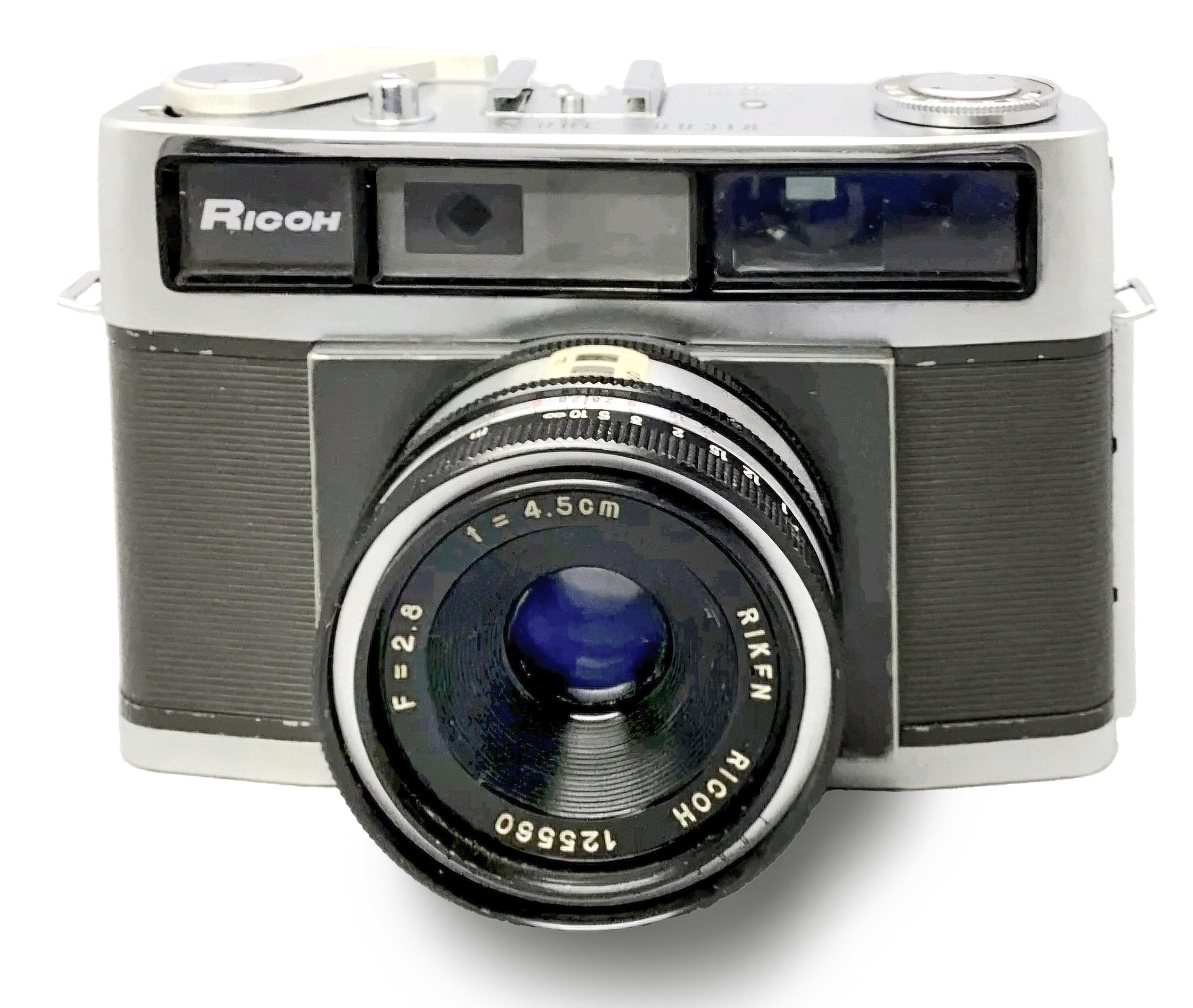
“Some whining to those parents produced a small Ricoh 300s 35mm camera with exposure and focus controls for my 12th birthday. Aged 13, I moved with my family to live in Brisbane with aunt and grandmother in their high-stumped old house. As an only child to decent working-class parents (Dad was a butcher) they hoped for continued respectability by my leaving school early (before learning too much “nonsense”) and entering a trade.
“Those hopes were obliterated when I was accepted into Brisbane State High School, an academic select entry school that aimed students towards my parents’ worst nightmare: university. That school had a huge influence on opening possibilities beyond my conservative family’s world.
“Meanwhile I saved enough for a Praktica camera plus wide and tele lenses. Next trick was to get Dad to show his carpentry skills by building me a darkroom under the house. It was great, and complete with a light-proof ventilation system. I became quite competent in that darkroom. So at Queensland University, I latched onto the student newspaper Semper Floreat, where my skill was in demand and soon landed me the title Photographic Editor.
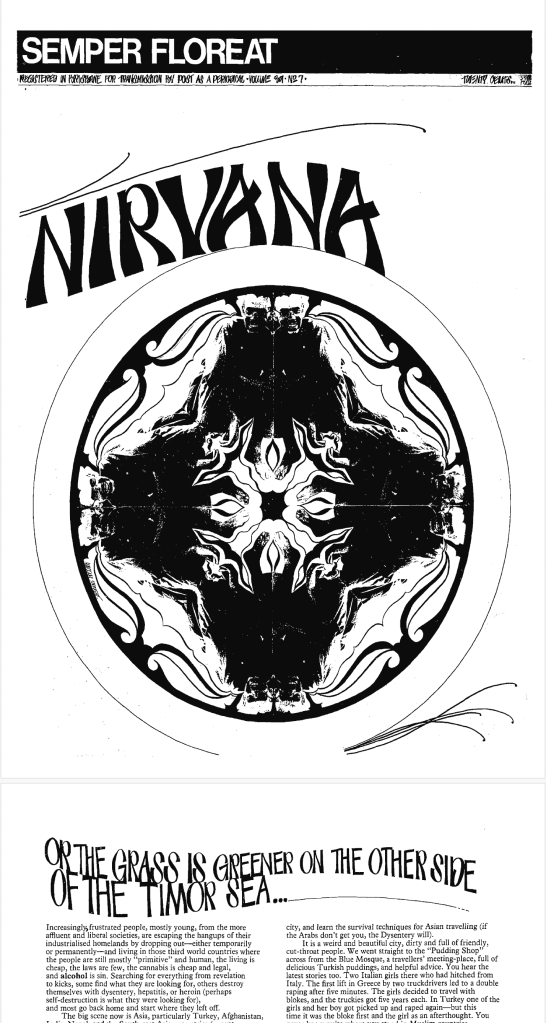
“The priorities of the first editor I had dictated that I photograph pretty female students, record political activism against the Vietnam War and stake out the secretive police Special Branch. It was the era of the ultra-conservative Bjelke-Petersen state government. I joined the Labor Party too, which ate up more time so that the poetry of Chaucer in English, consumption and production theory in Economics and the alphabets of Japanese all suffered. Political Science however got my full attention. Failing First Year Japanese, scraping through English and Economics, it was politics that showed me a future shape to my life.
“Second year coincided with the anti Vietnam War Moratoria (excuse my Latin) and my promotion to deputy editor. One night when I should have been studying, editing or engaged with the Labor Party, I was “visiting” a woman I had met, when a guy crawled through her bedroom window with the same intent. His name was Glen O’Malley. It is to my shame now that the woman was dropped from the conversation as I discovered Glen’s photography enthusiasm and recruited him to help cover the Moratorium the coming weeks. One of his shots led the magazine’s front page.
“Despite the fun, lust and politics, I found university a disappointment after the stimulation of high school so responded to an advertisement for a cadet journalist on a tiny newspaper across the state border in the coastal town of Ballina, where I had family. I got the job not exactly for my writing or editing ability, but because I could also produce photos, thus saving them employing a reporter and photographer.
“After mangling two of their office cameras when they fell from my motorcycle onto the rear wheel, I had to pull out my Praktica, which proved better kit than the demolished gear. With its extra lenses, I was able produce credible quality press photos. However the career there was to be measured in months. The editor, a disturbed Vietnam War veteran, was wildly unpopular, and one morning arrived at work with a front tooth missing after a brawl at the local RSL. I then committed some minor sin and we were both sacked on the same day. The paper did not survive long after.
“I jumped on my bike, a luscious looking candy apple red and chrome Ducati, and headed to Sydney to try for work. I returned with four job offers and took the most prestigious, at the Sydney Morning Herald. That career lasted just nine months. I hated the city of my birth and more importantly a letter arrived from the Courier Mail in Brisbane offering a promotion.
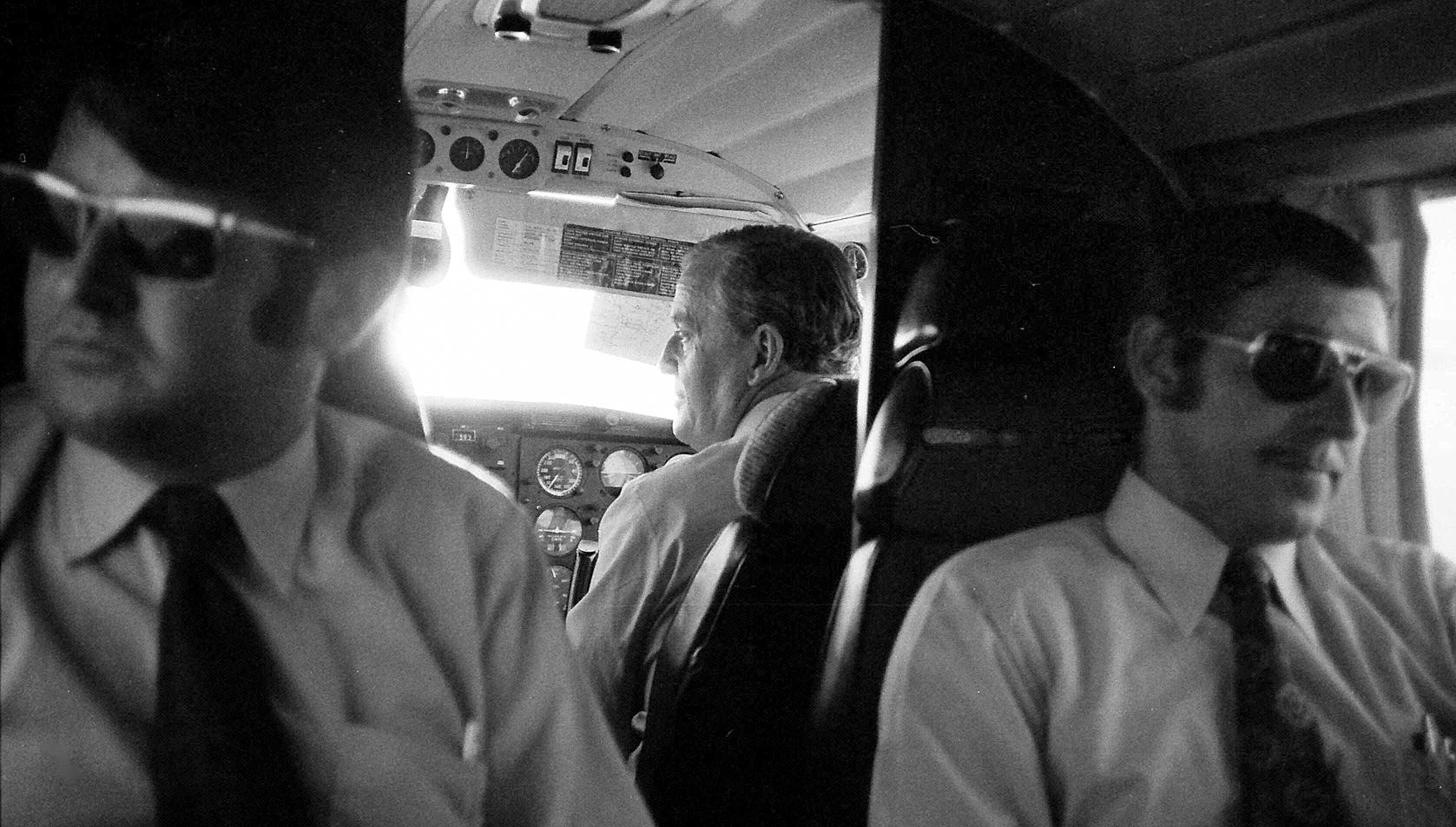
“Back on the Ducati, I returned to the family home and the darkroom. At the newspaper my political interest proved useful, with me being appointed deputy state political reporter. It was an interesting task which saw me flying around the state with Premier Bjelke Petersen in the government aircraft which he often piloted. I had let my Labor membership lapse, to present the facade of objectivity.
“About this time I retired the Praktica and bought a Konica Autoreflex outfit. Though I was quite used to a handheld light-meter, the Konica was one of the first SLRs to have automatic exposure. You chose the shutter speed and it chose the aperture. It was also ruggedly built with excellent lenses and a lot cheaper than a Nikon on Canon. Sometimes I fell out with the paper’s press photographers by recording a news event when they weren’t around.
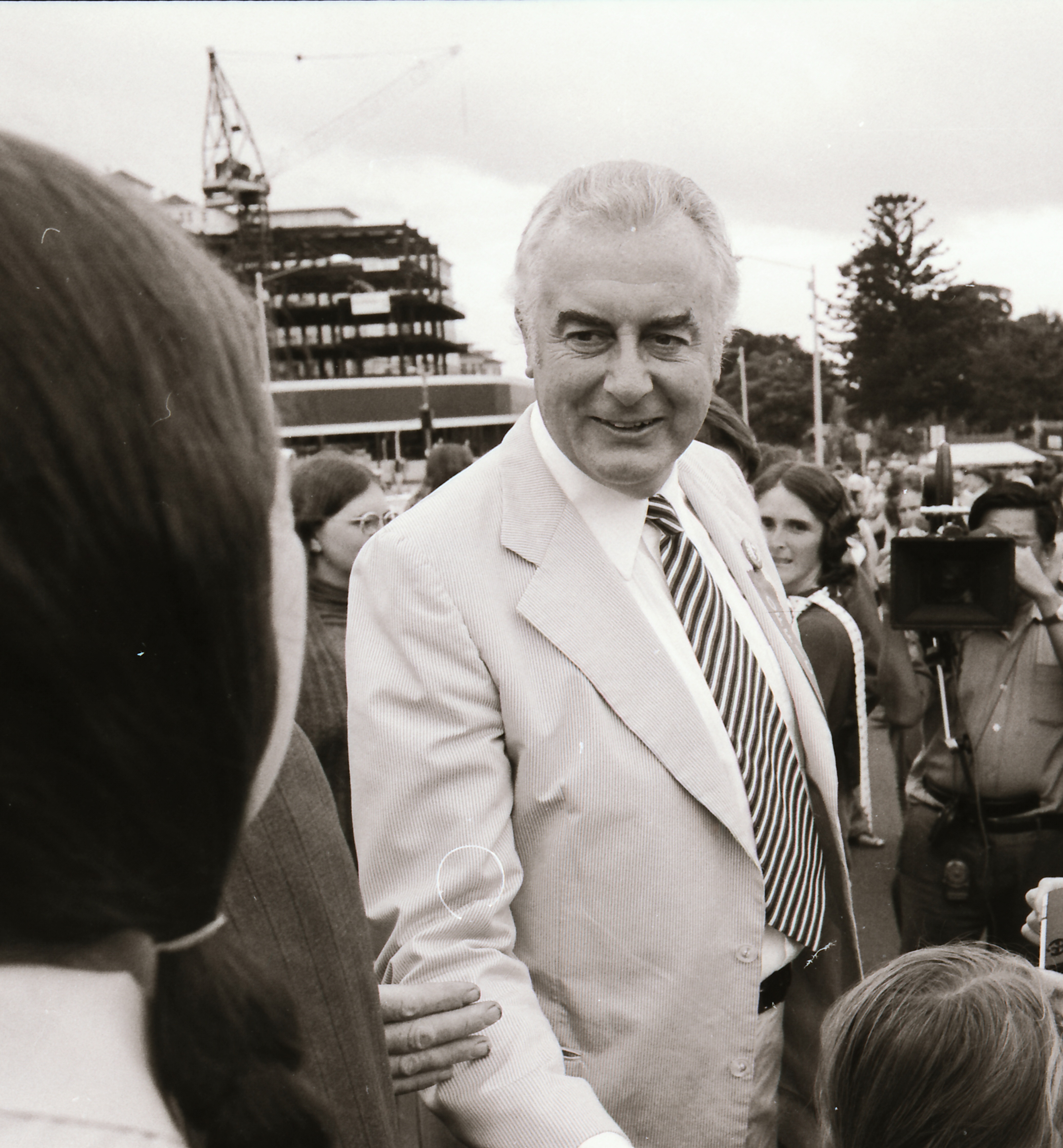
“In my spare time I took some satisfying shots with it. I was very happy with a set I took of then prime minister Gough Whitlam at a May Day rally. My then girlfriend Julie, also a journalist with the paper, was very photogenic and a willing model, so I produced plenty of her.
“Julie and I took a driving holiday south, finishing in Melbourne. Glen had told me about an interesting photography course in the curiously named suburb of Prahran. I packed a selection of my favorite shots, in case I could get an audience and gain feedback. I was greeted by the head of the course, a rather eccentric old guy with black framed spectacles, who smoked using a long cigarette holder into which he repeatedly inserted the cigarettes backwards, trying to light the filter end.
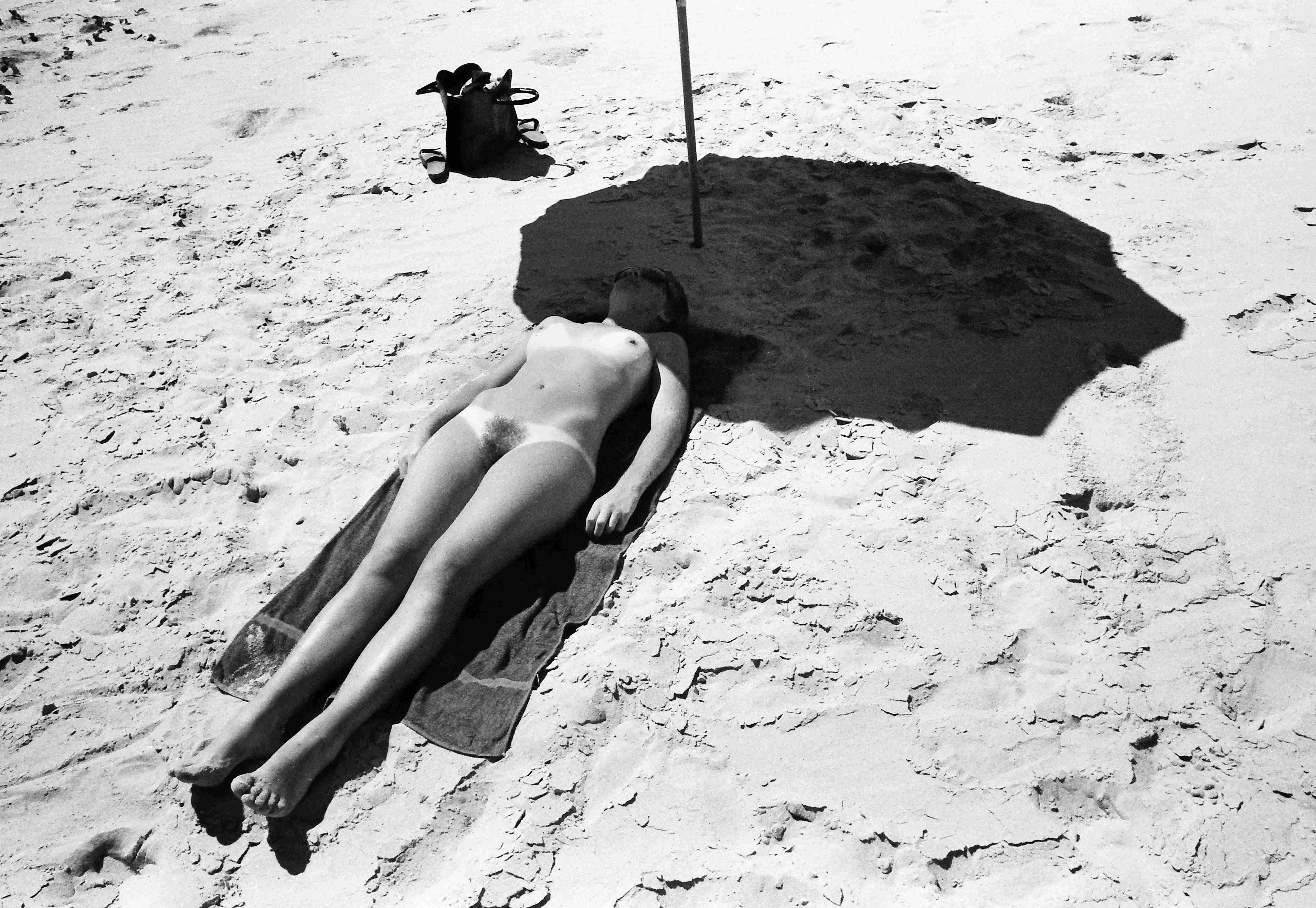
“I knew little of Athol Shmith’s fame as a fashion photographer but I sensed when he saw Julie’s photos that he liked pretty women, particularly undressed, but it was his reaction to the Whitlam photos that surprised. He described it as the best series he had seen of the Prime Minister. I thought little about the meeting with Athol until a few months later when a letter offering a place arrived. Julie and I vacillated about going together. In the end I resigned from the paper despite a promised promotion, and went south again by myself.
“Missing the first few days of the course due to a car breakdown, I arrived with fresh notebook to a class on exposure. E=it I was told. Hang on, didn’t someone called Einstein claim E=mc squared? The technical class over, the next one featured Paul Cox and it seemed more to deal with metaphysics than physics. Something like how many angels could stand on the edge of a Stanley Knife was it? The lecture did involve a Stanley Knife with Mr Cox chiding us not to throw away the knife blade when blunt and instead sharpen it to save the planet.
“Meanwhile Glen O’Malley had organised with a Brisbane art galley owner called Ray Hughes, to hold a joint exhibition with me. My first term folio was awarded honours, so that was what I exhibited beside his work.
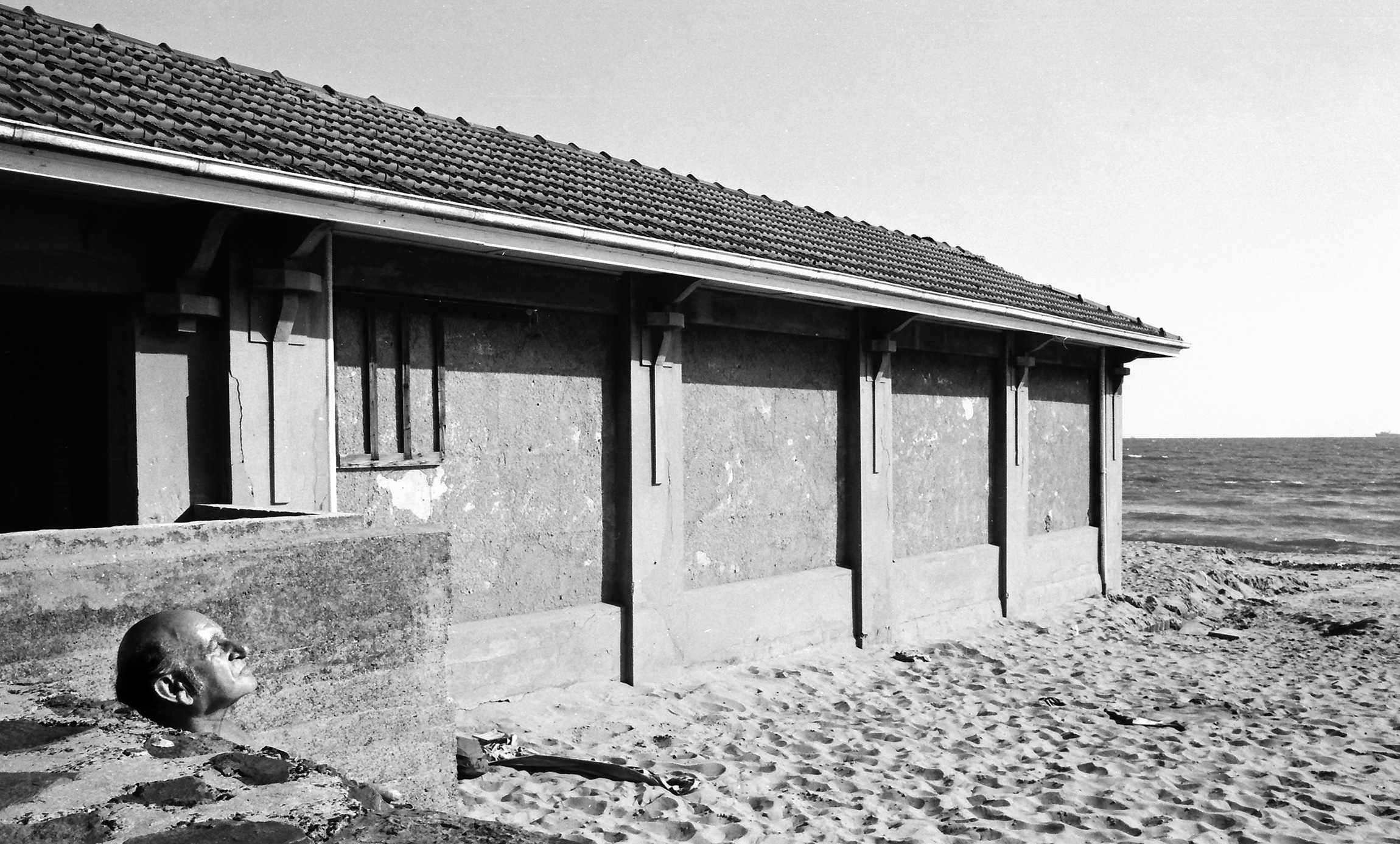
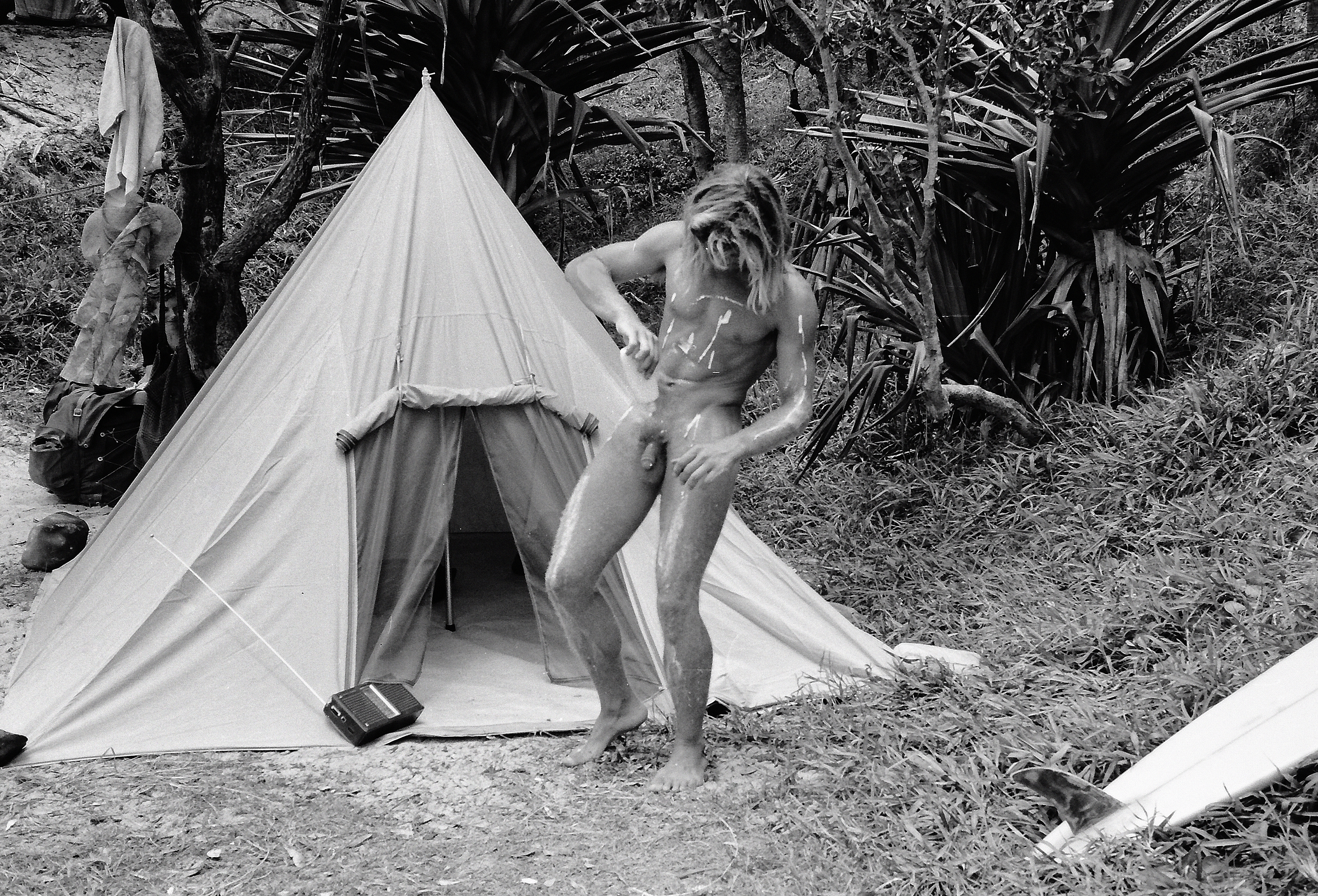
“Never intending to stay long in Melbourne, I expected to complete maybe one year at Prahran before returning north. But apparently sensing this, lecturer John Cato one afternoon visited me at home to talk me out of the idea. He was particularly impressed by a recent photo of mine of an elderly man sunbaking next to a building on St Kilda beach. He told me I could produce more like that, but warned against artistic vanity with a quote I never forgot. “You can realise you are good, that’s OK. But as soon as you think you are shit hot, it is very likely you really are just shit.” he warned.
“I stayed on and did quite well in my folios and together with Lyn Cheong, won an award for photographing Royal Melbourne Hospital. When interviewed by the health reporter at The Sun newspaper on why I could capture the essence of such a place, I replied it was because I came from a “long line of hypochondriacs.”
“Christmas holidays came, and needing some money, I found a suburban newspaper chain that wanted a photographer. I didn’t tell them I only planned to stay over the holiday break, when I told them I had journalistic experience, they offered me a choice of either job. Perhaps it was a sign of how I would react post Prahran and I decided to go back to being a reporter. “They were still looking for a photographer, so I phoned Glen in Brisbane. He came south and stayed maybe a year while I quit and returned to the College at the beginning of second year.
“That year turned out to be fateful. A group of us, mainly in our year group and particularly those who had been to other tertiary institutions, felt aspects of the course to be lacking. As I remember, a core group of us: Kim Corbel, John Van Loendersloot, Lyn Cheong, Paul Lambeth and I, got together with others to discuss some grievances and produced a “manifesto” as we named it, listing weaknesses in the course.
“Firstly there was a lack of clarity, and what we saw as opaque subjectivity in the criteria for judging our work. Secondly, while the diploma we were working towards was callled “Art and Design,” no art history was available to our year. We felt that if we were supposed to be producing art we at least needed to know something about the history and context of what had come before us.
“A student meeting was called and I was pushed out front to argue our case for change. It was put to a vote and as I recall only one or two students were opposed. A group of us went to see Athol (and possibly Paul) who agreed to make some changes. Art history was introduced, taught by historian Norbert Loeffler. An even greater surprise was the editor of the prestigious British photography magazine, Creative Camera Peter Turner, had agree to come to Melbourne the following year as a guest lecturer. That added a Wow factor to the course!
“Meanwhile, Ray Hughes the gallery owner used to stay with me and my Scottish girlfriend Ruth at our St Kilda house when he visited Melbourne. Ruth was a staunch socialist and feminist. Ray turned up with folio of coloured drawings of female genitalia. Ruth, not shy of expressing her views was outraged. I took her side telling him with reference to the vernacular: “You are not looking at a vagina Ray, you are looking at a mirror.” He got my meaning and seethed at my insinuation.
“A few weeks later I was at a restaurant in Brisbane with people from the arts scene including Ray. He stood up and addressed me with bile as: “St Kilda’s feminist photographer.” A few hours hours later a party was in swing at his house and he continued the insults. It became physical and I grabbed him by the shoulders pushing him into a wall, one of those thin wooden walls common in old Brisbane houses.
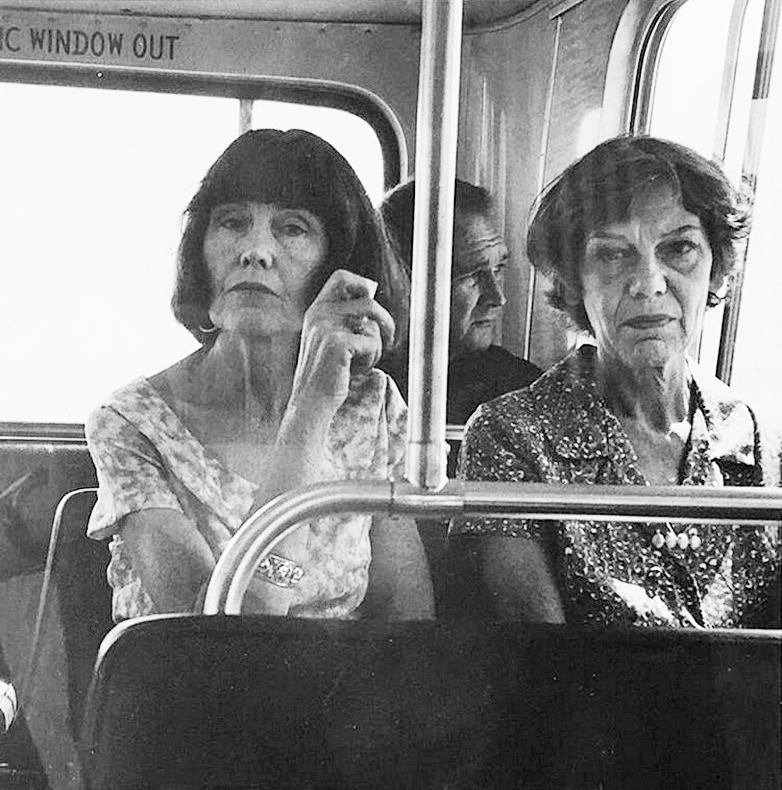
“I heard a crash from the other side and an artwork had fallen to the floor. It was a photo of mine from the earlier exhibition of two old ladies in a Brisbane bus. Ray moved to Sydney and became one of the city’s most successful and ebullient art dealers, but we never spoke again.
“Third year did see many of the agreed changes we sought, with both Norbert and Peter having an important influence. Ian Lobb, a devotee of ponderous American cult photographer Ansel Adams,” came in to teach us the zone system of exposure which I ignored. But when Athol saw some of my negatives, he asked if I was using it. I disappointed him revealing I was using the Konica’s automatic exposure. Such was to be the future of photography. Ian did however teach some useful darkroom printing techniques. The college also allowed me to take the unusual elective of creative writing conducted by playwright John Powers. This helped me for the first time break away from the rigid formulaic writing style of newspapers at the time.
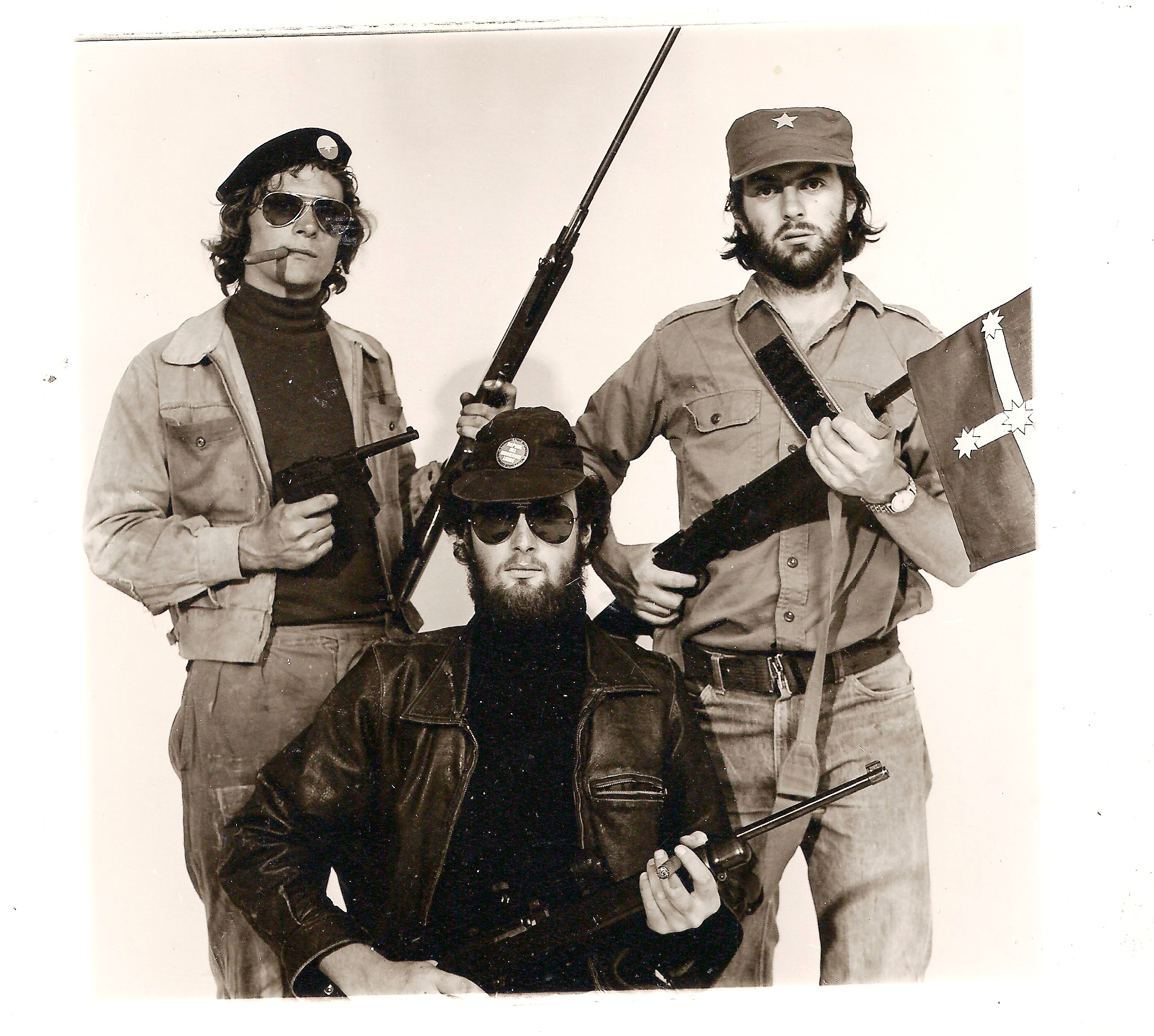
“But the anarchist rebelliousness kept bubbling though our year group. We were given one assignment where we could photograph what we liked. Someone got the idea to join together to produce a single collective image in Maoist style. It was to be based on one of those communist propaganda pictures of so called “revolutionary” heroes. It was to be done in the department studios photographed on the school’s largest 5×4 inch camera.
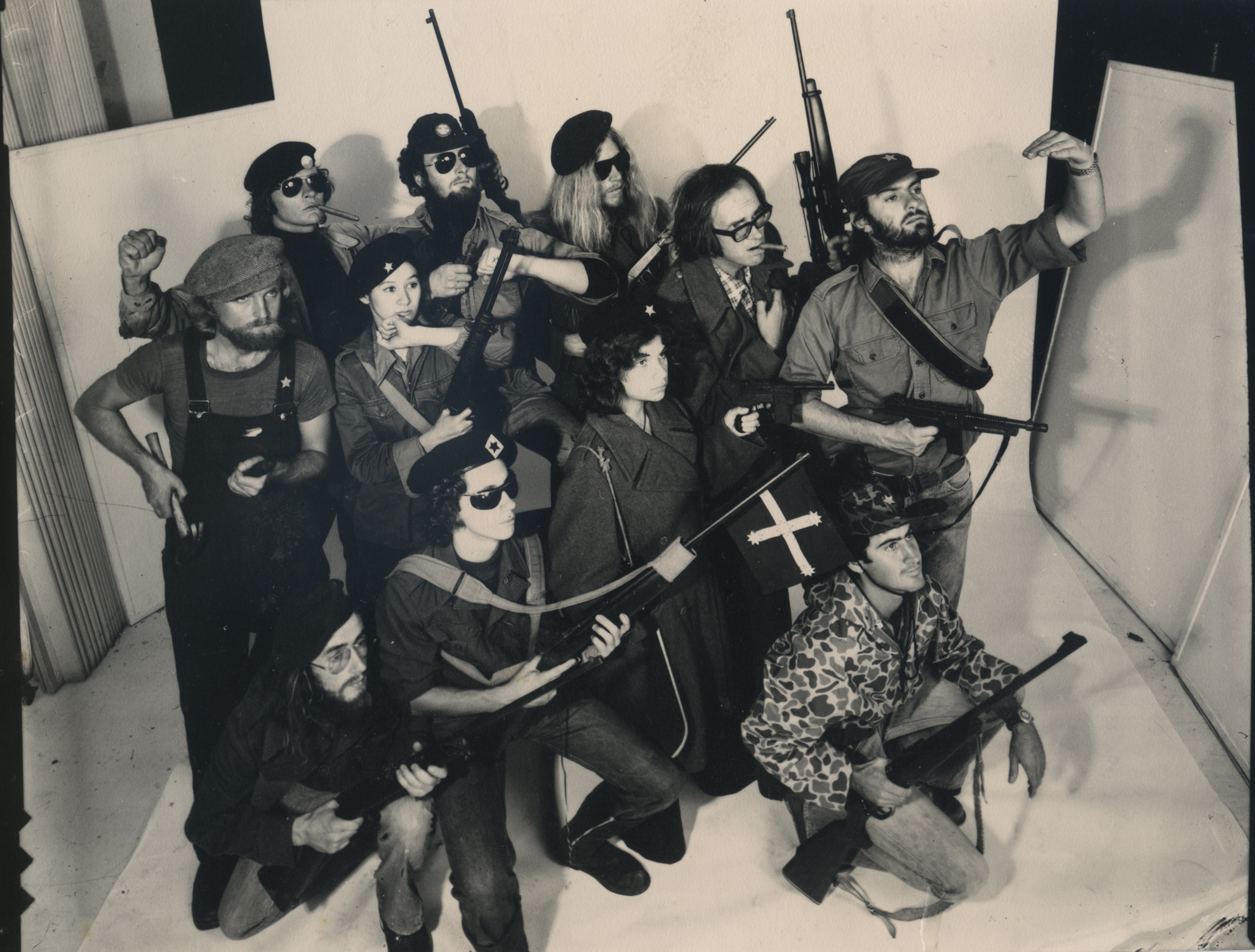
“We had no problem with revolutionary dressing thanks to op shops, but true revolutionaries needed weapons. One of our group, a geologist before Prahran, told us not to worry. In his old Holden ute the next day he arrived with the back tray covered by real guns, more than a dozen rifles, shotguns and pistols of various kinds.
“There was a curious stillness among department staff, probably hoping the former geologist had checked the weapons were unloaded. We posed as we arranged for someone else to trip the camera’s shutter. I think staff were relieved it was over and awarded all of us a pass.
“We had more hijinks that year. Van, who had theatrical experience from university, choreographed a street theatre performance satirising the photography department. We all had roles. Van, with a Dutch background naturally played Paul Cox while I played Athol due to my ability to imitate his aristocratic accent. Two songs were written. I wrote “Basement Rock,” pinching the tune from Elvis, while Kim ripped off Bob Dylan. The lyrics will remain “classified” as they were certainly libelous.
“Another prank was an exhibition of our year group’s best work held at Brummels Gallery South Yarra. I wrote a piece for the student newspaper Flash advertising the show again satirising the department. The pictures were serious enough but the show included one attributed to Kim’s dog Winnie. With an allusion to one of photography’s inventors, signed “W.H. Fox Terrier.”
“We handed in our final folios and that was basically it. We had our diplomas.

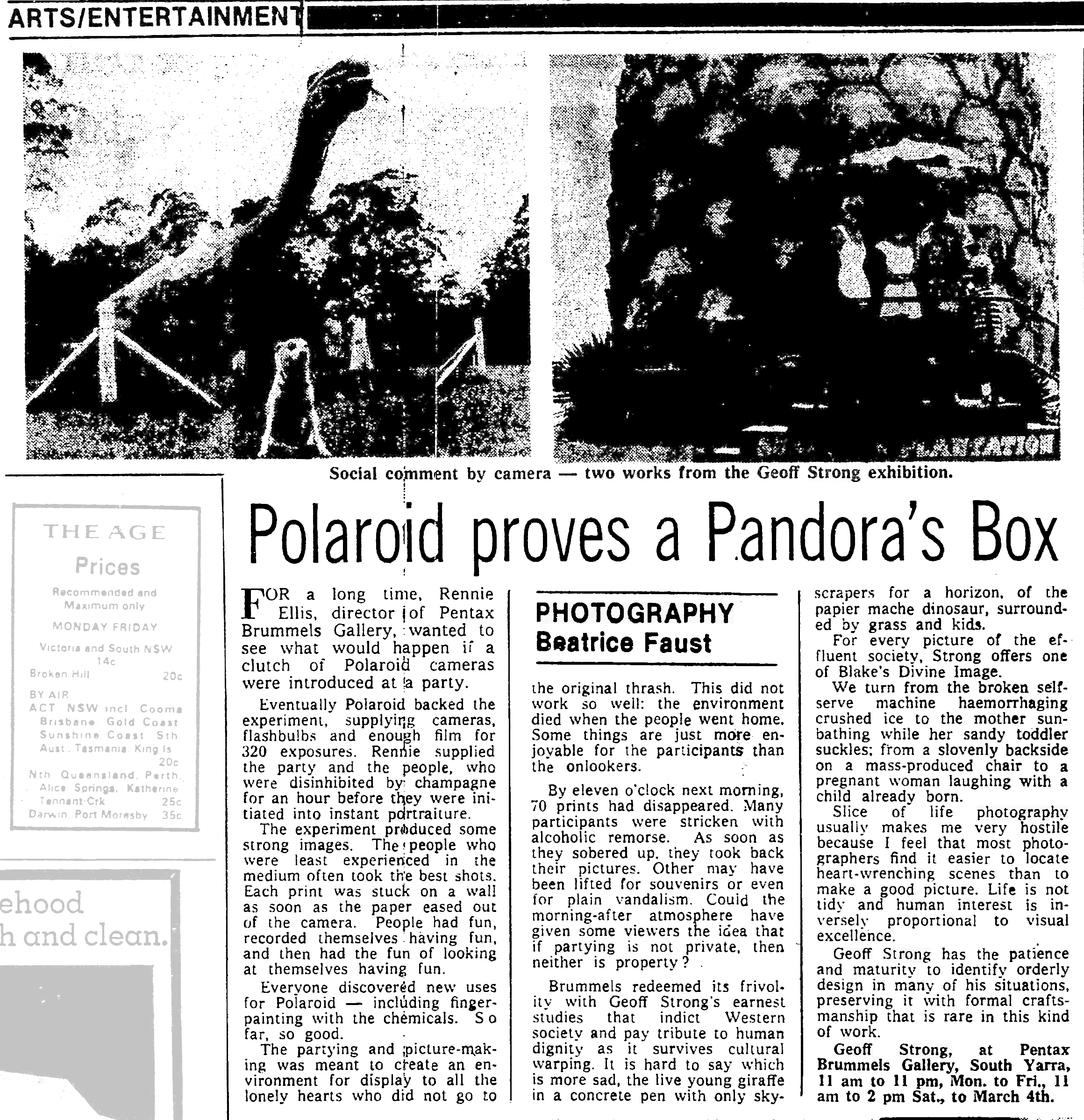
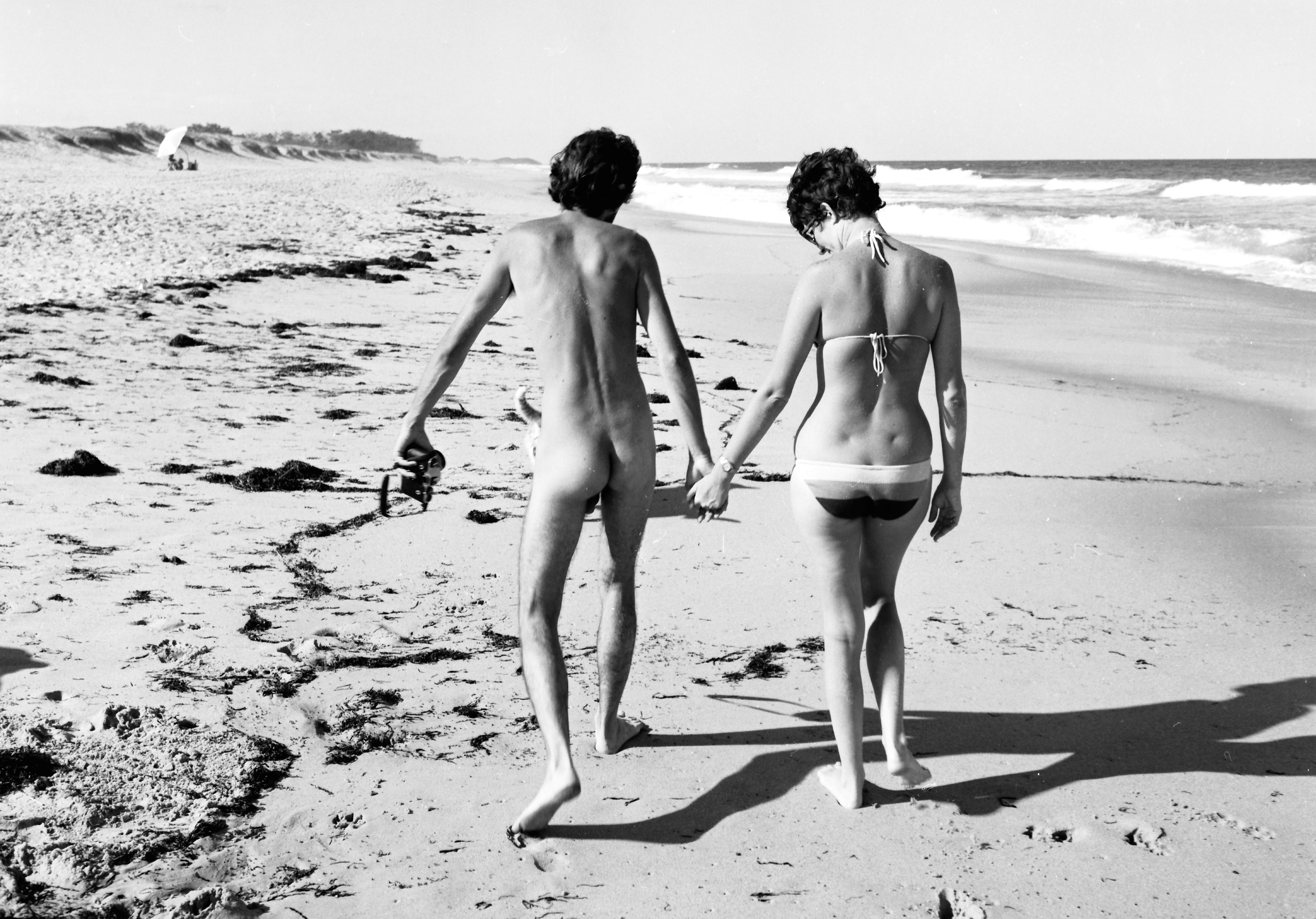
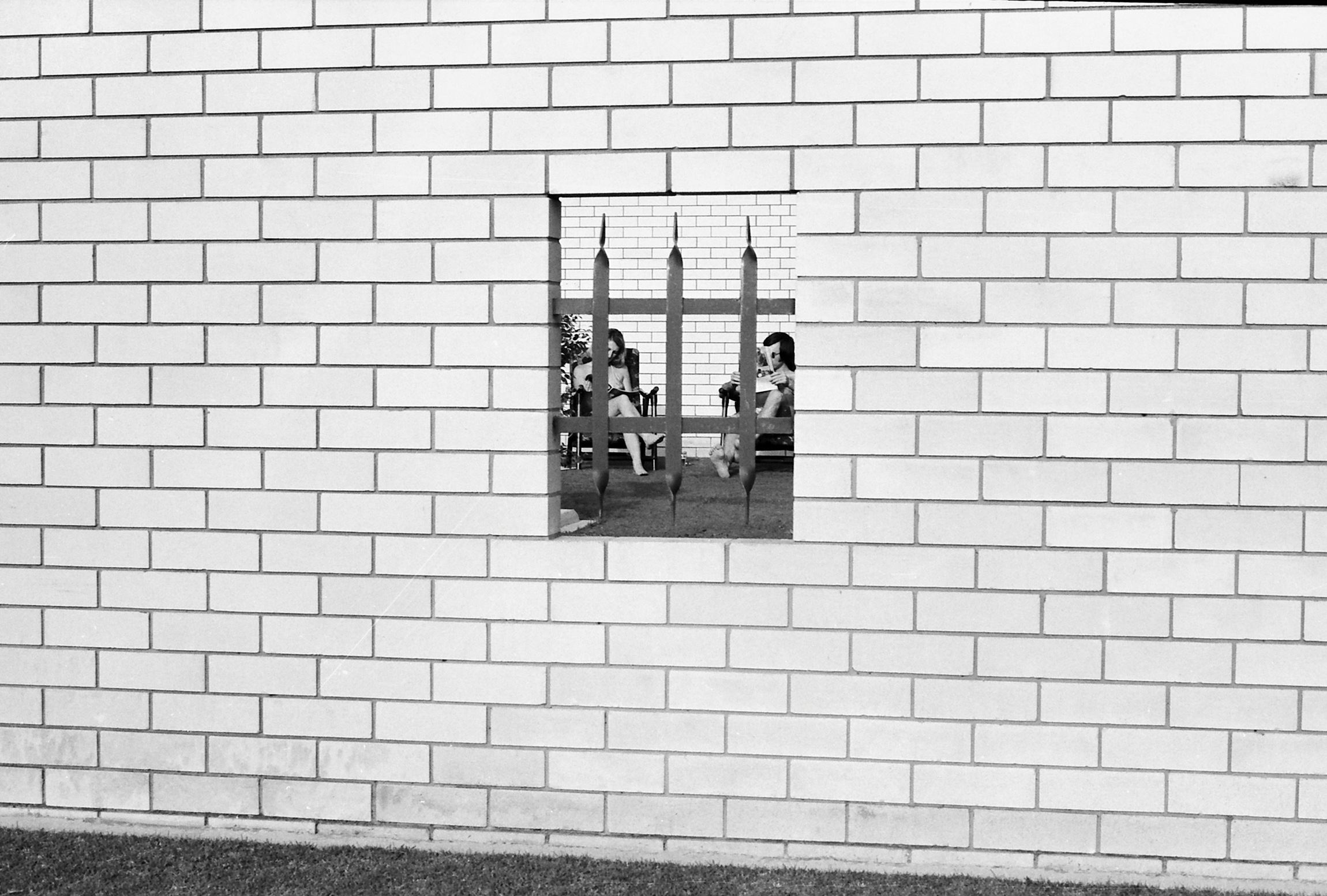
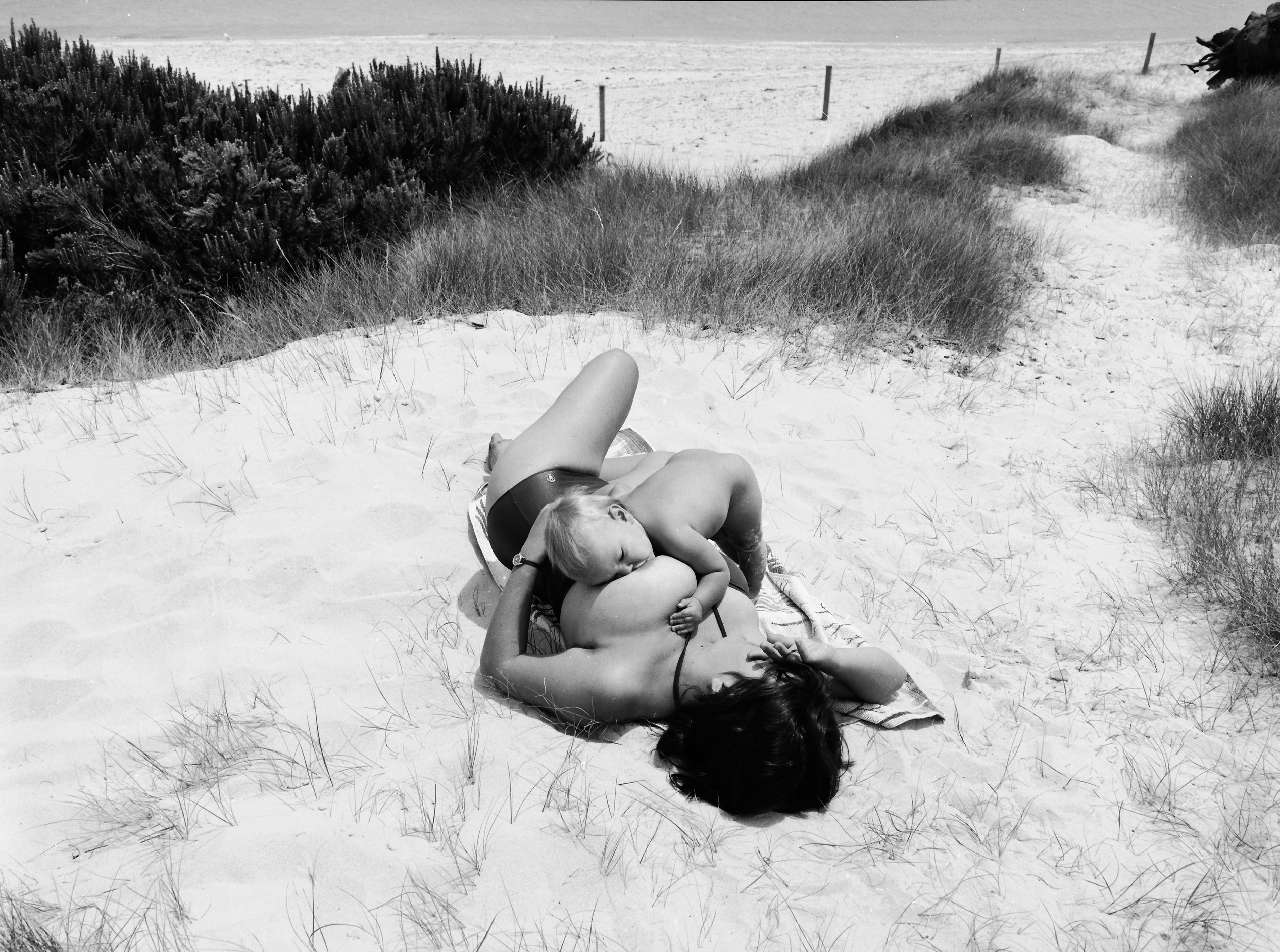
“I organised a solo exhibition at Brummels, for early 1978, I sold a few prints and then the devil came with temptation. A US multinational tobacco company in an attempted “smokescreen” for the evil it peddled offered to buy some prints and give to the new National Gallery in Canberra. I hate smoking and I agonised for a respectable length of time before giving in to hypocrisy and sold three.
“Around May, due to some well planned nepotism, The Age offered me a job as journalist. About a year later I was deputy state political reporter and some time that year I got the side gig as photography critic for the arts pages. I probably applied too much of the blowtorch I would have used in politics on the more sensitive arts world, to discover they did not have the thick hides of the political class.
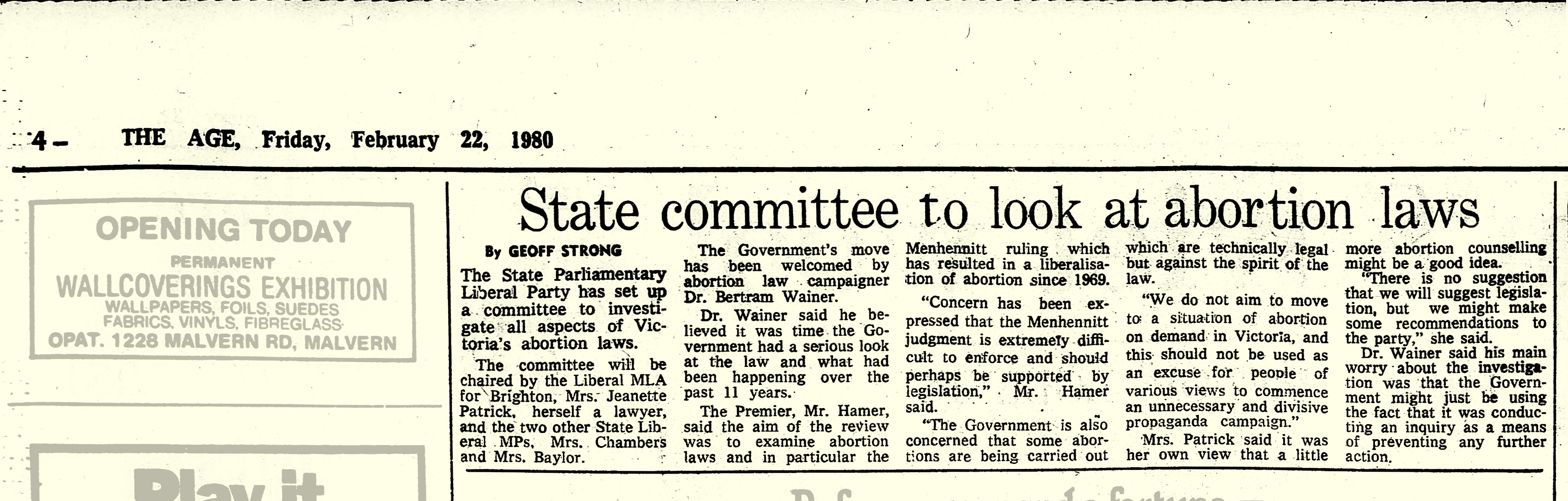
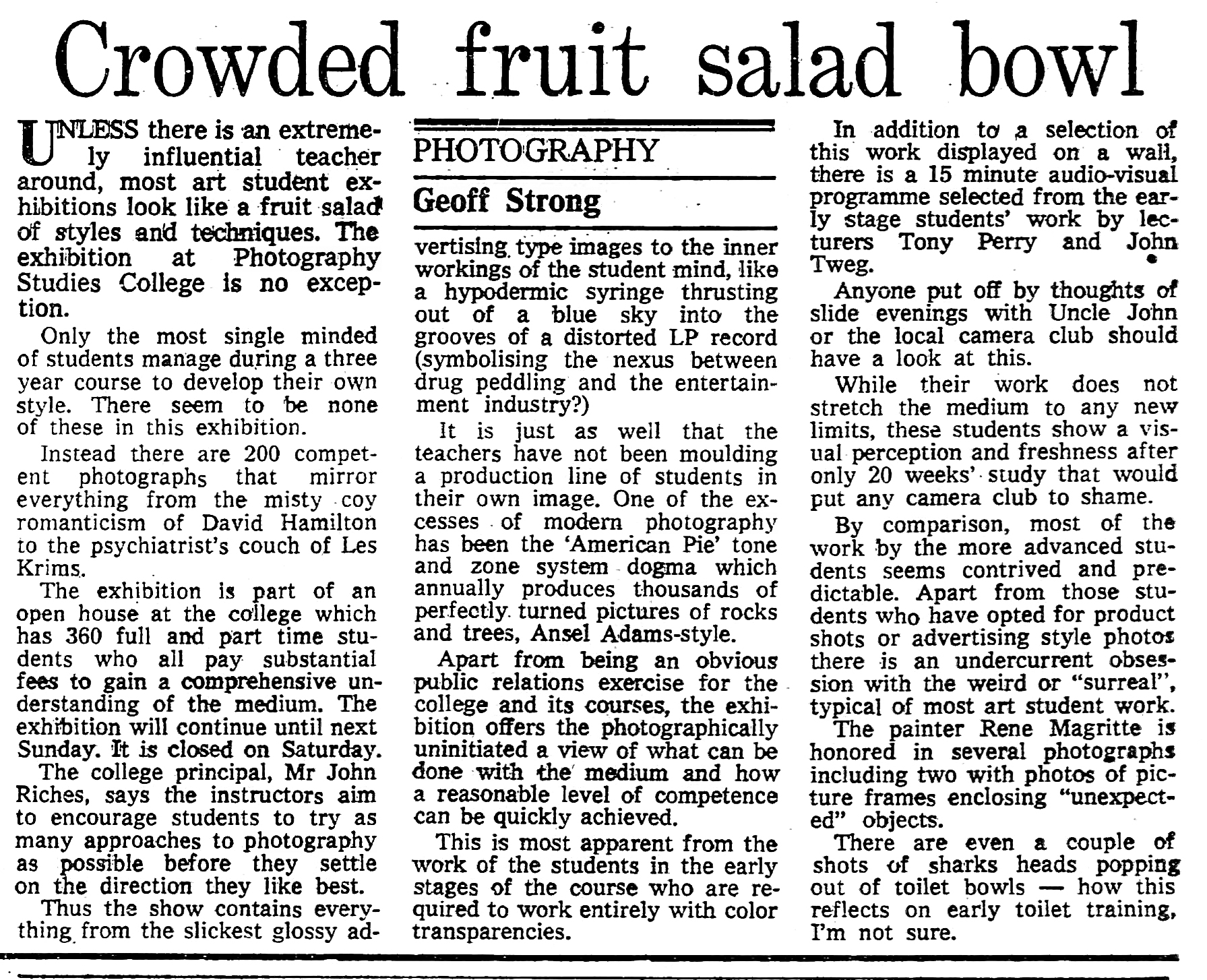
Geoff Strong ‘State committee to look at abortion laws’, The Age, Friday, February 22, 1980 p.2Strong took over the column from Tony Perry, who lectured at Photography Studies College and this was one of his first reviews, of a PSC show, in which he refers to both Perry and a former Prahran photography student, John Tweg. He also reviewed work of Prahran alumni Glen O’Malley, Martin Lacis, Julie Millowick, Polly Borland, and Jane Nicholls, as well as their lecturer John Cato.
“That year I also bought my first house, a run down place near a railway line in Kensington. It was great value in having four bedrooms, one of them making an excellent darkroom. I was still taking photos, by this time mainly with a wonderfully sharp Mamiya 645, and I gradually kept piling up more decent photos.
“Long having broken up with Ruth, I met Jill in October 1980. She taught English and loved ballet, opera and literature and had helped found the feminist society at Monash University in the early 1970’s. She soon joined me in the shabby Kensington house.
“The long term Liberal state government lost the 1982 election to John Cain and Labor and I was offered a job as press secretary. I was also compiling an exhibition which was to take place at a new gallery in Carlton called Visibility run by some former Prahran students. I sold quite a few prints including about 10 to the new Parliament House in Canberra. The show opening was well attended partly because it was opened by the state Arts Minister, Race Matthews. How did I organise that? Easy, I was his press secretary.
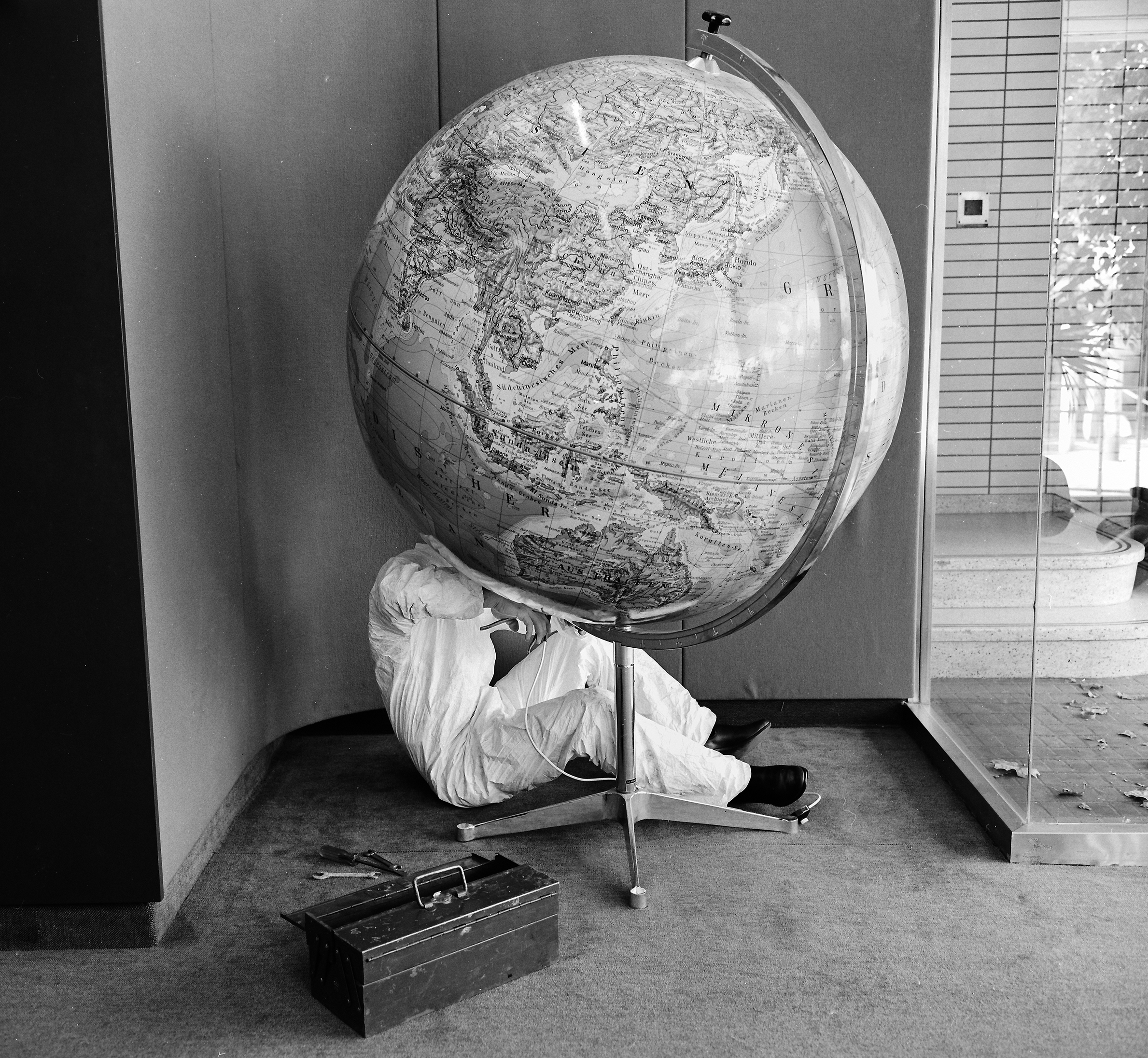
“After that, I did no more serious exhibiting; I just took photos for myself of travels and friends, but I still used the style I learned at Prahran. I think some of the photos are good, but I am not a filing clerk and they are stored randomly in the most inappropriate locations.
“As for my journalism career, after my stint as a media advisor, I went back to newspapers. It was more fun to have power without the responsibility of government. A few newspaper jobs later I ended back at The Age in the early ’90s. I was even able to sneak in a few photos to illustrate some of my stories, to the hostility of the staff photographers.
The Prahran influence, the college, the staff and especially my fellow students, stayed with me via a different way of seeing. Unlike linear or lateral thinking I dubbed it “prismatic thinking.” The idea is to look at a problem through the multi facets of an imaginary cut glass prism. One of my editors said people I interviewed often could not predict what I would throw at them. “They can’t anticipate what angle you are coming from,” he said.

Strong in an article on the Victorian College of the Arts (The Age 7 September 2009, p.11) discusses this in more detail:
“So many ideas would be lost if we were all pushed to think in the same way.
“In my 20s I studied visual art, majoring in photography, at what was then Prahran College of Advanced Education. Probably because of this, I evolved what I believe is an unconventional way of looking at difficulties and how to deal with them.
“Sometimes, rummaging through the storeroom of my mind, I uncover the memory of a long-forgotten problem and how I attempted to solve it.
“Art schools can cause people to do things like this. By insisting on original thinking, rather than just learning what has gone before, they can pump new ideas into society. They can also pump out self-obsessed, mediocre, ego-driven garbage so we need to be watchful.
“In the Western contemporary interpretation of art, one purpose is to take an idea where nobody has gone before. This is important in the current debate about the role of the Victorian College of the Arts. It is about more than producing artists and performers. Australians are always cheering about the boundary-pushing feats of sporting champions, but these feats, no matter how extraordinary, are usually a simple linear progression: fractions of a second off a record, for example.
“The way good visual artists develop new ways of seeing is probably closer to the way a research scientist makes a breakthrough. And just as it is with ground-breaking science, our society is less than engaged with great art.
“In my problem-solving technique, I learned to reduce conundrums to objects I imagined I could hold in my hand. I visualised them as solid but multi-faceted so that they could appear to change if I rotated them and looked from different perspectives. Ultimately they can become transparent with the solutions refracting differently as I change angle. These are often the alternative solutions.
“Rather than linear or lateral thinking, which people were talking about at the time, I labelled this approach prismatic thinking. It is not always easy to explain and in a literal world has sometimes landed me into trouble, particularly in journalism.
“Like a number of my colleagues in the course, I did not carve out a career in either photography or art, but the way of thinking I learned has stayed all my life.
“In the row about protecting the VCA from its Melbourne University masters, I believe evaluating the art school way of seeing the world is something that should be debated. The comparisons between art and conventional university modes of seeking solutions are important in questions about the VCA and its position as a department of the university. There is concern that as it comes under the Melbourne Model, the practical artistic training will be pushed aside by more academic learning.
“Prahran CAE had grown out of the old Prahran Technical College, which boasted alumni as varied as painter Sidney Nolan and football coach Kevin Sheedy. It had a wide range of disciplines but when much of it was absorbed into what became Swinburne University, the art department, including photography, was hived off to the VCA.
“I was one of a couple of students with previous university experience in my year of the course, so we had something to evaluate it against. We felt it was lacking in some important areas.
“The Prahran photography course was considered the best of its kind in Australia and was closely associated with a photographic art movement that flourished in Melbourne in the 1970s and ’80s. Some of its notable lecturers at the time were Athol Shmith, Paul Cox and John Cato. Some of its students included the now controversial Bill Henson, the late Carol Jerrems and the current head of photography at the VCA, Christopher Koller.
“Köller was a Prahran student after I left and we have never met, but we talked last week about the way artists learn to think. He says he tries to teach his students to conceptualise the image before trying to make the picture; in so doing he emphasises the importance of rigorous research.
“One of the ironies from my time at the art school was that students such as myself sought more academic rigour in what had been a practical course.
“We wanted more theory, in particular art history, which until then was totally lacking. Our reasoning was that it was impossible to become great creative artists if we did not understand what had come before. We won the argument; history and theory were added on top of the practical work. Koller says these are still part of the course.
“However, I realise that even from a largely practical course I evolved my own way of problem-solving, something I did not get from conventional education. Maybe this is the real value of art schools.”

When Geoff retired from The Age in 2012, the news director described him as one of Australia’s great wordsmiths. But retirement did not give him the hoped-for opportunity to take more photos:
“A medical disaster disabled my right leg and I have to hobble with a crutch. Photography is often about being able to walk for the best angle and a decent camera needs two hands, one for the shutter and the other to balance the lens, all but impossible when one arm is tethered to a crutch.
“In the end I did rejoin the Labor Party, for some comfort in like minded branch members and arguments with unalike minded branch members. It reminds me of some wisdom scrawled on a toilet wall years ago at Queensland Uni: “A man’s best friend is his dogma!” When it come to photography and politics, nothing could be more true.”


 On This Date in Photography: by James Mcardle
sunburned?
LikeLiked by 1 person