 American art historian James Elkins’ writes Why Are Our Pictures Puzzles?; the title of his 1999 book, in which he queries why it is that we now write so much about art.
The restoration of Dora Meeson’s In a Chelsea Garden at Castlemaine Art Museum—which its catalogue dates 1912—was the aim of a public fundraiser. The wall label below it read;
“This work by Dora Meeson has a number of cracks. A donation of $3.000 would allow us to have the painting cleaned and the cracks consolidated by a conservator. Please help us to save this important work.”
One of the gallery trustees remembered “from 50 years ago” that it had been stored under the building in less than archival conditions.
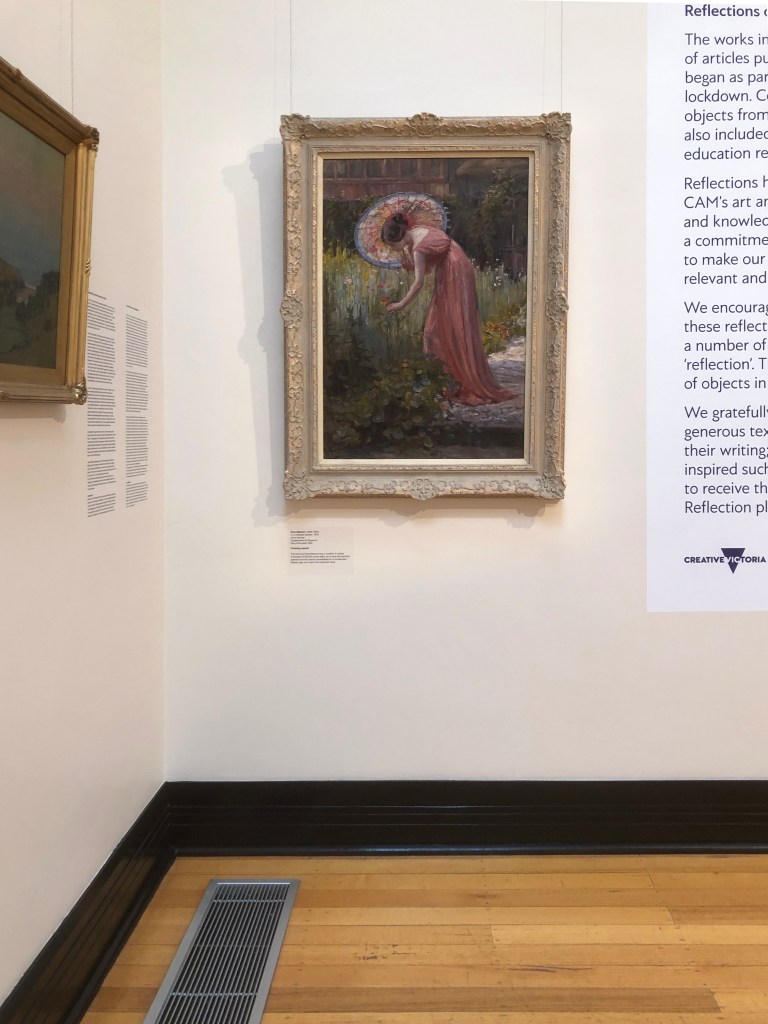
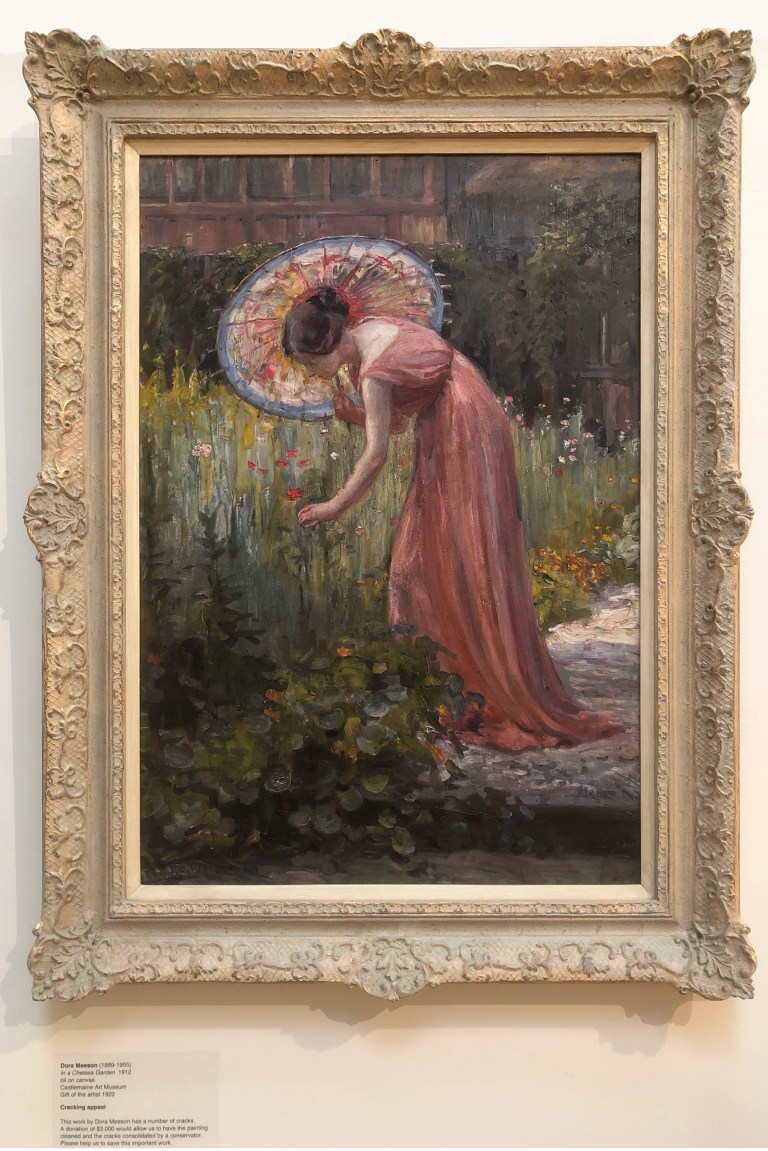 The result was a ‘cupping’ of the canvas and partial separation of the paint from it that can be seen as the white cracks at the subject’s knee and amongst the nasturtium leaves at the bottom of the canvas where it was dampest during that period of storage.

Recently in the gallery vaults we shared with our sister organisation Buda Historic Home and Garden an unveiling of the restored and now pristine painting, with gallery officer and illustrator Sarah Frazer introducing us to Dora Meeson’s suffragist generosity to Australian artists, including Mary Leviny (one of the sisters from Buda), visiting her in England. She noted also that with the outbreak of the Great War that Dora became aware of the harsh realities faced by women in Britain who were left behind during the conflict; as male family members departed to the front, women and their children were experiencing severe poverty, a situation exacerbated by lengthy delays in receiving government separation allowances. In response, Meeson dedicated her efforts to the establishment of the Women’s Police Volunteers, an organisation aimed at aiding women who found themselves in dire circumstances, often resorting to prostitution out of desperation. These volunteers, predominantly educated middle-class women, from their own considerable resources and influence, assisted both Belgian refugees and working-class British women.
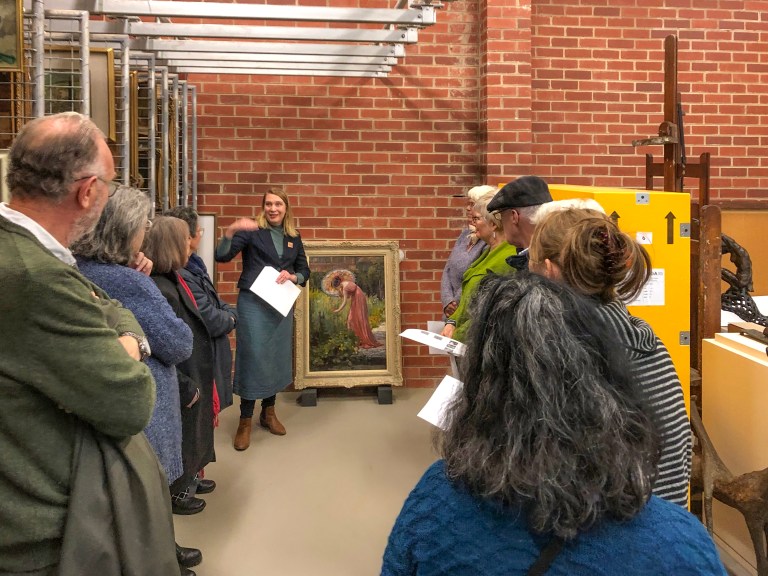
This painting also asks us questions which, speaking on behalf of the artwork, I raised with our gathering;
- Where in Chelsea?
- When was it painted?
- What time of year is it?
- Who is the woman it depicts?
- Why is the garden so overgrown?
- What are the flowers that she picks?
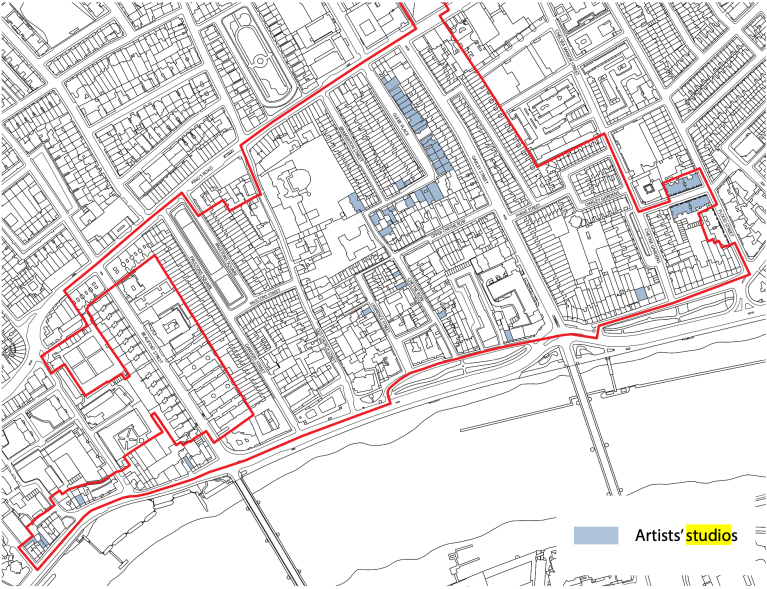
Meeson recounts in her 1937 biography of her husband George Coates : his art and his life how they first moved to Chelsea in 1906. After years of privation, of existing on herrings, oatmeal and bread, and after both of Dora’s parents died in 1909 she and George made it their home, amongst an enclave for artists called Cedar Studios in Glebe Place constructed by Conrad Dressler, the potter-sculptor, and its earliest artist occupant being the history painter and suicide Benjamin Haydon (1786–1846).
In addition to Cedar Studios, three more clusters of art studios were built in Glebe Place: one at numbers 60-1, another at numbers 64-5, and a third at numbers 52-9. Glebe Studios were established between 1888 and 1889. The rector played a role in their development, granting his son one of the first tenancies. Subsequently, notable artists such as Walter Sickert, William Rothenstein, and Ernest Shepard, among others, also occupied the studios. This period, spanning the 1880s and 1890s, saw Chelsea rise to prominence as London’s artistic hub.
The presence of artists’ studios naturally led to the establishment of art education in Chelsea. Life classes were conducted in Limerston Street, and Sickert’s influence inspired others to offer formal art classes in the area, and Meeson, from 1906, became one of the providers of such classes. In 1895, the Chelsea School of Art, a division of the polytechnic, was inaugurated. The Meeson couple’s residence, along with Dora’s studio, was situated at 52 Glebe Place. The property consisted of a timber-framed building dating back to 1587 and a seventeenth-century workman’s cottage once the accommodation, from 1769, of workers at the Wedgwood workshop for hand-painting of overglaze enamel in Little Cheyne Row in Chelsea. George occupied a spacious studio at No. 55, which had a connecting door to the Meeson home. This studio was later occupied by Sidney Nolan.

They were surrounded by artists; a 1973 article in the Westminster and Pimlico News of Friday 13 July (above) notes some, including architect Louis Rey, James and Catherine Kerr-Lawson, dancer Anton Dolin, artists Edward Le Bas, William T. Wood, Helen McKie, T. C. Dugdale, Letitia Graham, Amy K. Browning (Mrs. Dugdale), Florence Englelbach, T. B. Gibbs, sculptors Andrew O’Connor and L S. Merrifield, authors Cicely Hamilton and Australian Jack McLaren, actor Valentine Dyall, Thomas Sheard, Frank Mowbray Taubman, Harcourt Barnard, Paul Kummer and A. P. Egerton Cooper, but the article does not mention that around 1937 Francis Bacon moved in with Eric Hall at his top floor flat at 1 Glebe Place.
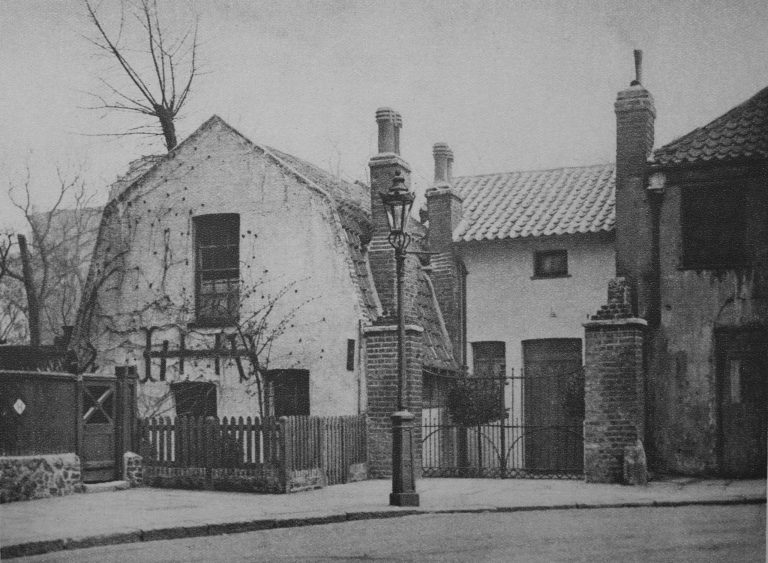
The couple, despite their adoration of children so obvious in their drawings at CAM, decided that “our paintings would be our babies.” Ironically their home at no.52 became, and still operates as, an infant day care centre, Chelsea Open Air Nursery School.

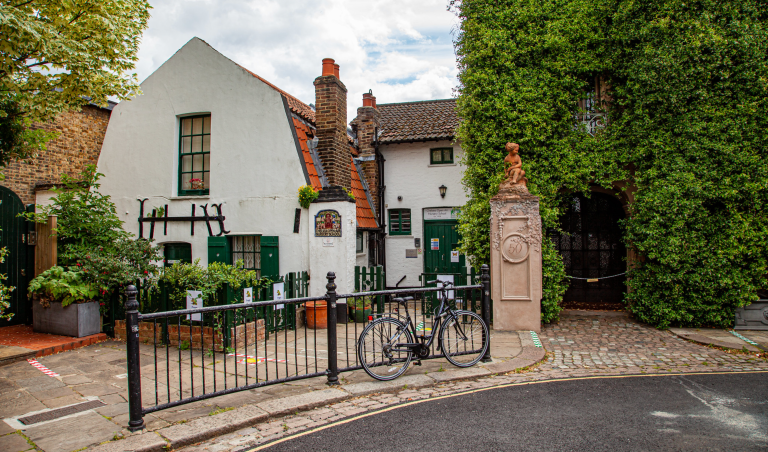

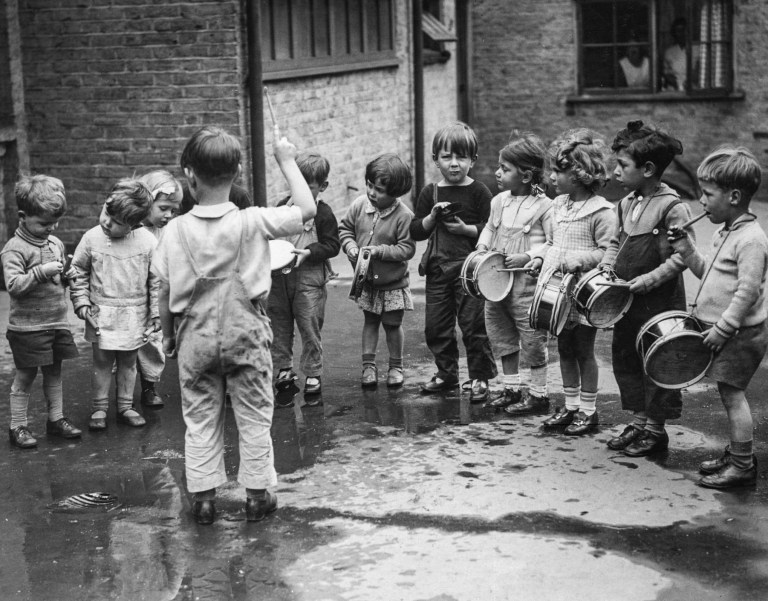
The School was set up in 1928 by Dr Susan Isaacs and American heiress Natalie Davies, the name ‘Open Air’ signifying its part in a countrywide educational movement when in the 1920’s came recognition that the outdoors is a valuable a learning environment, and that many city children did not have enough access to fresh air, sunlight and exercise for healthy development. The school garden dates from the beginning of this period.

Dora wrote:
I found it difficult to work in George’s studio…He generally…painted from preference in a low key with a subdued light…I could not see in the light that suited him, which seems to prove that tone is largely an affair of physical eyesight, and that which is a fair light to one is a glare for another. Neither did he understand my struggle to express light and colour, but always wanted me to lower my work in tone, whereas I would urge him to lighten his. But we went our separate ways quite harmoniously. The crampedness of painting and living in a studio drove me out to study the river and the multitudinous forms of water, and to try and give its weight, and movement and glorious ever-changing colour, while George concentrated more and more on figure painting, and portraiture especially.
It is a mere 500 metres along Cheyne Walk to the Albert Bridge and the left bank of Dora’s beloved Thames which became the subject of her developing post-impressionist style that, by 1913, we remark in the dashing impasto of Sunset at Chelsea that is as pyrotechnic as the Fire Dance of their friend the performer Loïe Fuller. In 1945 the Port of London Authority purchased a group of these impressions of the Thames.

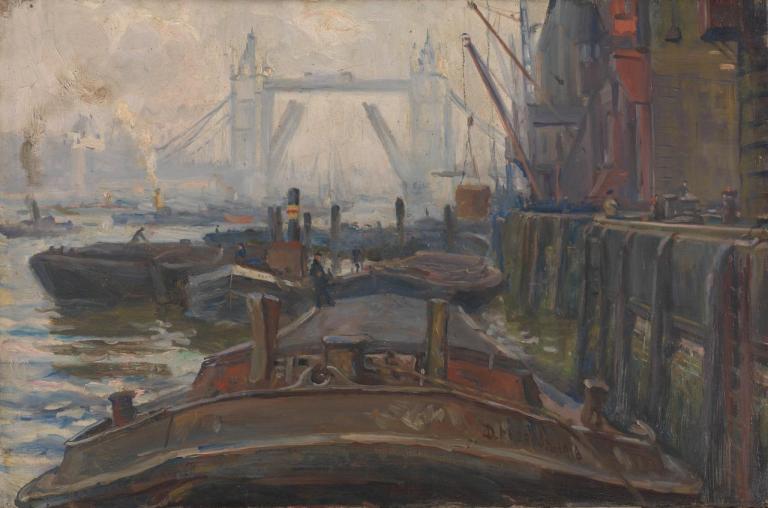
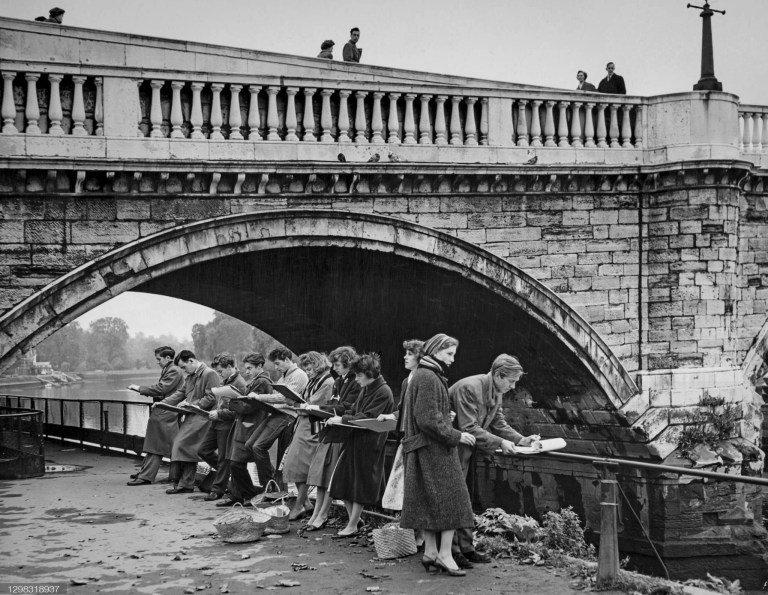
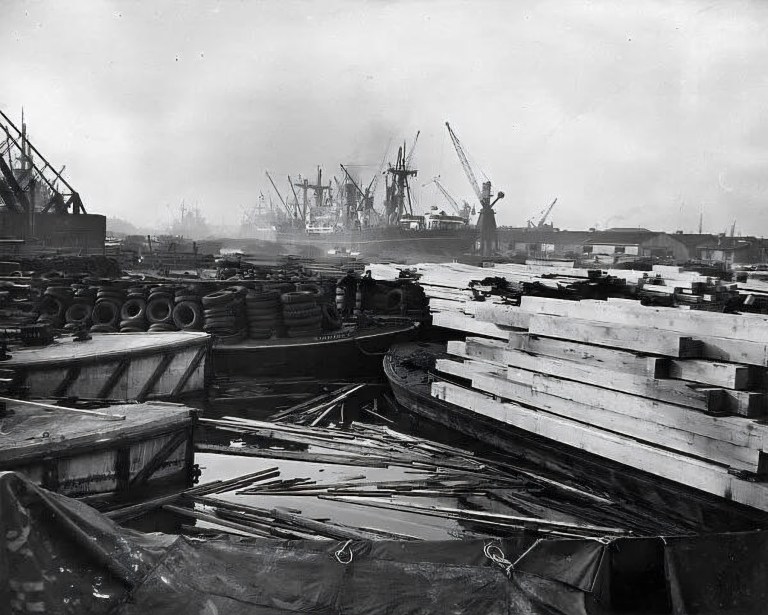
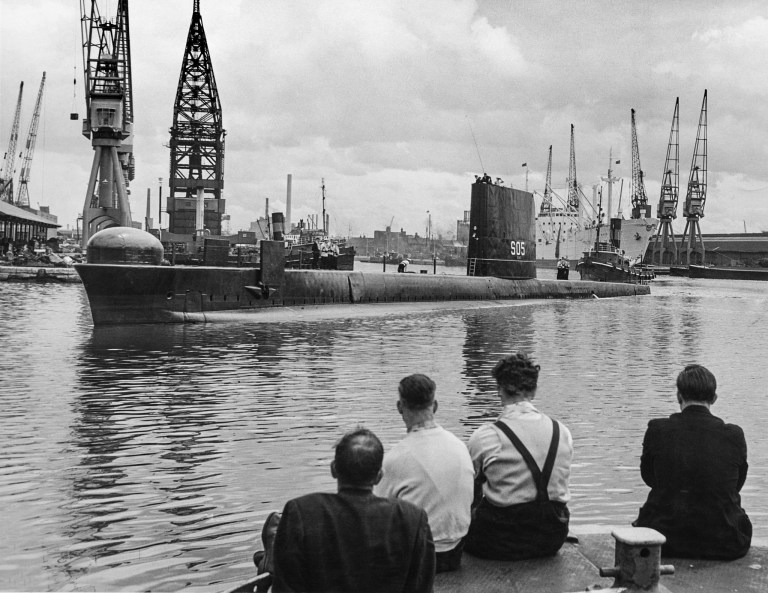
The photographs of the River Thames by Harry Jackson Todd (1918-1993)—who photographed the Chelsea Nursery children above—convey the atmosphere and the reputedly masculine and treacherous activities of the river along which Meeson valiantly painted; compare his view of Hays Wharf and Dora Meeson’s above, clearly painted en-plein-air while perched on the bow of a pitching barge.

Little known apart from as a photographer for Fox Photos, one of the leading press agencies of the first half of the twentieth century, Todd migrated to New Zealand from England in 1950 and became Valley News editor/photographer, a local councillor and a member of Wainuiomata organisations concerned with conservation and recreational matters.
His picture of Ealing School of Art students sketching by the Thames evokes Dora’s working in such locations and is apt here, because the couple were married in Ealing on 23rd July 1903 at St. Peter’s Church where the Australian painter E. Phillips Fox had married Ethel Carrick a year earlier, and whose reception Dora and George attended.
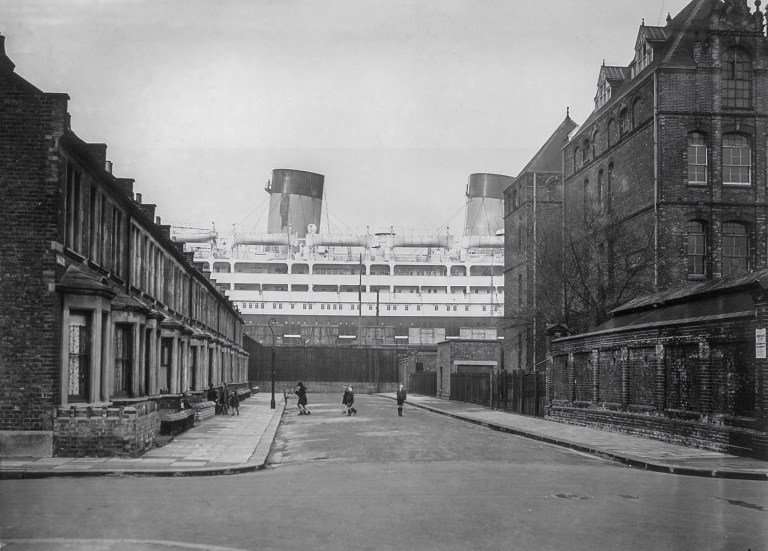
Todd’s Shaw Savill liner Dominion Monarch predates Chris Killip‘s more foreboding Tyne Pride at the end of the street, Wallsend, of around 1975–77.



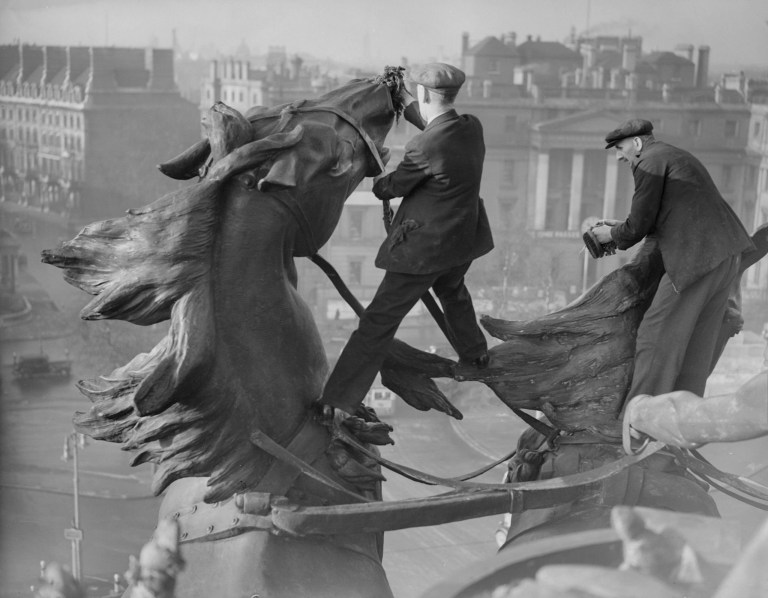
I cannot resist this extraordinary scene, a dramatic paragon of health and safety; workers photographed by Todd atop the Quadriga statue on the eighteen-metre-high Wellington Arch at Hyde Park Corner, one of the many news stories he covered that involved the working-class milieu in which he operated.
Who then is the woman in the painting In A Chelsea Garden? She reappears with the same parasol and hairstyle in On a Chelsea balcony. With her small budget, Meeson resorted to having her students model for her, and she writes that “at this time Miss Dawson (?) had a wonderful collection of old gowns at her house of the White Swan near Chelsea post office, and they were a great boon to Chelsea artists.” Draped in, rather than wearing, the red textile, the woman rests atop other fabrics and clearly is a figure copied from a life drawing, as is the other model perched on the balcony railing. The lighting of the two is not consistent. Likewise, in our painting, the red cloth is tied about her waist as worn in classical Greece.
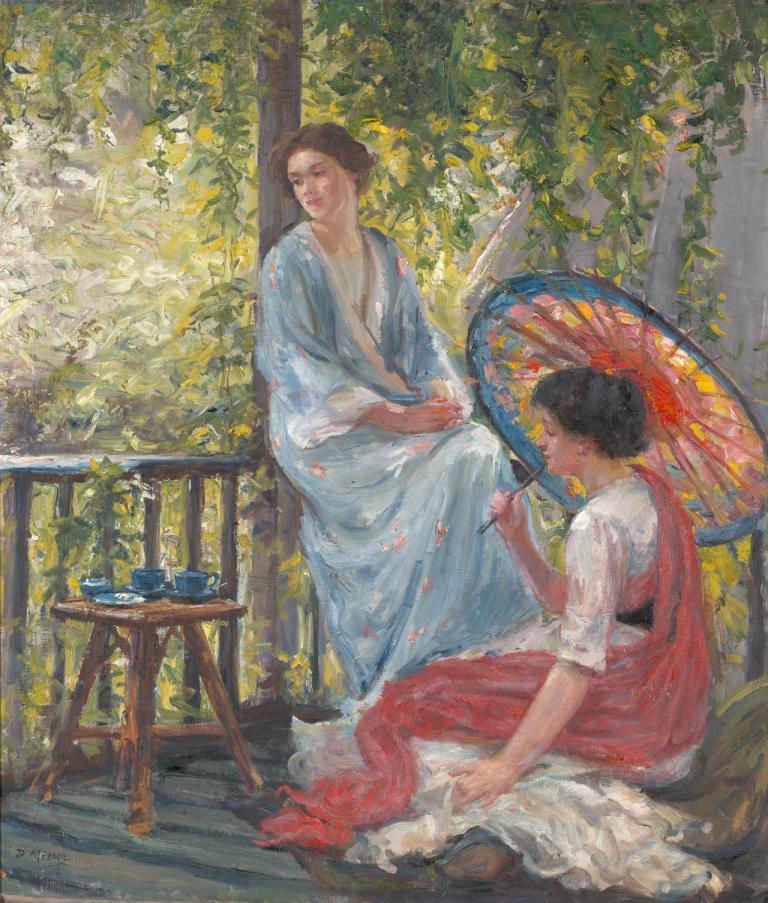
Gift of Andrée Fay Harkness through the Australian Government’s Cultural Gifts Program, 2020. © Lt Col Simon R Hearder on behalf of the heirs in copyright
Dora notes that titling pictures annoyed George; “what did it matter what a work of art was called? It is the work itself that matters and it should be its own expression.” Consequently there are two paintings titled In A Chelsea Garden —one in a 1913 catalogue held in our State Library, and another mentioned in newspapers — one by each of the couple. But I contend that there may be three … because a close inspection of the newly restored painting’s date with the signature, unusually at bottom left, seems to me to read 1917 with a full-stop, crossed with a bar in the European manner, not “1912”.

Probably also in 1917, or 1918, Dora completed the more sentimental ‘pot-bolier’ 1916: Leaving for the front—for which she probably posed one of the real working class families she assisted through her work in the Women’s Police Volunteers. As art historian and curator, and Meeson researcher, Victoria Hammond points out, it is a sentimental genre picture of the sort painted in the 1880s, but very dated by 1917, though older collectors with more traditional tastes might still have bought works in this style. Nevertheless, it remained unsold until the Art Gallery of Ballarat purchased it from the couple’s joint show at the Melbourne Athenaeum in Collins Street, 1-12 March 1921.

In A Chelsea Garden is likewise in a realist style, rather than the Post-Impressionism of her river paintings—yet regard the way she paints the dense thicket of the garden! If its date is actually 1917, and not 1912, then it has a deeper meaning and is symbolic. As she bends into this summer garden under the halo of her parasol, she becomes an apotheosis of devotion; that quality that combines admiration and patience in equal degrees (and which typifies the relationship Dora had with George). The step, over which tumble disc-leafed nasturtiums, elevates her to such a status. The flowers the woman gently plucks from the overblown summer garden are poppies. Canadian, Lieutenant Colonel John McCrae wrote a poem, “In Flanders Field,” published and widely read in Punch magazine in late 1915, in the voice of the soldiers buried under battle-churned mud through which rose, in the warm early spring of 1915, the bright red flowers of Papaver rhoeas; the Flanders poppy, corn poppy, red poppy or corn rose.
Is In A Chelsea Garden intended as a more subtle and contemporary momento mori, a reference to the declaration of Death; ‘Et In Arcadia Ego’ (Even in Arcady am I)?
If so, it is ever more poignant.


 On This Date in Photography: by James Mcardle
Thanks James.
Interesting, enjoyable, impressive.
Peter
LikeLike