
 Pierre Bonnard once remarked that if photography could be in colour “les peintres seraient foutus”?
As a friend of the Lumière Brothers he knew full well, when teasing fellow Nabis Paul Sérusier with the idea, that in fact colour photography had been achieved, though in a form still impossible to print.
Yesterday my daughter and I visited Bonnard at the National Gallery of Victoria; an extensive exhibition of about 100 of Bonnard’s paintings, with additions by other Nabis painters Maurice Denis, Édouard Vuillard and Félix Vallotton from private collections around the world, and museums, especially the National Gallery Washington, and the Musée d’Orsay who partnered with the NGV in mounting this show.
I have ruminated previously on the NGV’s own Bonnard, his 1906 La Sieste, one I have always loved for its rhythmical evocation of the onset of slumber, and as a magnificent well-credentialed oeuvre since it was acquired through the Felton Bequest in 1949 having passed through the collections of Leo and Gertrude Stein, Ambroise Vollard and Sir Kenneth Clark. In considering the photographs in this show I won’t repeat myself, having noted back in 2017 that “for a 20 year period of his long life, and probably with reluctance, [Bonnard] took up the camera, because it was a trend, and because photography had become much easier with the advent of the Kodak,” and to refer once again to the c.1899-1901 photographic source of the setting, its patterned background and pose.

Felton Bequest, 1949
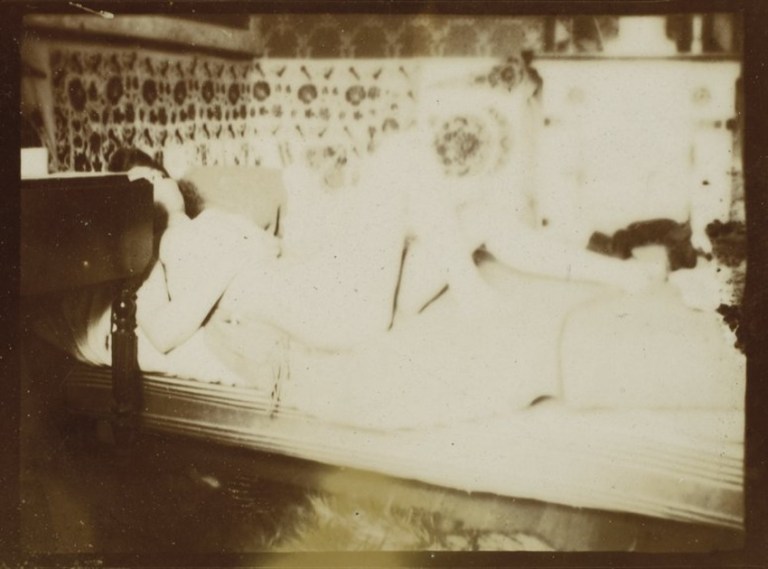
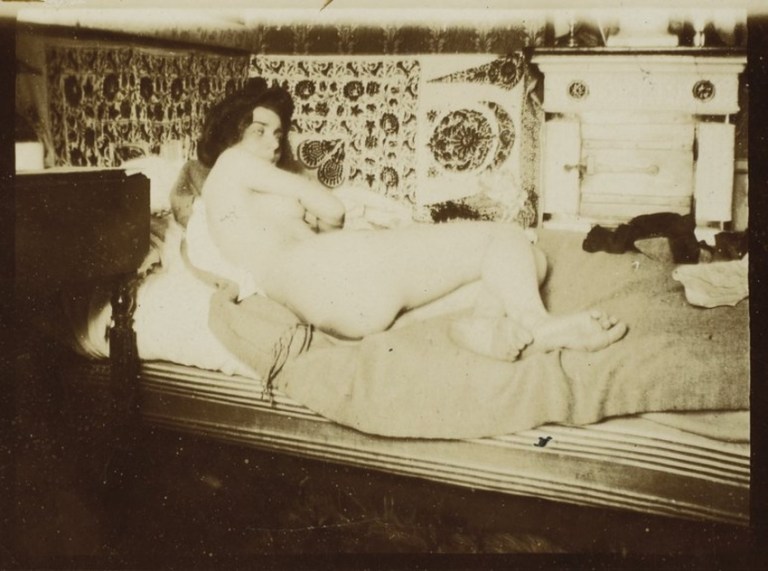
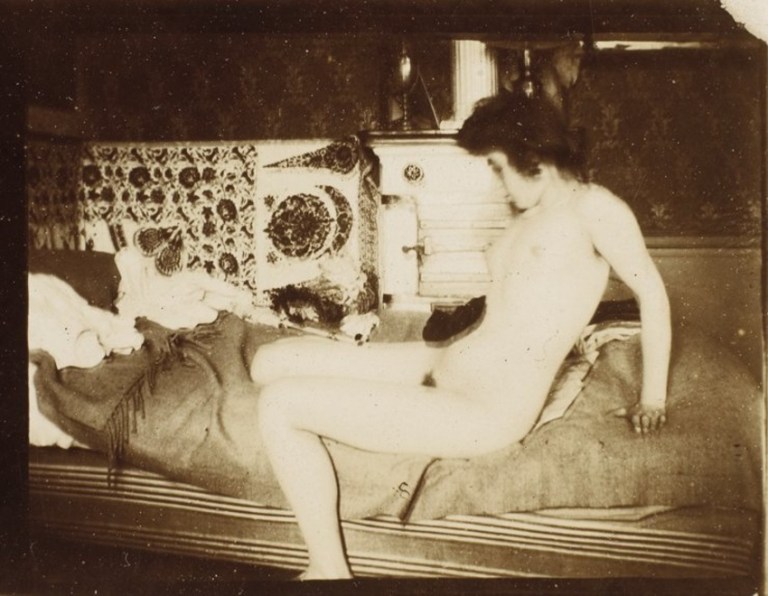
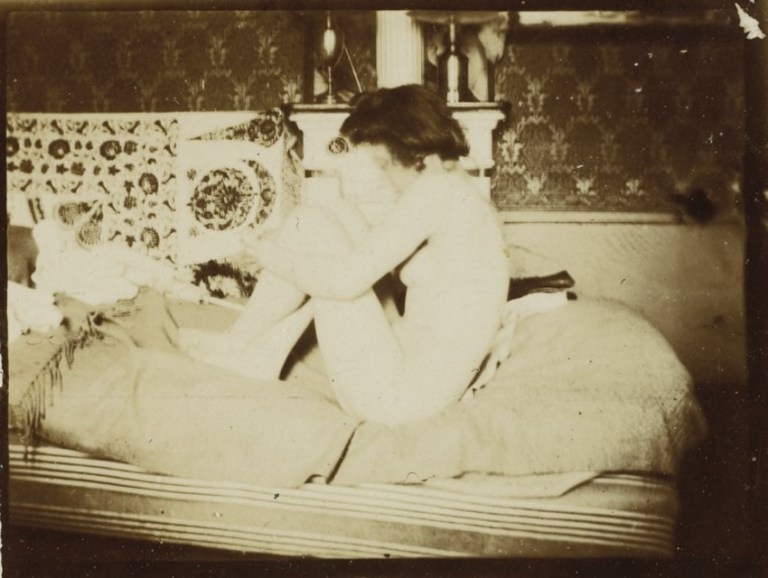
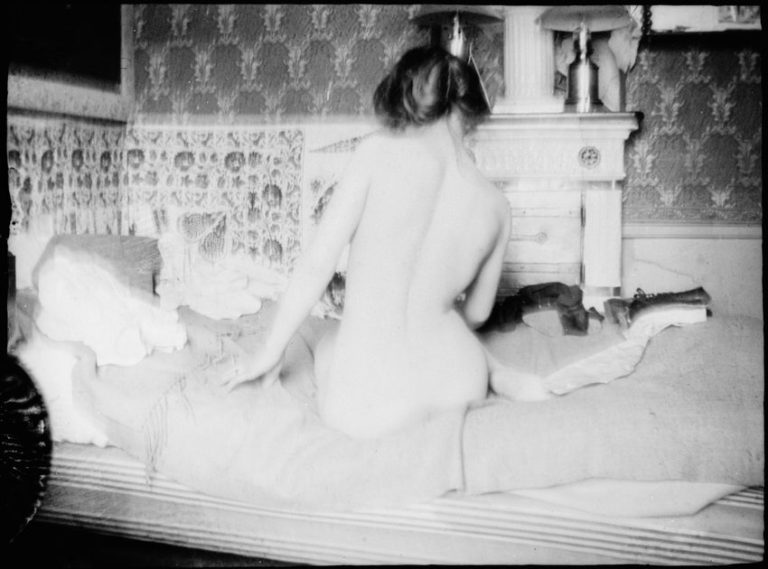
The series of photographs make also a little movie, shot with 8 frames, every one that the Kodak roll-film contained. We can reassemble them into this sequence (or other iterations) in which Marthe reclines, rolls over, and then self-consciously rises from the bed as Bonnard fires the shutter of his camera, mounted on a tripod so that he can use the ‘bulb’ setting of his shutter in the indirect light from the window behind him.


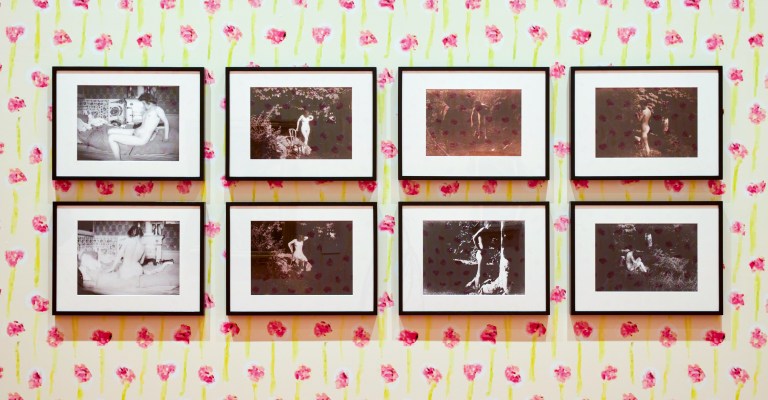
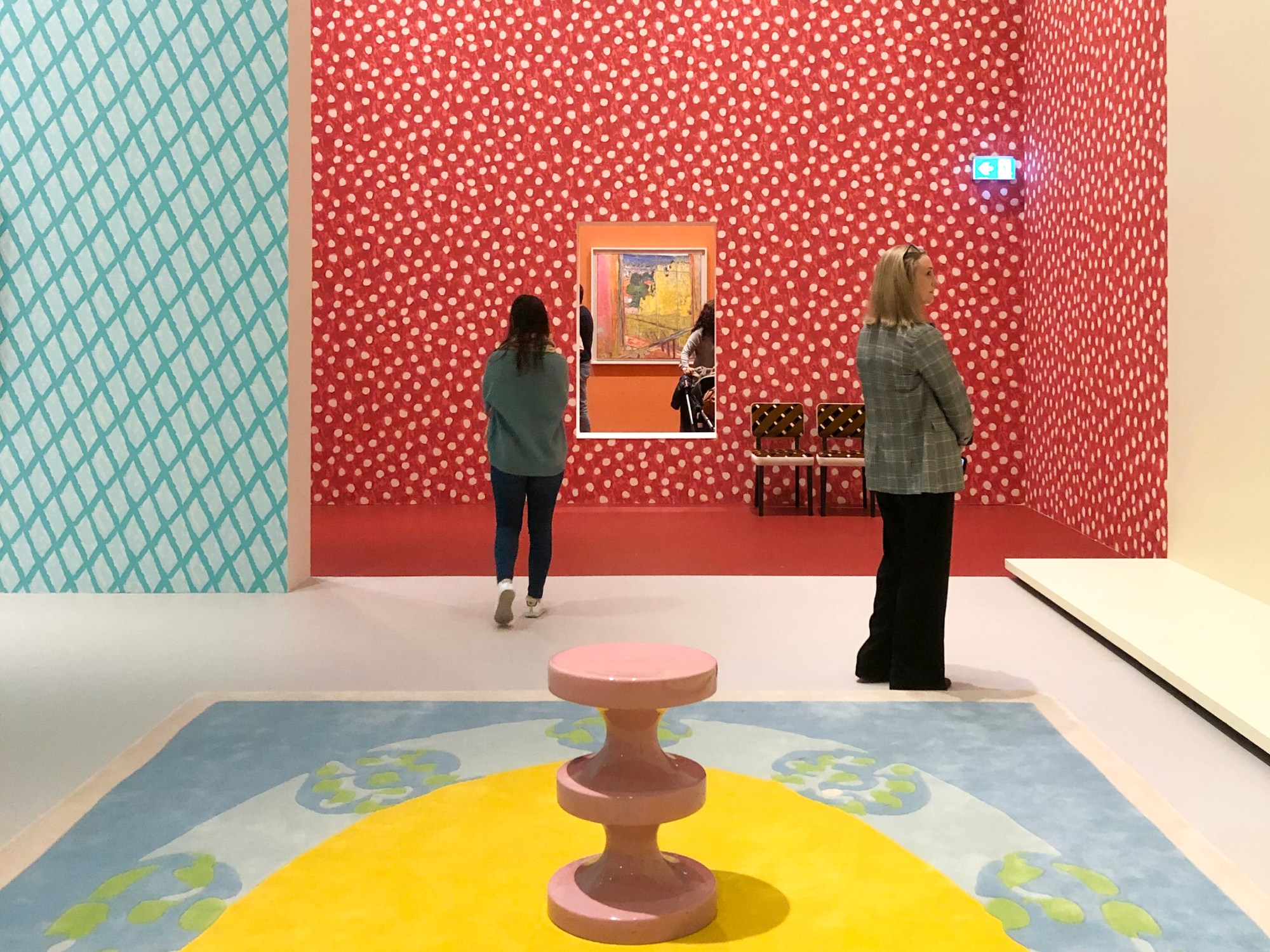
The NGV proudly announces that it commissioned celebrated architect and designer India Mahdavi, who boasts more than one listing in Architectural Digest among of the world’s 100 most influential architects and interior designers, to create the exhibition’s ‘scenography,’ its wallpaper, furniture, and ‘window’ apertures that frame viewers in the next room as if they too were in Bonnard paintings.
Given Bonnard is a virtuoso colourist, does his work need to be ‘enveloped’ in such an environment? I’d argue that it develops a recession of the painter’s representations of décor so that they become vignettes—I mean those small ornamental space-fillers in a book based on foliage—rather than allowing them, as they may in other surrounds, to expand into the space. Furthermore, and astonishingly, Mahdavi admitted that she “knew little of Bonnard” so before the exhibition had to immerse “herself in his art,” and in turn, we find ourselves immersed in hers, and there’s no doubting that she knows her stuff.
Admittedly, ‘white cube’ gallery walls are just another, ideologically more loaded, imposition on the art they present. Bonnard himself quipped that “the museums are full of uprooted paintings,” and one has only to look at his interiors to see the quite extravagant domestic environments in which owners of his works would have displayed them. So here in this space that Mahdavi has created as its architect and interior decorator, she hopes to welcome them home. After an initial claustrophobic, crowded vestibule, they are given ample space, but what does all this colour piled on colour, do?


On a wall in a salon full of nudes, opposite La Sieste, and wallpapered, like the room in the painting with fields of flowers, we find some of the photographs of Marthe posing for that work. As we can see from the series above , though made with the humble Kodak folding camera, these are the work of one with a photographic sensibility; devoted (as he noted in 1934) to “la transcription des aventures du nerf optique,” but fascinated too by the way that the lens equates to human vision, albeit in monochrome.
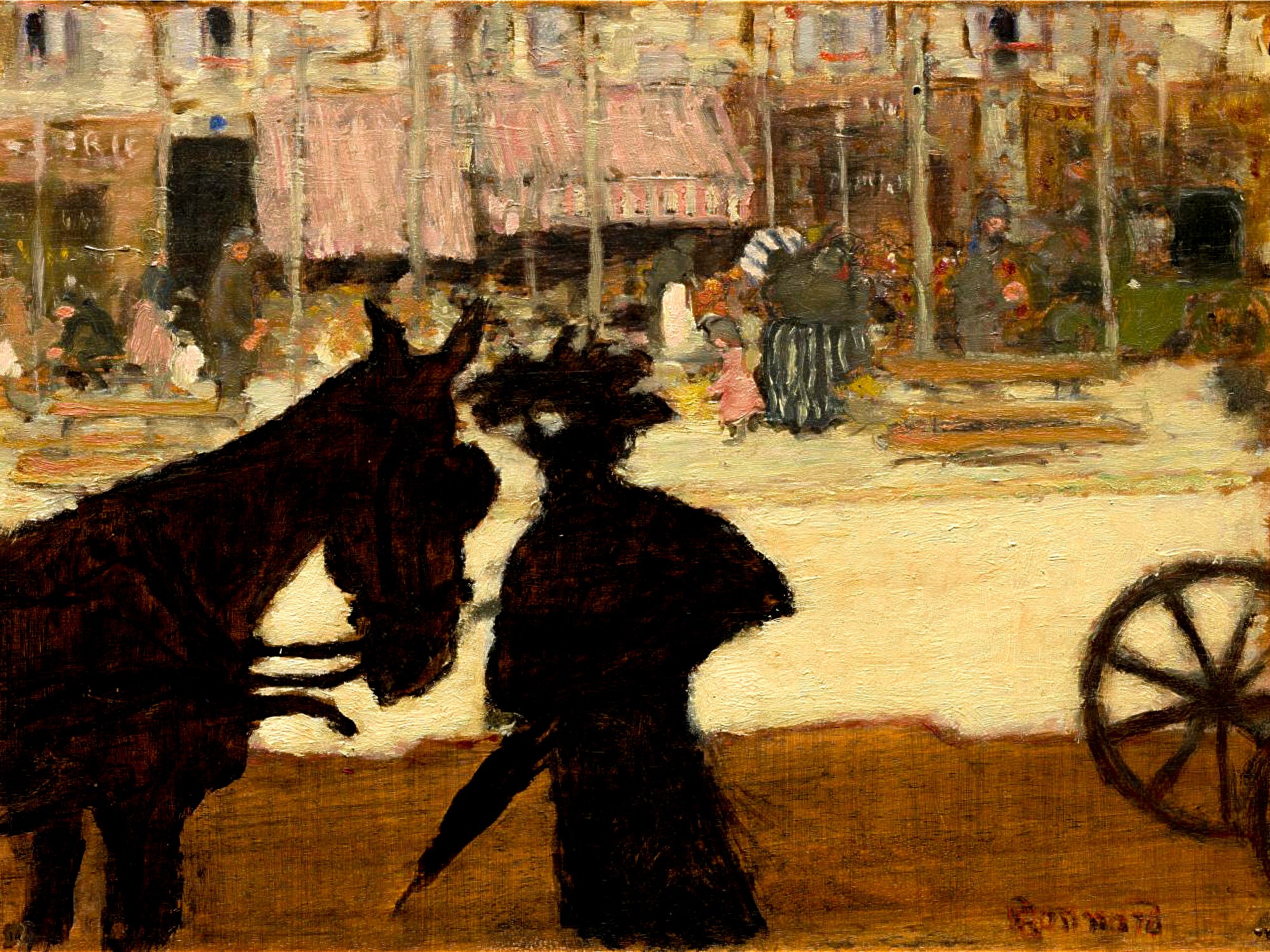
In fact, he often directly transcribes the photograph, not only the retinal image. The fleeting figure of the working-class woman with shawl, umbrella and floral hat (who perhaps is Marthe) appears in silhouette in drawings and prints adjacent to The Cab Horse in the exhibition. The silhouette here makes sense only photographically; the naked eye too quickly adjusts shadow detail to be able to enable us to see such a scene.
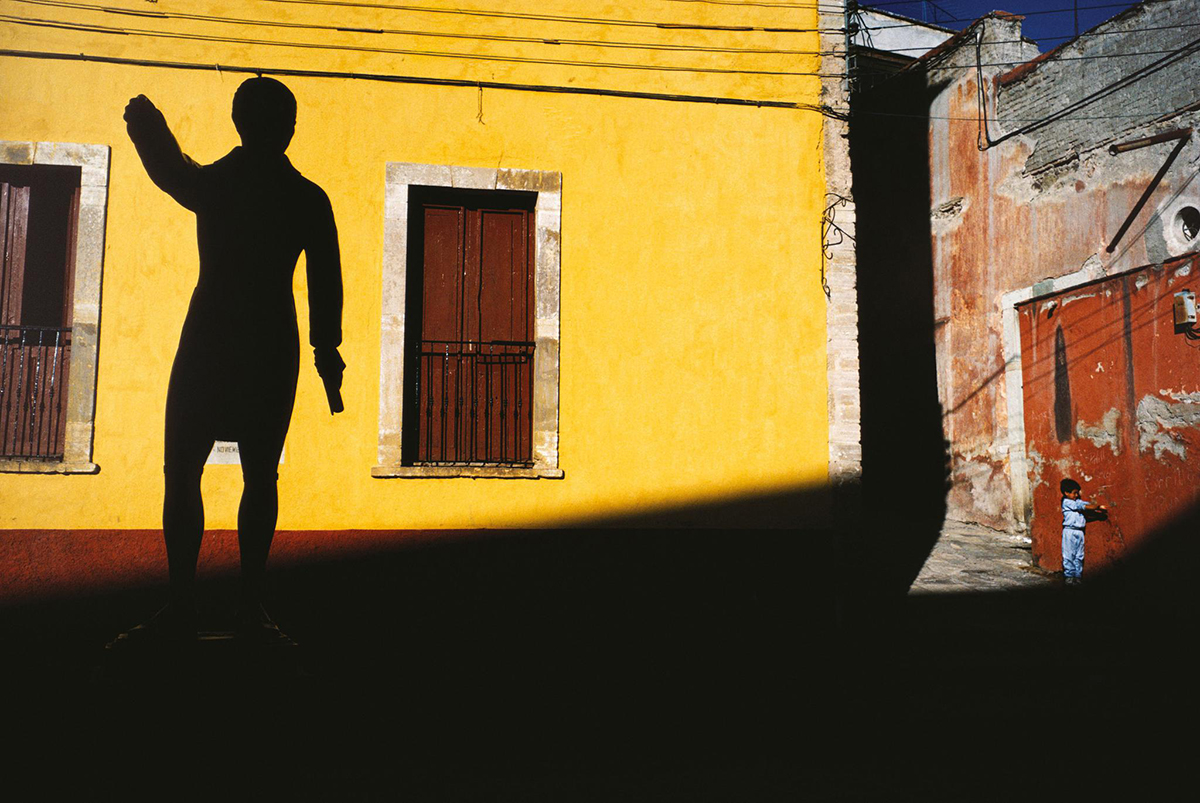
One hundred and ten years later, Alex Webb exploits Kodachrome, a transparency film discontinued in 2010, that he says he “would have been happy continuing to use…until I died,” which because of its short gamut renders shadow a featureless black against a sunlit scene. Looming foreground forms in both Bonnard’s and Webb’s images are set in contrast to a guileless child figure in the broadly lit street opposite.
Marthe standing naked in the garden presents an opposite counterchange, of white skin, dappled so that we can read details of the upper body, against a dense background with vaguely delineated features that the mind must fill in to recreate the sense of hot sun and the mystique of the coolly shadowed, overgrown garden path.

Bonnard’s Pocket Kodak model of 1896 was compact and easy to hand-hold, manoeuvrable for quick capture of different perspectives. The shutter had variable speeds and a bulb setting which enabled the indoor photography of Marthe posing for La Sieste and accounts for the motion blur in some.
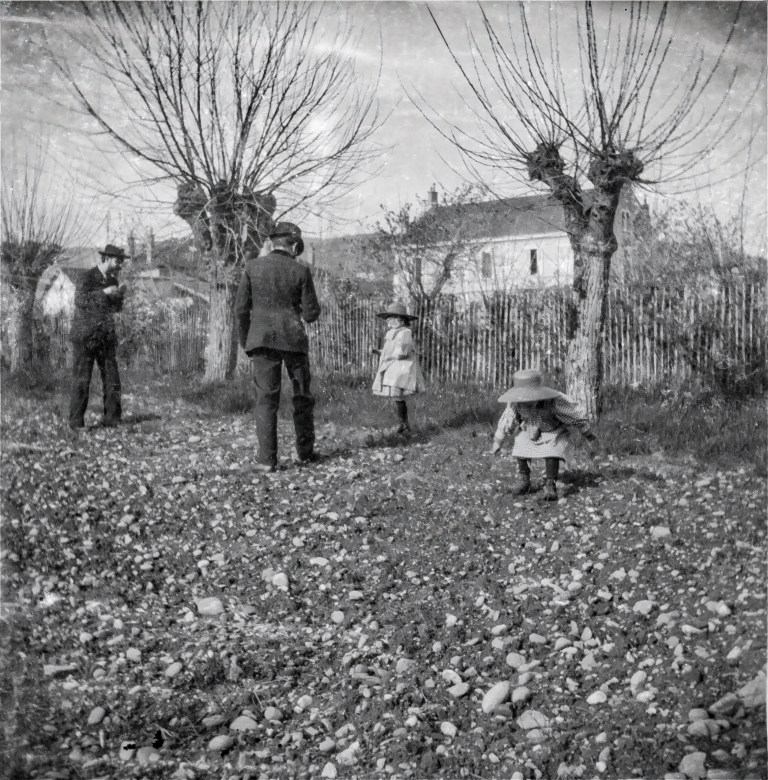
Unlike other Nabis, especially Maurice Denis who left 2,689 prints and 1,250 negatives, only about 200 of Bonnard’s photographs survive, mainly from this period, and it is said that after 1920 he lost interest in the medium or may have destroyed his others, like Félix Vallotton, who was criticised for making a painting from a photograph.

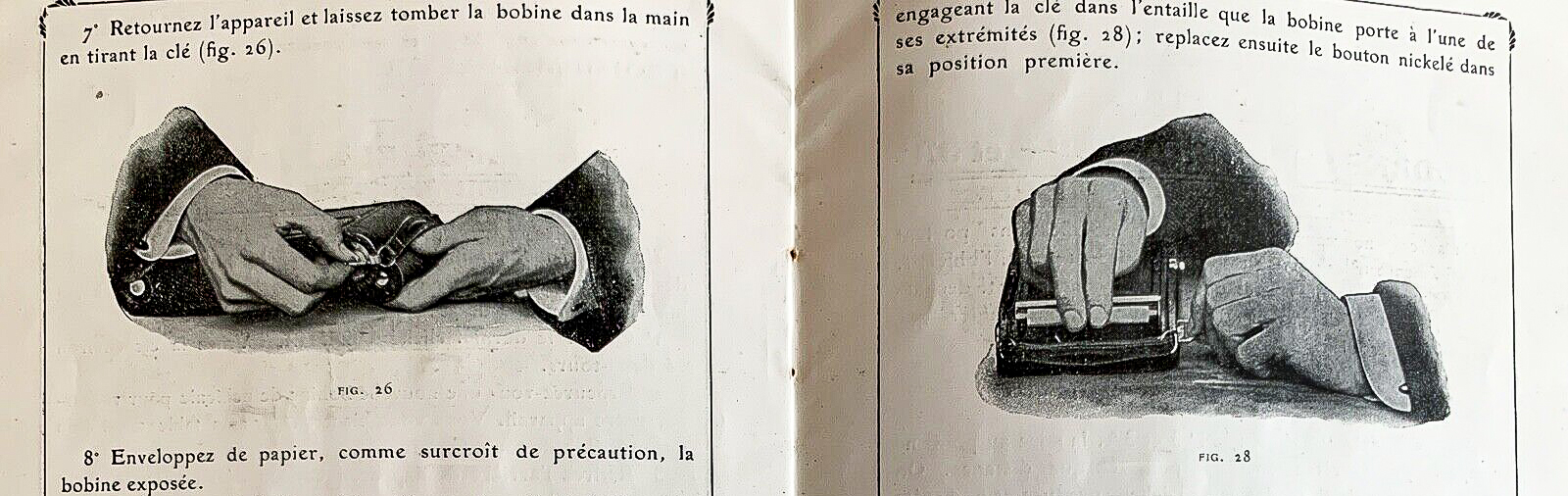
Marthe in turn uses it to photograph a coy nude of Bonnard under the chestnut tree in this domestic arcady. This collaborative photography session points to a fact we should not overlook; that Marthe, rather than being a passive model contributed actively to Bonnard’s art. Lucy Whelan uncovers some further truths about Marthe that contradict art historians’ perpetuation of rumours about her that support a convenient picture of a troubled and troubling relationship.

Her death in 1942 and his own ageing prompts the production of works from memory; complex, often perceptually bewildering works to which he would return to rework, in this case throughout WW2, so that dates of production can only be estimates.
The verticals here recall his Japanese-inspired posters, graphic works like the lithographs set in the NGV screen, La Promenade des nourrices, frise de fiacres, an example incidentally of his reference to the instant imaging of the camera shutter.
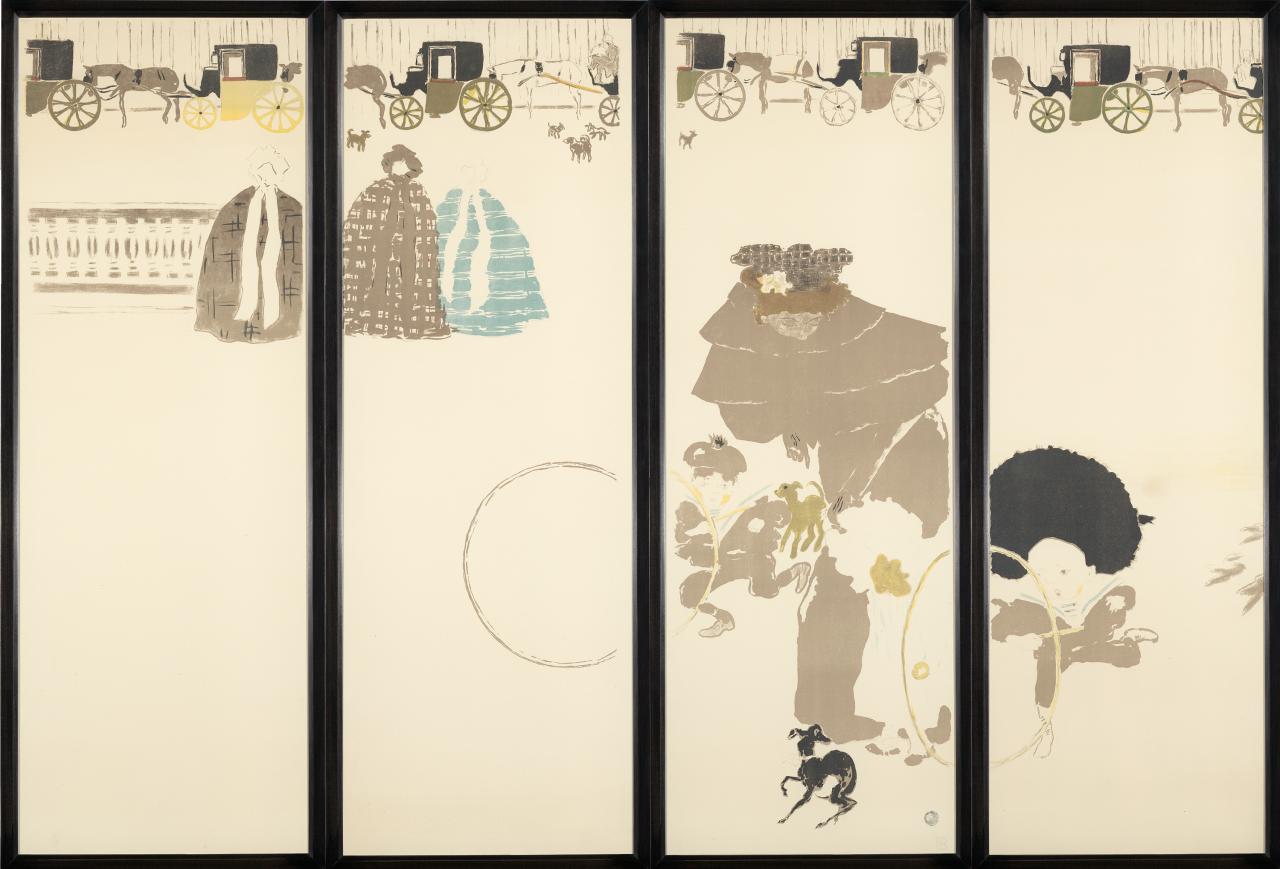
Purchased, 1946
As in so many of his late paintings that verticality extends a coda; ambiguous strips of colour at either side of the canvas. They remind us of rectilinear limits and its flatness, of the substance of the paint, of the abstraction of its colour in Bonnard’s untethered expansion on retinal stimuli.
Entering this exhibition, I was soon overcome with a joyful euphoria, a Belle Epoque. What I was seeing was indulgently bourgeoise certainly, but how happy! Was it because of Mahdavi’s bright patterns? Was it Bonnard’s painting?
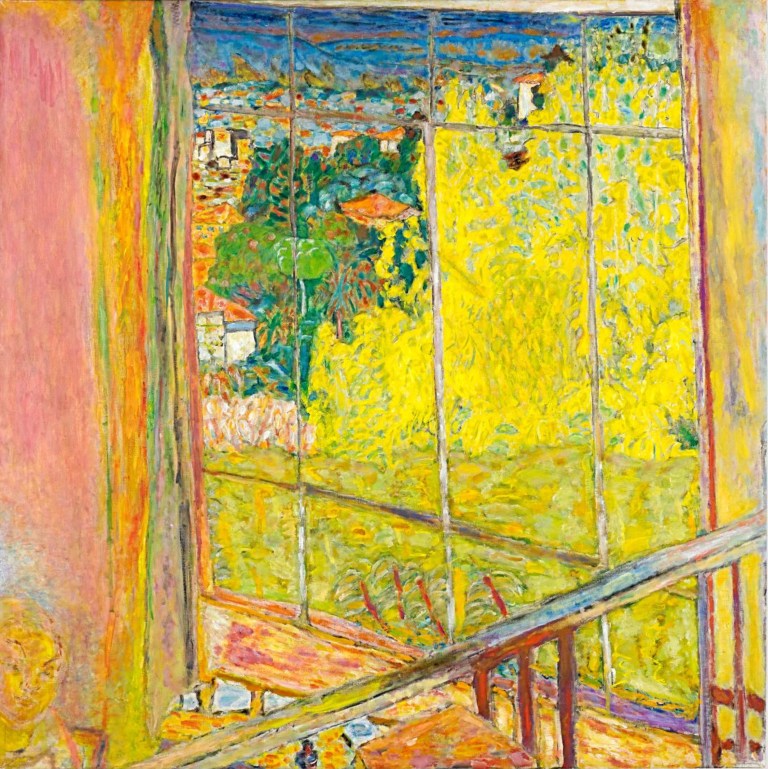
In L’Atelier au mimosa made at the end of Bonnard’s life, and started when he was the same old age as I am now, the rapture remains, but is joined by a melancholic sense of absence that is reinforced by the enigmatic face with its inscrutable expression that emerges, half-seen, barely there, at the corner of the frame, only to sink back, but once seen, always present.
Against this work La Sieste with its undulating modulations of tone looks almost monochrome. Its patterns of wallpaper and mattress ticking are decorative incidents of the décor. Their colour returns here with amplification; so much of the spectrum at play seems to create light. Tonal contrast, that element of drawing, is vanquished — as can be demonstrated with a black and white rendering of the painting in which so much of it becomes invisible, so that we realise how Bonnard’s colour is his triumph.
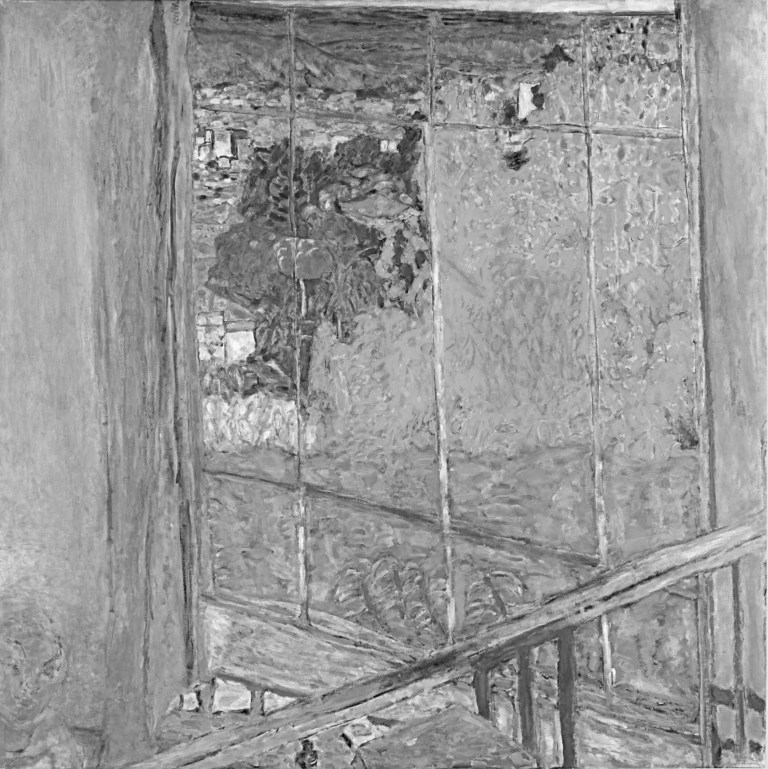
This painting provides you an object lesson with which to assess the effect of India Mahdavi’s décor. Am I right to talk about recession, of their reduction to vignettes? Here is the brilliant L’Atelier au mimosa seen through one of her ‘windows’. Surrounded by a hail of white dots on a red ground and against an orange wall, and the audience in their winter drab, and underscored by a carpet containing its colours and forms, the yellow irradiance of L’Atelier au mimosa is subdued, while its red rises. The painting becomes about red and its contrast with green.
Colour: it is volatile.


 On This Date in Photography: by James Mcardle