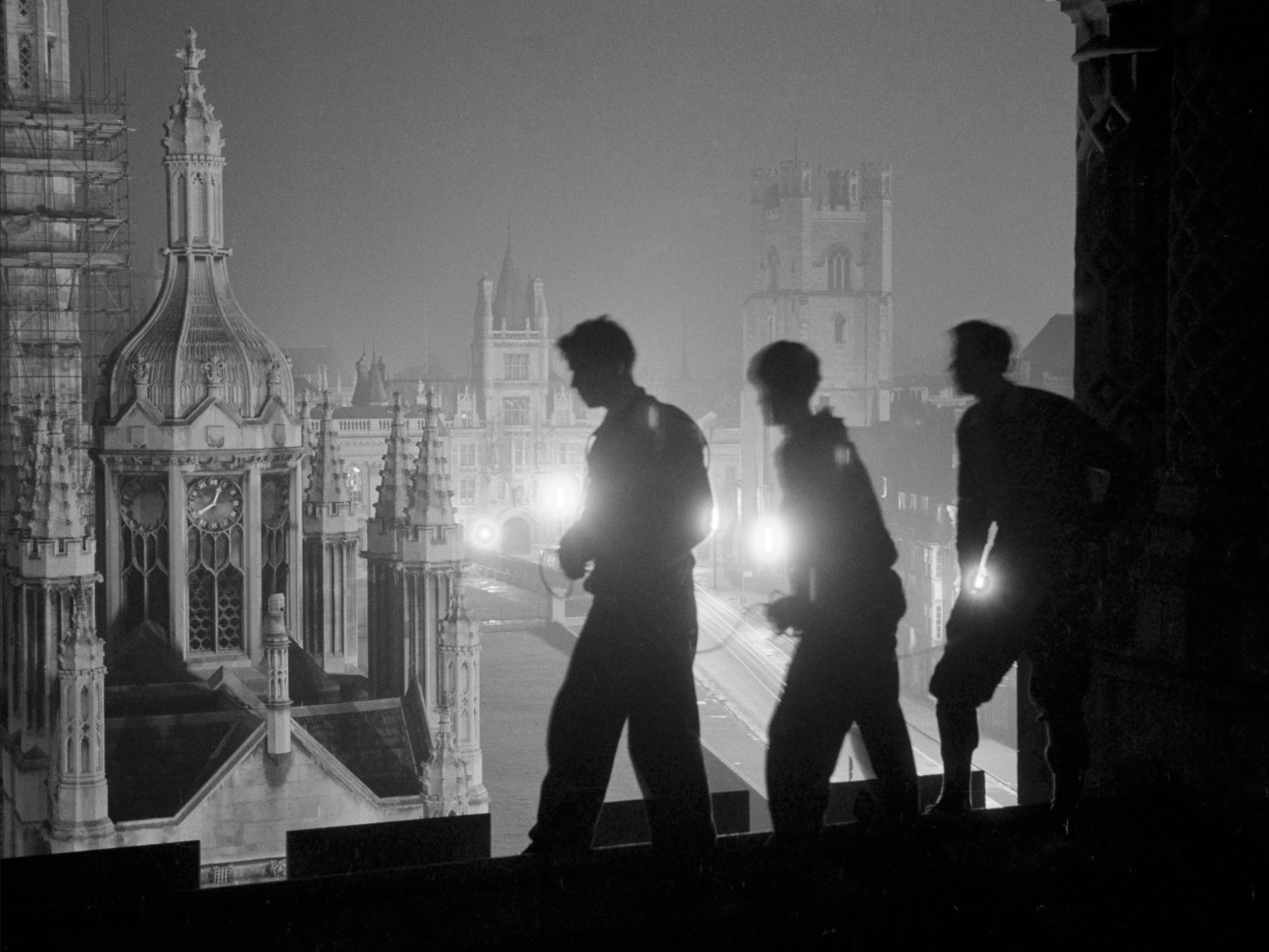
 There are photographs that cost their maker something more than money and time. For John Bulmer, born in Herefordshire in 1938, grandson of the founder of the Bulmer cider dynasty, the cost was his engineering degree. He has said since that it was the best thing that ever happened to him. The career that followed certainly makes that a defensible claim.
Bulmer studied engineering at King’s College, Cambridge, where his interest in photography deepened. While still a student he had photographs published in Varsity as well as a magazine he co-founded, Image, and did photostories for the Daily Express, Queen, and — fatally for his degree — The Sunday Times.
In a 19 November 2025 interview, Bulmer remembers:
“There’d been a book written about the night climbers [of Cambridge] that was quite well known, in the ’30s, but nobody had attempted to photograph them since—nobody had photographed them seriously. The early photographs were taken by night climbers themselves, not a photographer. Even in that early stage, I did regard myself as a photographer.”
The night climbing tradition at Cambridge is more than a century old, its foundation literary text being Geoffrey Winthrop Young’s 1901 The Roof Climber’s Guide to Trinity. Its definitive monument arrived in 1937, when so legendary had the night climbers become that it was Chatto and Windus who took up and published a second book The Night Climbers of Cambridge, written anonymously by Noël Howard Symington, as ‘Whipplesnaith’—the Potteresque moniker sounds, not coincidentally, a likely inspiration for JK Rowling.
Learned fellow that he was, Symington introduces his first chapter with an appropriate quotation, in French, naturellement; “toute la nuit je l’entends rôder dans la gouttière” from Victor Hugo’s novel Notre-Dame de Paris (also known as The Hunchback of Notre-Dame) Book 1, Chapter 5, which refers to Quasimodo, describing the noise he makes at night: “all night I hear him prowling in the gutter”. The 1937 book contains a compendium of routes across the Gothic stonework and a philosophy of nocturnal transgression that has lost none of its appeal—it reached cult status among climbing societies and was reprinted in 2007—and in it, Symington explains his motivation for writing:
“Although it is impossible to write a history of night climbing— because there is no such history—yet the game of roof-climbing remains the same, changing scarcely, if at all, from generation to generation. History records change, big events sandwiched between long periods of monotony, while roof-climbing-if it could stand out of the darkness which enshrouds it is simply a string of disconnected incidents. There is no continuity. Or rather, there is none of the continuity of purposes and cross-purposes, developments and declines, ambitions and indifferences which make history.
“When one man goes, there is no one to take up the thread where he left off. The blanket of the dark hides each group of climbers from its neighbours, muffles up a thousand deeds of valour, and almost entirely prevents the existence of dangerous rivalry. The undergraduate population changes too frequently for roof-climbers to form an organised body.
“Another reason for the lack of continuity is the absence of spurs to ambition beyond a certain point. Mountaineers have always some bigger mountain they hope to climb, some steeper rock-face they hope to assault. But in Cambridge, with the exception of several dangerous or difficult buildings which few climbers attempt, there is no graded list of climbs, no classification of climbs according to their degree of severity. Thus, after he has done a number of difficult climbs a man feels he has reached a stage where he is no longer advancing, and he has no means to test himself by standard comparisons.
“Again, the lack of written records makes a history of past roof-climbing impossible. Some records doubtless exist, in diaries or in logbooks kept by individuals and by ephemeral night climbing societies. But the written word, where it exists, is kept hidden away, and so contributes nothing for the benefit of future generations. Practically the only exception is the Roof-Climber’s Guide to Trinity, published anonymously [in 1901], which has helped many an errant wayfarer in search of novelty over the less-known routes of Trinity.”
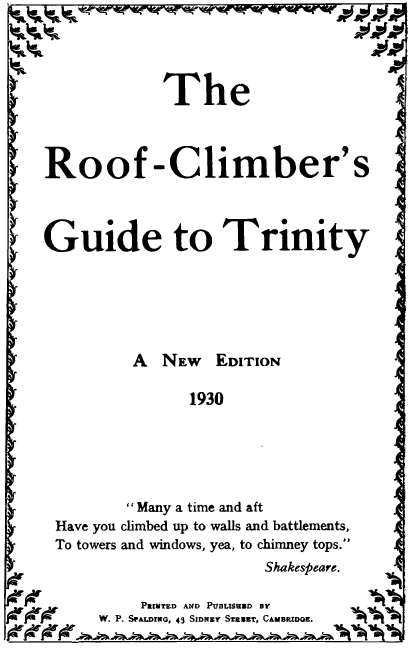
That foundational volume The Roof-Climber’s Guide to Trinity provides instructions for clambering up and around Trinity’s major buildings which date from the 16th and 17th centuries, rebuilt and redesigned by Thomas Nevile, Master of Trinity from 1593, including enlargement and completion of Great Court and commencing construction of Nevile’s Court, which was completed in the late 17th century with the Wren Library, designed by Christopher Wren.
It’s a sport of wealthier students—sons of the aristocracy and of business-owners—some of whom regarded their studies as secondary, and treated university as a social, rather than academic, experience. The text, conscious of its educated audience, speaks in an authoritative, no-nonsense tone as if describing military strategy, and is interspersed liberally with quotations from Shakespeare, Marlowe, Tennyson, Keats and Kipling. Symington continues his reasons for writing the second text, which expands the climbs beyond Trinity:
“Descriptions of past adventures serve little purpose, save as anecdotes, but there is plenty of scope for descriptions and classifications to help future climbers. This absence of literature on the subject can be easily understood. The college authorities, acting presumably on purely humanitarian motives, have set their official faces against roof-climbing, and no one would have it otherwise. It may lop off many a would-be climber who cannot risk being sent down, and keep many an adventurous spirit from the roof-tops, drain-pipes and chimneys, but this official disapproval is the sap which gives roof-climbing its sweetness. Without it, it would tend to deteriorate into a set of gymnastic exercises.”
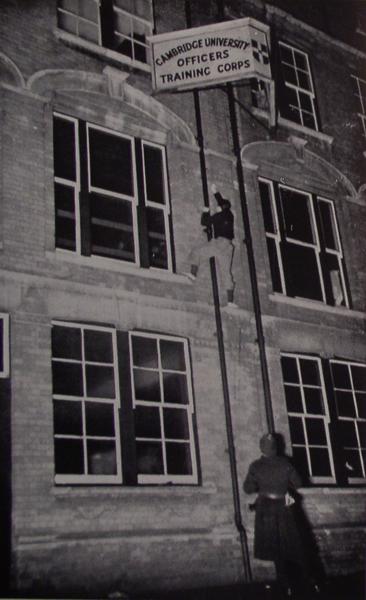
 It is believed that it was Eric Waddams, a choral scholar at Kings College, who either took or featured in most of the photographs. They are documents rather than photography in any considered sense — made on snapshot cameras, and many, like the frontispiece below, in daylight, though the cover of darkness was desirable given that detection—by police, porters, dons, the caretakers or other officials—brought the serious consequence of an appearance before the proctors, and likely expulsion from the University.
As ‘Whipplesnaith’ writes: “Modesty drives the roof climber to operate by night; the proctorial frown makes him an outlaw.” In one case however (at right) a bobby is seen watching as the climber scales drainpipes on the Cambridge University Officers army reserve training building, but “there was nothing dramatic in the photograph showing the policeman at the foot of the pipe; he obligingly posed for us.”
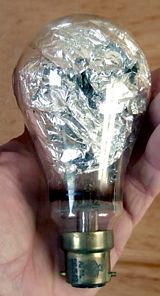
The technology of 1937 made genuine night photography of moving figures on dark stone difficult due to the slow-speed film. But these were resourceful young men from wealthy families and flash, though expensive, was available to them. It came in the form of bulbs as large as the old domestic tungsten light-globes and connected with the same style of bayonet mount to the battery pack. One such was the ‘Sashalite,’ invented and marketed in Britain by Alexander Stewart, a professional photographer whose business name was Sasha. His lamp was an oxygen-filled bulb in which aluminium foil is burned, ignited by a shorting charge from by a 4-volt battery. Synchronisation for flash didn’t come until the first mass produced camera with such facility, the Falcon Press Flash, was released in 1939, with an integrated on-camera flash-bulb holder/reflector.
Such technical limitations conspired to keep the activity’s 1930s documentation in the realm of the snapshot. Harsh cutout edge-shadows result in some when the flash-holder is mounted on the camera, while in some more sophisticated shots where the flash is held off the camera, the stark contrast between light and shadow results in a dramatically film noir quality — but this is accident, not intent. The figures appear on ledges and cornices caught in mid-movement, the stone rendered flatly, the images valued for what they show rather than how they show it.
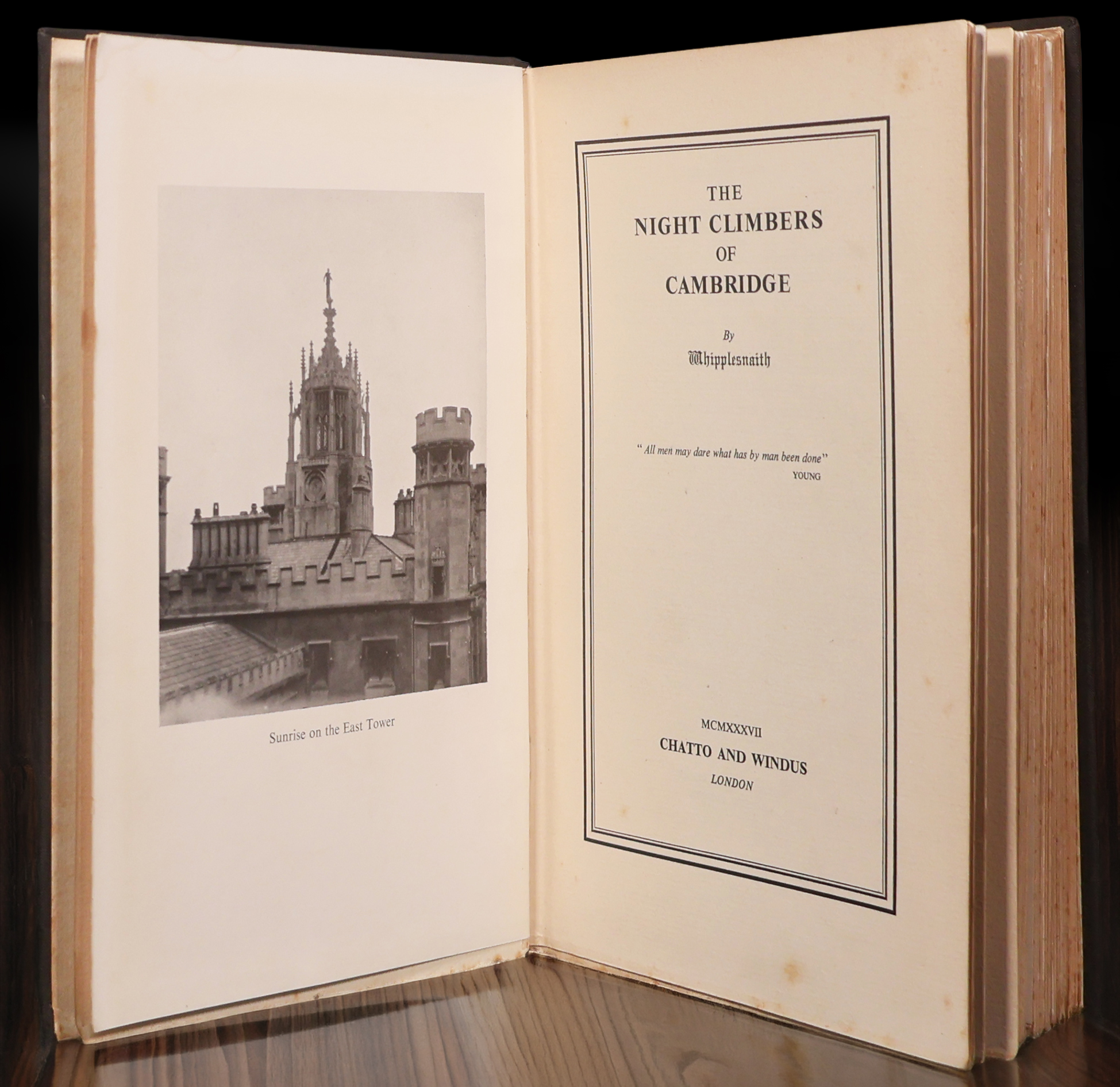
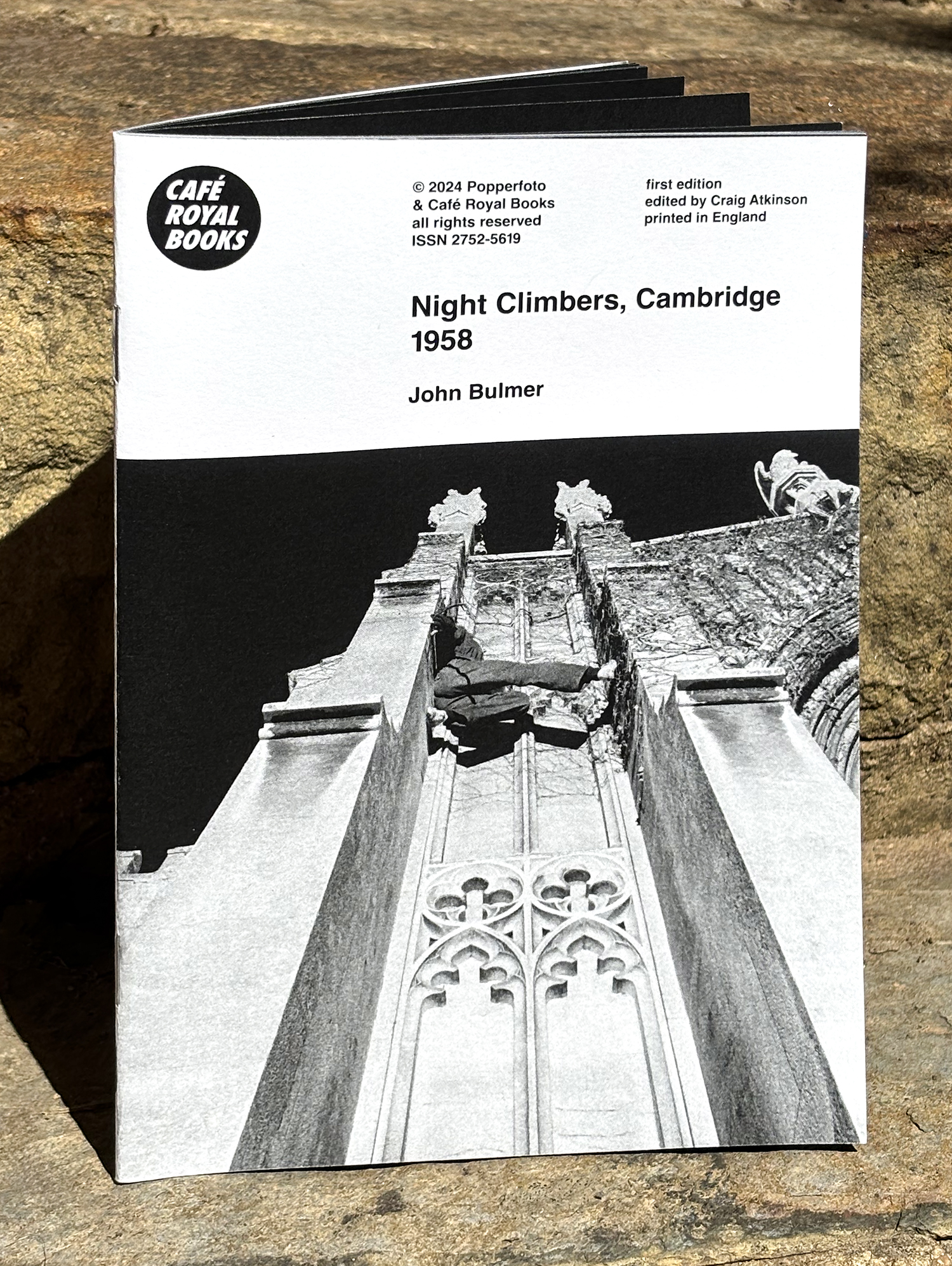
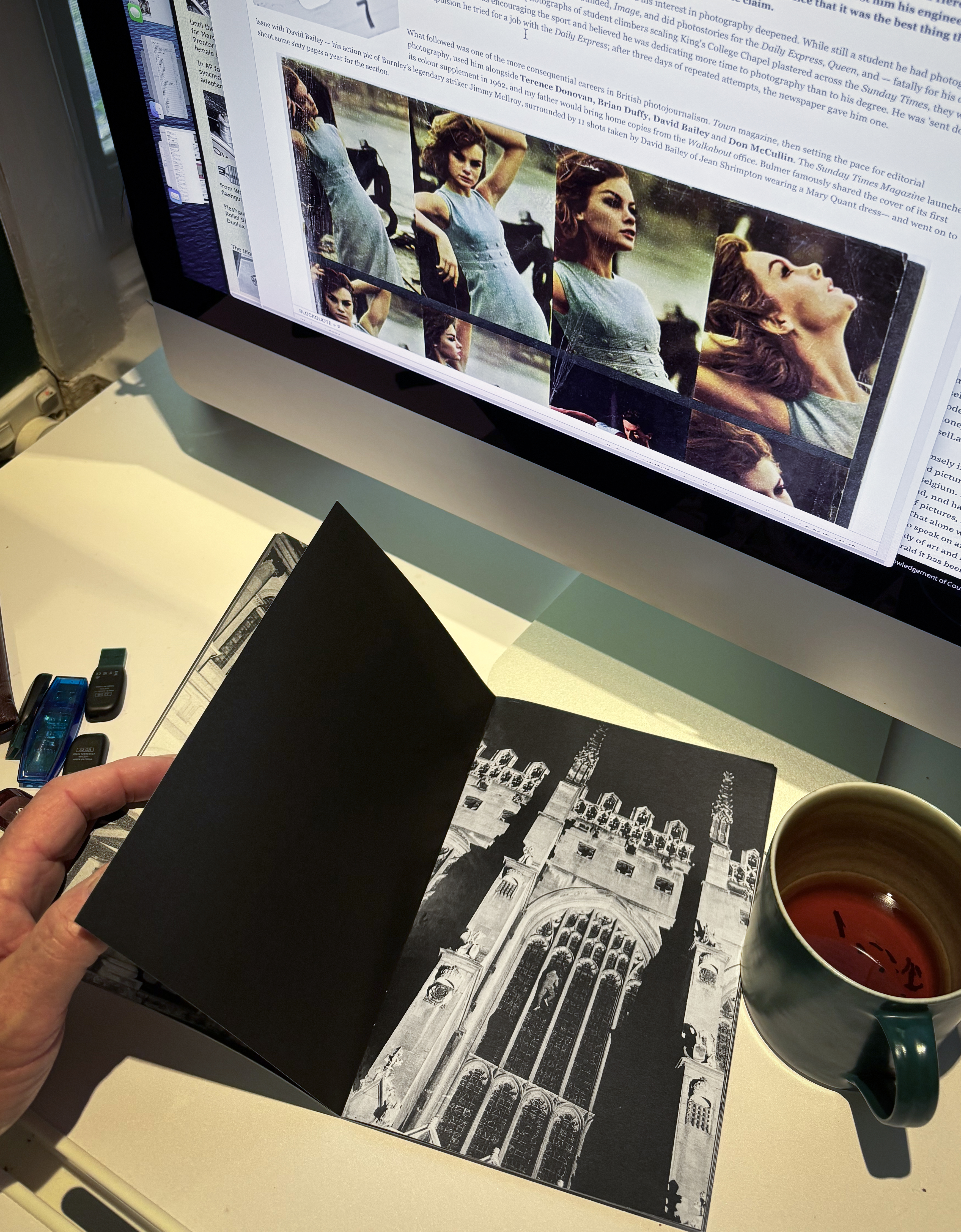
What has landed on my desk (little more than a week after I ordered it sent from the UK!) is the third book. An elegant, slender volume, it showcases photographs of another generation of night climber. They were made in 1958, 21 years later than Symington’s and Addams’ text-heavy publication, by Bulmer. Born the year after the ‘Whipplesnaith’ publication was released, Bulmer describes how, early in his studies at Cambridge he:
“met a man who was to become a friend, Tim Green, who was a postgraduate, who’d worked in Canada and with Life magazine a bit, and the two of us did a number of stories together, or picture stories, for magazines, things like Queen and Canadian magazines; for example, a story on the training of the Blue Boat crew for the Oxford-Cambridge Blue Boat Race. And then we thought about the night climbers because they had this mystique, and everyone was rather interested in them, but nobody actually knew any of them. Somehow, we got to know a few of them, and they suggested we come along with them and have a look.”
Most, but not all, the photographs illustrated below are from Night Climbers, Cambridge 1958
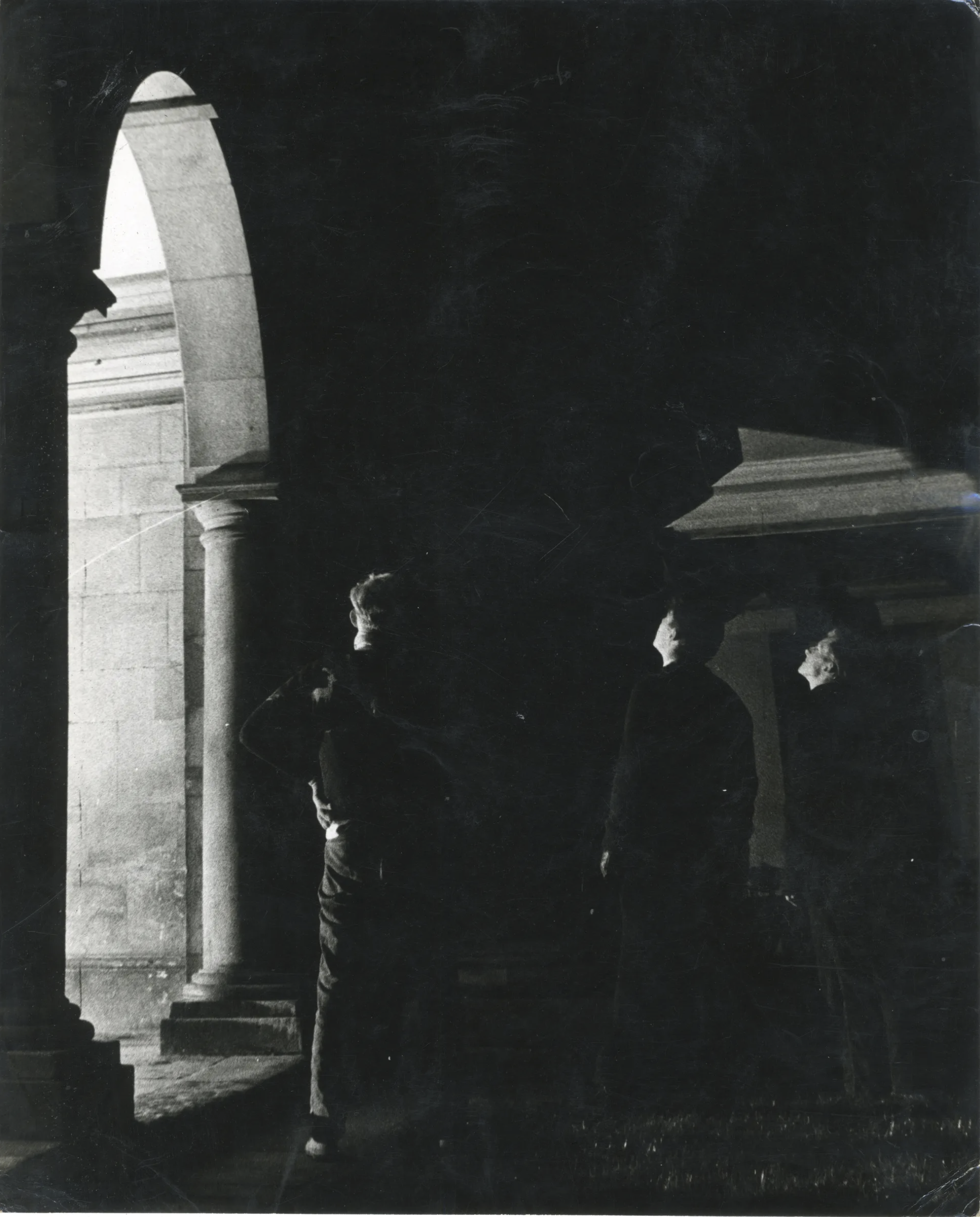
“We went along to look at a particular climb. I didn’t like heights much, so I tried to keep my feet as near the ground as I could. So it was really a question of setting up particular pictures and if you look at the them, you can see why and how they worked.”
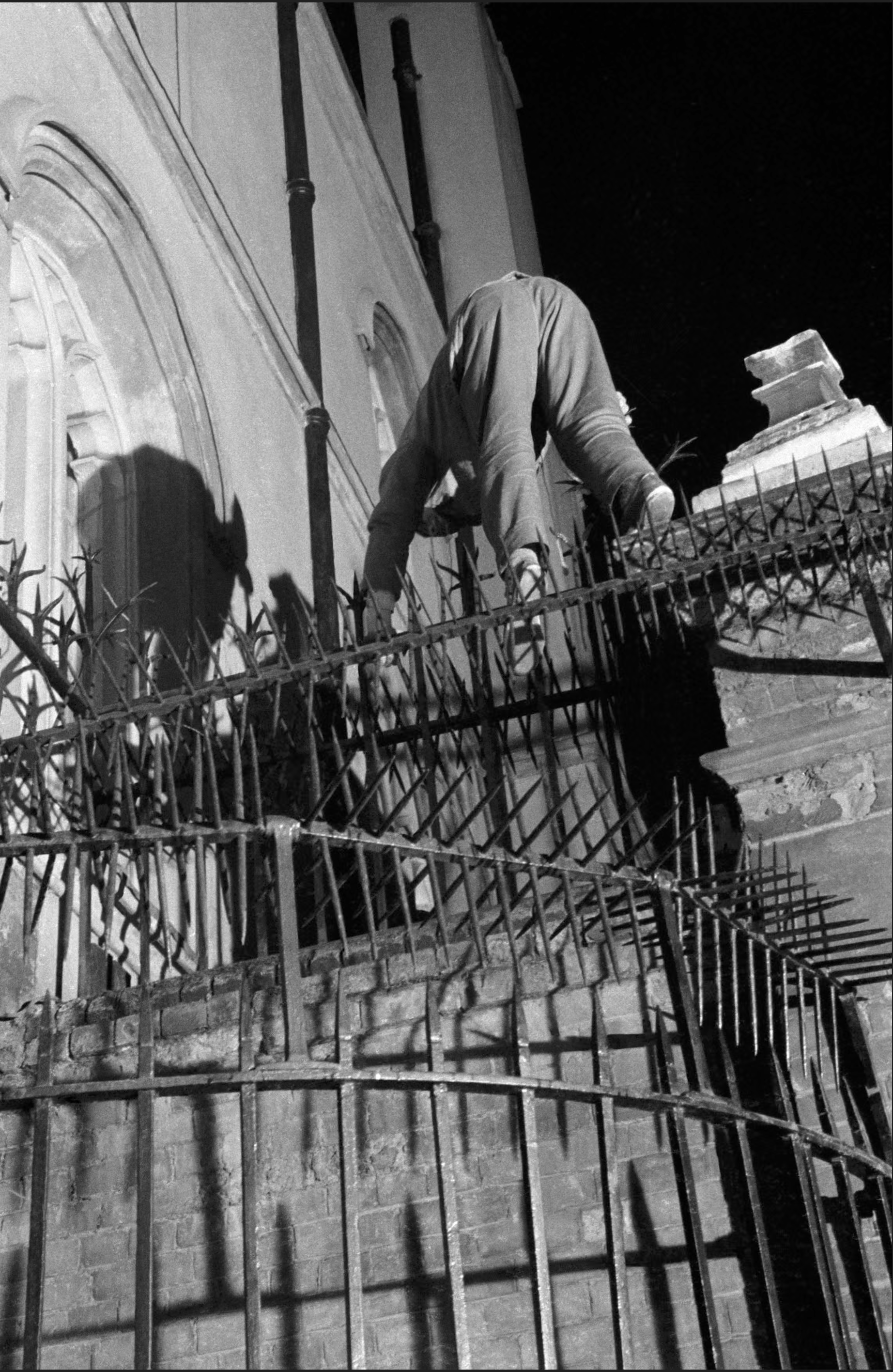
“The first problem is, how do you photograph nightclimb? How do you light it? By nature it’s going to be dark. My friend, Tim, had some good friends on Life magazine, and they supported the project, and they gave us a whole box of those huge, old fashioned flash bulbs that you used to see in the movies with wire filling them. Not wanting lots of cables to get in the way, I resorted to the old fashioned method [of] open flash, where I would open the [shutter] manually, then give a signal to my colleague who was holding the flash gun, and he would fire the flash gun, and then I would close the [shutter]…the fact that the camera shutter was open for a second or so didn’t really make any difference.”
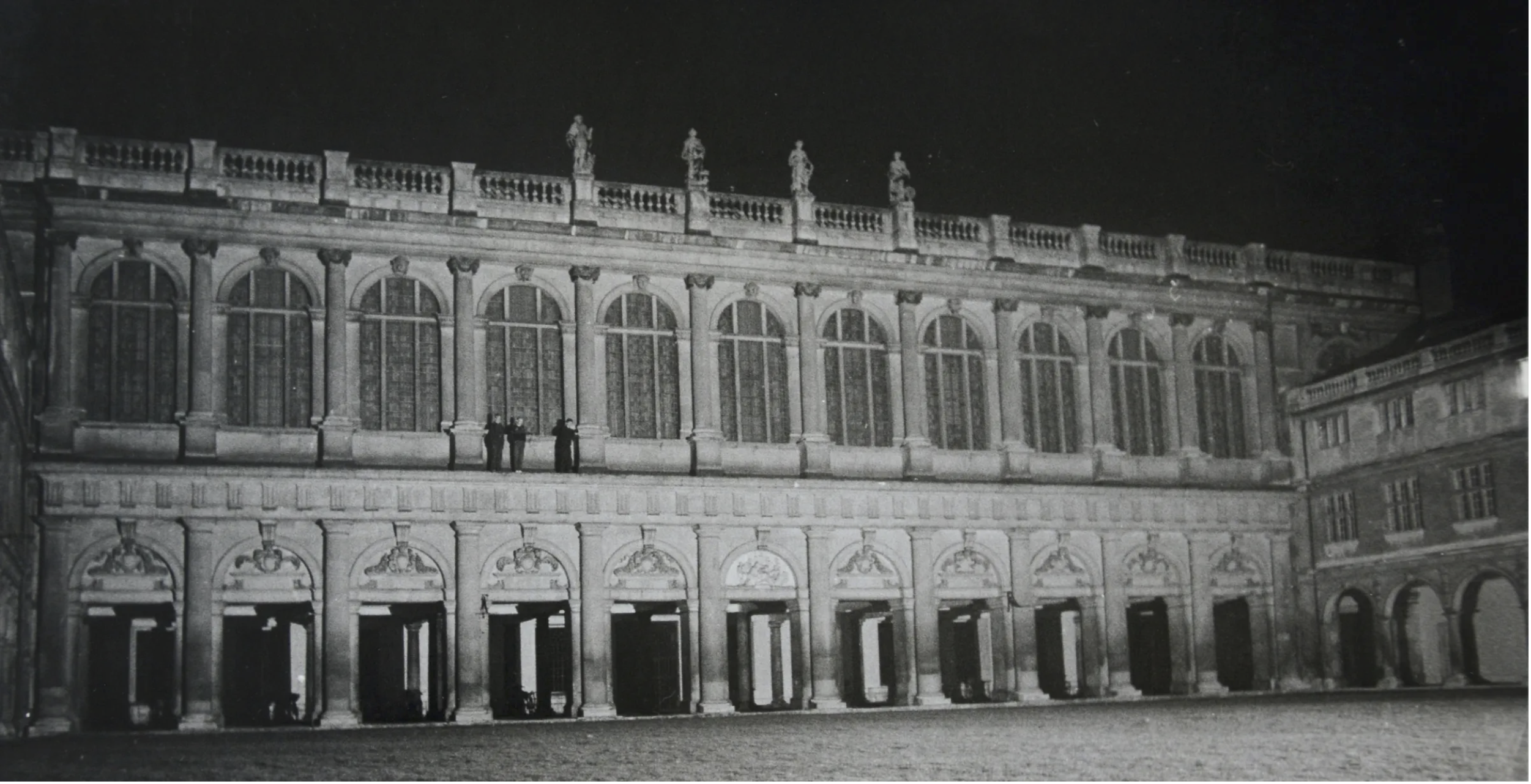
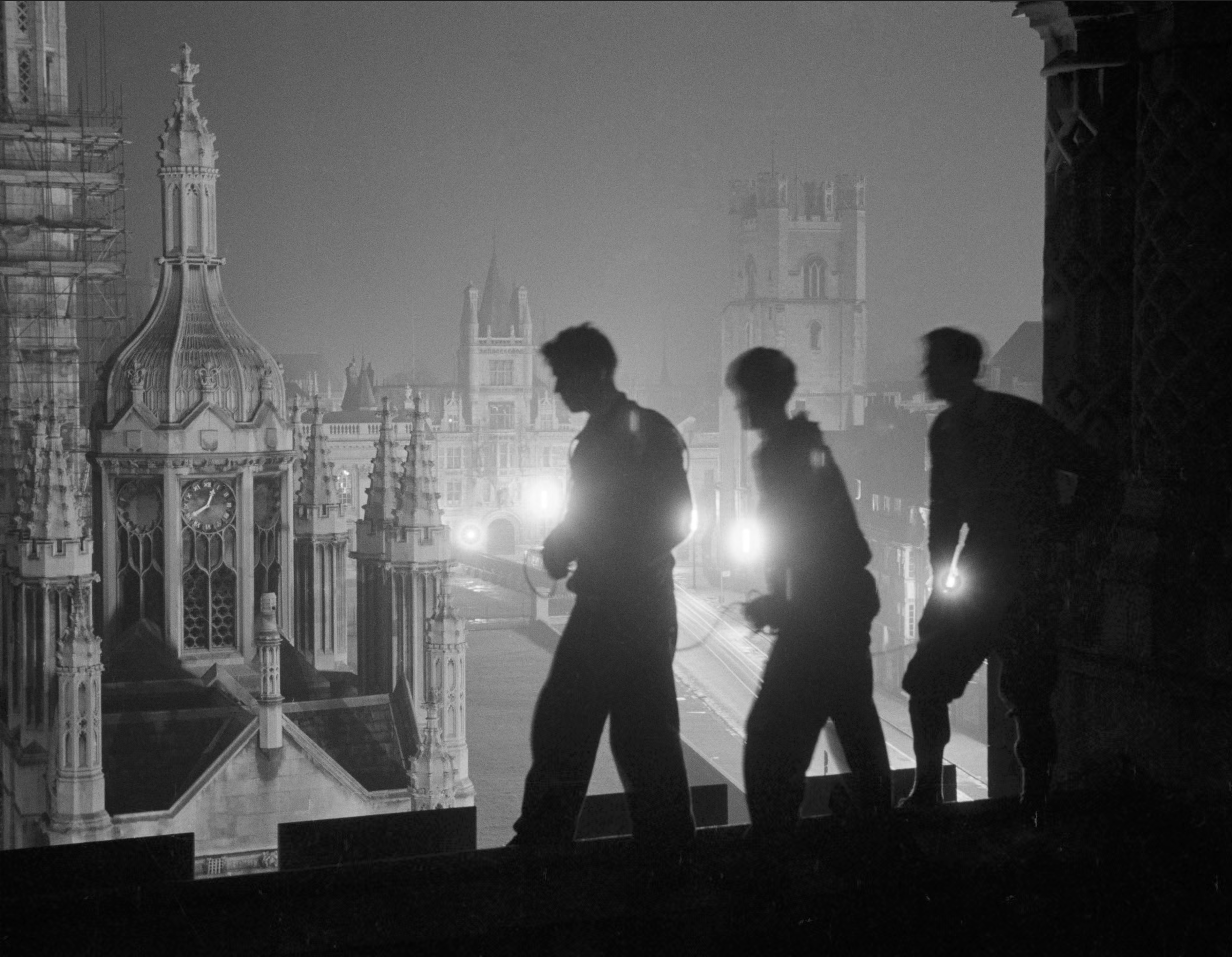
“90% of the pictures were really taken by that method. I was up somewhere on the building, and the flash might have been somewhere quite far away on the ground. Just to give a nice picture with one light is a photographic challenge, because [while] you’ve got an awful lot of black in the picture, you’ve got to light up the climber, so that you can see who he is and where he is. If I could summarise the night climbers as a story, it was certainly exciting.”
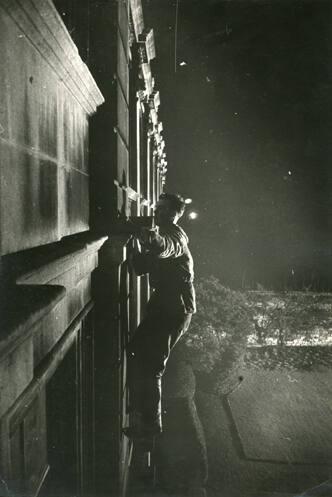
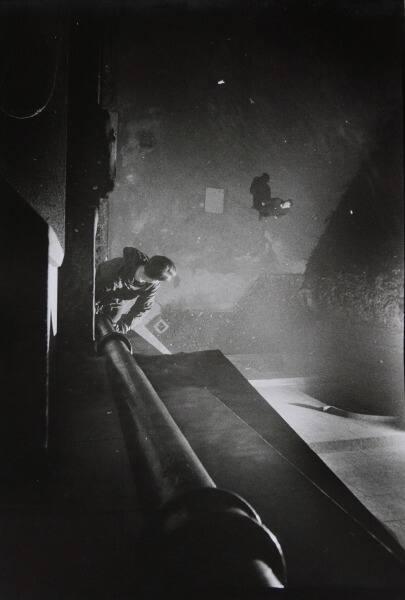
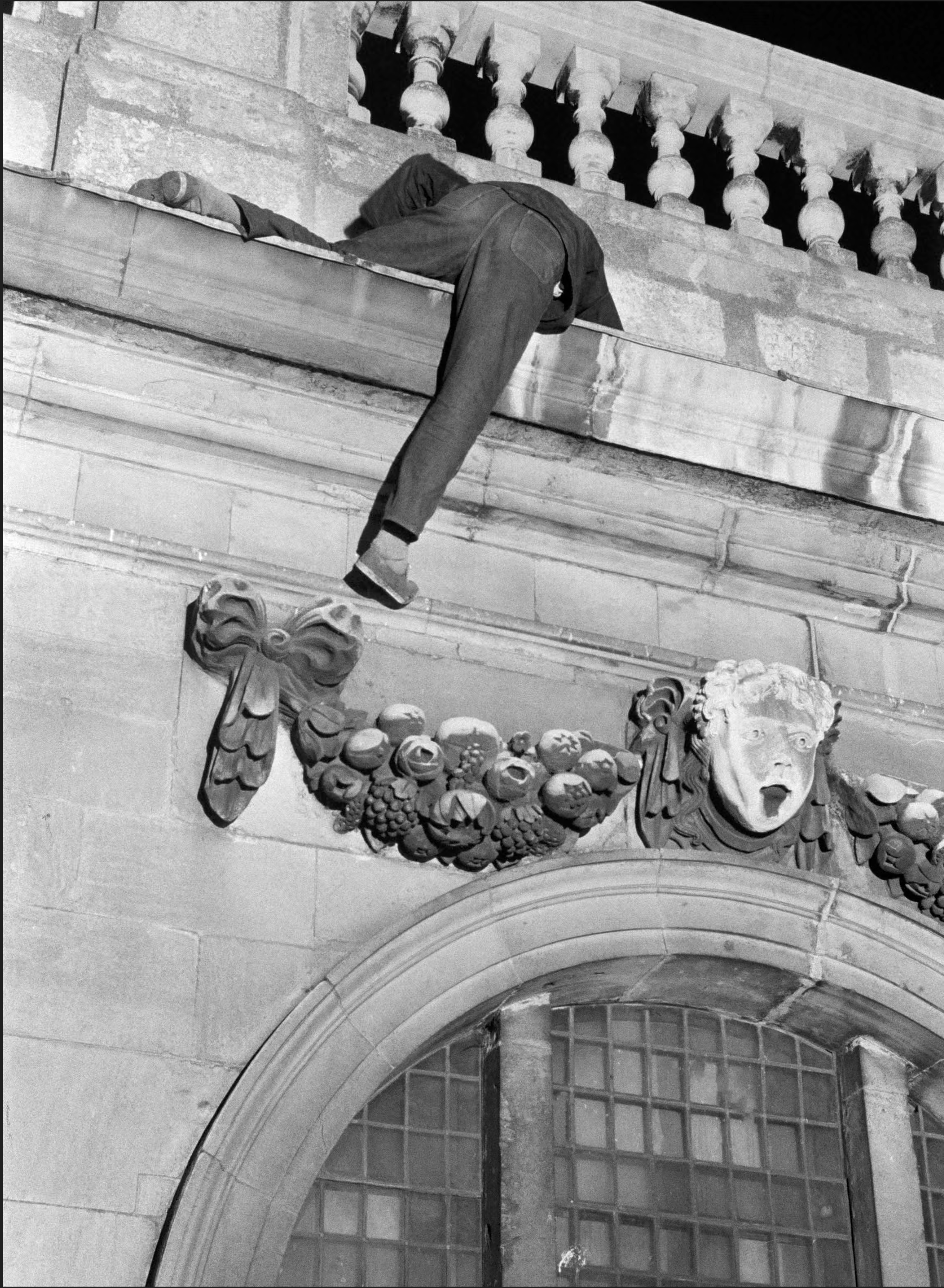
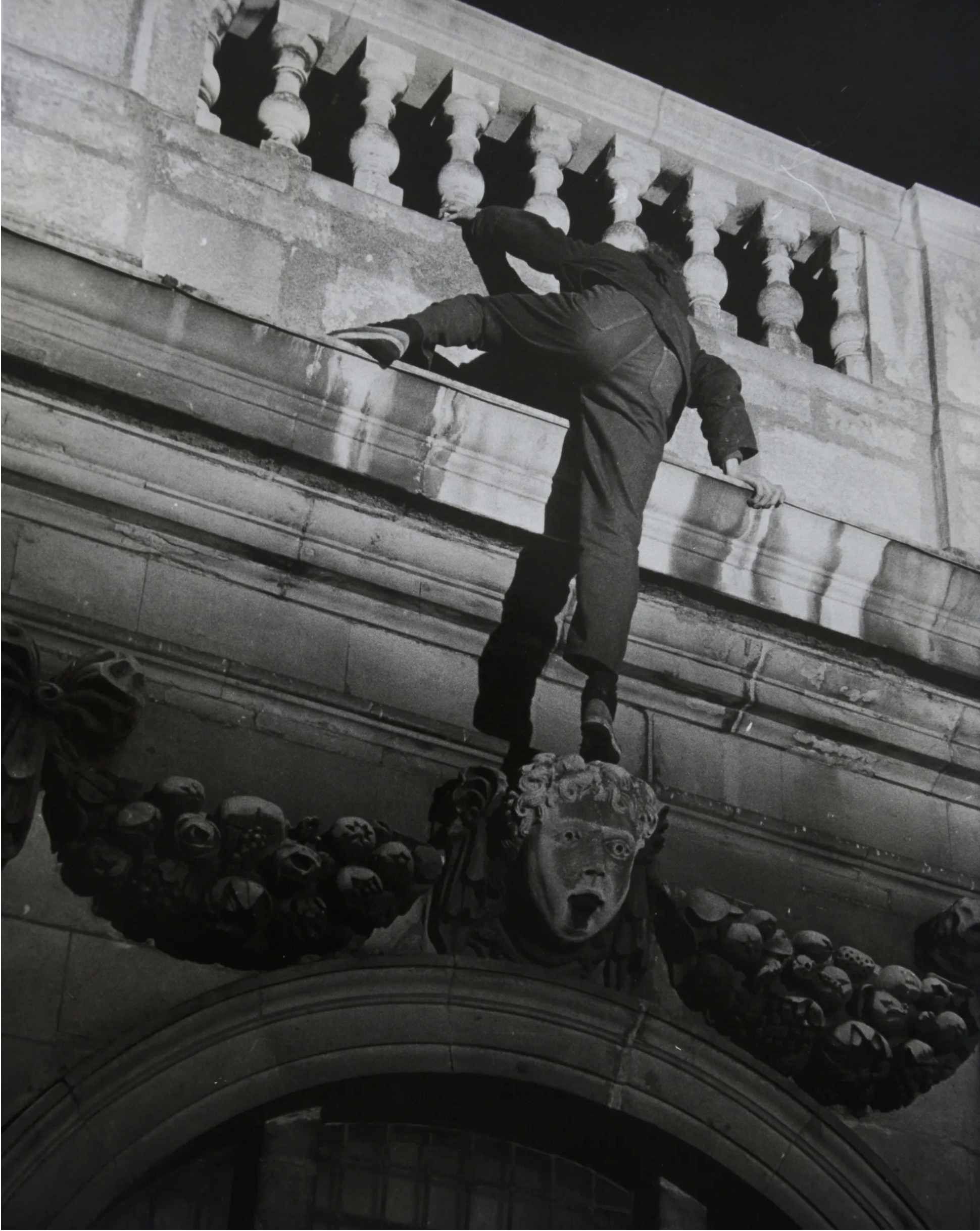
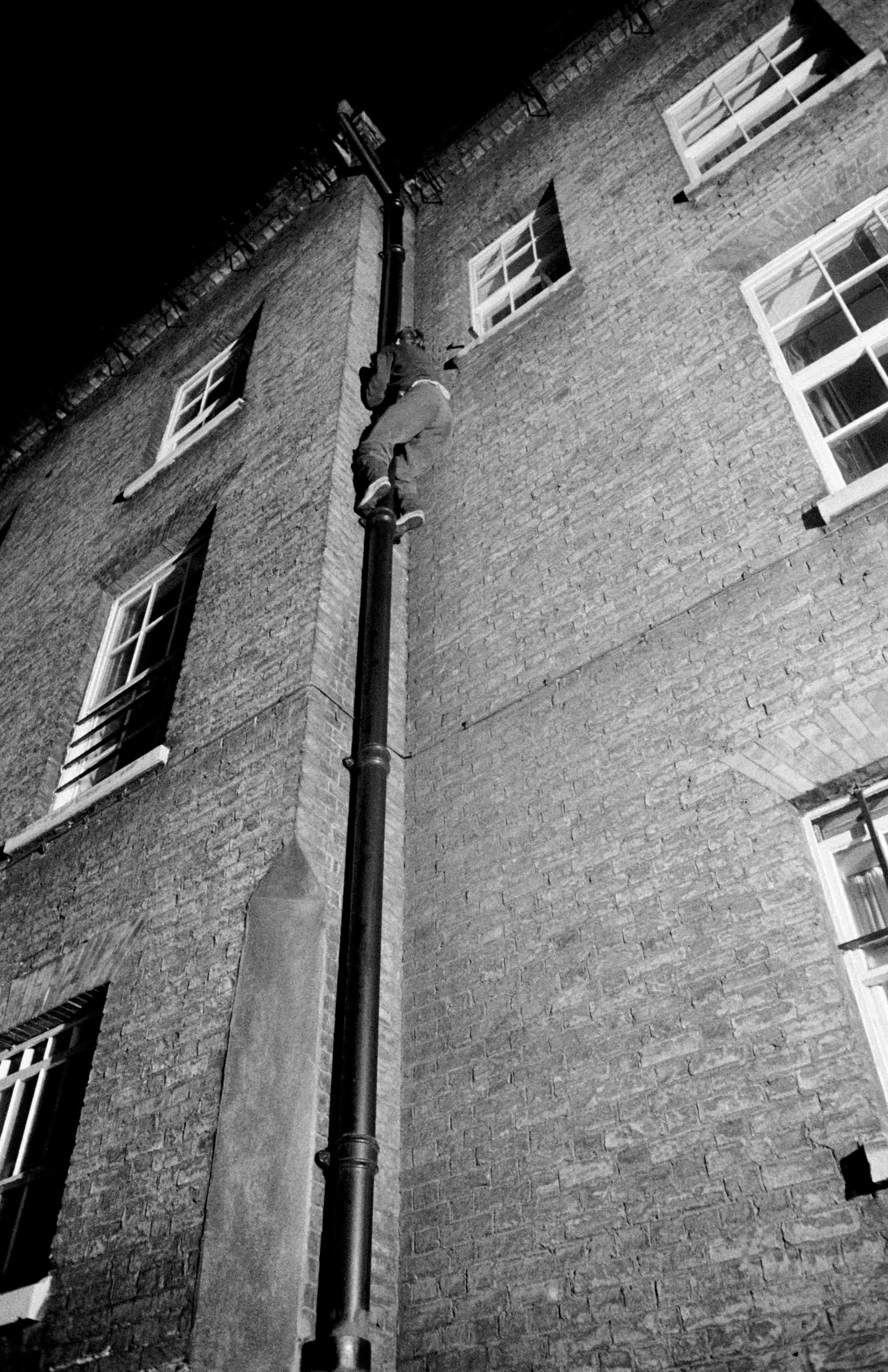
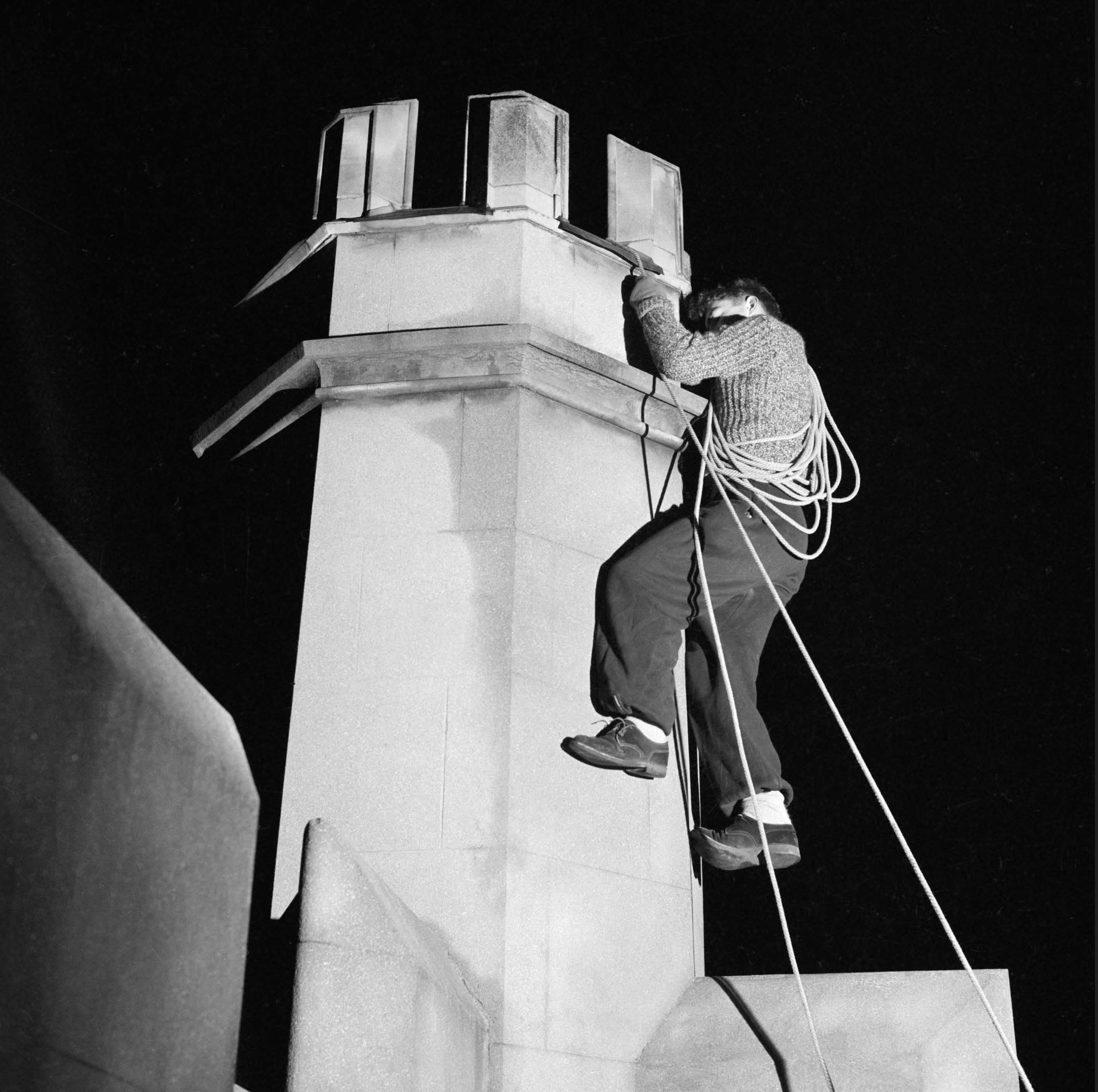
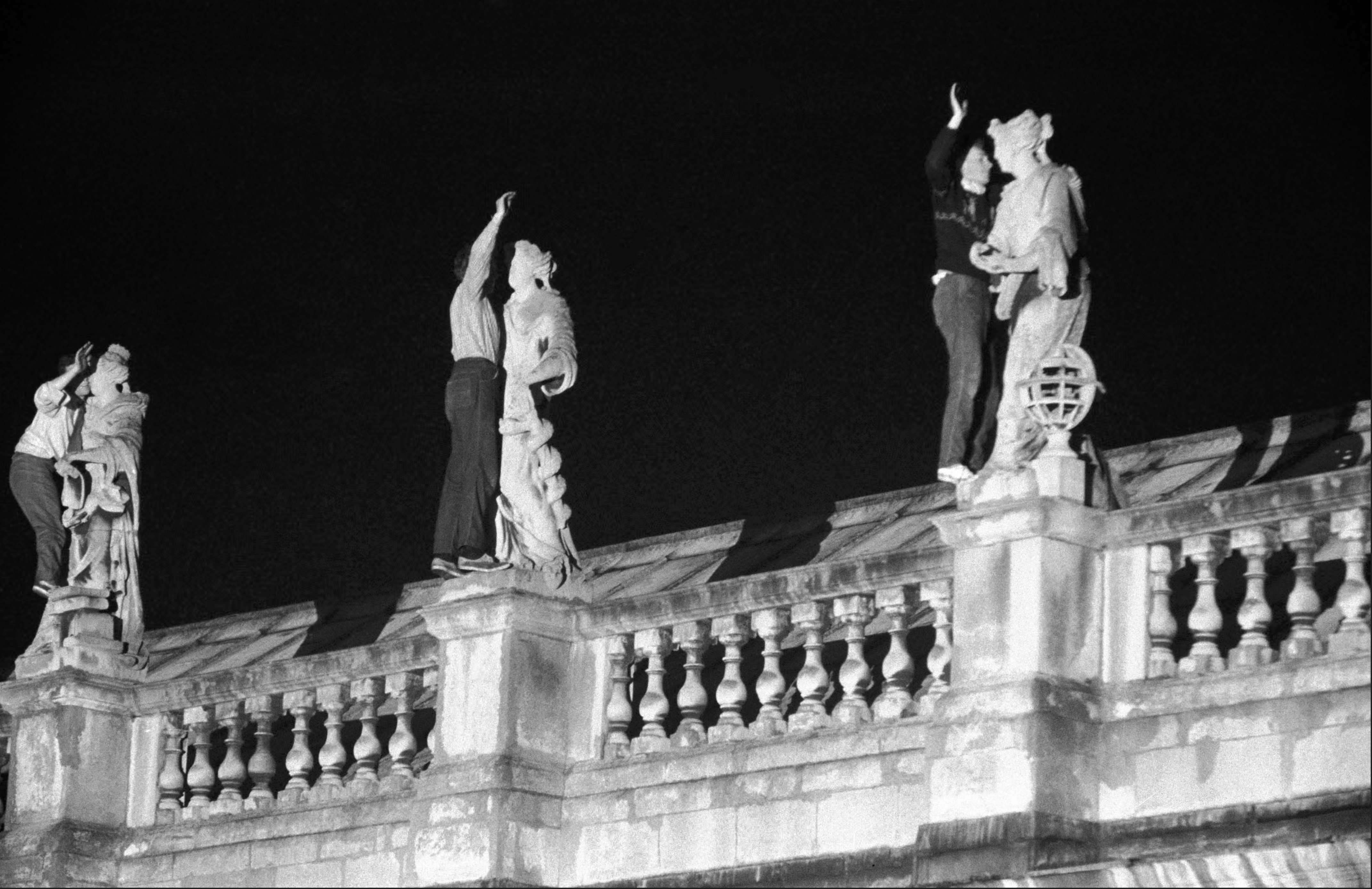
When university staff saw his photographs of student climbers scaling King’s College Chapel plastered across the Sunday Times, they were enraged that Bulmer was encouraging the sport and believed he was dedicating more time to photography than to his degree. He was ‘sent down’.
Born 28 February 1938, in Herefordshire Bulmer was grandson of the founder of the Bulmer cider company in which his family expected him to work having gained a Cambridge engineering degree. They sent him to boarding school — an experience he recalls without nostalgia — having not thrived in its culture of games and rugby. He later was grateful that it forced him to find “something that was my own, something that mattered to me.” Photography was that thing and his first contact with it came as one of a series of boyhood mechanical crazes — Meccano, model trains, carpentry — being given a Box Brownie, and drawn by the idea of developing his own prints, he built his own enlarger from tin cans and Meccano. His first published photograph — a girl in a bumper car at the Hereford May Fair — sold to the Hereford Times for five shillings when he was around sixteen, when he walked into Derek Evans’ Studio, during his sixth-form year at Hereford Cathedral School.
Evans was stringer for most national newspapers in the county, and Bulmer watched him work fast, throwing prints from developer to fixer without a stop bath, smoking constantly — ash dropping into the chemicals without, apparently, affecting the results — he treated the whole process as unsentimental and direct. Bulmer came to see that “a news photographer doesn’t have two chances.” Evans gave him holiday employment; his first significant solo assignment was to photograph a Hereford vicar’s affair with his housekeeper for a News of the World exposé, for which he hid in bushes stalking for a shot of the vicar answering the door. Underexposed and grainy, it ran anyway.
The catalogue of The Family of Man exhibition — he didn’t see the show itself in London — “was an eye-opener… it was about real life rather than being a sort of static thing,” and he recalls that “as a teenager I fell in love with the ‘decisive moment’ pictures of Cartier-Bresson. I have always aimed at being a ‘fly on the wall’ photographer.” This orientation — unobtrusive, patient, averse to staging — remained a constant throughout his career. Evans used a Rolleiflex and small Linhof Praktica for news work, but Bulmer found them cumbersome: “I was looking to be like Cartier-Bresson, who used a Leica.”
While at Cambridge, 1957–1958. Bulmer went up to King’s College but from the first week was more photographer than engineer. He ran a spread in the university newspaper, co-founded a picture magazine called Image, worked for Varsity, and became the informal Cambridge stringer for the Daily Express — initially because he happened to send them a newsworthy picture, subsequently because he had access within the university that the paper’s town photographer lacked—all while shooting for Queen magazine.
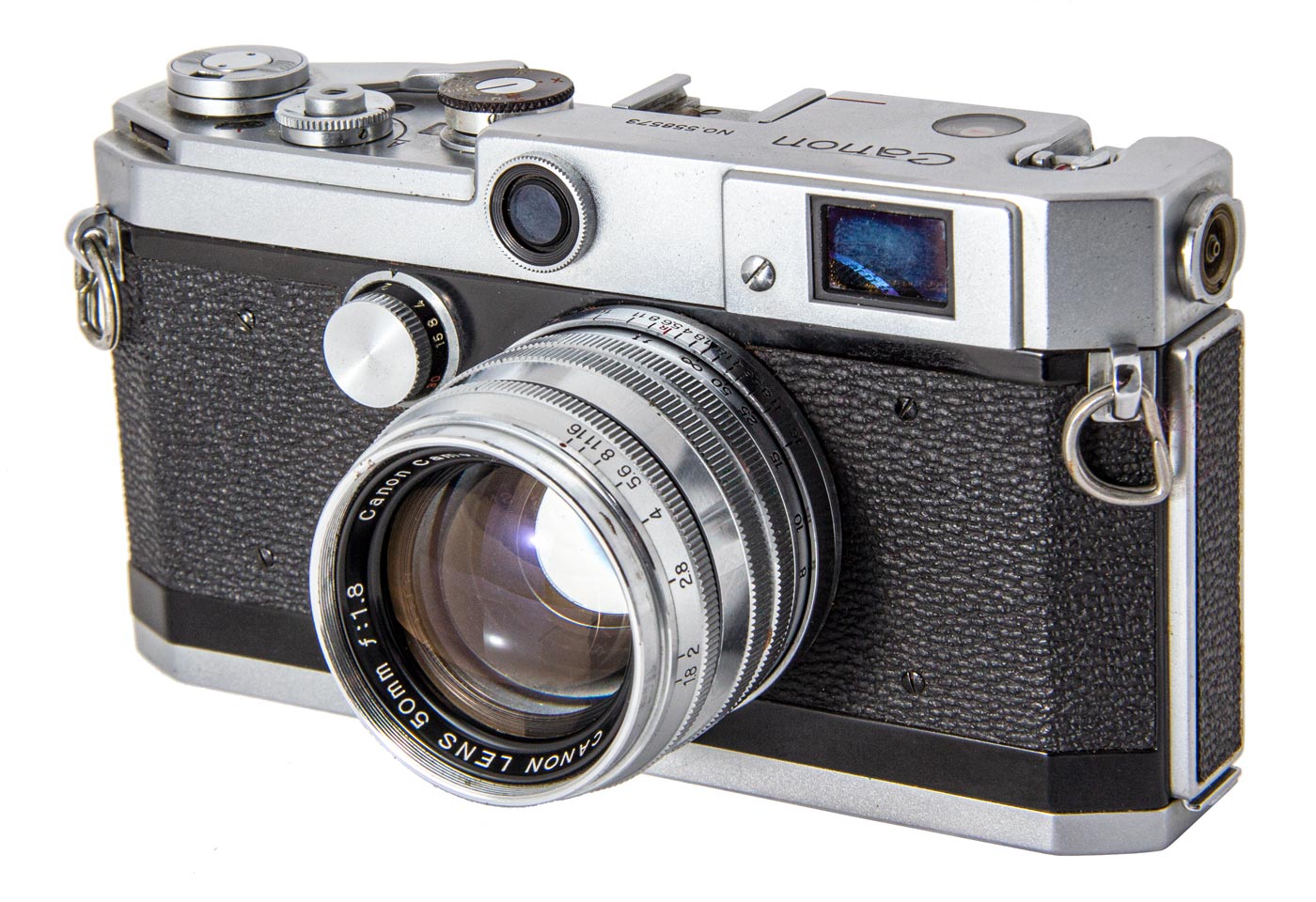
The Night Climbers and his expulsion in 1958 is the narrative that he tells with most delight in interviews.. He photographed them with a Canon 35mm and large single-use flashbulbs. The Canonflex SLR did not exist until 1959, so was certainly a rangefinder that he used — a Leica screw-mount look-alike — most likely from the VT or L series.
The incident that ended his Cambridge career involved photographing the notorious Senate House Leap.
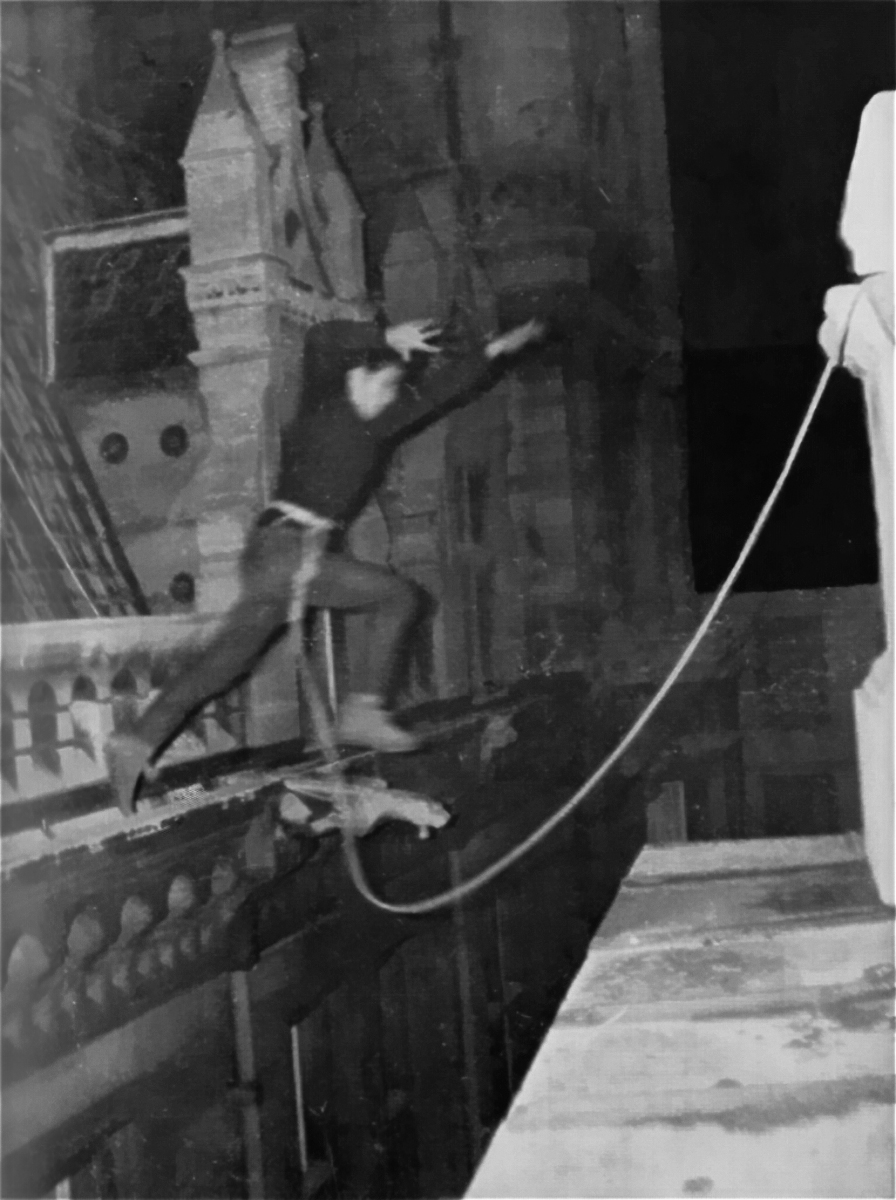
A student approached him just before Christmas: “We’re thinking of taking a look at the Leap tonight — do you want to come?”
The Senate House Leap, considered the Everest of Cambridge night climbing — 2.1 metres (seven feet) across at its narrowest, 15cm (six inches) down going one way, terrifying going back — was the shot that got away: Bulmer positioned himself in the alley below with camera and flash gun, the flashbulb failed to fire, the police arrived, having apparently been tipped off, the climber disappeared under a bed in Caius, and Bulmer found himself hauled before the Proctors. His defence — that he was merely passing and happened to observe — satisfied nobody but was impossible to disprove.
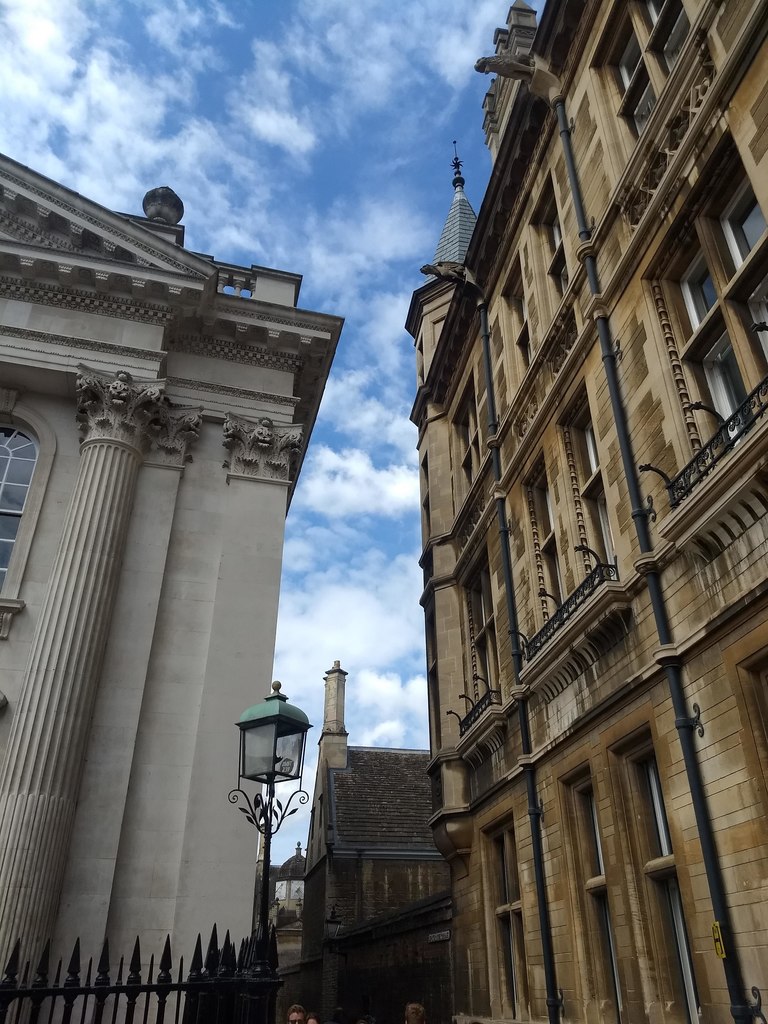
Around the same time, a photograph he had taken of someone climbing the windows of King’s Chapel ran in the Sunday Times which had not put his name to it, but the university connected it to him. The verdict: too much time on photography, likely to fail finals. He was sent down six weeks before his final examinations.
“I think the picture that changed my life was this one of a student climbing the window of Kings College Chapel…We sold it to Life magazine, and it also ran on the front page of The Sunday Times.”
Bulmer went to London and pestered the Daily Express for three days running until they gave him a job. He stayed just over a year. He had started with a Canon, then moved to Leicas with wide-angle lenses combined with a Nikon F for longer focal lengths — a two-body system that was necessary in the era of separate film stocks for colour and black-and-white, fast and slow. “Leicas were no good for long lenses and the SLR did not have good fast wide-angle lenses, they were also difficult to focus quickly.” Later he moved to the Olympus OM1 system for its smaller size and lighter weight — “a great relief to my back” — before switching to Canon EOS in the 1990s when his eyesight required autofocus for film work. When digital matured he moved to Canon digital bodies, and eventually to the Fuji X series — the XT-2 and XT-3 — for their combination of near-full-frame quality with smaller, lighter, more discreet form.
What followed was one of the more consequential careers in British photojournalism. Town magazine, then setting the pace for editorial photography, used him alongside Terence Donovan, Brian Duffy, David Bailey and Don McCullin. Bulmer recalls being paid £40 per page (equivalent to £1,155.76 in 2026) for colour by Town. For Town assignment he spent three days in Nelson, Lancashire, comparing the declining mill town with the booming Watford. ‘England’s Hard Centre’ appeared in Town magazine of March 1961.
Coming from a privileged upbringing in rural Herefordshire, it is revealing that Bulmer recalls thinking the industrial north “was as exotic as darkest Africa.” His visual style by this point was formed: wide-angle lenses for intimate street work, longer lenses for compressed architectural and townscape views. The key editorial relationships of this period were Tim Wolsey, designer at Town, and David Hughes, its editor — the same David Hughes who later introduced him to Mai Zetterling, his collaborator in film.
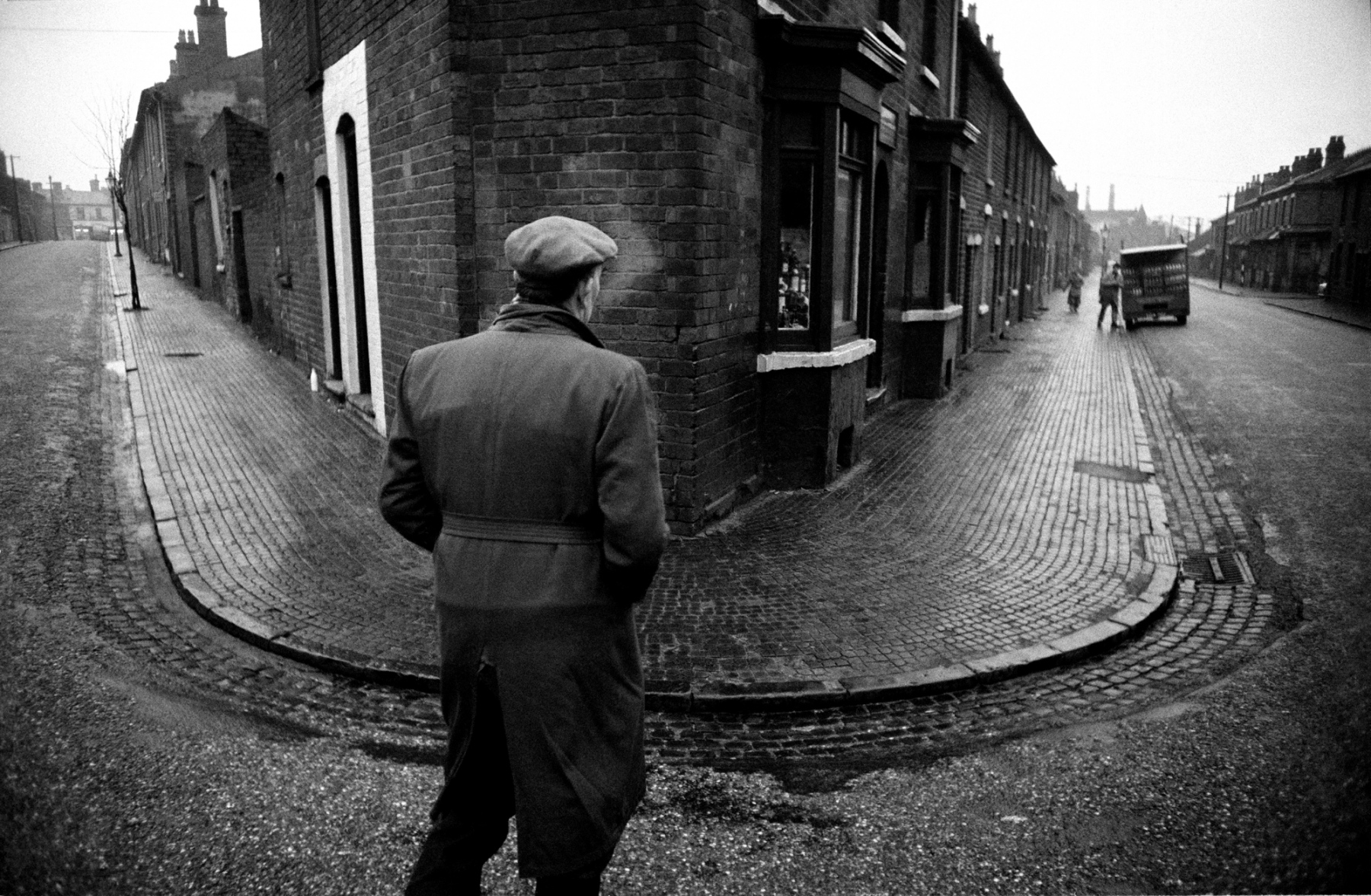
The Sunday Times Magazine launched its colour supplement in 1962, and my father would bring home copies from the Walkabout office. Bulmer famously shared the cover of its first issue with David Bailey — his action pic of Burnley’s legendary striker Jimmy McIlroy, surrounded by 11 shots taken by David Bailey of Jean Shrimpton wearing a Mary Quant dress— and went on to shoot some sixty pages a year for the section.
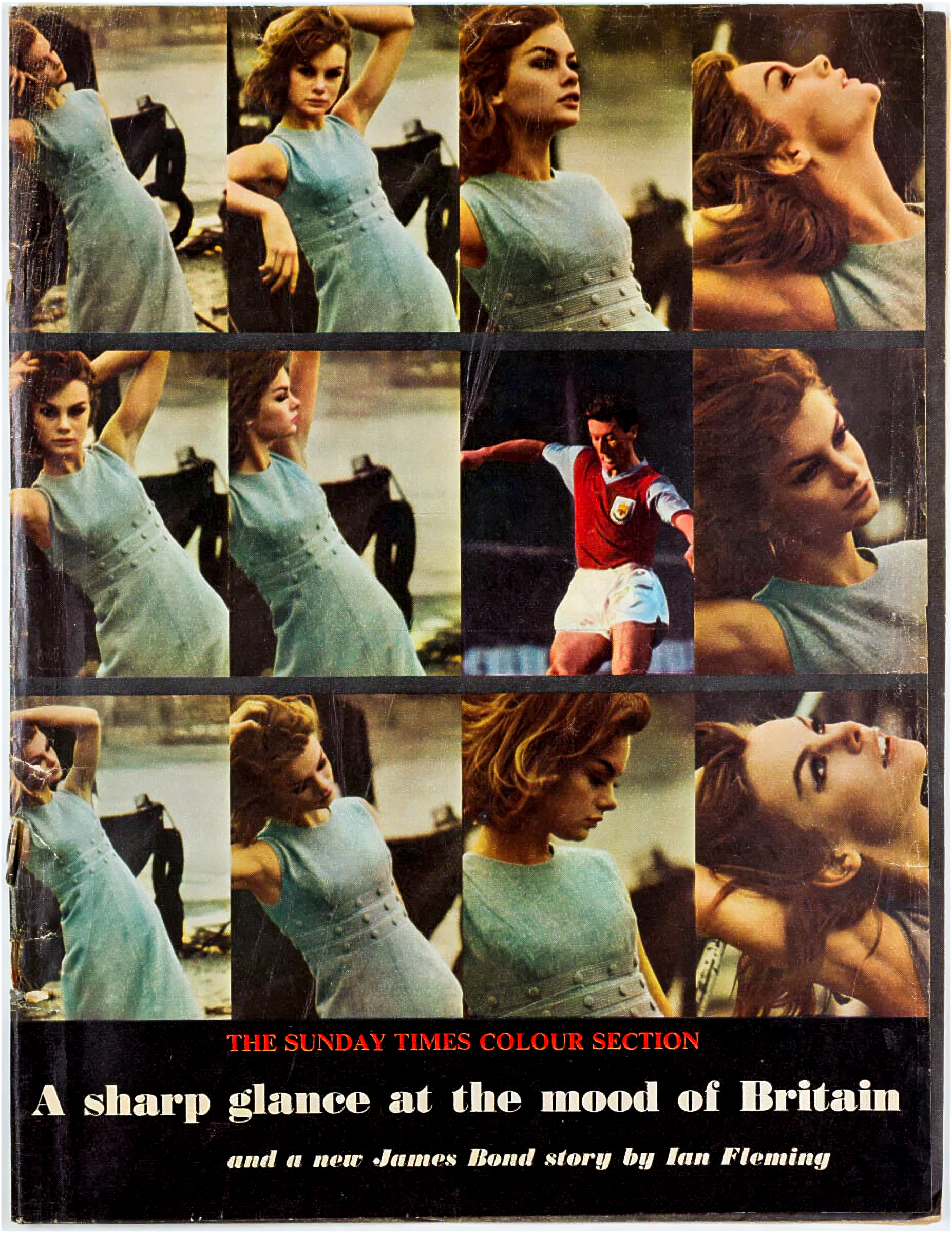
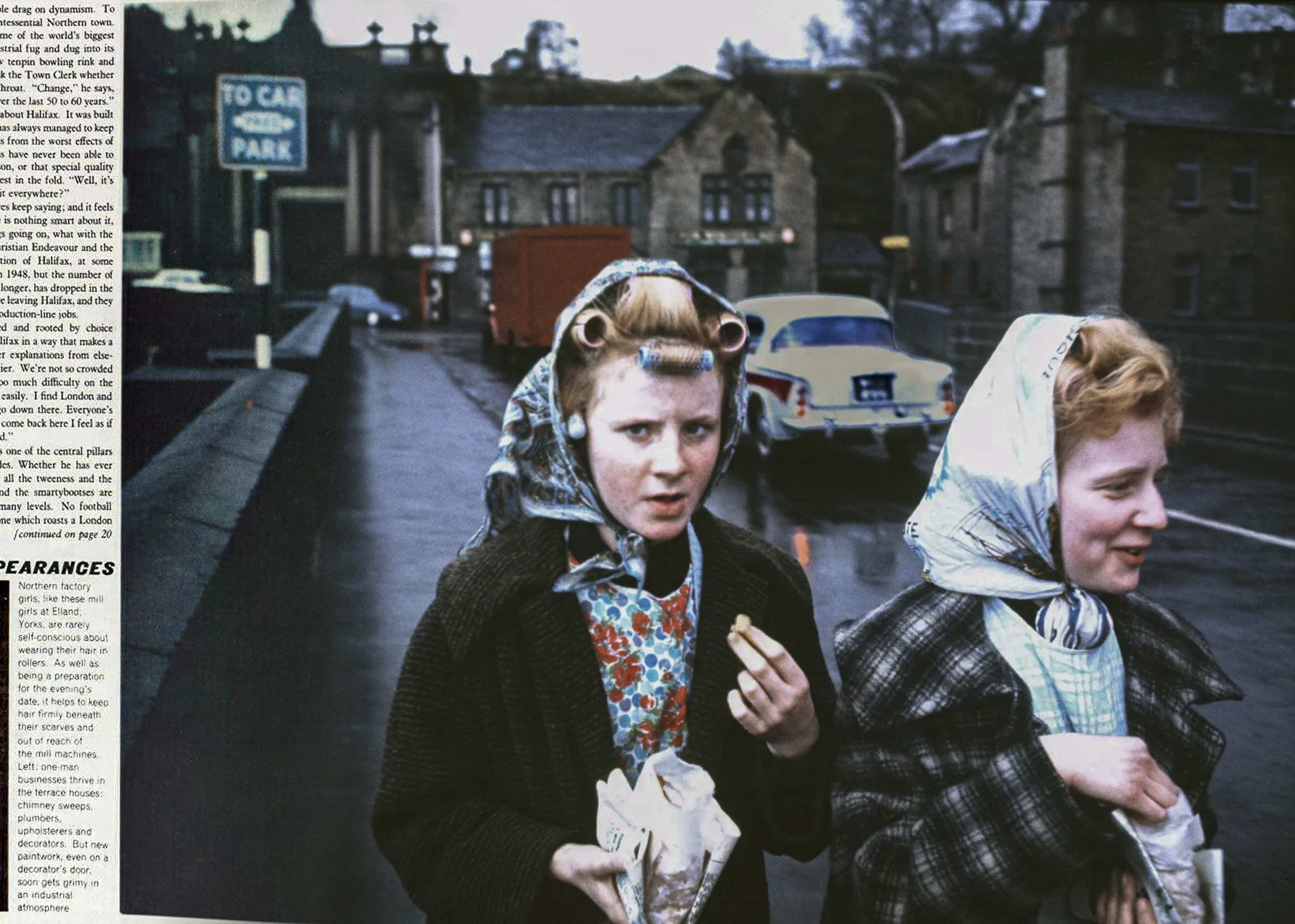
Richard Farmer credits John Bulmer’s later series of colour photographs with showing the North as “a bright and vibrant region, thereby disrupting some of the (metropolitan) prejudices and assumptions about a part of Britain that was all too frequently stereotyped according to the tropes and preoccupations of ‘kitchen sink’ literature and New Wave films.”
At The Sunday Times Magazine, from 1962, Bulmer had sixty pages a year to fill and the freedom to propose his own subjects. Though the origins of Bulmer’s reportage is in such iconic series in monochrome as that on the Black Country (for Town magazine published in a feature titled ‘Britain’s Hard Centre’ in March 1961) art historian Martin Harrison in his 1998 Young Meteors: British Photojournalism, 1957–1965 claims Bulmer as “the British pioneer” in colour, far ahead of such photographers as Martin Parr.
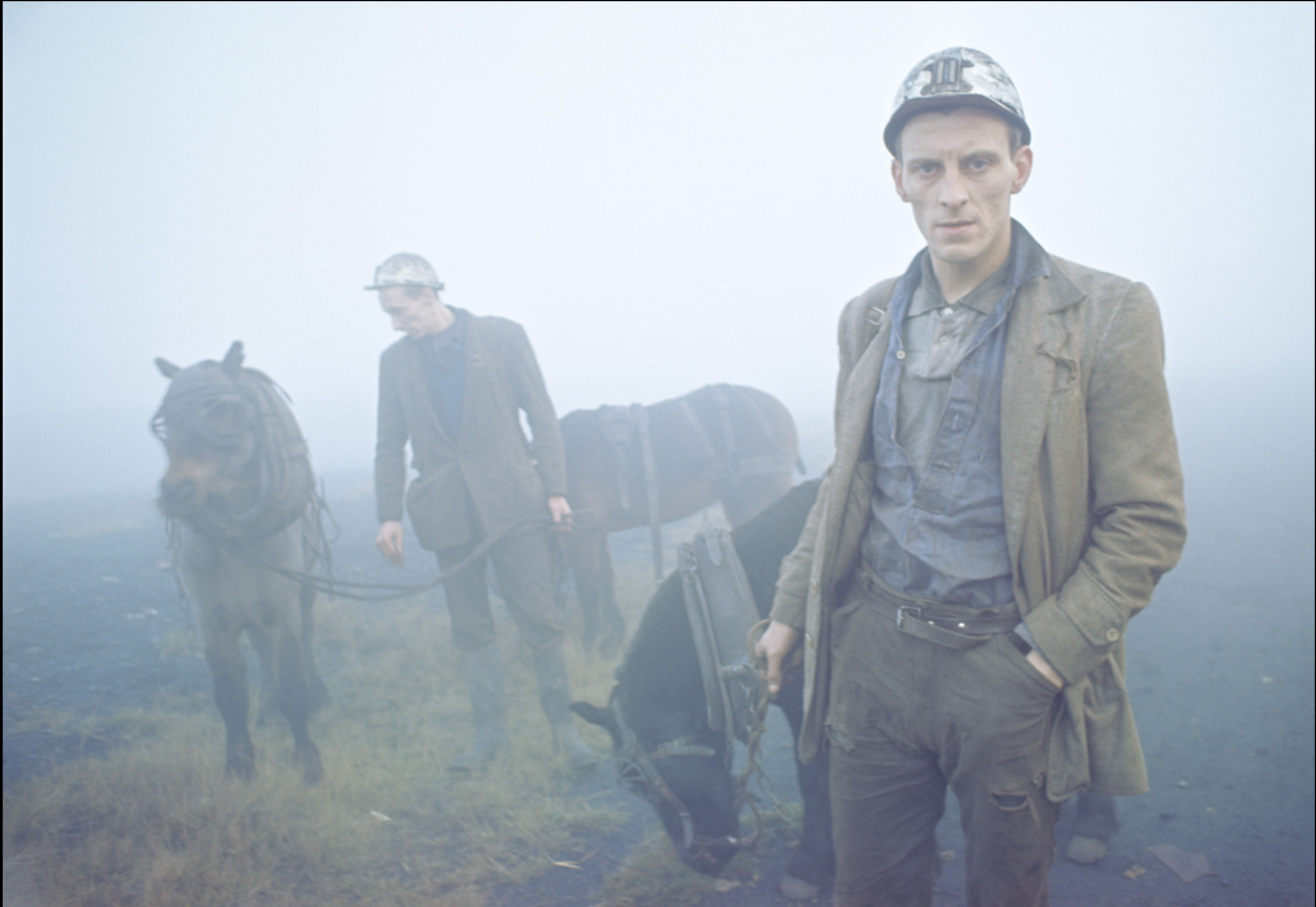
In his own statement about colour Bulmer says “We see the world in colour, so the introduction of black and white photography in the 19th Century was quite an odd event… The process of photography is a form of abstraction. The world is a complicated place, and what we are doing in a photograph is trying to simplify and arrange the items within an emotional impact. Adding the element of colour complicates this process.” He embraced it precisely because it was harder. The 1965 issue on “The North” — an entire issue of the magazine — required him to work in winter, deliberately seeking fog and rain to simplify the backgrounds of industrial landscapes where colour, on a sunny day, would have become distracting rather than expressive. “Colour film was so slow and had poor latitude”: the technical constraint was real, and working around it demanded genuine thinking.
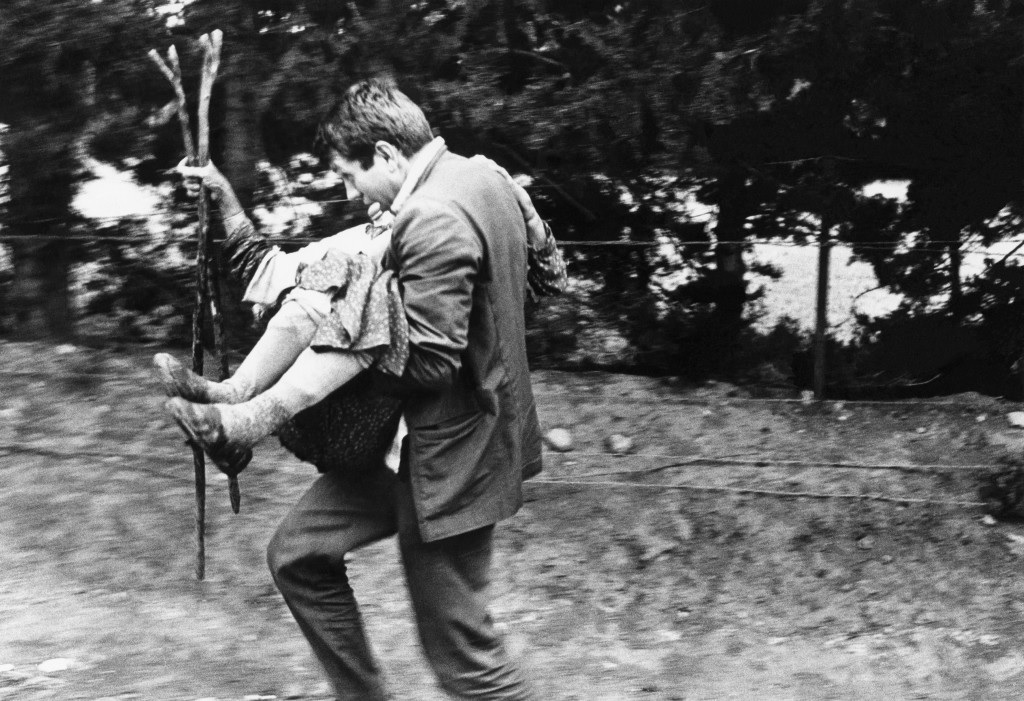
Famously, in 1964, Bulmer photographed Don McCullin carrying a civilian to safety in Cyprus (exhibited in Shaped by War: Photographs by Don McCullin, Imperial War Museum North, Manchester, 2010). Chiang Kai-shek he recalls as being “one of my hardest assignments, there was such security around him that it was hard to get near, and I had my cameras and body searched… I was aware that he had the power to kill or torture anyone that displeased him.” He photographed the Queen with Haile Selassie in Ethiopia, running a mile at high altitude to reach a position. He framed Thelonious Monk from backstage, finding a small tear in the curtain and enlarging it just enough to get his lens through. North Korea in 1973 — his final story for the magazine — he describes as “the hardest place I have ever worked… we were under constant surveillance, and were not allowed to photograph anything they did not approve. I resorted to photographing out of a lavatory window to show how ordinary people lived.”
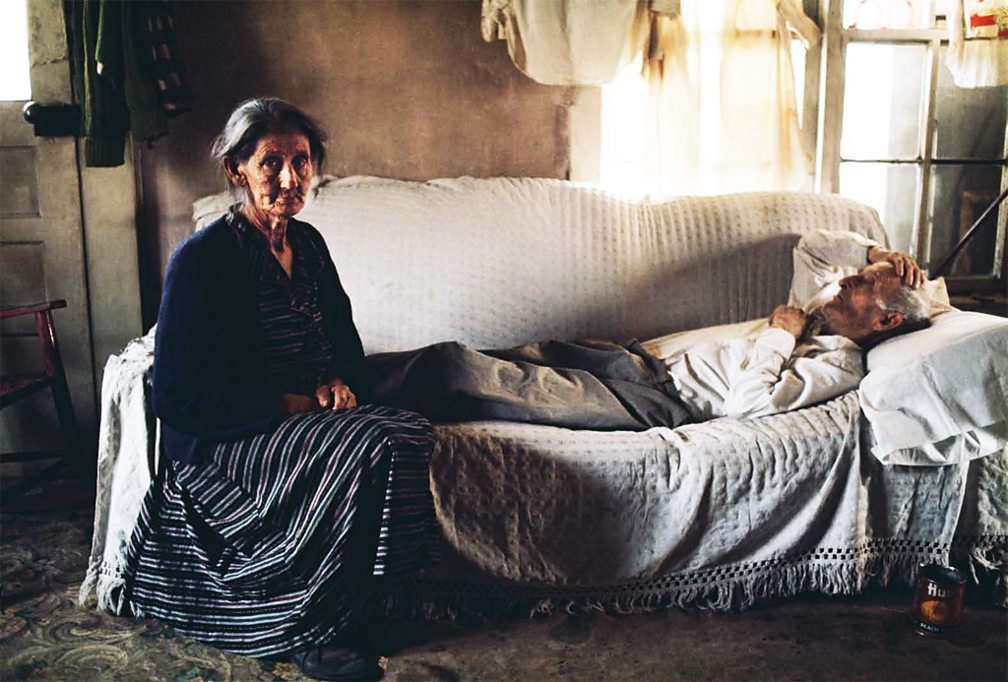
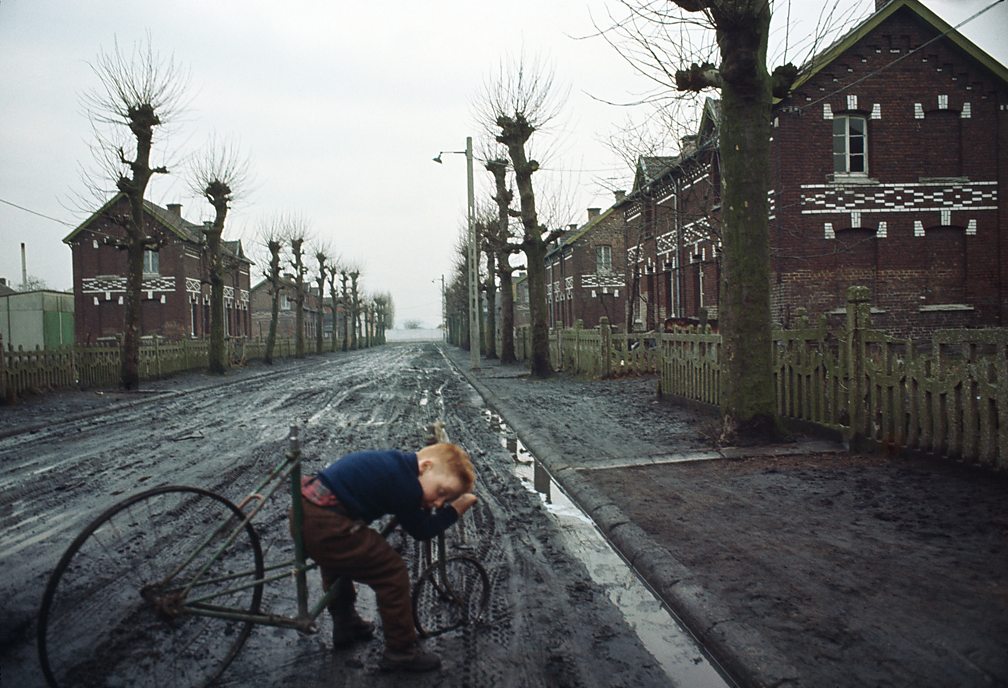
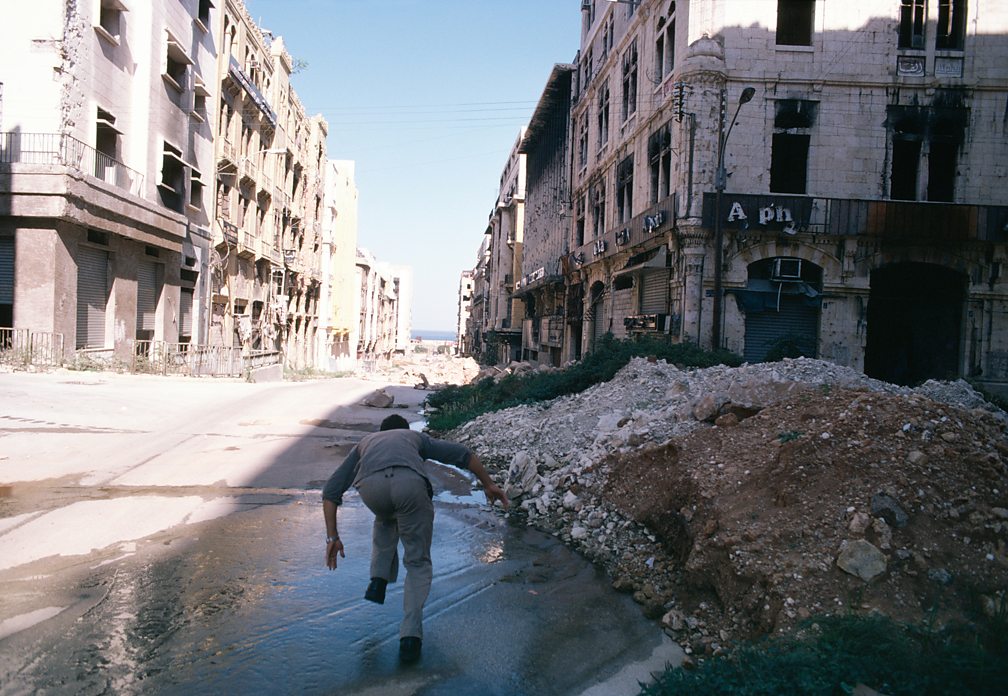
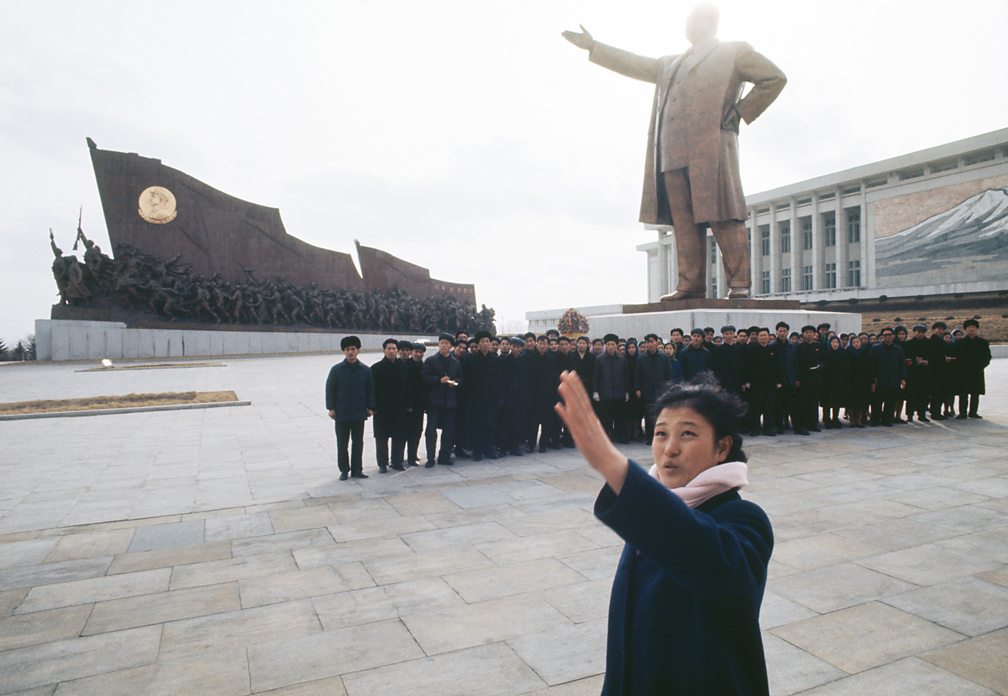
His departure from the Sunday Times in 1973 came when the new editor directed that the magazine would concentrate on crime, middle-class living, and fashion: “I had also found that travelling the world was a lonely business, and I was going out day after day and making the same compositions of people without really getting deep into their culture.”
His transition to film was initiated by a Burma visa no magazine wanted. He went to the BBC:
“I’ve never made a film in my life, but I’ve been given this visa. Will you give me the money?”
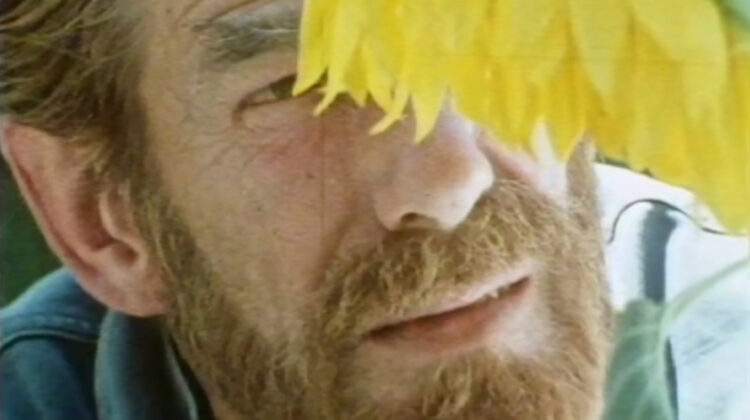
They said yes, and the result was a fifty-minute film for The World About Us. He describes the technical challenge honestly: “At first, I tried to make every shot composed like a still photo. This led to rather static camera work, so I learned to accept that the camera needed to flow more, even at the expense of composition.” He worked in 16mm himself rather than using a separate cameraman, which other photographers found frustrating — he found independence more important than convenience. He made films for BBC, Discovery Channel, and National Geographic, including the BAFTA-winning . He retired from film around 2009, aged 71, due to the physical demands of carrying heavy equipment in remote locations and a shift in commissioning editors’ preferences toward presenter-led formats.
On returning from film he catalogued and digitised his still archive, publishing two books through Bluecoat Press: The North and Wind of Change. His archive has been transferred to Popperfoto, distributed through Getty Images — a deliberate choice over academic institutions, which he regards as vaults where images go unseen: “I have seen a number of photographers leave their archive with academic institutions where the pictures will sit in a vault and never be seen again. This way I think I will have the best chance of the images being looked after and seen by as many people as possible.” The Night Climbers work, made from his Cambridge years, has had a separate trajectory: vintage silver gelatin prints made from the original negatives are handled by Michael Hoppen Gallery, and a Café Royal Books edition of the sequence appeared in 2024.
On photography, Bulmer considers that: “The most important things…are: that the subject is interesting; that the viewer’s eye knows where to go and is not taken out of the photograph. This combination needs to give a strong emotional impact. It’s hard to make rules about how to do this, and that is one of the things that give photographs their magic.” And on the question of working in series: “Although an individual great picture is a wonderful thing, to me the satisfaction of working on a picture story and building up a set of images around an issue gives the most satisfaction. The same thing drove me to film making, where you have a beginning, middle and end.”
As Bulmer moved away from photography to film, his earlier photographic work was overlooked. Martin Harrison credits a 1983 exhibition at the Photographers’ Gallery — British Photography 1955–65: The Master Craftsmen in Print — with saving the work of Bulmer from obscurity. The Night Climbers photographs, however, occupied a different position in that recovery. Consistently considered “juvenilia” or “early work,” they were treated as prelude to the more significant colour documentary career, interesting as an origin story but not as mature achievement in their own right.
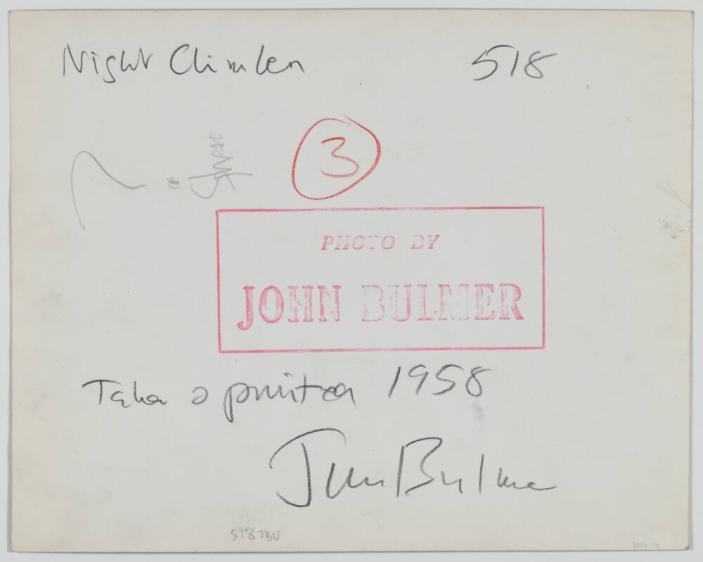 That assessment has shifted markedly amongst both institutional and commercial interests. The prints at Michael Hoppen Gallery — vintage silver gelatin, printed 1988 — show that Bulmer was making exhibition prints from these negatives nearly forty years ago. The Museum of Fine Arts, Houston acquired prints through Michael Hoppen in 2023, the kind of acquisition that sends a signal to the market about their value. The Guardian ran a substantial feature on the Night Climbers photographs in January 2024, and Cambridge Radio interviewed Bulmer directly in February of the same year. The timing is not coincidental: the MFAH acquisition, the Café Royal publication, and the renewed press attention are part of a re-evaluation of Night Climbers.
The Café Royal book Night Climbers fits the pattern Craig Atkinson has established over 900 publications. In each image and sequence are presented without text — each book is a record offered on its own terms, generally archive material at least fifteen years old at time of publishing. The photographer supplies the archive; Atkinson sequences, designs, and produces; no interpretive apparatus intervenes; it is a model that respects the photographs’ capacity to speak without a curator’s voice mediating between image and reader. The sequencing of the Café Royal book is worth attention precisely because Atkinson’s editorial method of sequencing images in a chosen order — means the sequence carries weight normally distributed across caption, introduction, and layout. The book builds from establishment shots of the Cambridge roofline and stonework at night, through progressively more intimate and vertiginous close images of climbers on specific routes — the drainpipes, the ledges, the chimneys — to individual figures caught in the flashbulb’s harsh pool against the dark. The rhythm alternates between wide architectural shots that locate the activity in its setting and tighter frames that isolate a climber in mid-movement, their concentration palpable…it took me a while to remember to breathe after closing the book!
The closing shot — no spoilers — is apt, a comic and quietly understated conclusion, in the British manner, as I am sure you’ll agree once you get hold of this very economically-priced publication!
Since beginning in 2005, Café Royal Books has produced over 900 titles, creating a body of work presenting a broad, previously underrepresented spectrum of documentary-type photography with links to the British Isles. Collections held by the Bodleian, Harvard, MoMA, the V&A, the Tate, and the National Galleries of Scotland, Canada, and Japan testify to what a consistent, modest, affordable publishing programme can achieve over two decades. The Night Climbers book — 32 pages, staple-bound, 14 x 20cm, around AUD $15 — is acquired by institutions because it is part of a coherent catalogue, not because it is an expensive object.
The Australian equivalent of this archive does not yet have its Café Royal. The interwar salon photographers, the press photographers of the postwar decades, the documentary workers who recorded industrial communities now transformed beyond recognition, the alumni of Prahran College — this material exists, in private hands, in institutional storage, on the hard drives of photographers who retired from film into digital and never looked back at what they had made. I believe that a staple-bound pamphlet of 32 pages, printed in an edition of three to five hundred copies, with a cover price of AUD $18–22, is not beyond the economics of a determined individual or small co-operative with modest subsidy or pre-sales support. It will find an audience.
Café Royal Books began in 2005 with a much smaller potential audience than it has now, and built its catalogue and reputation over twenty years. The question for an Australian equivalent is not whether the audience exists at the outset but whether it can be built through consistency and institutional relationships. The Museum of Australian Photography at Wheelers Hill is an obvious anchor institution — it has the collection rationale, the educational mission, and publishing capacity and appetite. A series of modestly produced publications about individual photographers in its collection or in its orbit, issued consistently with an ISSN, would serve its educational mission while building the kind of catalogue that Café Royal has built in Britain.
The challenge, as always, is not capital but sustained editorial will — someone deciding what matters, and then publishing it, persistently, for years.
Bulmer’s Night Climbers book is a useful measure of what that will can produce: a body of work made by a twenty-year-old student with scrounged flashbulbs and a rangefinder, recovered sixty-five years later, now in the collection of a major American museum and available for fifteen dollars from a publisher in Southport. The photographs did not change. The decision to take them seriously did.
John Bulmer — Night Climbers, Cambridge 1958 is published by Café Royal Books. 32pp, staple-bound. Available at caferoyalbooks.com


 On This Date in Photography: by James Mcardle