
 It’s that time again when everyone has gone away on holiday and there’s the opportunity to catch up on peaceful, uninterrupted reading. Significant publications on photography have been issued this year in Australia and New Zealand.
They include the National Library’s 14 Aug 2025 – 09 Mar 2026 exhibiton 1975: Living in the Seventies, which in book form, using photographs, tells the story of that decade now having its moment after half-a-century. Preceding it, and celebrating youthful perspectives on that period, was the catalogue of the Museum of Australian Photography exhibition The basement: photography from Prahran College (1968–1981) shown over March–May this year. Last month was released Women Photographers 1900–1975 [there’s that decade again!]: A Legacy of Light to accompany the exhibition (to 3 May 2026) of the same name at the National Gallery of Victoria, in collaboration with art publisher Hatje Cantz, Berlin. Thames and Hudson have just issued Exposure: Contemporary Photographers in Australia and New Zealand, shortly to appear in bookshops, by artist promotor Amber Creswell Bell who has personally interviewed each of the 40+ artists it surveys.
Aside from those already reviewed here (and in which I have personal involvement)—Andrew Chapman’s Fill the Frame, and The basement—here are three which stand proud of their difference…
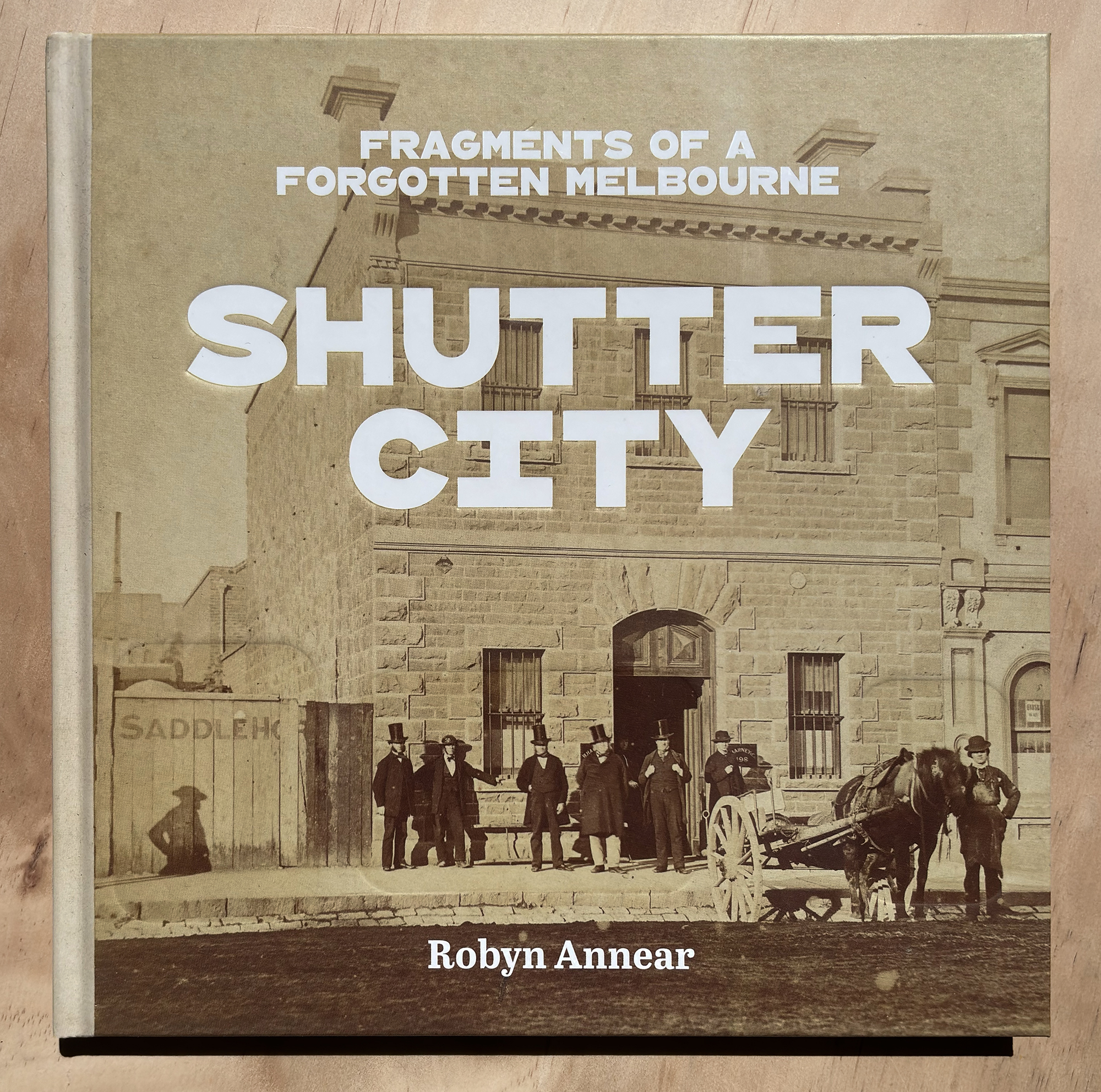
Robyn Annear’s Shutter City is not on a particular photographer, and nor is it written by an expert in our field, but by an historian who believes in, and uses, photography as a “Time Machine”, having discovered that photographs “get you closest” to the past to pique her yearning to see what it was like back then.
Large format glass plates of city street views taken between the 1850s gold rushes and before the ‘Marvellous Melbourne’ 1880s, and exquisite prints made from them, by photographers Charles Nettleton, Richard Daintree and Antoine Fauchery, Charles Bayliss, John Hunter Kerr, John H. Jones, and others, reveal astonishing “hidden-in-plain sight” secrets. Here are authoritatively annotated details of the city whose stories Annear has explored so thoroughly through the inky trails of Melbourne’s newspapers to produce landmark histories Bearbrass: Imagining early Melbourne (1995); A City Lost and Found: Whelan the Wrecker’s Melbourne (2005); Adrift in Melbourne: Seven Walks with Robyn Annear (2021); Corners of Melbourne: The great orange-peel panic & other stories from the streets (2023). You’ll find a more detailed review of her discoveries here soon.
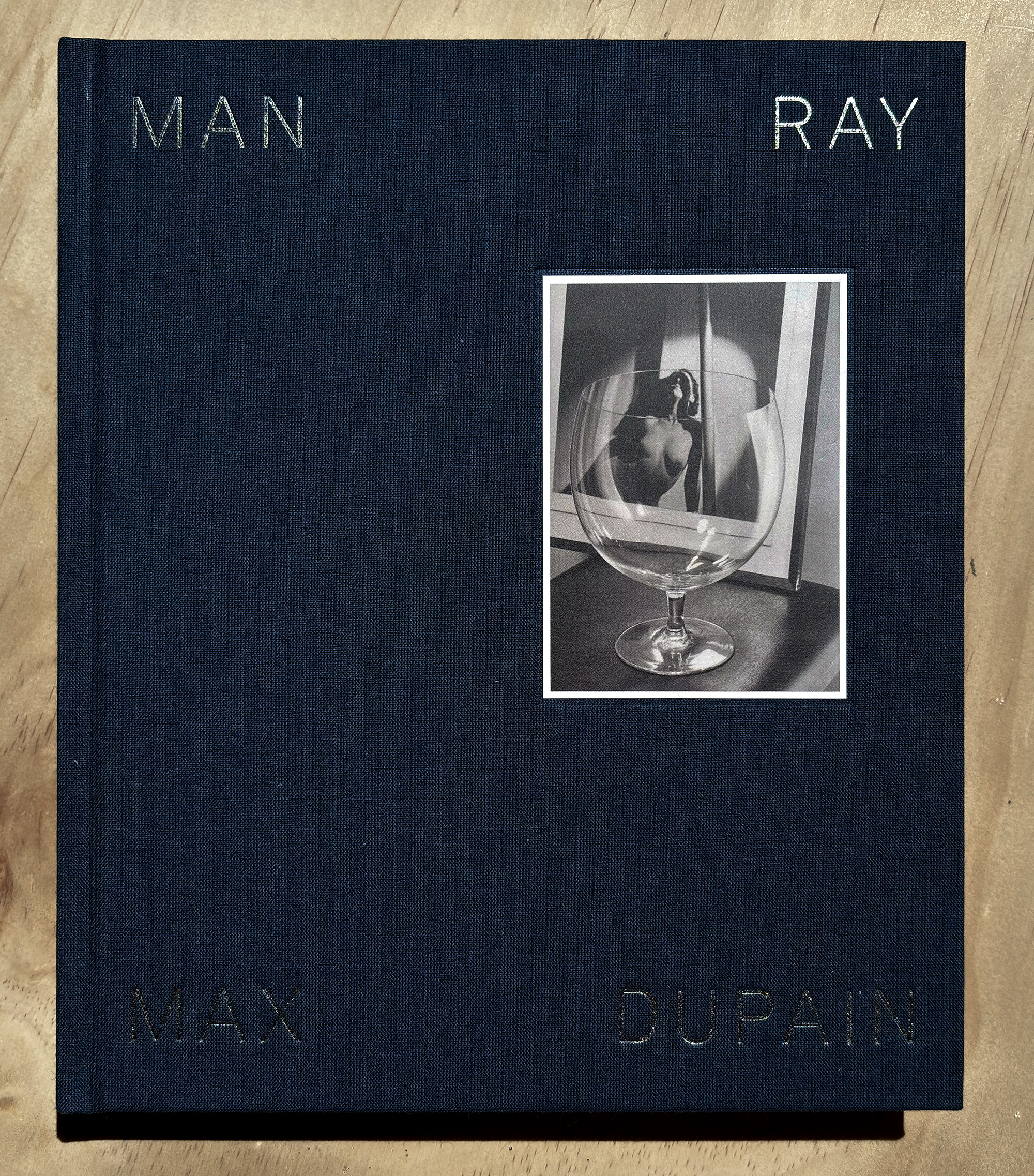
The stand-out exhibition for me this year—I visited it three times—was Heide Museum of Modern Art’s joint show of Man Ray and Max Dupain who shared, in the 1920s and 30s, a period of intense experimentation. The notion driving this exhibition and publication was genius: to bring together and compare, as director Lesley Harding explains:
“the work of two artists who never met, but whose individual paths led them to corresponding ways of seeing the modern world and whose contemporaneous photographs have perceptible likenesses and parallels, especially those from the artistically progressive decade of the 1930s. What they held in common, alongside an attraction to modernist techniques and themes, was a capacity to produce rich imagery comprising only the most essential elements. Unorthodox, uninhibited and adventurous, they both made pictures that appear at once spare and elevated, bringing fresh insights and alternative perspectives to conventional subjects and presenting new ideas by way of their creative inventions.”
Thus we see before us, in more than 200 photographs, “how modernism’s diaspora inspired contiguous representations of the cultures and societies to which its adherents belonged”
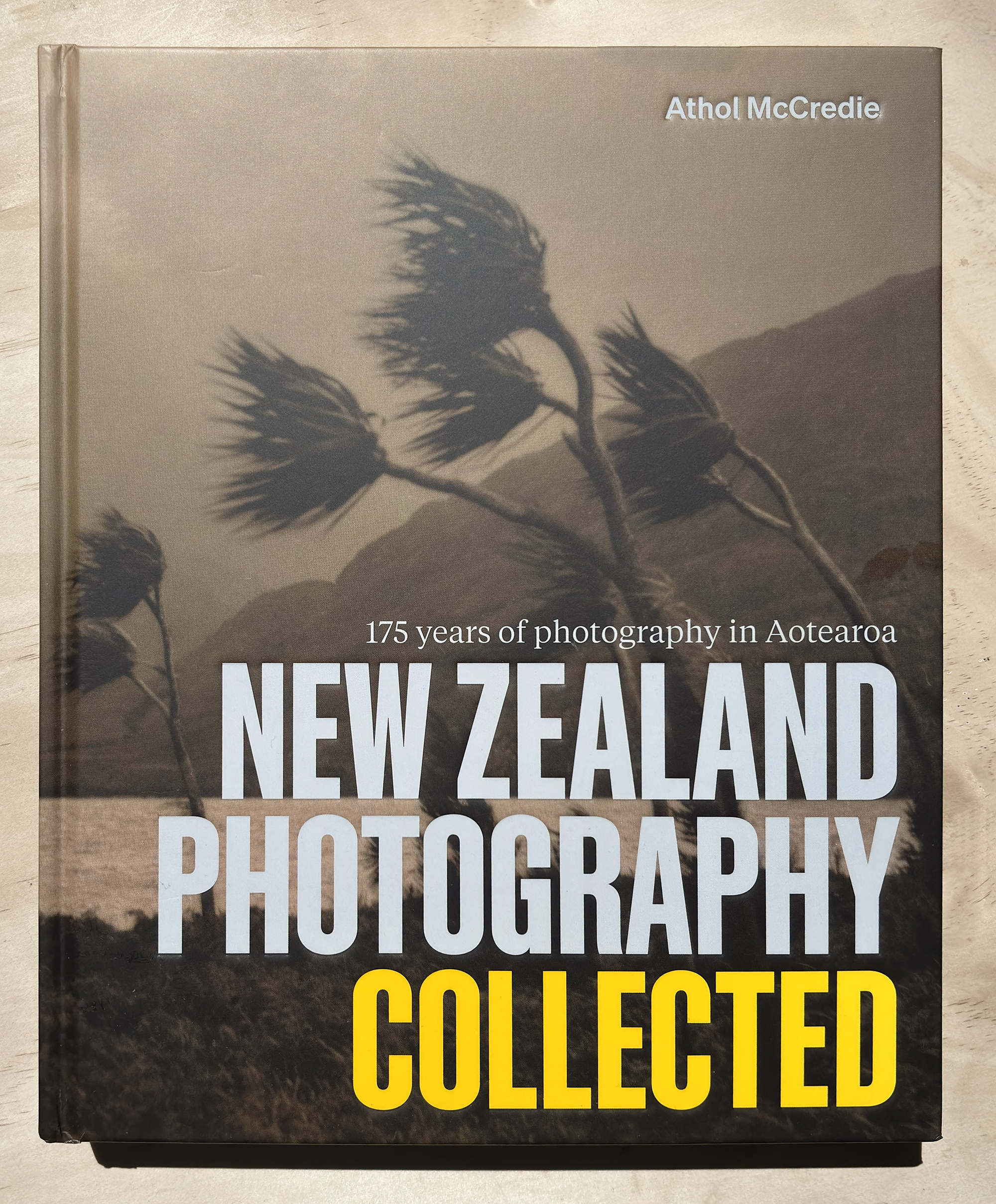
Athol McCredie is a central figure in documenting and curating photographic history in New Zealand. His work spans practical photography, curatorial practice, and authoritative publications that make vast collections accessible and meaningful. New Zealand Photography Collected (2015) was acclaimed as a major reference work and opened up subsequent critical discourse and debates about authenticity and presentation. The 2025 expanded edition builds on the original’s strengths, integrating new material and contemporary perspectives that deepen engagement with Aotearoa’s visual heritage.
McCredie’s work illuminates distinctive and otherwise under-examined aspects of New Zealand photography, particularly by reframing the field away from a narrow art-historical canon toward photography as a social, institutional, and material practice embedded in Aotearoa New Zealand’s specific histories. What is “unique” here is less a claim of singular images than a methodological shift in how national photographic history is constructed and narrated. One of McCredie’s most distinctive contributions is his insistence on treating photography in New Zealand as something used, circulated, and consumed across multiple domains—science, ethnography, tourism, family life, state documentation, and art—rather than as a linear progression of artistic achievement.
Australian (National Gallery of Victoria’s Photography: Real and Imagined, 2023, or Art Gallery of New South Wales’ The Photograph and Australia, 2015) and US museum surveys (the Museum of Modern Art’s Photography at MoMA: 1960 to Now, New York, 2015) privilege iconography, authorship, and stylistic genealogy and discuss process primarily when it enhances aesthetic reading. They treat digitisation as neutral access rather than interpretive transformation, while McCredie treats research into reproduction itself as a central content, not something behind the scenes. The instability of the photograph is part of the story being told. The book is organised around functional and social purposes of photography (“How we looked”, “Being there”, “Pursuing knowledge”, “Belonging and aspiring”, etc.), rather than chronological periods, stylistic movements, or artist-led chapters . This allows amateur, commercial, scientific and art photography to coexist without hierarchy so that meaning emerges from aggregation rather than singular masterpieces, and patterns (shipping, studio portraiture, advertising aspiration) to appear only through volume and juxtaposition.


 On This Date in Photography: by James Mcardle