 “A major concern to atmospheric scientists is whether and to what extent the general warming is linked with the man-made increase of carbon dioxide and dust in the air”.
You know that it is, but only 46% of Americans comprehend that human activity is the primary reason why the Earth is warming, because they mindlessly absorb Donald Trump’s contrary ideas that he reasserted on 14 August 2024 with all his classic lucidity and percipience:
“You know, when I hear these poor fools talking about global warming. They don’t call it that any more, they call it climate change because you know, some parts of the planet are cooling and warming, and it didn’t work. So they finally got it right, they just call it climate change. They used to call it global warming. You know, years ago they used to call it global cooling. In the 1920s they thought the planet was going to freeze. Now they think the planet’s going to burn up. And we’re still waiting for the 12 years. You know we’re down almost to the end of the 12-year period, you understand that, where these lunatics that know nothing, they weren’t even good students at school, they didn’t even study it, they predict, they said we have 12 years to live. And people didn’t have babies because they said – it’s so crazy. But the problem isn’t the fact that the oceans in 500 years will raise a quarter of an inch, the problem is nuclear weapons. It’s nuclear warming … These poor fools talk about global warming all the time, you know the planet’s going to global warm to a point where the oceans will rise an eighth of an inch in 355 years, you know, they have no idea what’s going to happen. It’s weather.”
Here we see how Trump propagates misinformation about climate change, misrepresents scientific consensus, and incorrectly downplays impacts of global warming and climate change in a garbled mix of misconceptions, inaccuracies, and his trademark schoolyard name-calling.
He suggests that the terms “global warming” and “climate change” are interchangeable—or that one replaced the other due to inaccuracy—when ‘global warming’ refers specifically to the long-term increase in Earth’s average surface temperature as a component effect of climate change that includes effects like sea level rise, melting glaciers, and shifts in weather patterns, all of which are happening now.
His claim about “global cooling” in the 1920s perhaps refers to sporadic concerns about cooling in the 1970s, but scientific consensus has long since confirmed clear warming trends. His “12 years” before “the planet’s going to burn up” confuses the IPCC’s calls for urgent action by 2030 to limit warming. He grossly understates sea level rise predictions when current projections indicate disastrous rises. Dismissing climate scientists as “lunatics” and “poor fools,” is an attempt to diminish the vast body of peer-reviewed research and global scientific consensus on climate change; 91% of all scientists and 100% of climate scientists with high levels of expertise (20+ papers published) agree human activity is causing climate change. And nuclear warming…what does he mean by that?
His nonsense is having an effect. Strong bipartisan support across all American voters for renewables such as solar and wind, is beginning to weaken in the wake of Trump’s attacks as a new Pew Research Center poll shows; support for new solar farms has slumped to 78% across all Americans, down from 90% just four years ago. Backing for expanding wind power has dropped by a similar amount, while interest in buying an electric vehicle is significantly lower than a year ago, with just 29% of people saying they would consider an EV, down from 38% in 2023.
Let’s go back to that statement at the top of this post:
“A major concern to atmospheric scientists is whether and to what extent the general warming is linked with the man-made increase of carbon dioxide and dust in the air.”
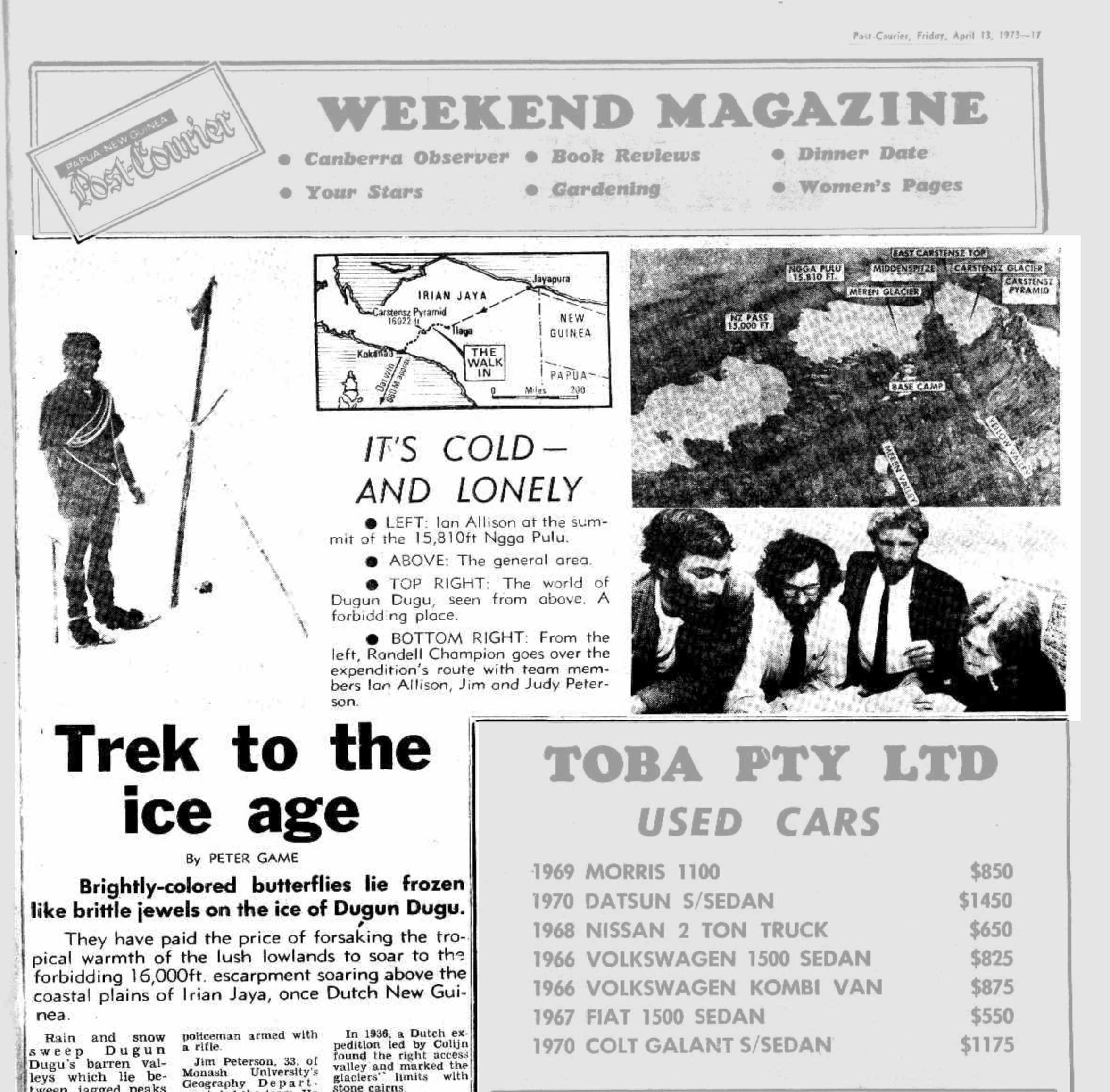
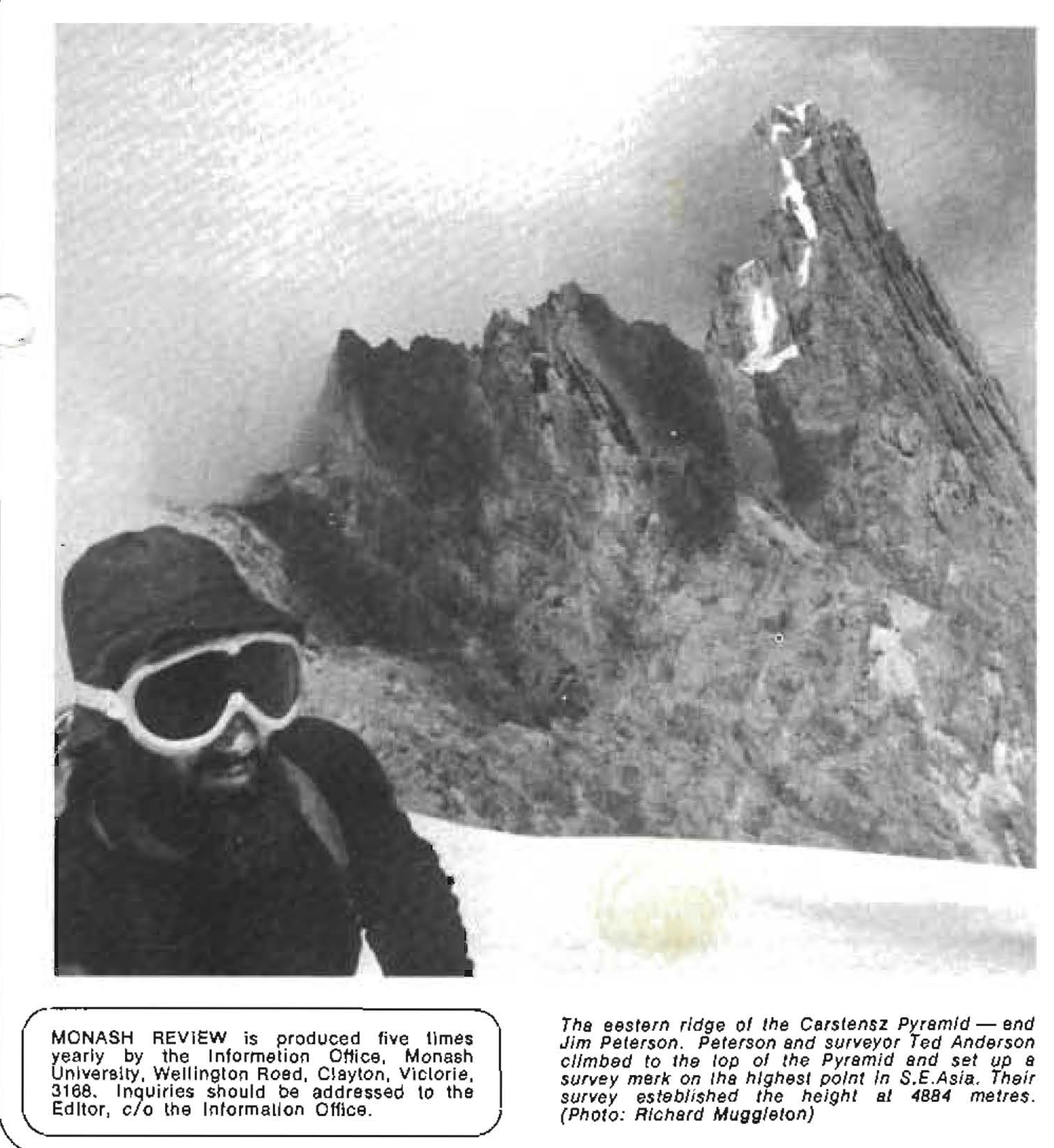
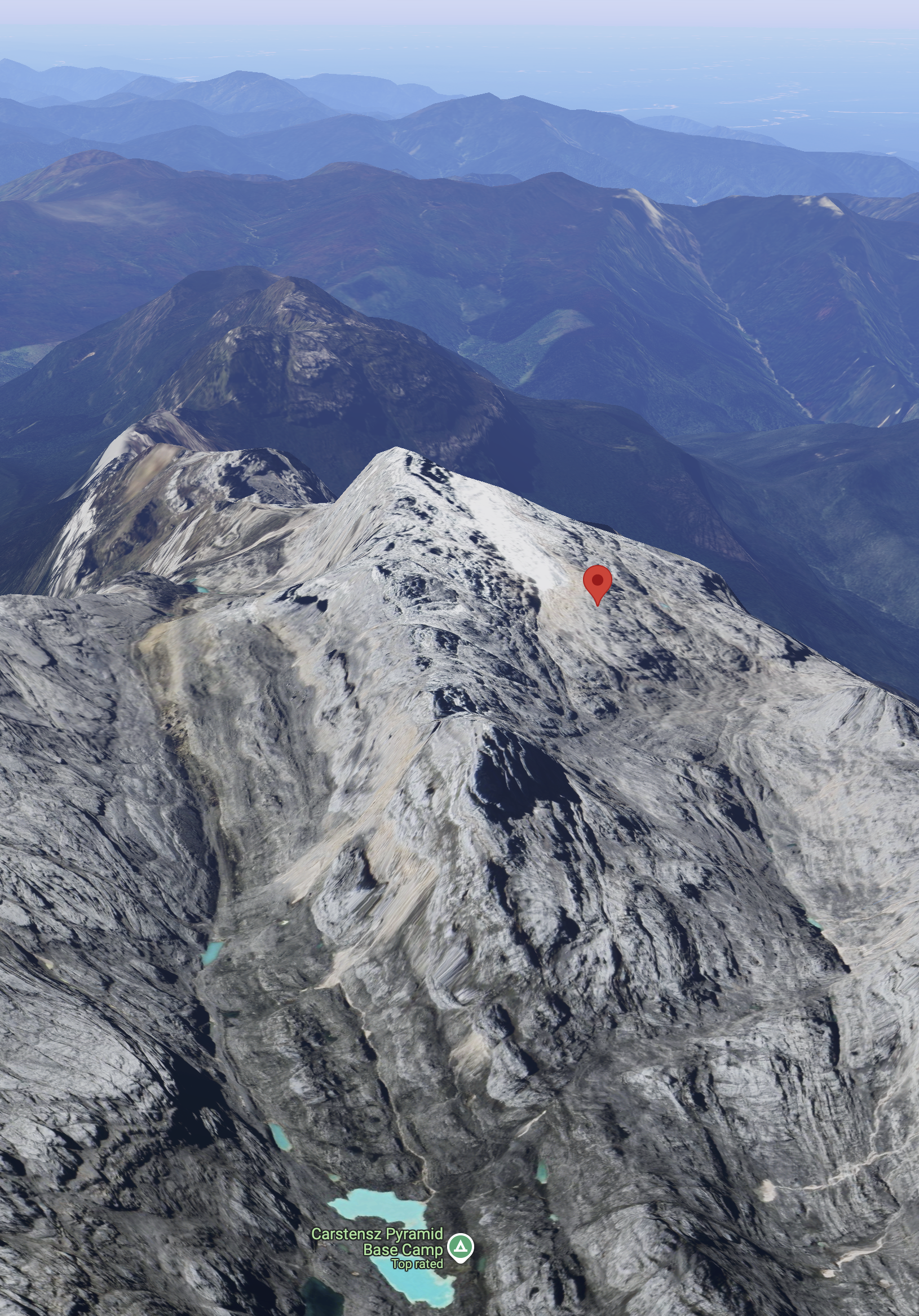
That was written in May 1973—fifty-one years ago!—in the Australian university’s Monash Review. The journal reports on an expedition following a first, also by Dr. J. A. Peterson, lecturer in geography leading a team of geomorphologists, over December 1971-March 1972 to the Carstens and Meren Glaciers (see: Carstensz Glacier Expedition (1971-1972) & Champion, C. Randell & Radok, Uwe (1972). Carstensz Glaciers [sic] Expedition, 1971-72 : preliminary report. University of Melbourne, Meteorology Dept, Parkville, Vic.), which at latitude 4° south, and 4500 metres high are among the world’s tropical glaciers.
The report continues:
“So, in keeping track of the climatic changes in the atmospheric ‘heat-engine’, data from such remote, high and tropical places as the Carstens area in West Iran are especially useful. This expedition, like the first, was very much a co-operative effort. Ted Anderson, the surveyor, came from the University of New South Wales; Sam Mustamu from Unchen University, Republic of Indonesia. Photographer on both occasions was Richard Muggleton, of Preston and Northcote Community Hospital, Victoria. Logistic support was provided by Freeport Indonesia Inc., a mining company in the area.”
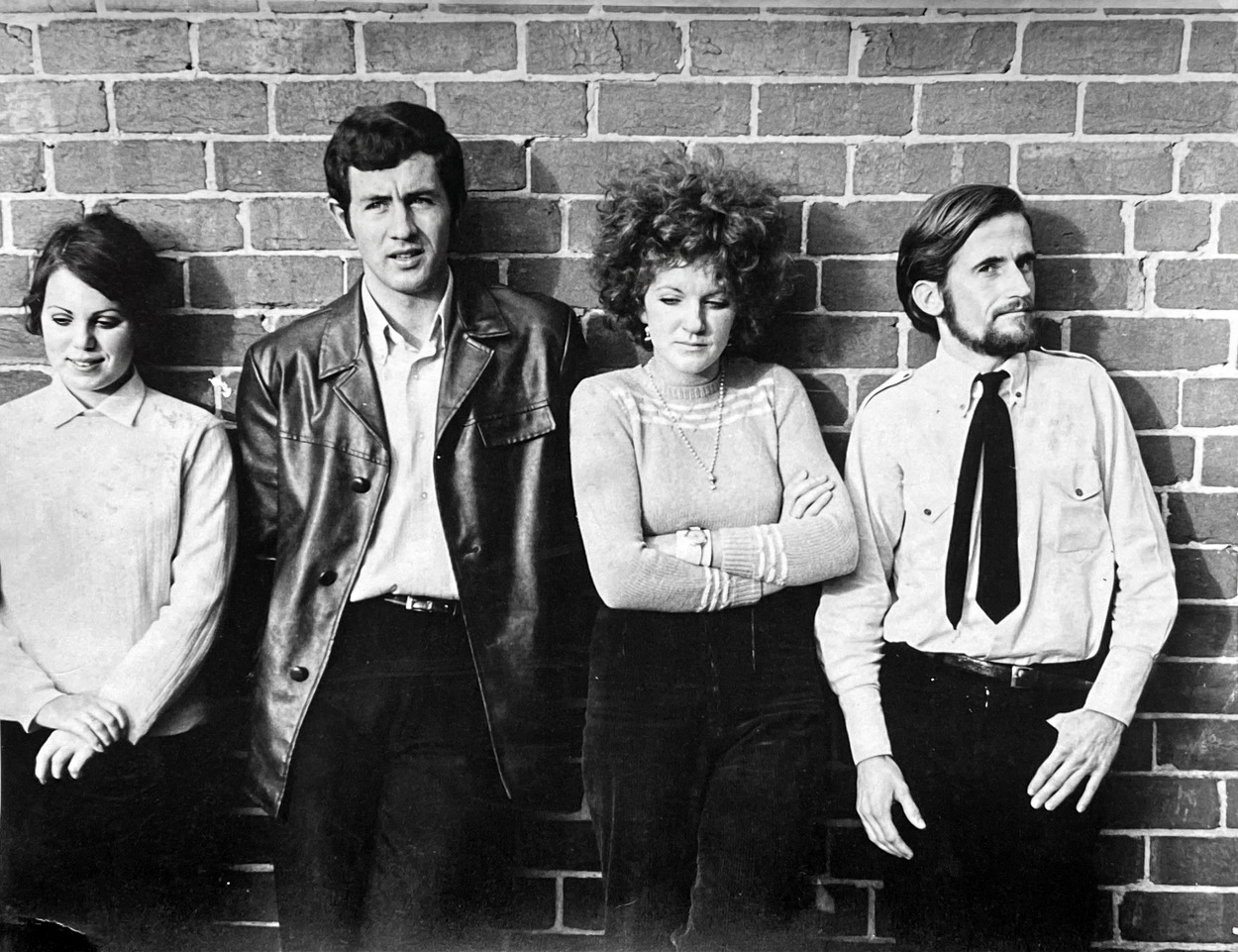
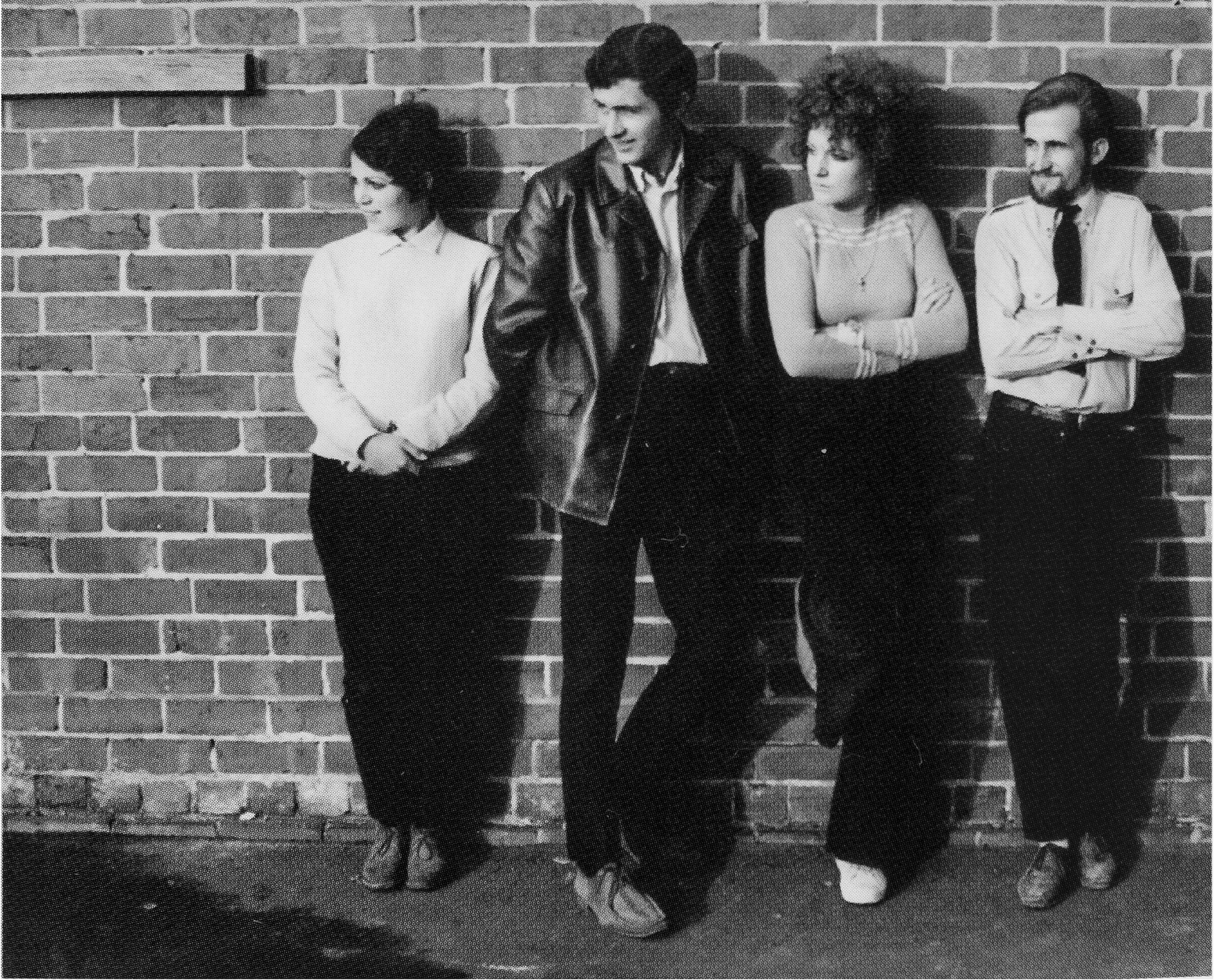
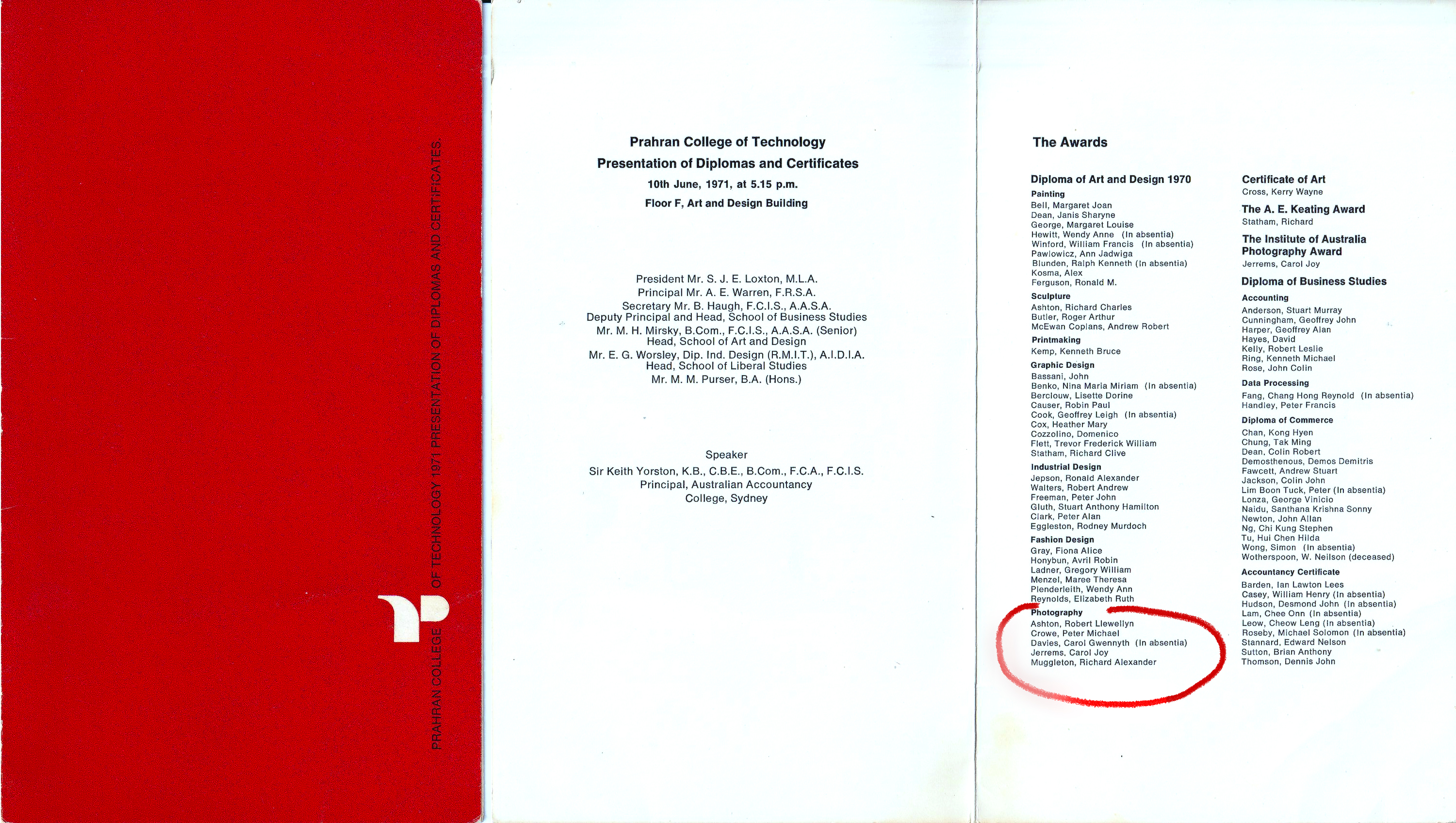
Richard Alexander Muggleton was one of the earlier alumni who graduated with Carol Jerrems in 1970, so was at Prahran 1967-69.
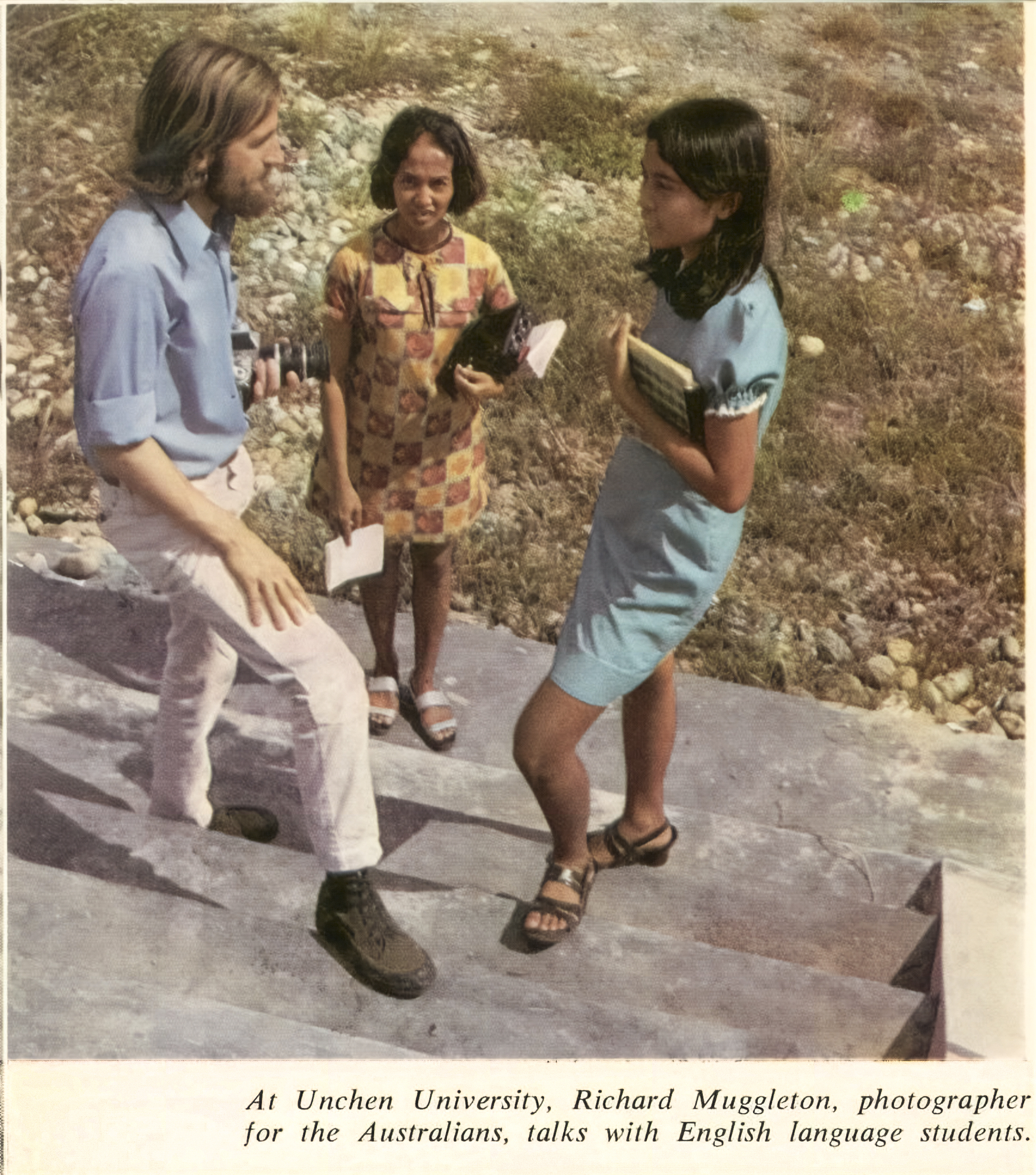
Here Muggleton is talking to students at Cenderawasih University (Universitas Cenderawasih) in Jayapura, Papua province, Indonesia during the time he was there for the expedition, as featured in Hemisphere: An Asian-Australian magazine, November 1973 issue, which reproduces several of his colour pictures of adventures on the Puncak Jaya range where the glaciers were situated.
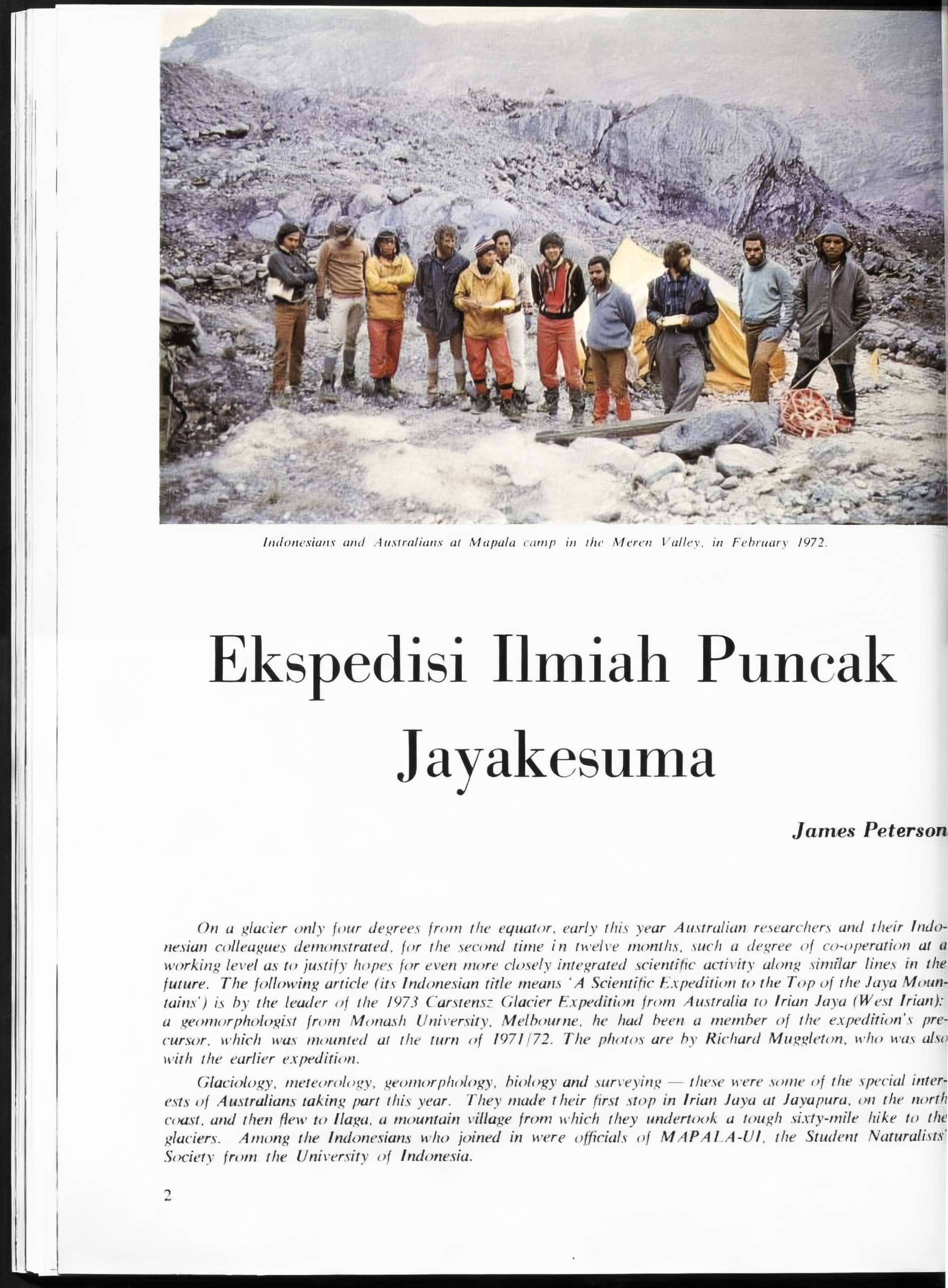
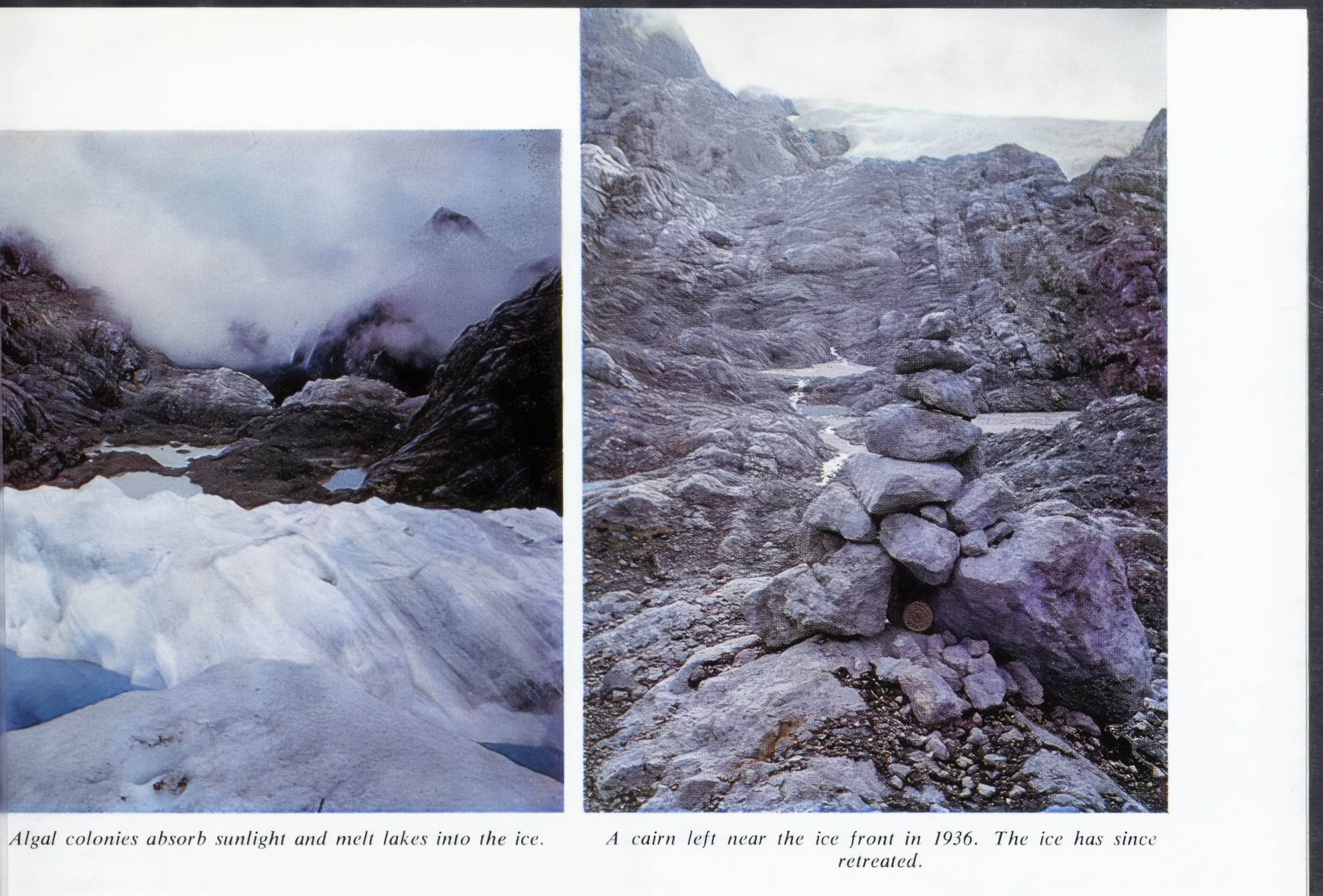
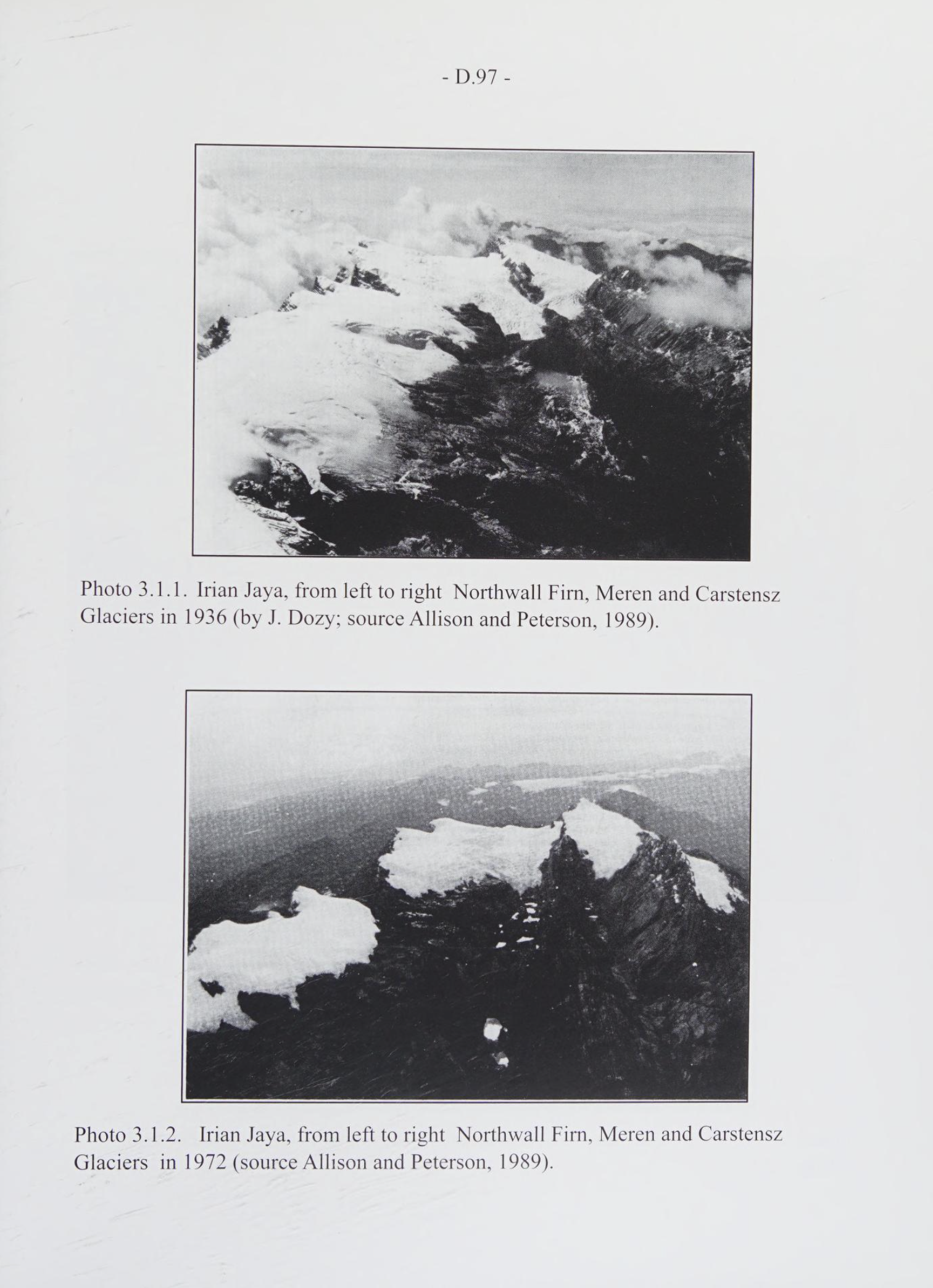
As discussed elsewhere photogrammetrists and glaciologists have since the 1800s been using photography, as Muggelton has here, to document the retreat of glaciers in the face of global heating.
Muggelton’s background grew up in a small town Quirindi, on the North West Slopes region of New South Wales and remembers his first experience of taking photographs:
“I was given a box Brownie camera for my 13th birthday. After photographing my family I took a train to Sydney staying at the People’s Palace. In Sydney I took photos of the harbour and the buildings, as did everyone, but for me it was a big change from Quirindi, the country town where I grown up.
“At age 14 I signed up for a 15 year term with the RAAF at Wagga Wagga serving as an apprentice engine fitter. I was photographed cutting my 15th birthday cake with a bayonet. There was a hobby darkroom at the apprentice base and, having bought a Ricoh rangefinder 35 mm camera, I learnt to develop and print black and white photographs.
On completing my apprenticeship as an aircraft engine fitter I was posted to Melbourne to study Commerce at RMIT. While there I discovered the Australian Art Room at the State Library and decided on a career in art. I then deserted from the Air Force and sent a letter requesting a discharge with a forwarding address.
He heard of Prahran’s reputation for innovation in art studies:
“I applied and was interviewed by Lenton Parr, then Head of School. He was not impressed by my drawing folio, but was favourably impressed by my written analysis of a design project. The High School at Quirindi had only offered Art to girls. The boys had to study Agriculture. As I had no previous art studies I was placed into first [preliminary] year, as a mature age student, studying Painting, Drawing, Design, Printmaking and Art History. After twelve weeks I was promoted to second year.”
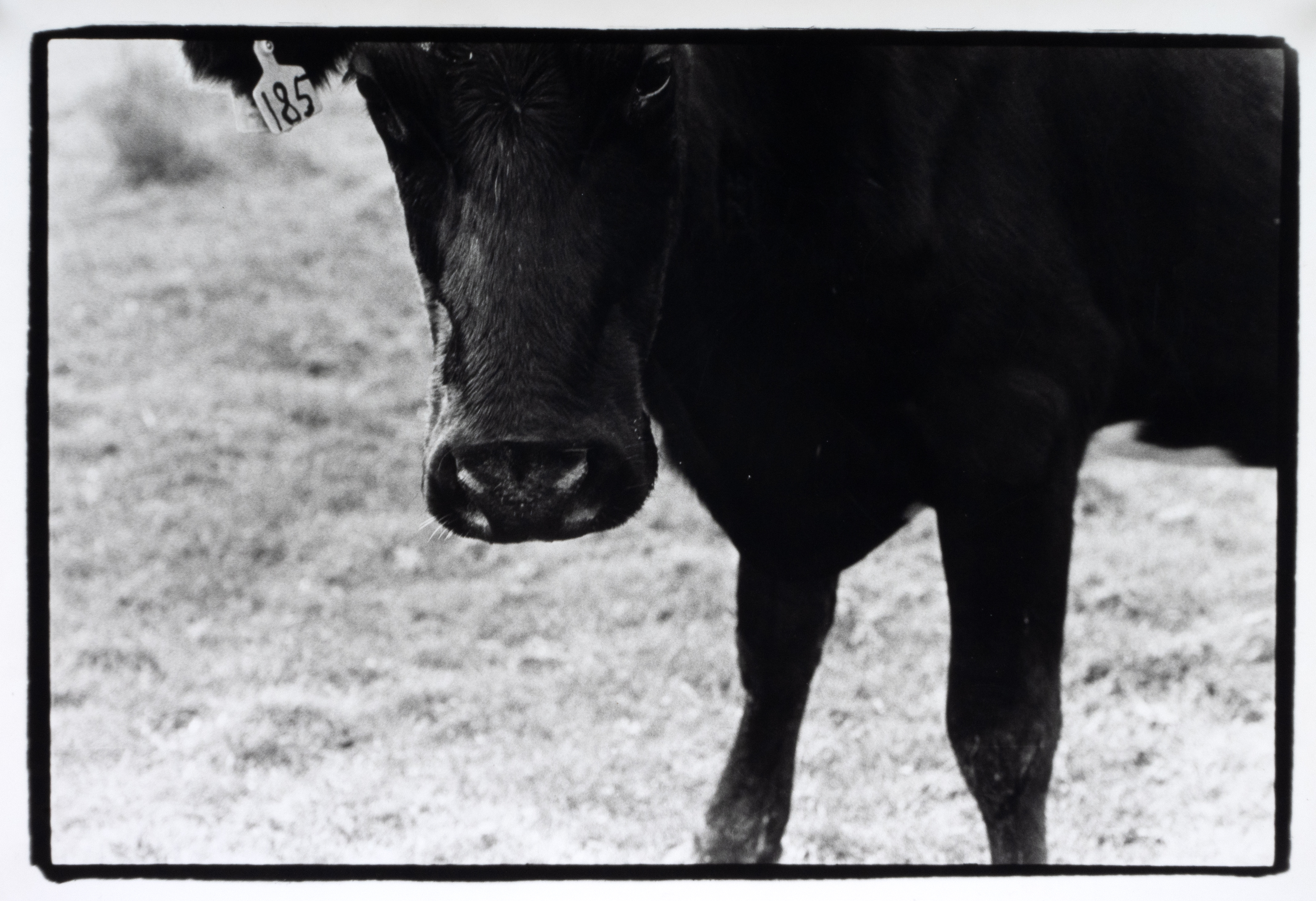
“The painting studio was located in an old factory in Chapel Street while the new building in High Street was being completed. Alun Leach-Jones and Peter Booth took painting classes and provided very different approaches to the discipline.
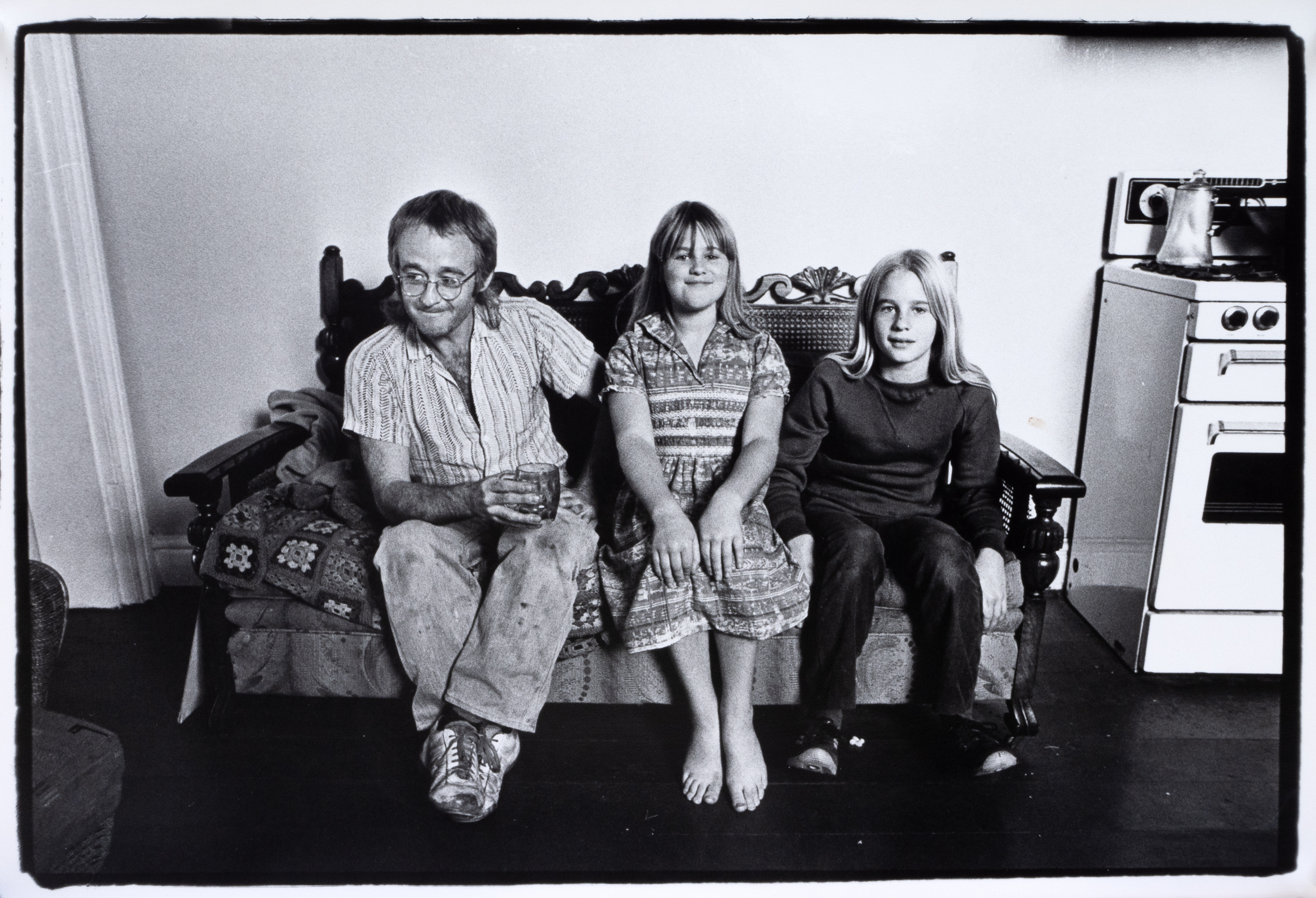
Alun’s paintings suggested a scientific view through a microscope, large scale, hard-edged and very controlled whereas Peter Booth’s paintings were mainly black with geometric shapes of pure colour applied thickly with a palette knife. ‘The Field’ exhibition in that year had a great influence on the painting students.”
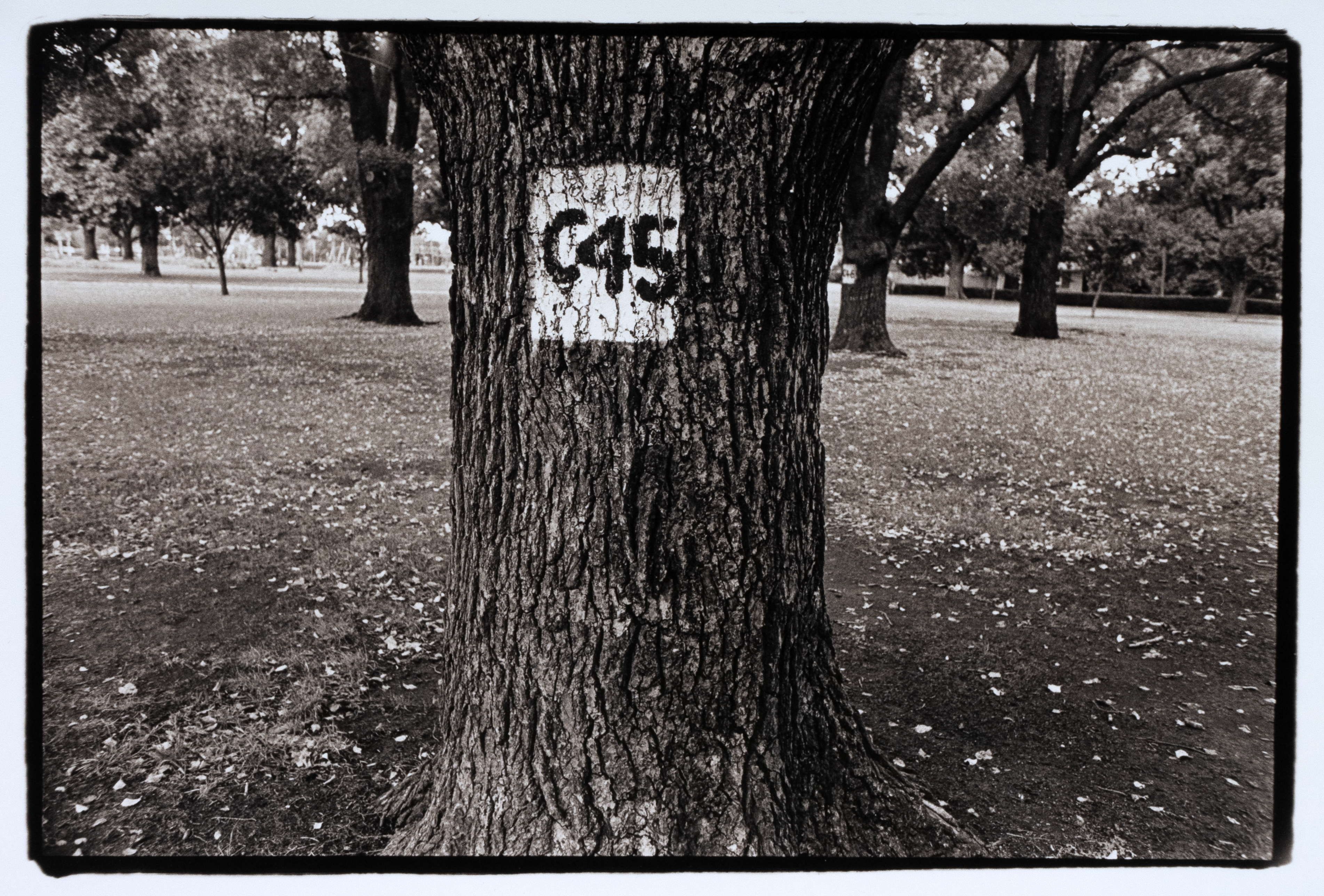
During this time it was Ian McKenzie who took the photography classes with Derrick Lee, and Muggleton recalls that Paul Cox had a considerable influence on Photography through his teaching in Film Making as an acclaimed film maker who had won the Nikon International Photography Award and who illustrated a book of poetry on New Guinea; “he brought an international focus to our studies.”
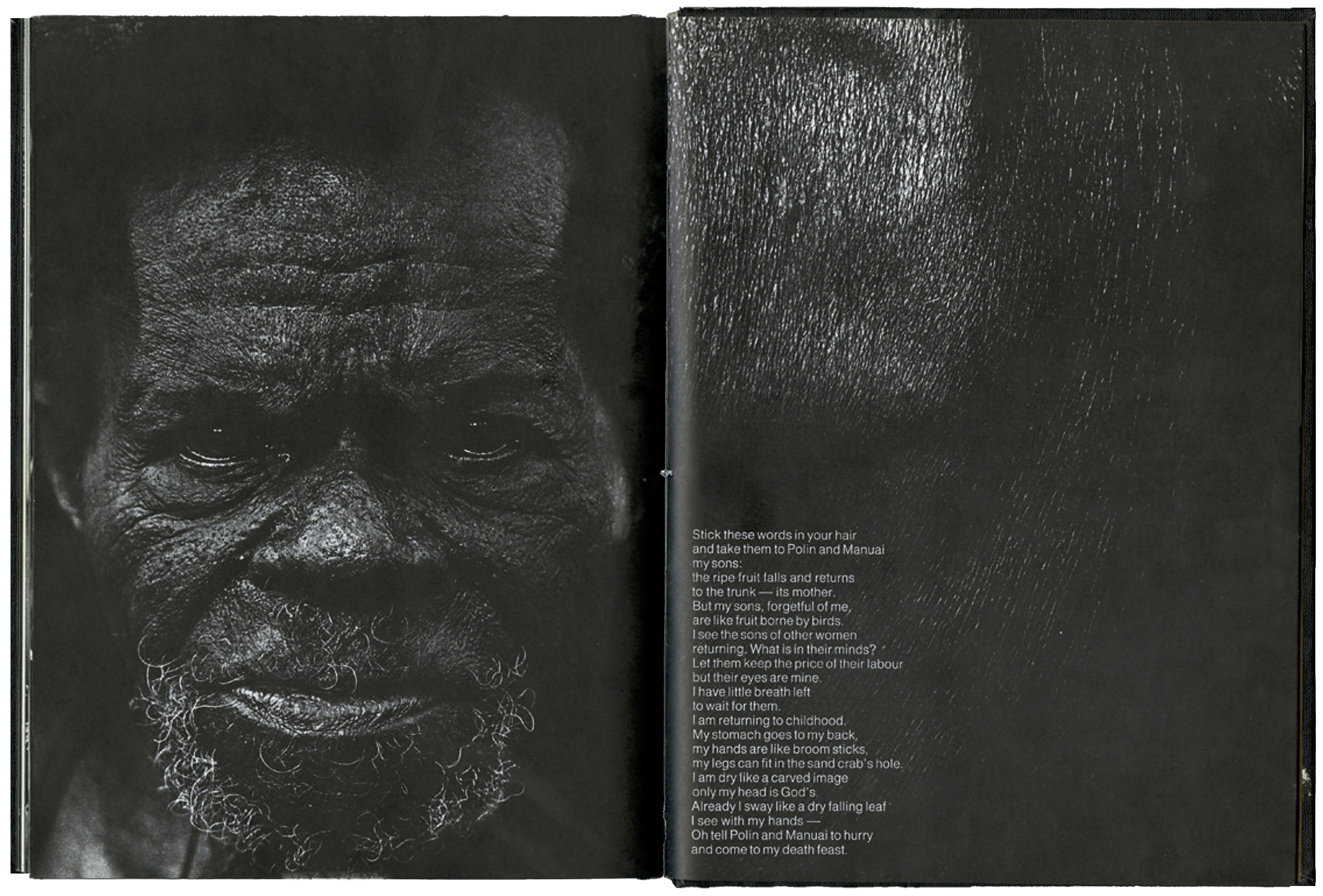
Muggleton appreciated Man Ray’s experimental approach to technique, such as solarisation, use of photograms and surrealist collage techniques and they opened up possibilities he had not considered before and he experimented with these techniques.
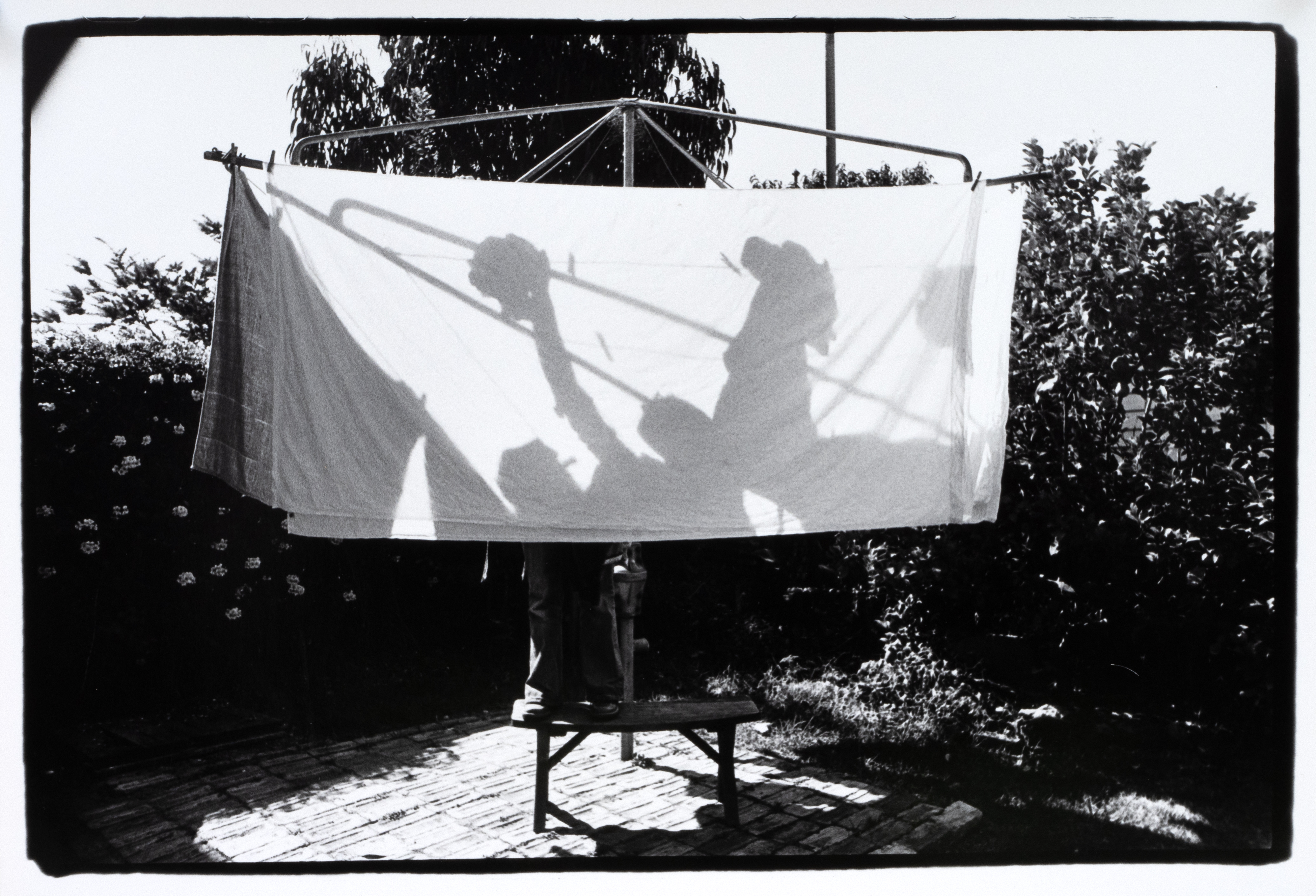
Henri Cartier Bresson’s street photography that aimed to capture the ‘decisive moment’ with uncropped 35 mm images was an inspiration for much of the student work at the time.
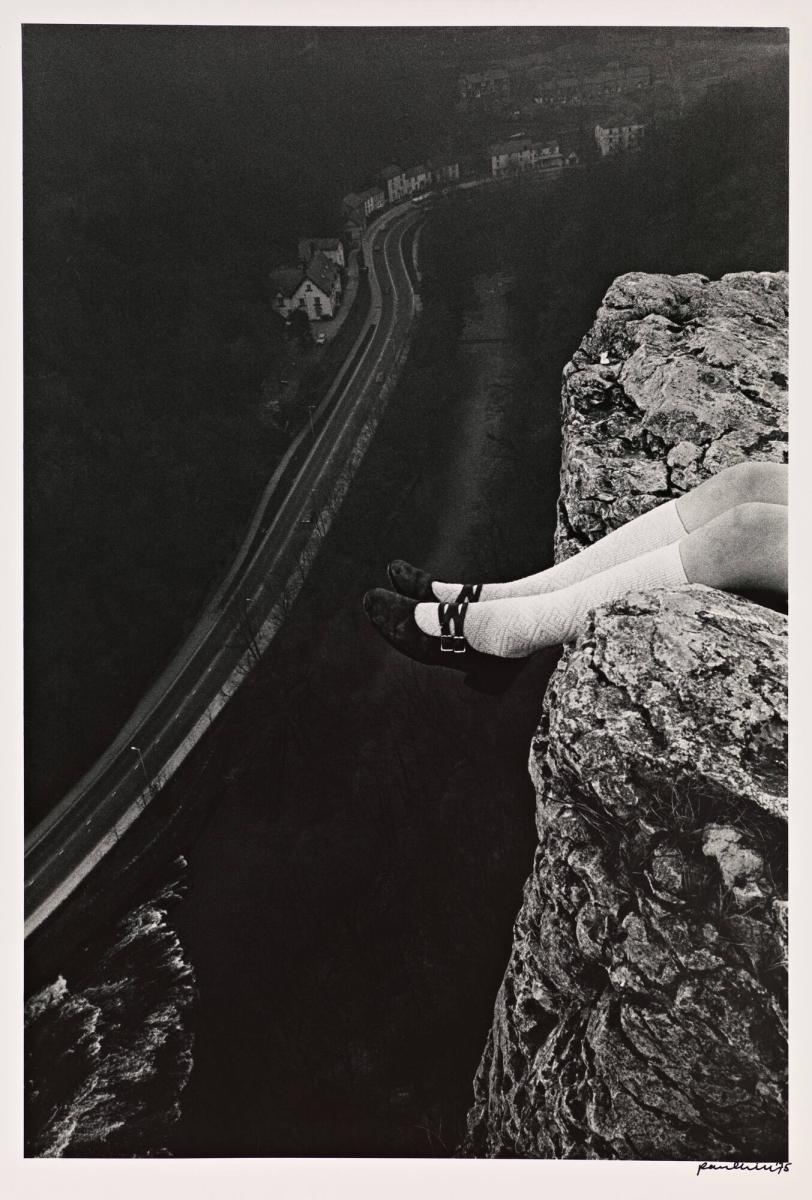
After visiting an exhibition by Paul Hill, an English photographer, at The Photographers’ Gallery, Muggleton spent two weeks of his income purchasing a 6″ x 9″ print taken from High Tor. When years later he visited England, he took photos from the same point.
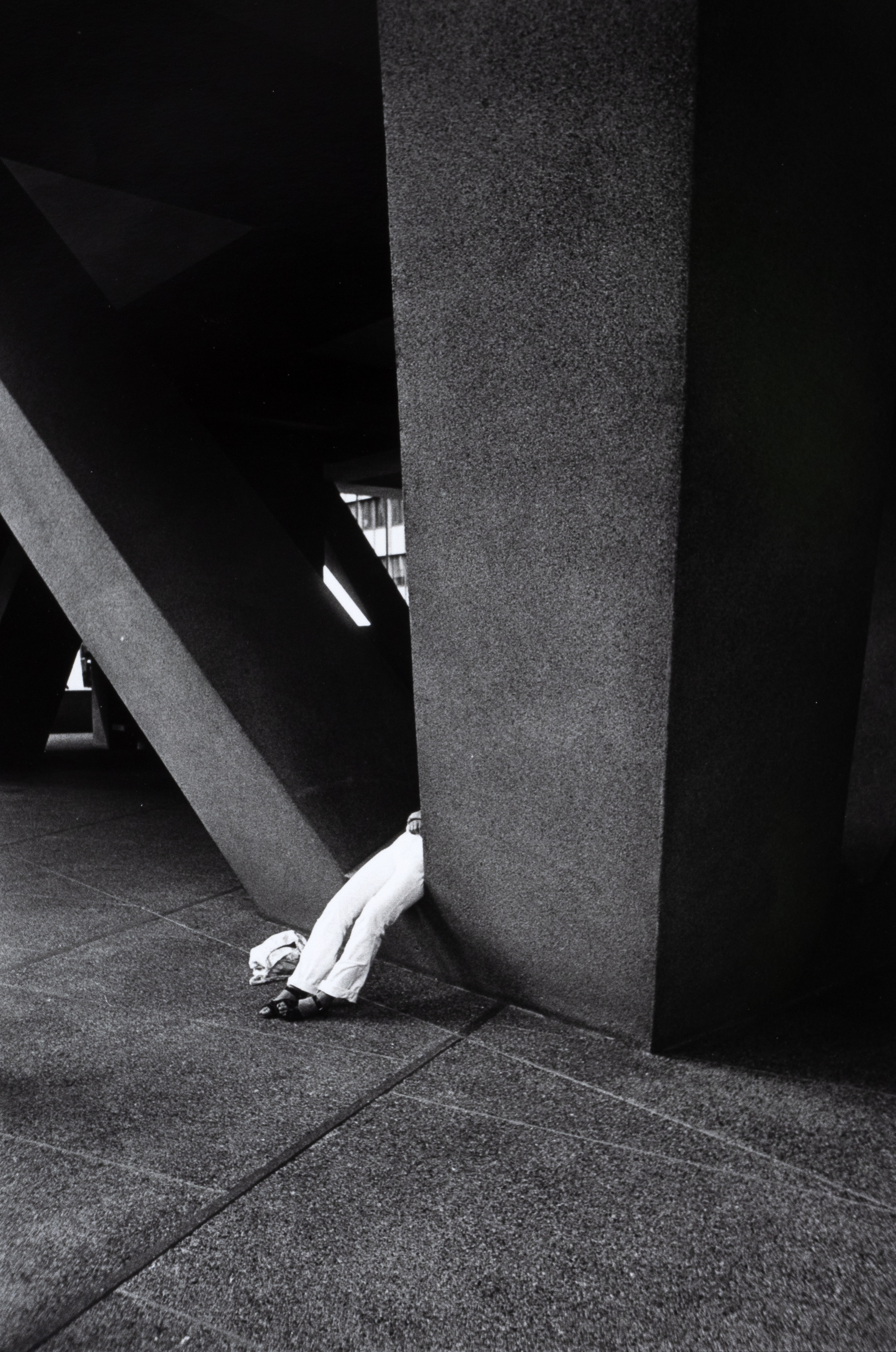
A student colleague was Carol Jerrems; “a fearless photographer and became well known for her photographs of troubled youths around Heidelberg.”
“It was an exciting and anarchic time with nuns in their habits quietly working in the studios while other art students set fire to suspended plywood clouds; watched things rot in sealed glass jars and made wax body casts.”
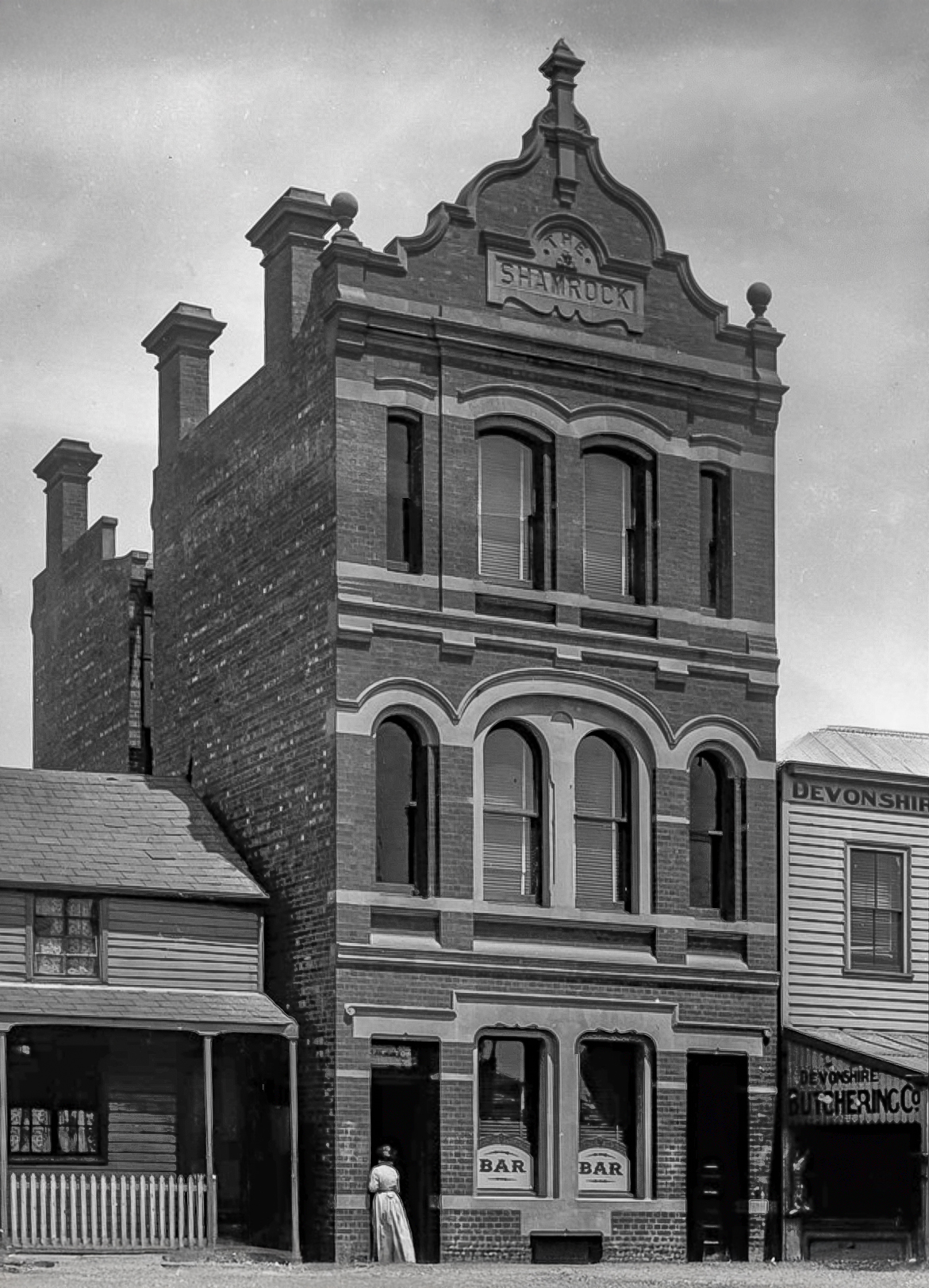
“I was living in a three storey ex hotel building which I rented for $24 per week and sub-let to other students. The rooms in ‘The Shamrock’ had unusual colour schemes, (black, red and gold), and the plumbing and wiring were very basic. The arrival of a taxi load of sailors at 2 am one morning alerted us to the fact that the ‘The Shamrock’ had been operating as a brothel before we moved in. I constructed a very small darkroom in a disused service shaft.
“After my RAAF service I had no problem getting employment as a security guard with MSS. I spent many nights in factories and warehouses in Port Melbourne and other industrial areas. I took cleaning jobs (mainly offices and banks) in the evenings. I also worked lunch times at the O’Brien’s milk bar on the other side of High Street delivering lunch orders along Queen’s Road. This provided me with breakfast and lunch each day and enough money to maintain my car.”
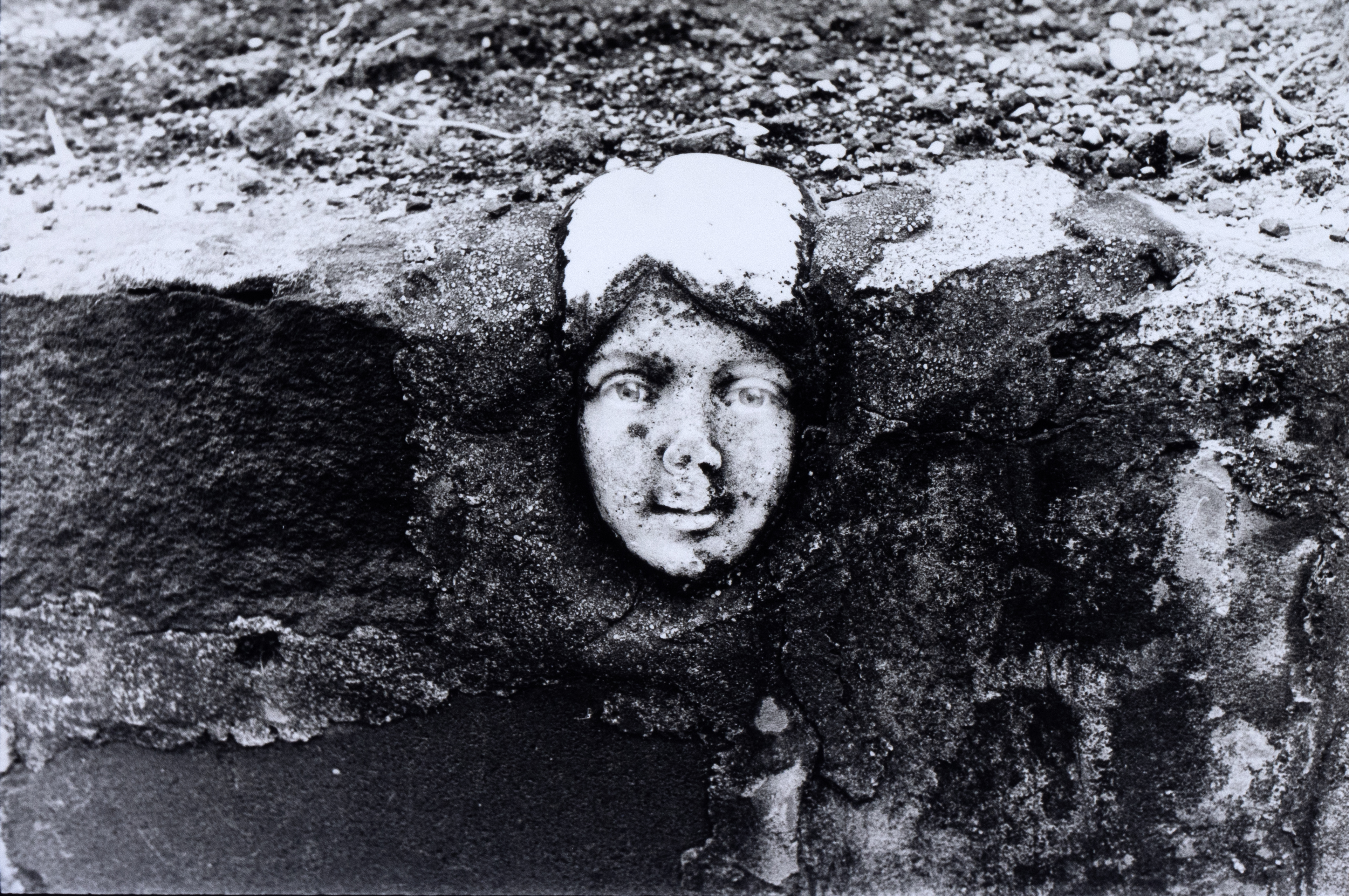
Muggleton failed in the third year of his course and converted to a major in Photography and Cinematography under Paul Cox, Bryan Gracey and Gordon De’Lisle. Over the Christmas holidays he worked cleaning the Holden design studios at Fishermen’s Bend where alumnus Jim McFarlane was then working:
“Eventually, when the job required us to get on to the roof in mid summer and clean the skylights with acid, I decided instead to hitchhike to Perth with Norman May, another art student. We got a lift with a young couple with two small children who were moving to Perth. The van they were driving broke an axle in the middle of the Nullarbor a few miles from Nullarbor Station. My airforce training came in handy as I was able to remove the broken axle and send it and $20 with a passing tourist bus driver to Adelaide. Six days later a returning bus arrived with a replacement axle and we could continue our journey.”
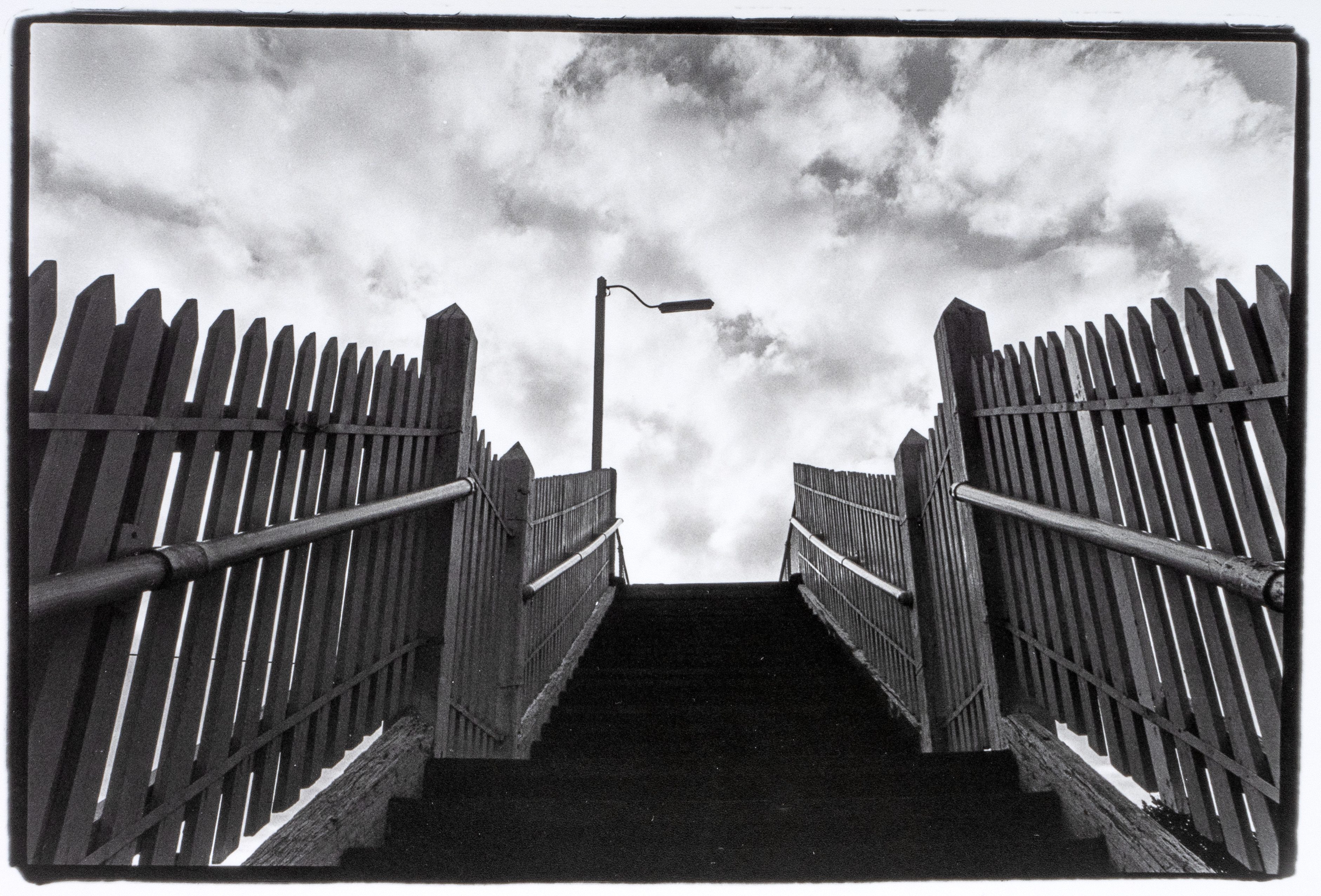
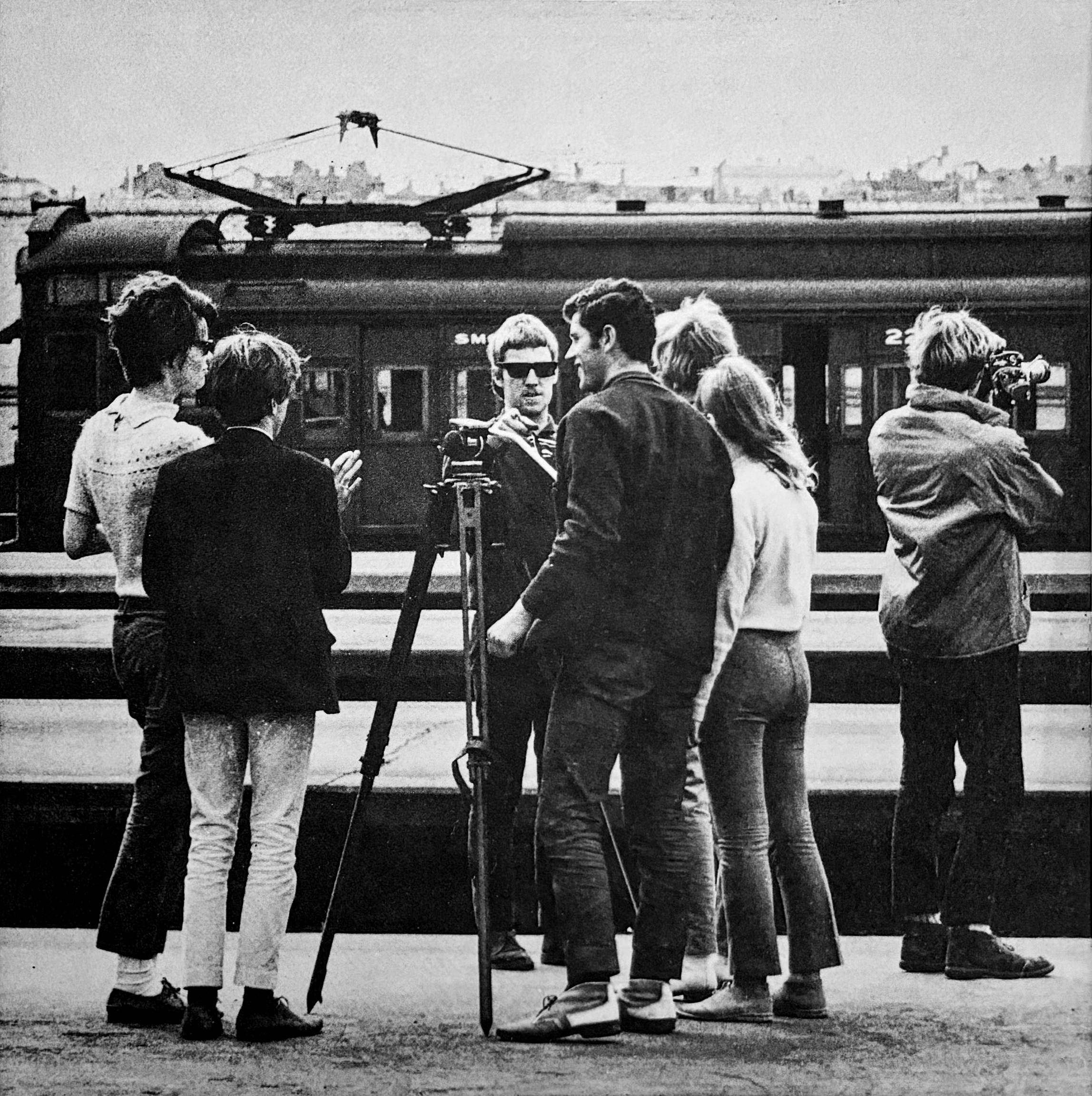
“On my return to Prahran, with Paul Cox, we made two films: the first of Richmond railway station, and the second where I played the part of an eccentric photographer who carried multiple cameras around his neck and slept with his equipment. This was filmed at the ’Shamrock’, the Botanic Gardens and Albert Park Lake. Linda Jackson, Marie Menzel and the Fashion Design students produced costumes for the cast and a Gala Premiere screening was held at the College.”
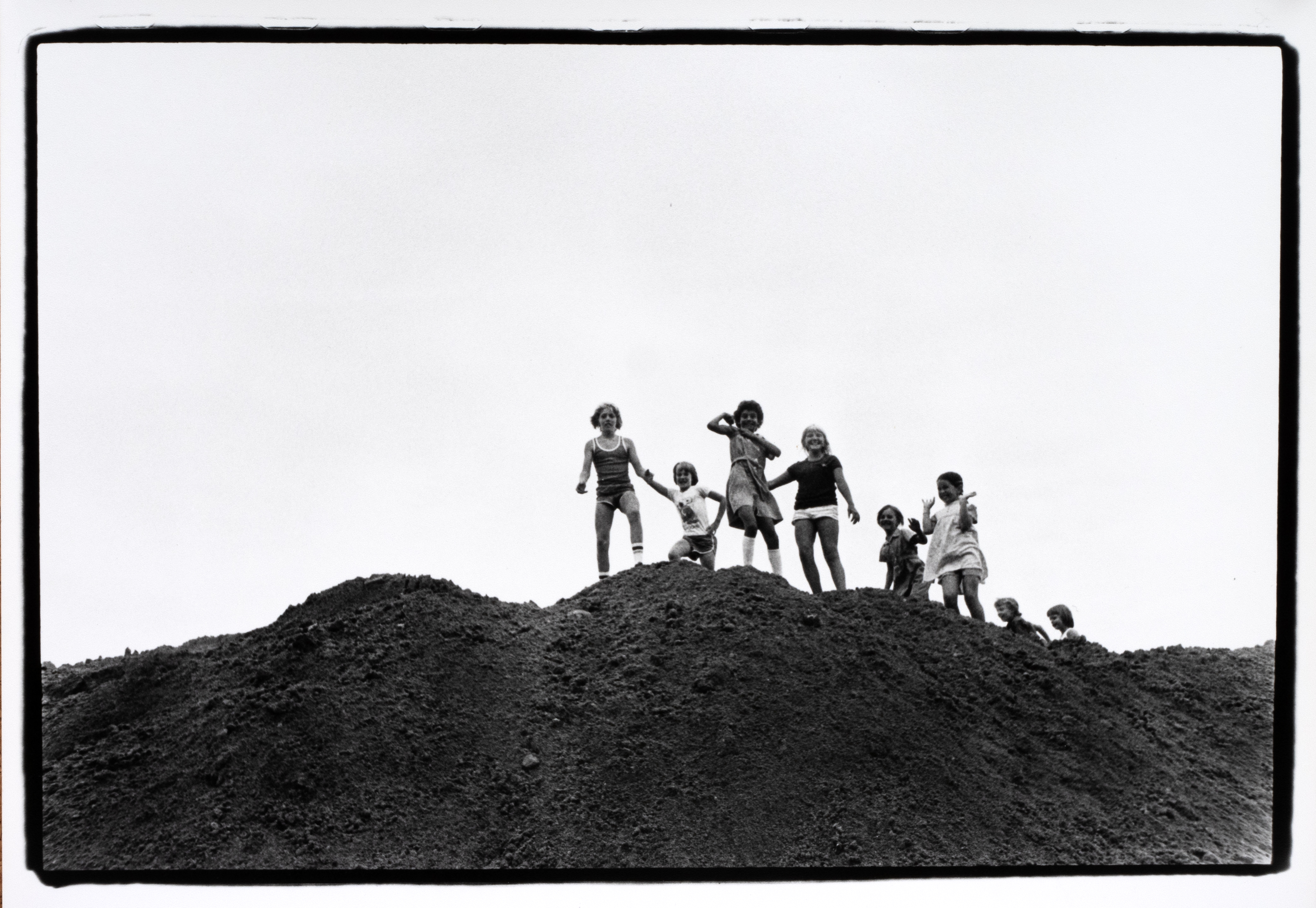
“Social awareness was fostered at Prahran. We photographed slum clearance; the development of high rise housing; homeless people and child poverty. Our black and white photographs were generally printed large and presented uncropped for assessment.”
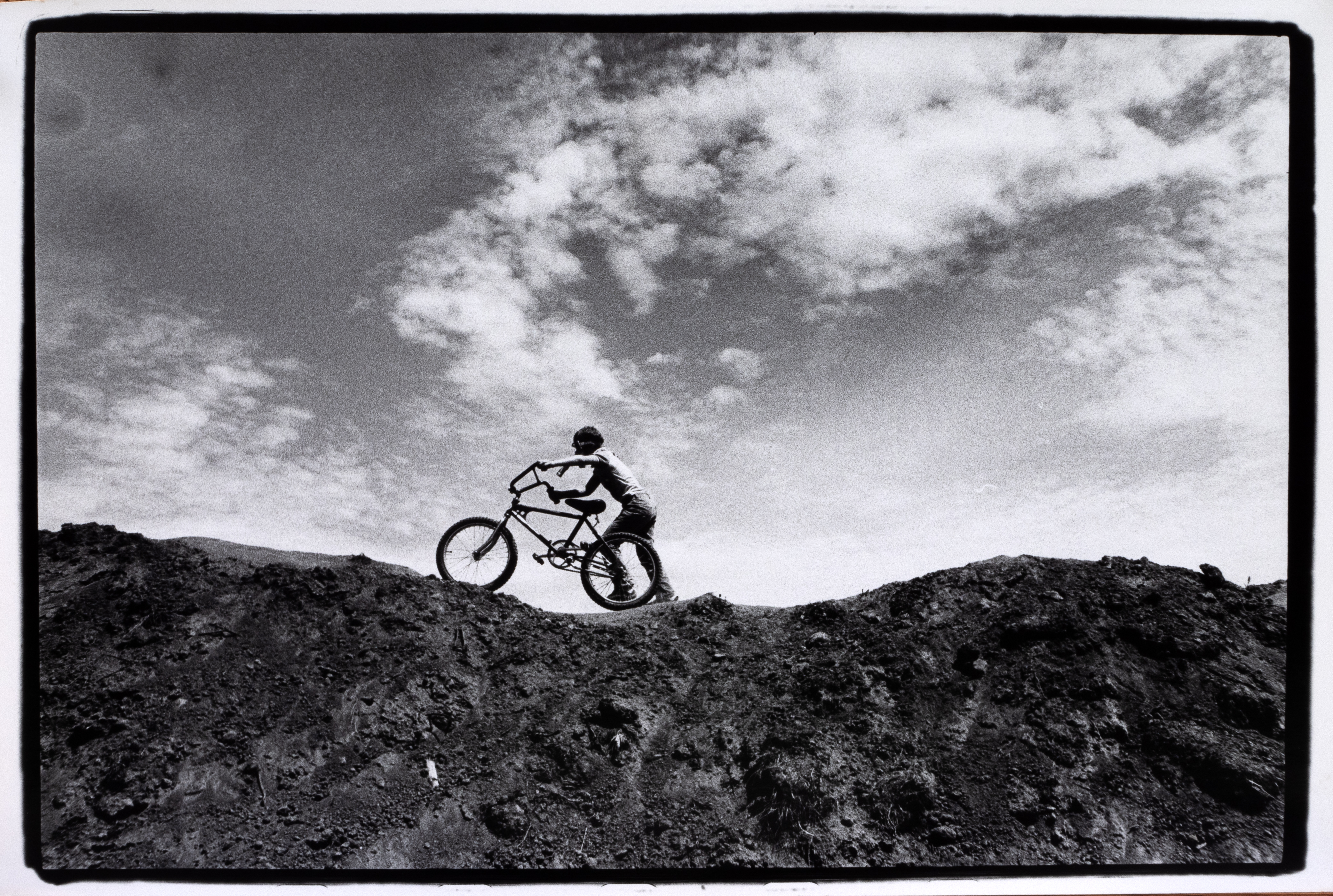
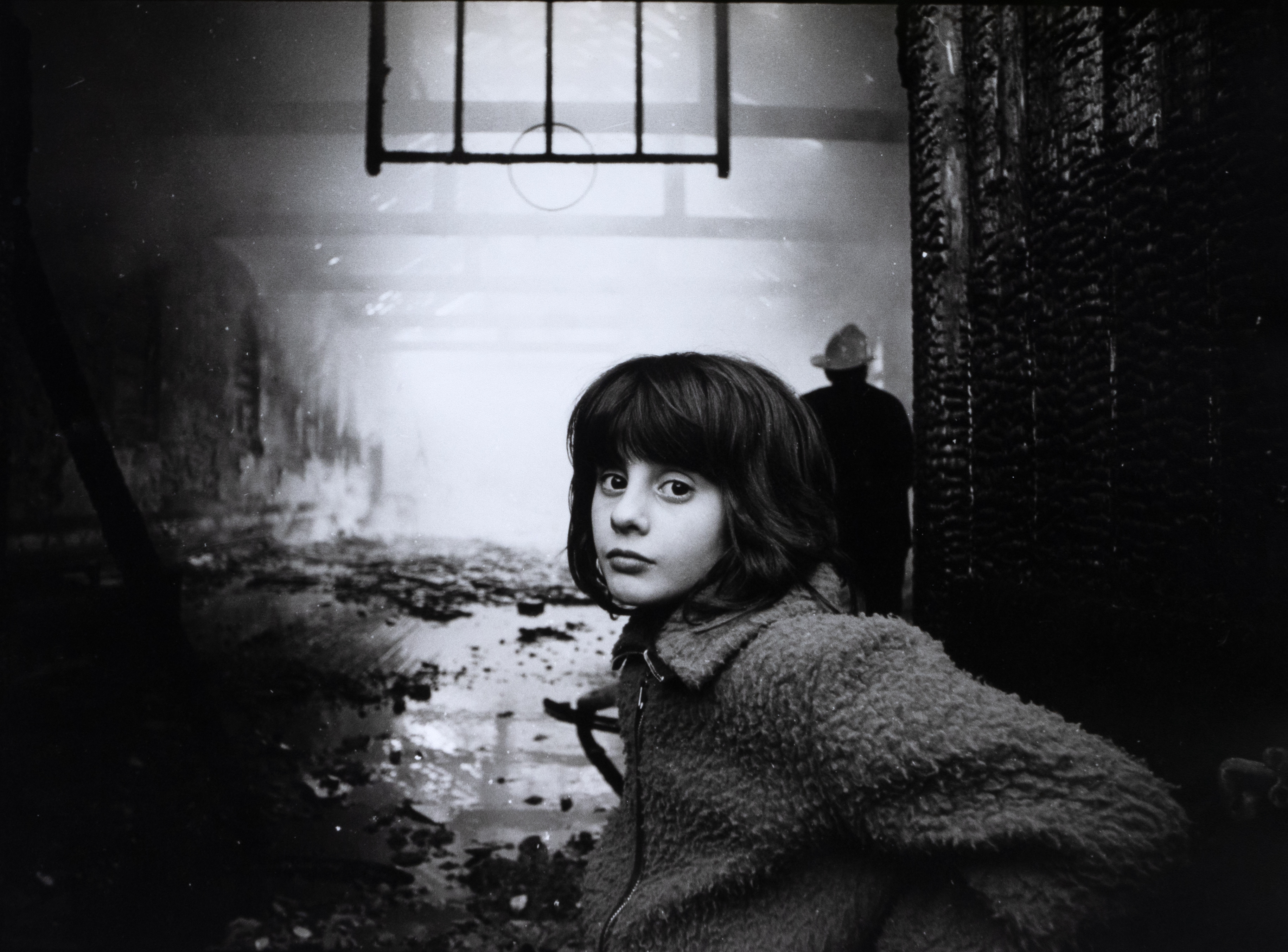
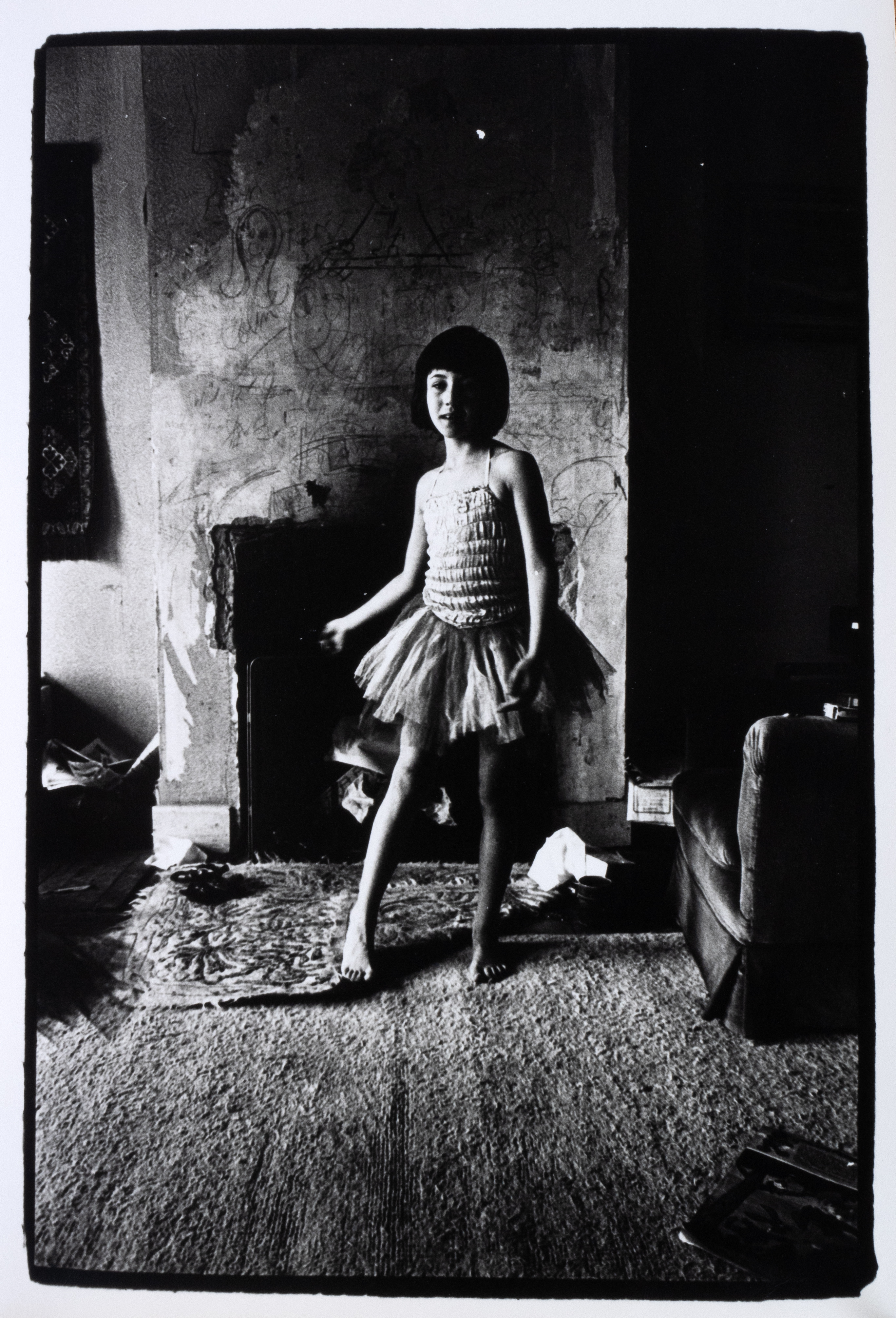
A second year Technical Teaching Studentship along with Richard’s cleaning job relieved some of the pressure of earning an income while studying. On graduating I was offered a supervisor’s position with the cleaning firm on a wage plus car. That was more than he was to earn as a Clinical Photographer with the Victorian Plastic Surgery Unit. At that interview he was asked why I had applied and he admitted frankly that it was the only photography job advertised in the ‘Age’ that Saturday. He spent over two years setting up the department and taking medical photos for lectures, journals and medical records of motor car accidents, industrial accidents and congenital deformities.
“During my time at the hospital they allowed me leave to join a scientific expedition, as photographer, to West Irian (West New Guinea). The team was to study and camp on an equatorial glacier, the Carstenz, for three months. The glacier is situated at about 14,500 feet and 4 degrees from the equator. There was a second expedition twelve months later, which I also joined, to survey glacial retreat, melt-water run off and snow ablation rate.”
Skills gained in his employment at Preston and Northcote Community Hospital led to Muggleton, after his return from Papua, advertising in The Age, 5 October 1974:
Mr. Richard Muggleton has commenced a specialist photography and graphic service to provide clinical records to legal medical or publication requirements. For studio or hospital appointments 224 1863
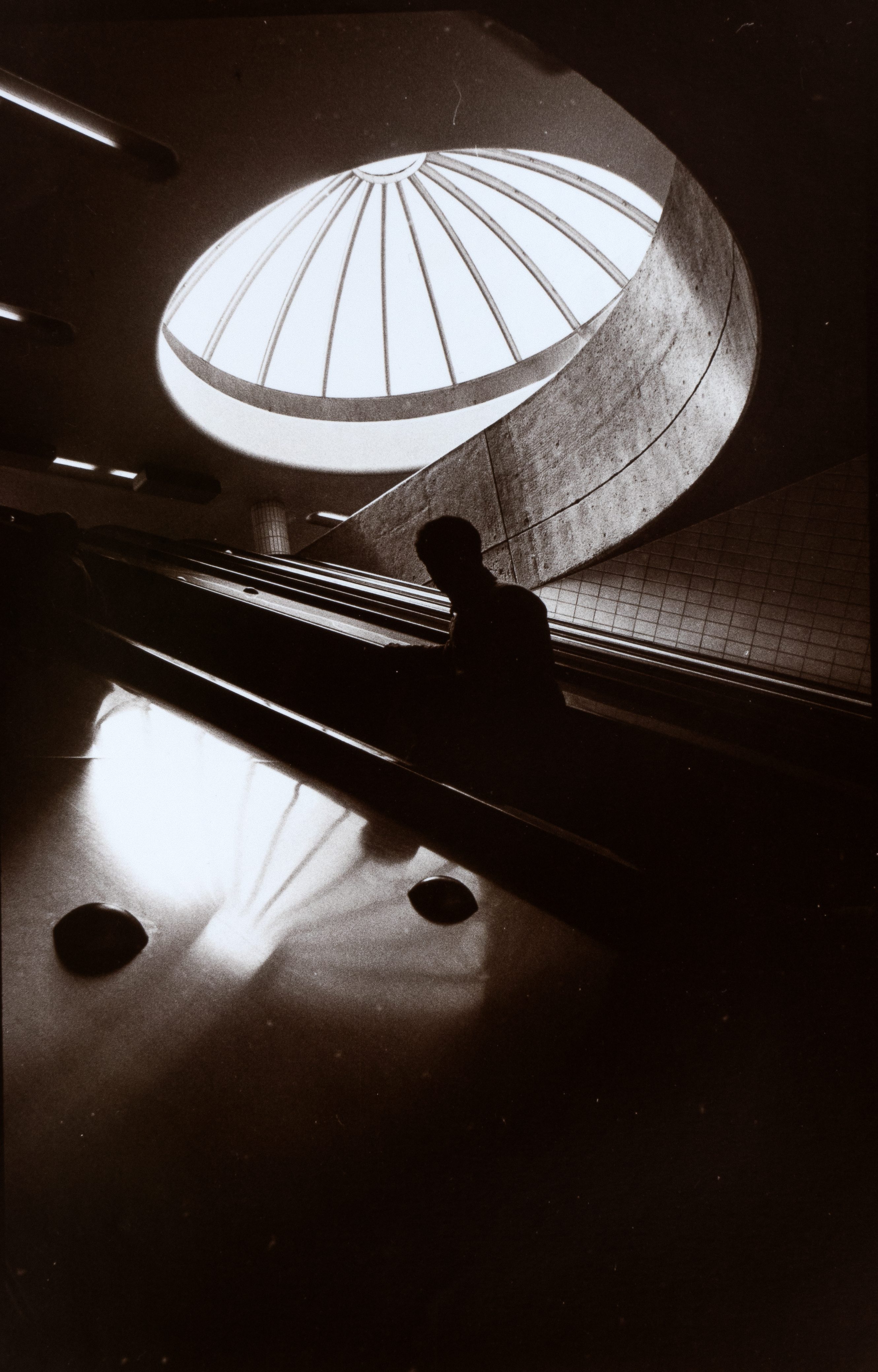
In 1979 and 1980 Muggleton was teaching darkroom skills and camera technique at the Council of Adult Education along with numbers of other Prahran graduates including Sandra Graham, John Tweg, Matthew Nickson, and another alumnus now unable to be located; Tony Maskill.
Leaving the Victorian Plastic Surgery Unit he spent one year at Technical Teachers’ College, Hawthorn, and taught Photography in portable classrooms—one converted to a darkroom—and also Drawing for the following ten years at Box Hill Tech, where he was a colleague of alumnus Peter Kelly:
“I then moved to Caulfield Institute where I taught photo silk screening onto clay to Ceramics students and Photography to TAFE art students. The Art Department was transferred to Holmesglen TAFE where we had to re-establish studios and darkroom in a factory site on Koonang Road. Two years later we were transferred again to a new TAFE college at Knox and where we were responsible for ordering new equipment and furniture and interviewing prospective students to establish an Art Department at Outer Eastern College of TAFE. This was eventually taken over by Swinburne University.”
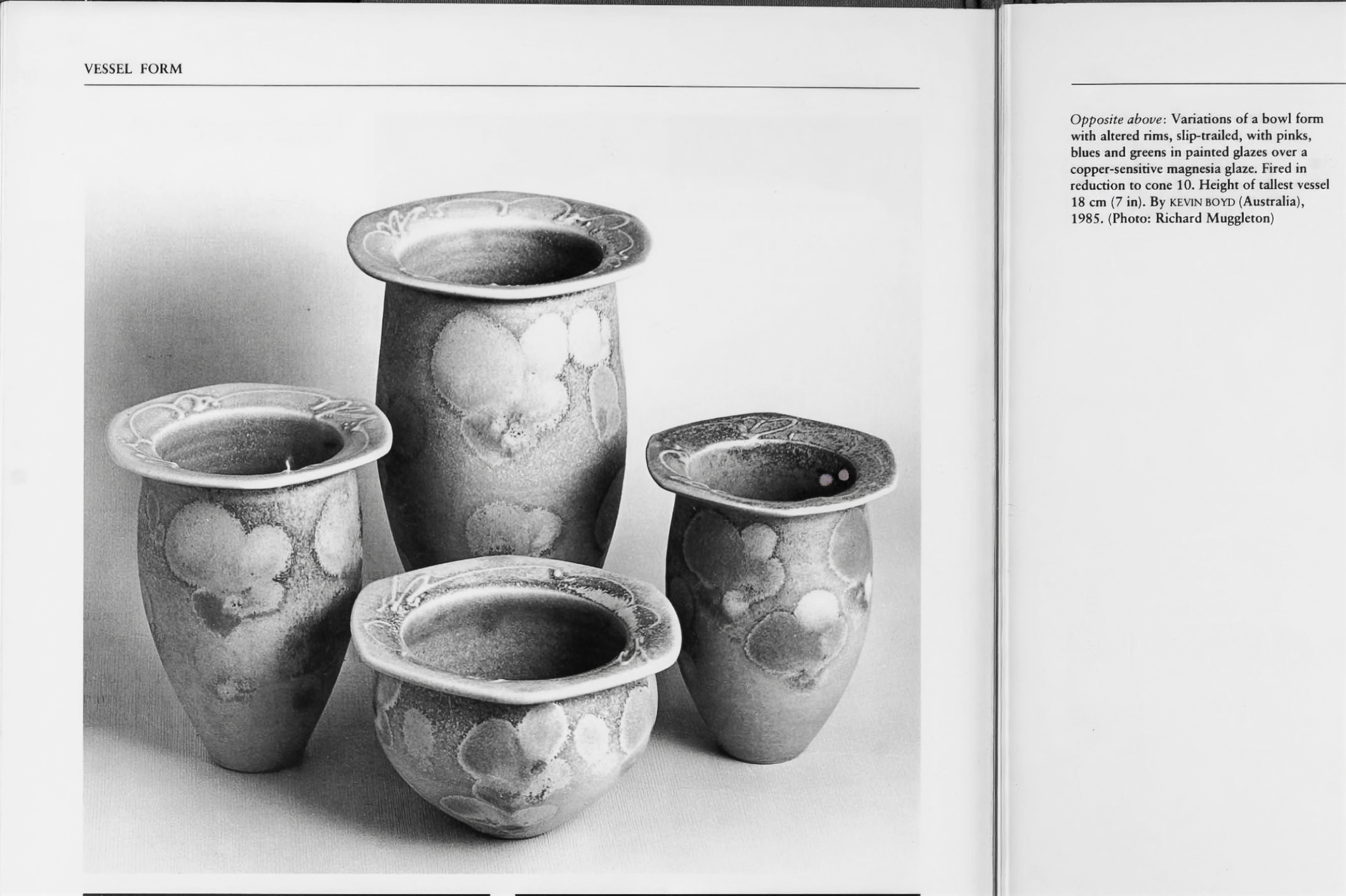
By the year 2000 mergers and the closing of colleges, the casualisation of the teaching workforce, and the digital revolution made the job less satisfying, so Richard took a package: “I was not surprised when my name was misspelled on the separation cheque.”
He built a darkroom at home:
“I still carry a camera wherever I go. Now it contains a digital camera though I still enjoy my time in the darkroom and an occasional life drawing session.”
There are more recent publications from Muggleton’s continued photographic practice.


 On This Date in Photography: by James Mcardle